L’entrée de Giverny sous la neige — History & Facts
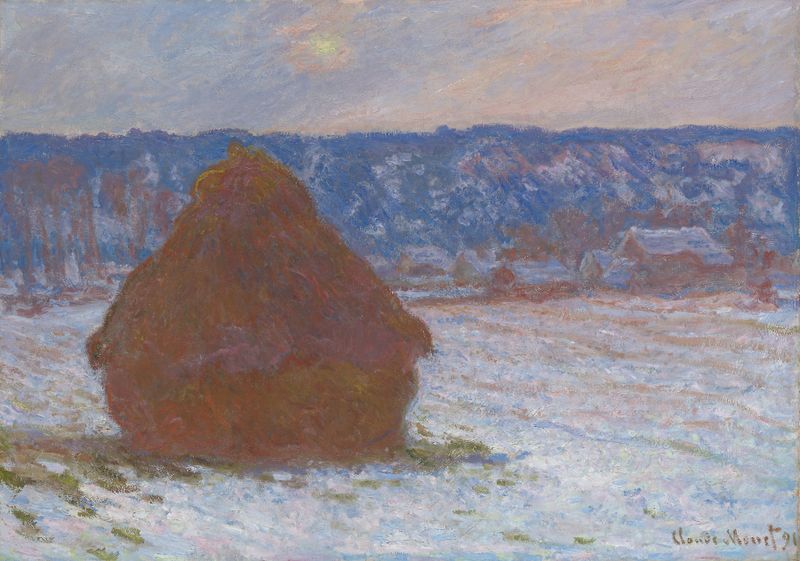
The canvas doesn’t lie — it simply waits. In the hush of a snow-blanketed landscape, serenity drapes itself over the scene, inviting contemplation and stillness. Look to the foreground, where a gentle path, marked only by the soft impressions of footsteps, leads the eye into a world muted by winter. Notice how the delicate blues and whites intertwine, creating a harmonious blend that captures the essence of a frigid morning.
The bare trees stand as silent sentinels, their dark branches stark against the ethereal light, while the modest dwellings peek through the snow, cloaked in tranquility. Beneath the surface, there lies a contrast between warmth and cold; the comfortable homes suggest a refuge from the chill, embodying the human experience in stark juxtaposition with nature's unforgiving embrace. Each brushstroke reveals a dialogue between the vibrancy of life and the stillness of winter, inviting viewers to reflect on the peace found in solitude. This balance not only conveys a moment frozen in time but also evokes deeper feelings of longing and nostalgia. In 1885, Monet was painting at his home in Giverny, where he had settled nine years earlier.
The artist was deeply immersed in capturing the nuances of light and color, experimenting with impressionism amidst a period of personal challenges. This work emerged as part of his exploration of the seasons, a testament to his dedication to portraying nature's beauty, even in its quietest, coldest forms.