
Les jardins d’Horace (The Gardens of Horace) — History & Facts
In a sun-drenched glade, whispers of nature intertwine with quiet reverie. A girl, lost in thought, kneels by a small pond, her reflection merging with the shimmering surface. Above her, the branches of trees arch like protective arms, casting dappled shadows that dance gently on her delicate features. Look to the left at the soft contours of the girl, her white dress glowing against the rich greens of the foliage.
Notice how the light filters through the leaves, creating a play of highlights and shadows that imbue the scene with a sense of peace. The artist's brushstrokes render the landscape almost ethereal, as if time itself has paused to capture this moment of innocence and introspection. The colors, a harmonious blend of earthy tones and soft pastels, evoke a tranquil atmosphere that invites the viewer into this serene garden. Beneath the surface of this idyllic scene lies a tension between solitude and connection.
The girl’s quiet contemplation suggests a deep communion with nature, yet her distance from the viewer speaks to an isolation that contrasts with the enchanting beauty surrounding her. The pond’s reflection can also be seen as a bridge between the inner world of thoughts and the external reality of the lush garden, hinting at the duality of existence—the desire for both connection and solitude. In 1855, when this painting was created, Jean-Baptiste-Camille Corot was immersed in a period of transition within the art world, navigating between traditional realism and the emerging Impressionist movement. Working in his studio in France, he was exploring new techniques in light and composition, responding to the shifting tides of artistic expression and his own evolving philosophy towards nature and its representation.
More Artworks by Jean-Baptiste-Camille Corot
Browse all →
View of Genoa
Jean-Baptiste-Camille Corot
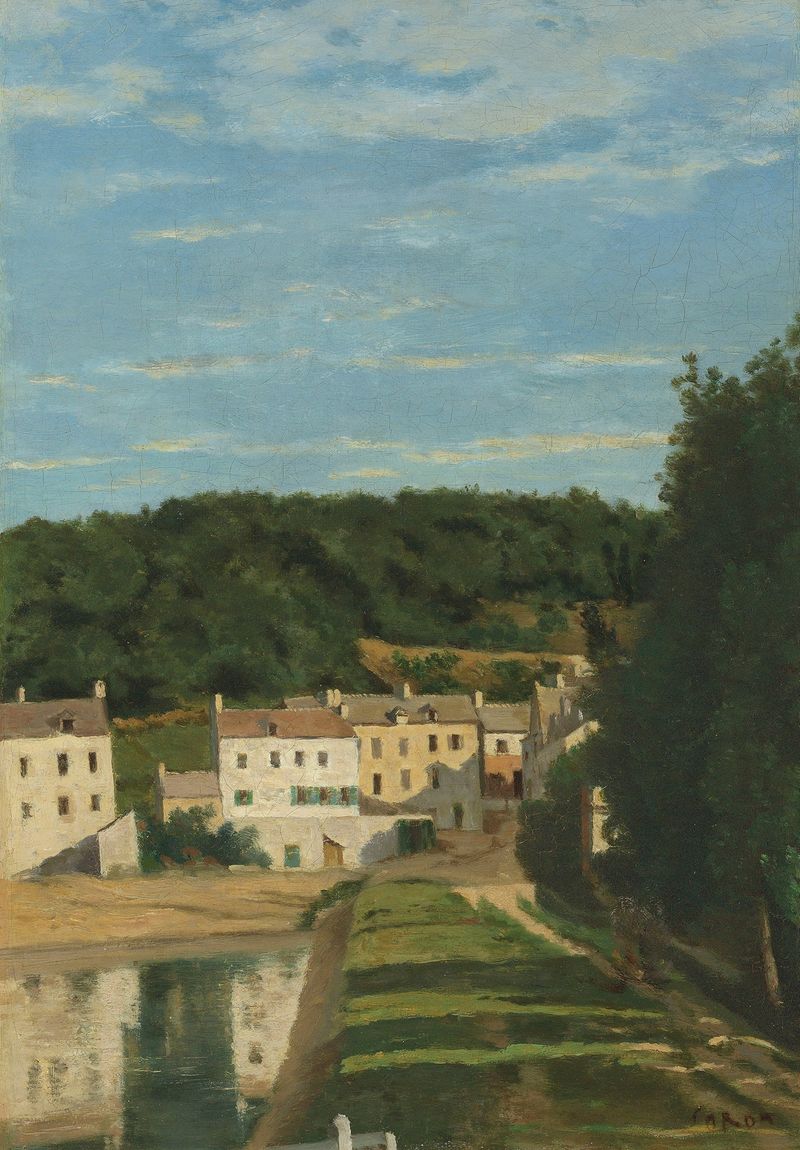
Les Maisons Cabassud À Ville D’avray
Jean-Baptiste-Camille Corot

La solitude. Souvenir de Vigen (Limousin)
Jean-Baptiste-Camille Corot
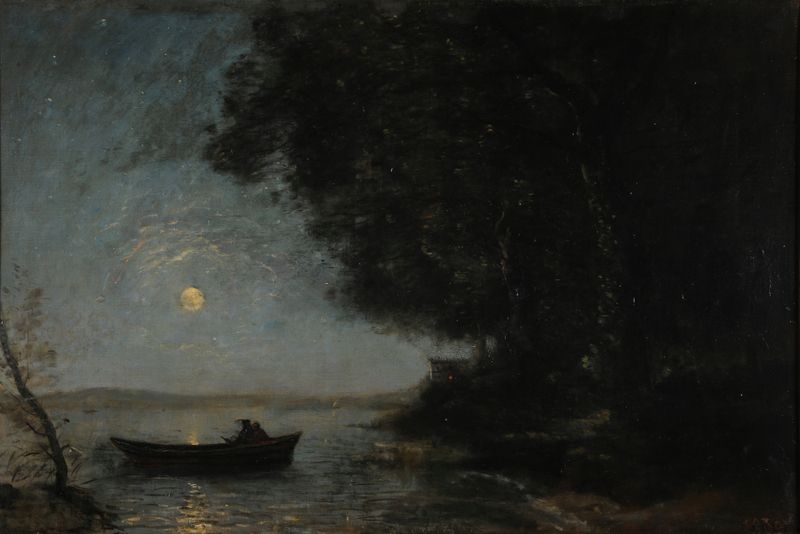
Le lac ; effet de nuit
Jean-Baptiste-Camille Corot
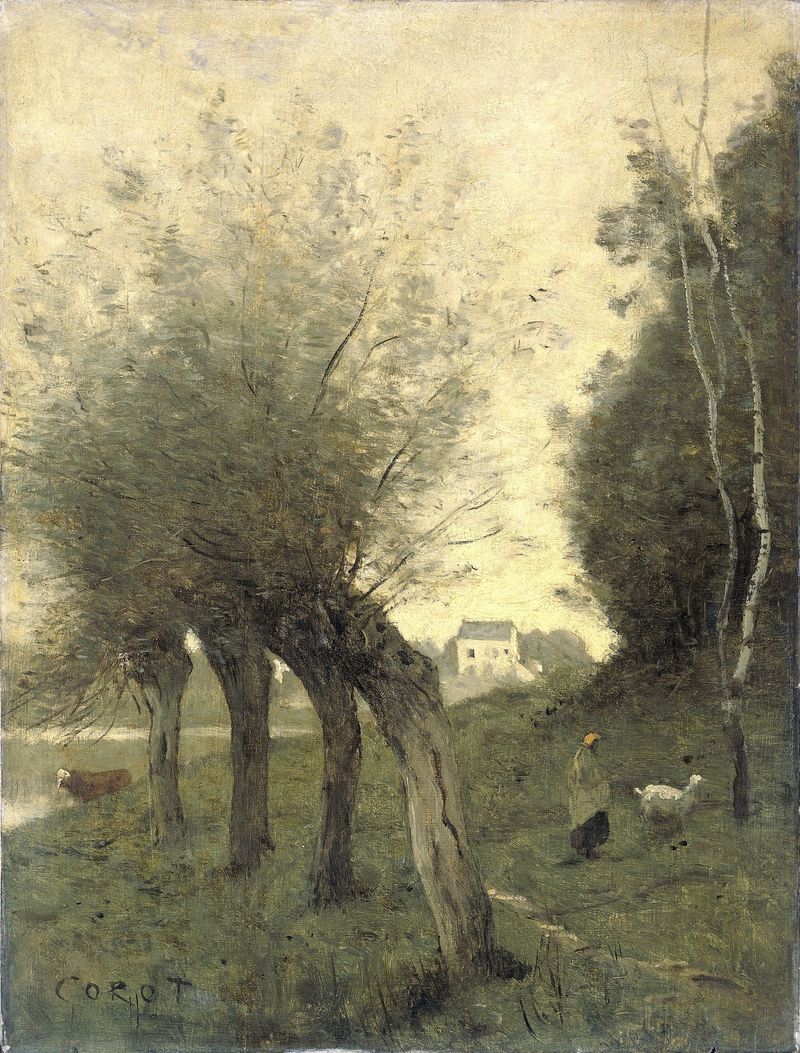
Landscape with Pollard Willows
Jean-Baptiste-Camille Corot
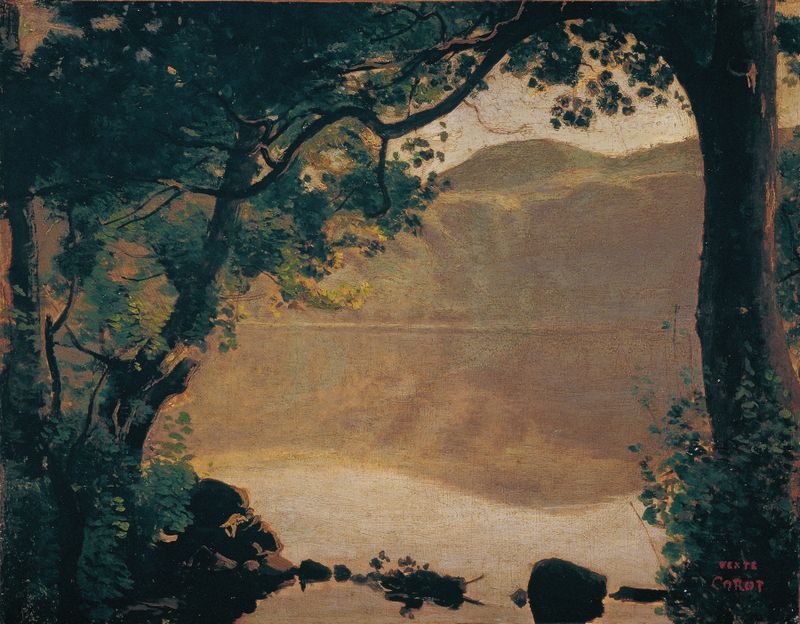
Der Nemisee
Jean-Baptiste-Camille Corot
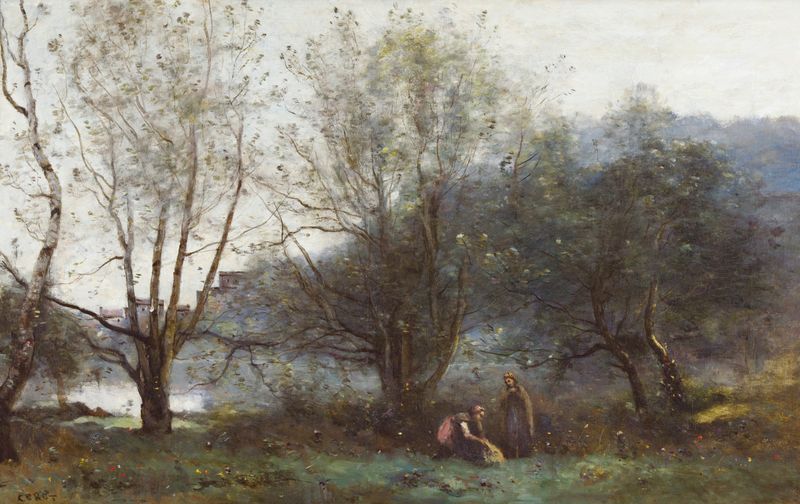
Les Étangs De Ville D’avray
Jean-Baptiste-Camille Corot
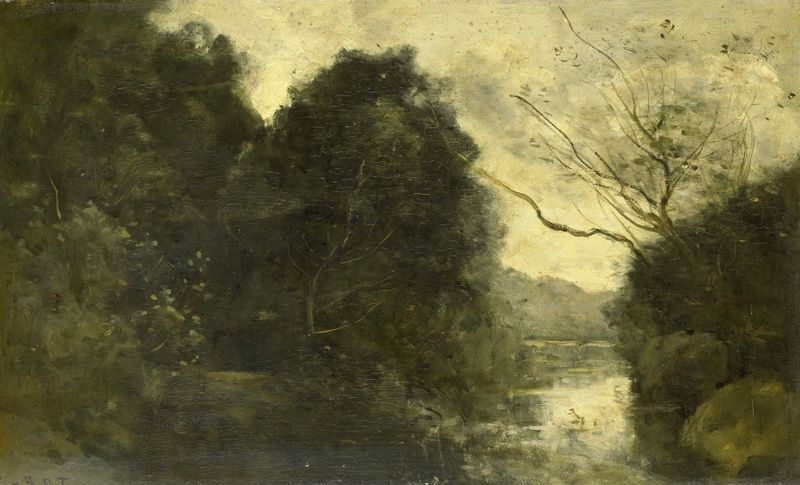
Pond in the Woods
Jean-Baptiste-Camille Corot
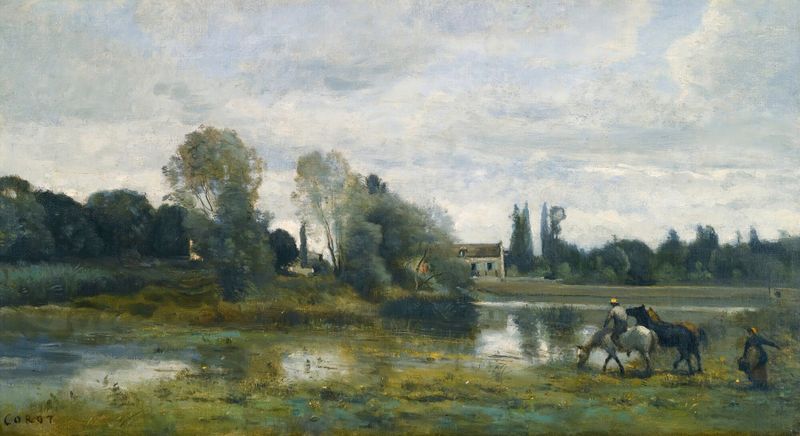
Ville D’avray; L’abreuvoir Des Chevaux
Jean-Baptiste-Camille Corot
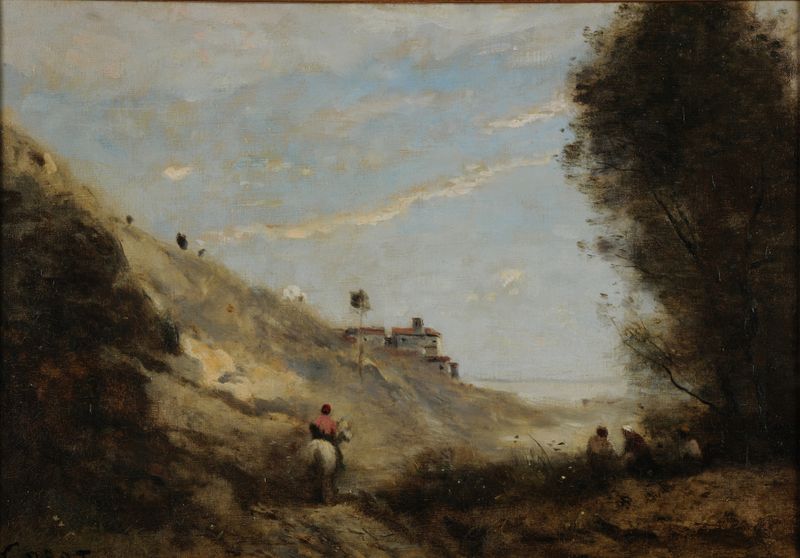
Le vallon au cavalier
Jean-Baptiste-Camille Corot





