
Les travaux du Marché du Temple — History & Facts
Who listens when art speaks of silence? In the stillness of Les travaux du Marché du Temple, a revelation unfolds, inviting viewers to ponder the unseen narratives within its frames. Look to the left, where the bustling market comes alive through Bourgoin's delicate brushwork. The vibrancy of the stalls bursts forth with earthy tones, each hue meticulously chosen to reflect the life and commerce of the time. Notice how the light dances across the faces of the vendors and buyers, casting gentle shadows that hint at the interplay of labor and leisure.
Your eye is drawn toward the figures, frozen in a moment of exchange, their gestures speaking volumes in a language that transcends words. There’s an underlying tension of contrast within the scene—between the fervor of the market and the quietude of the background. The harmony of colors and the stoic expressions of the characters suggest a deeper, shared understanding of daily life’s grind, revealing the silent struggles of those who toil. Each detail, from the fabric of their garments to the arrangement of goods, hints at a collective story of resilience, echoing through history yet remaining profoundly personal. Created between 1801 and 1900, this piece reflects Bourgoin's dedication to portraying the intricacies of urban life during a time of significant social change in France.
As the country teetered on the edge of modernity, the artist captured the essence of a market that served as a microcosm of society, revealing both the vibrancy and the challenges of the era. His work lies at the intersection of realism and impressionism, showcasing an evolving art movement that sought to depict the complexities of human experience.
More Artworks by Marie-Désiré Bourgoin
Browse all →
Maison de Cuvier au jardin des Plantes
Marie-Désiré Bourgoin
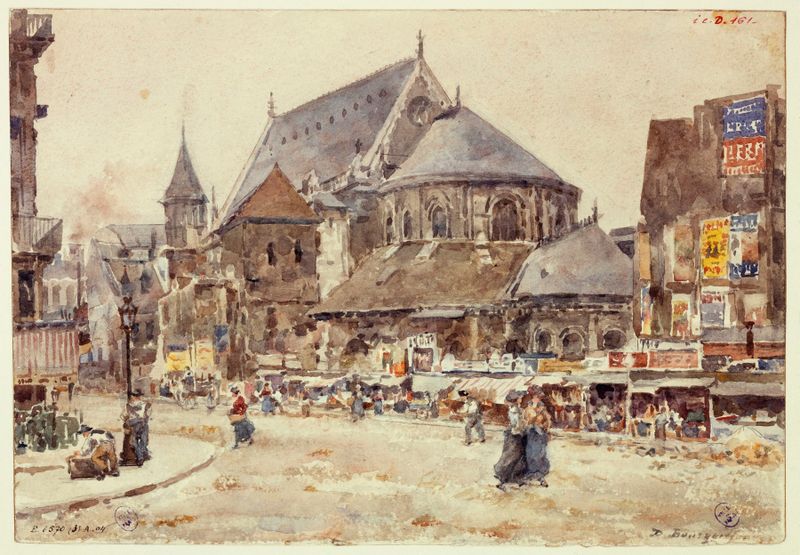
Le chevet de l’église Saint-Nicolas des Champs
Marie-Désiré Bourgoin
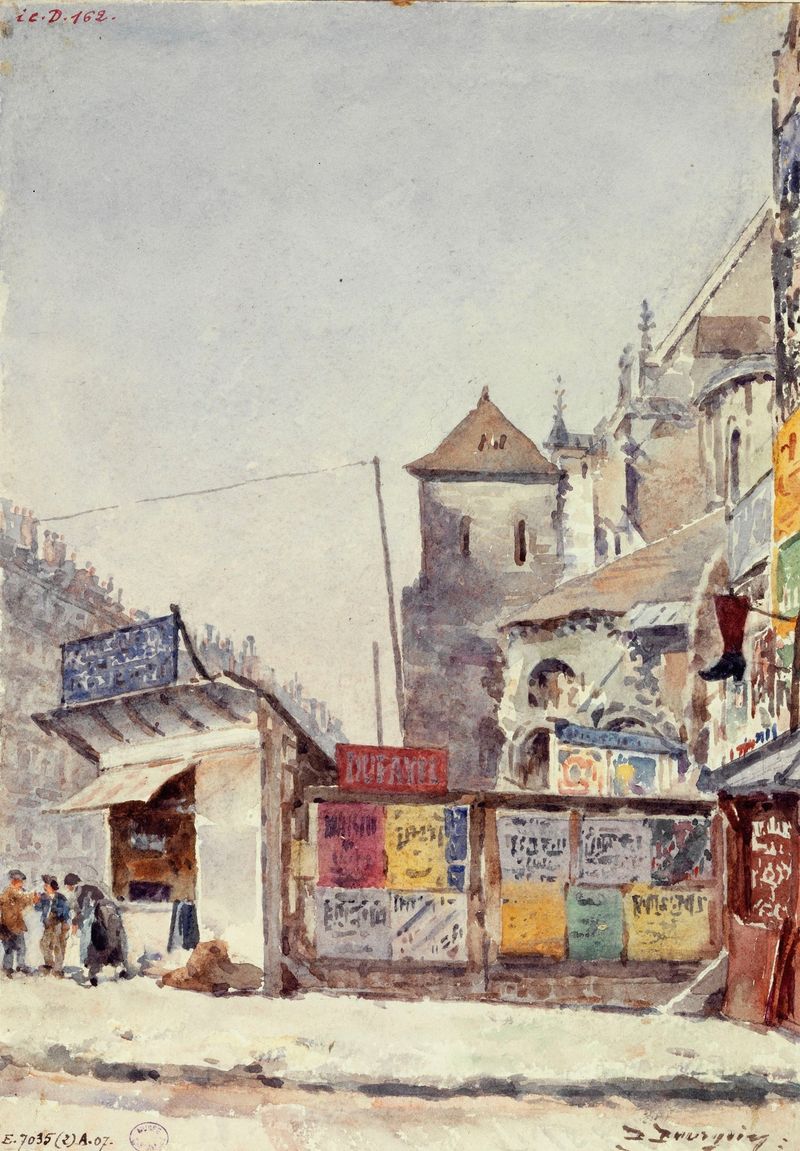
Palissade autour de l’église Saint-Nicolas, rue Réaumur
Marie-Désiré Bourgoin
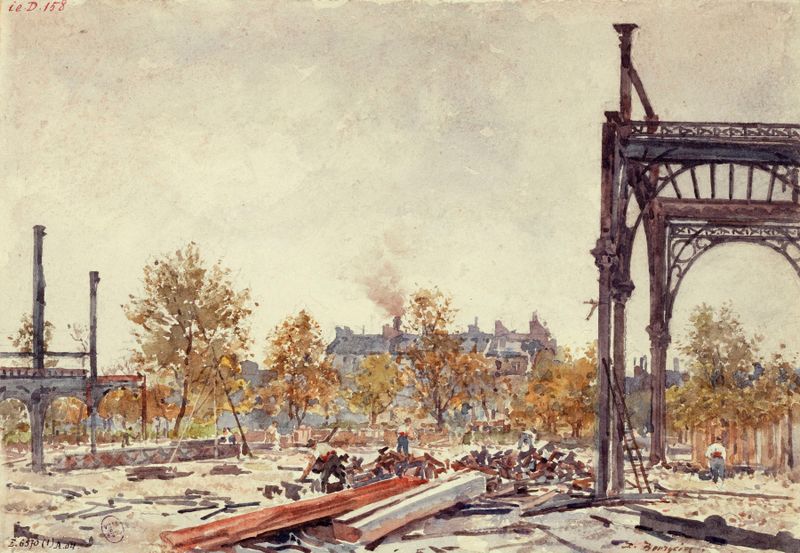
Les travaux du Marché du Temple
Marie-Désiré Bourgoin

L’église Saint-Nicolas, rue Réaumur
Marie-Désiré Bourgoin





