
Les travaux du métropolitain place Saint-Michel — History & Facts
What if silence could speak through light? In the quiet depths of an underground world, the flicker of humanity's labor unveils the fragility of progress and the lurking shadows of fear. Look to the center of the canvas, where the dull gray of the tunnel walls creates a stark contrast against the bright, golden glow of the lanterns held by the workers. Notice how the figures, bent and weary, engage in their daunting task, their gestures a blend of determination and trepidation. The strokes are deliberate, capturing the rough textures of their clothing and the glistening sweat on their brows, while the muted palette encapsulates the oppressive atmosphere of the subterranean setting. In this piece, light serves as a dual narrative: it illuminates the immediate struggle of laborers while casting elongated shadows that hint at the unknown dangers lurking beyond their sight.
The juxtaposition of workers' toil and the oppressive environment suggests a deep-seated anxiety about the relentless march of progress, echoing the fears of those who built the very foundations of modernity. Each flicker of illumination resonates with an unspoken tension, as if the scene itself is holding its breath. Victor Marec created this work in 1906, during a time when Paris was undergoing transformative urban development. The expansion of the Métro reflected both the innovation of the era and the societal uncertainties that accompanied it.
Marec, immersed in an evolving art world, sought to capture not only the physical labor but also the emotional weight carried by those who toiled in the shadows of progress.
More Artworks by Victor Marec
Browse all →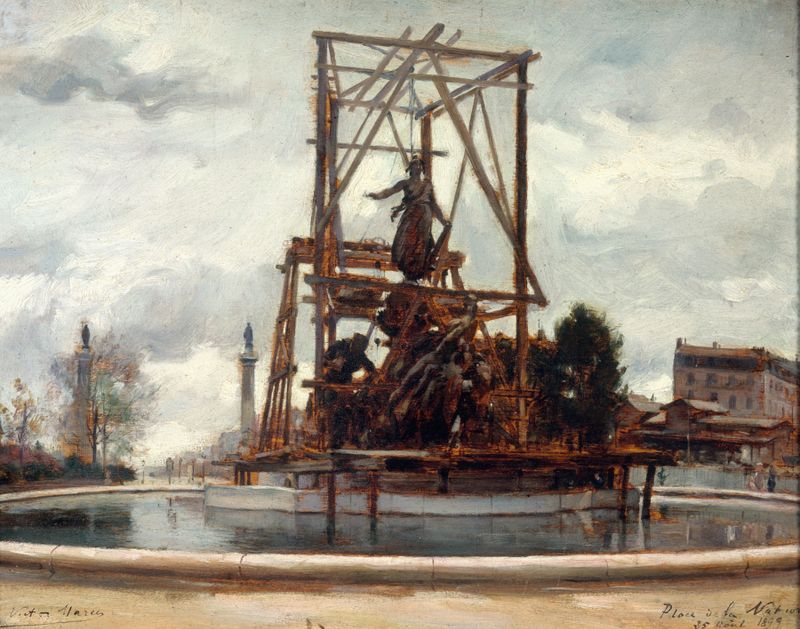
Mise en place du monument du ‘Triomphe de la République’ de Jules Dalou, place de la Nation
Victor Marec

L’embarcadère de l’Ouest, gare de Paris à Saint-Germain
Victor Marec
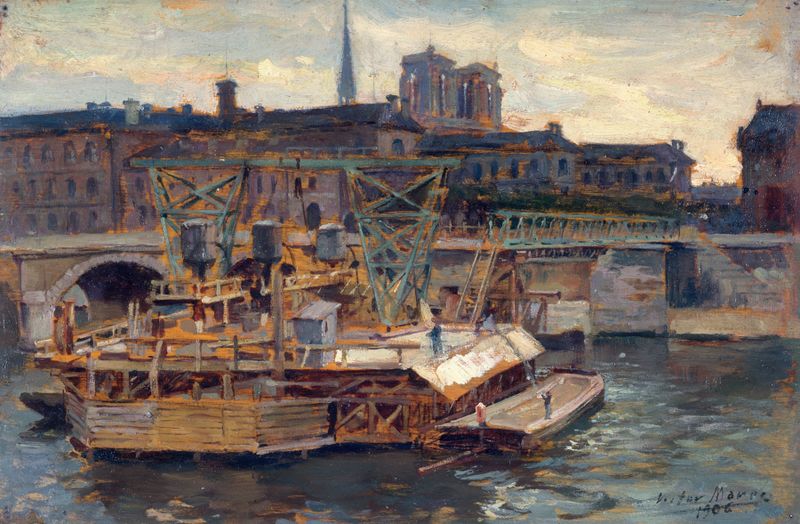
Les travaux du métropolitain au pont Notre-Dame
Victor Marec
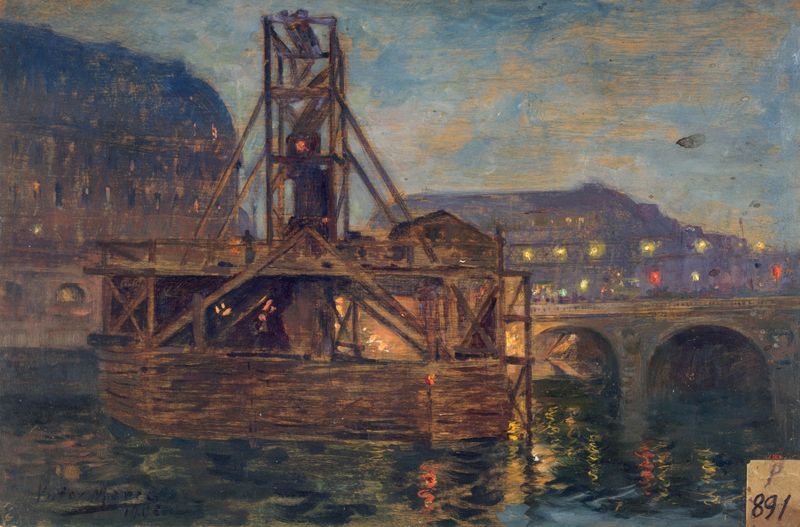
Les travaux du métropolitain au pont Saint-Michel
Victor Marec
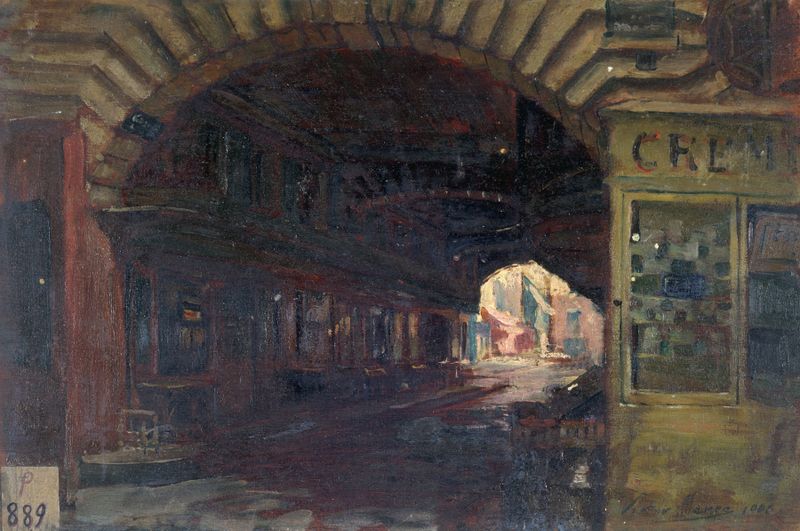
Entrée du cloître Saint-Honoré, rue des Bons-Enfants
Victor Marec
Les bains Deligny, au quai d’Orsay
Victor Marec

La cour de l’auberge du Cheval-Blanc, rue Mazet
Victor Marec
Les travaux de la nouvelle gare d’Orléans
Victor Marec

Le cimetière de Picpus et le champs des Martyrs, où furent enterrées les victimes de la Révolution, guillotinées à la barrière du Trône
Victor Marec

Entrée de l’auberge du Cheval-blanc, rue Mazet
Victor Marec





