
L’Escaut près d’Anvers, Soleil couchant — History & Facts
Did the painter know this moment would outlive them? The amber rays of a setting sun cast an ethereal glow over the waters, inviting awe and reflection with each brushstroke. Focus on the tranquil horizon, where the sun dips low, spilling its golden light across the rippling surface of the river. Notice how the fiery colors contrast with the cool blues and greens of the landscape, creating a harmonious balance that draws the eye. The meticulous strokes capture the soft undulations of the water, mesmerizing in their fluidity while the silhouettes of boats float gently, contributing to the scene's serene dynamism. Within the stillness lies an emotional tension—the fleeting nature of time echoed by the day’s end.
The juxtaposition of warmth and coolness mirrors life's transience, invoking a bittersweet feeling as day transitions to night. Each detail, from the delicate reflection of the clouds to the distant cityscape shadows, invites contemplation of the essence of change and permanence, urging viewers to pause and savor the beauty of the moment. In 1866, Jongkind painted this piece during his time in France, influenced by the burgeoning Impressionist movement. While grappling with personal struggles, including his place in the evolving art world, he honed a style that blended realism with a sense of immediacy, capturing the essence of fleeting moments like this one.
The painting reflects his commitment to portraying light and atmosphere, echoing the revolutionary techniques that would shape modern art.
More Artworks by Johan Barthold Jongkind
Browse all →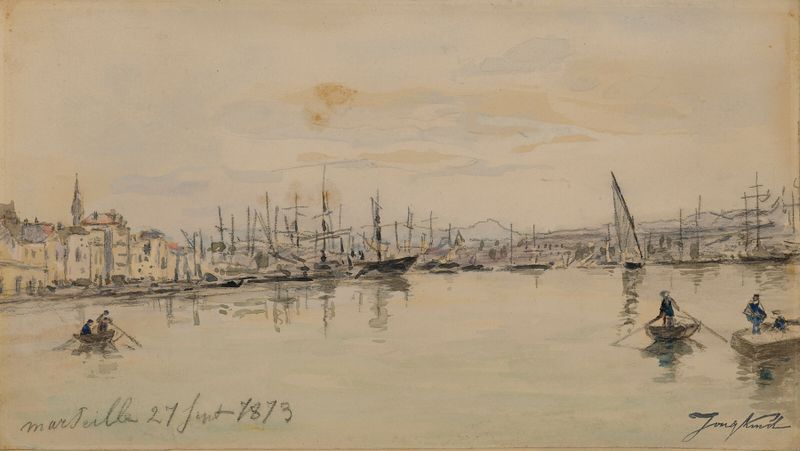
Le Port de Marseille
Johan Barthold Jongkind

Canal Saint-Martin
Johan Barthold Jongkind

Countryside near Brezins, between Grenoble and Vienne
Johan Barthold Jongkind

Notre-Dame vue du quai de la Tournelle
Johan Barthold Jongkind

Environs de Grenoble
Johan Barthold Jongkind

Clair de lune à Overschie (environs de Rotterdam)
Johan Barthold Jongkind

Port de Honfleur
Johan Barthold Jongkind
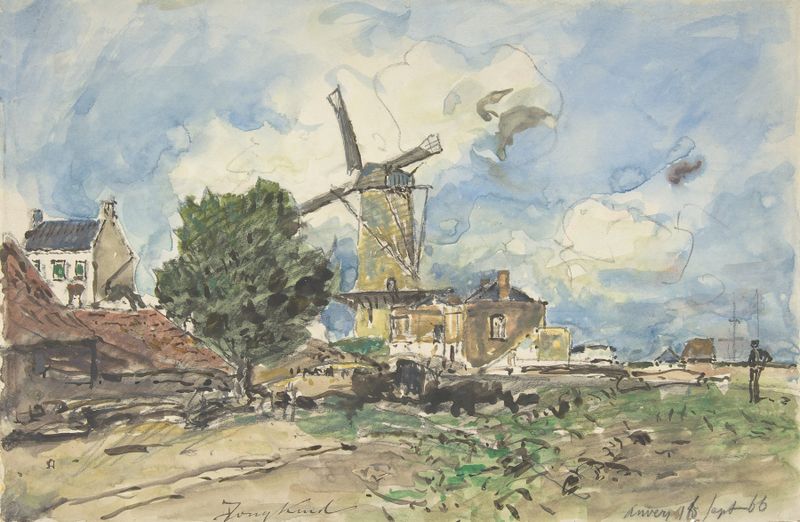
Wind Mill at Antwerp
Johan Barthold Jongkind

Le Havre
Johan Barthold Jongkind

The Church of Overschie
Johan Barthold Jongkind





