
L’Estuaire, Belgique — History & Facts
In the swirling currents of destiny, the landscape whispers stories of time and the vastness of experience. Look to the left, where the gentle curve of the river reflects the soft light of a fading day, capturing the essence of fleeting moments. The palette, a mixture of muted blues and greens, invites contemplation, while warmer tones shimmer across the water's surface, evoking warmth amidst the coolness of dusk. The composition draws the viewer’s gaze along the river’s edge, where figures appear almost ethereal, mere silhouettes against the expansive sky, emphasizing both their presence and insignificance in the grand tableau of nature. Delve deeper into the work, and you will find contrasts that speak to the duality of existence.
The serenity of the flowing water juxtaposes the solidity of the distant land, illustrating the tension between movement and stillness, fate and choice. Each brushstroke conveys an emotional resonance, as if the artist captured not just a moment in time but the weight of all that came before and after. The trees, gnarled yet resilient, whisper tales of endurance, suggesting that destiny is shaped by both the forces of nature and individual will. Johan Barthold Jongkind painted L’Estuaire, Belgique in 1867 during a period where he sought to establish himself in the evolving landscape of Impressionism.
Living in France but with a heart tethered to the Dutch countryside, he faced both personal and artistic challenges. The world around him was shifting, with the burgeoning movement questioning traditional forms, and in this climate of experimentation, Jongkind harnessed his experiences to bridge the realms of realism and impression, laying the groundwork for future generations.
More Artworks by Johan Barthold Jongkind
Browse all →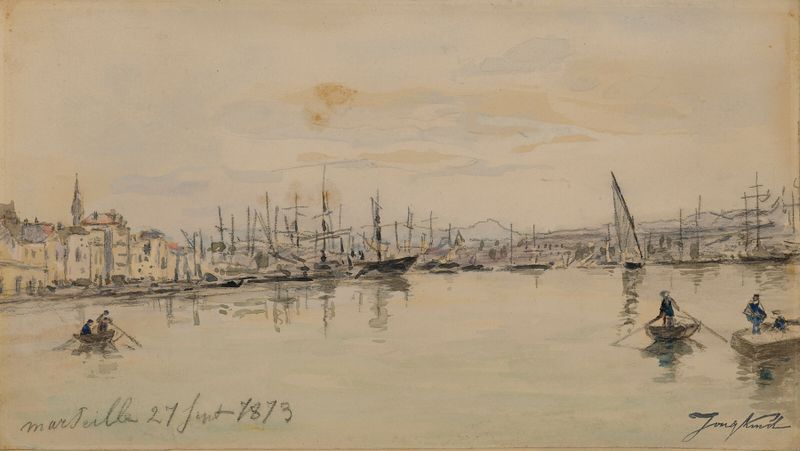
Le Port de Marseille
Johan Barthold Jongkind

Canal Saint-Martin
Johan Barthold Jongkind

Countryside near Brezins, between Grenoble and Vienne
Johan Barthold Jongkind

Notre-Dame vue du quai de la Tournelle
Johan Barthold Jongkind

Environs de Grenoble
Johan Barthold Jongkind

Clair de lune à Overschie (environs de Rotterdam)
Johan Barthold Jongkind

Port de Honfleur
Johan Barthold Jongkind
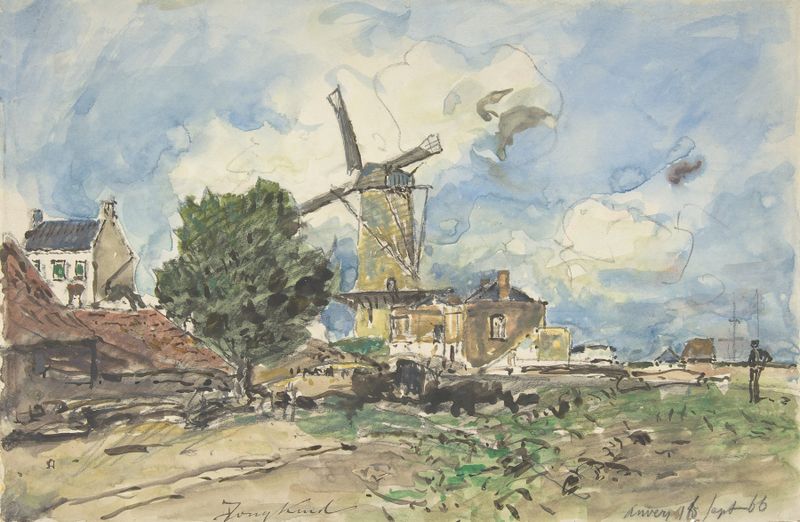
Wind Mill at Antwerp
Johan Barthold Jongkind

Le Havre
Johan Barthold Jongkind

The Church of Overschie
Johan Barthold Jongkind





