
L’hôtel de La Vieuville — History & Facts
Can paint confess what words never could? In L’hôtel de La Vieuville, the delicate interplay of light and shadow whispers of stories hidden beneath the surface, evoking a world weighed down by silence and contemplation. Look to the left at the elegant façade of the hotel, where soft, muted colors blend seamlessly into the atmosphere of early 20th-century Paris. Notice how the light filters through the trees, casting dappled shadows on the cobblestone path, inviting the viewer into a moment suspended in time. The meticulous brushwork and gentle palette create a harmonious balance, drawing your gaze from the architectural details of the building to the serene figures meandering about, each absorbed in their private thoughts. Hidden beneath the tranquil beauty of the scene lies a tension between solitude and connection.
The figures, while seemingly immersed in their own worlds, are paradoxically tied together by the shared space, suggesting an unspoken bond forged by the ambiance of their surroundings. The contrasting warmth of the sunlight against the cool shadows underscores a deeper emotional narrative, reflecting the duality of human experience—where isolation coexists with community in the heart of urban life. In 1903, Paul-Joseph-Victor Dargaud painted this work during a time of significant artistic transition in France. The turn of the century saw the rise of Impressionism, and Dargaud, influenced by this movement, sought to capture ephemeral moments in urban settings.
At this point in his career, he was exploring the balance between realism and impressionistic techniques, seeking to convey not just images, but also the emotions embedded within them.
More Artworks by Paul-Joseph-Victor Dargaud
Browse all →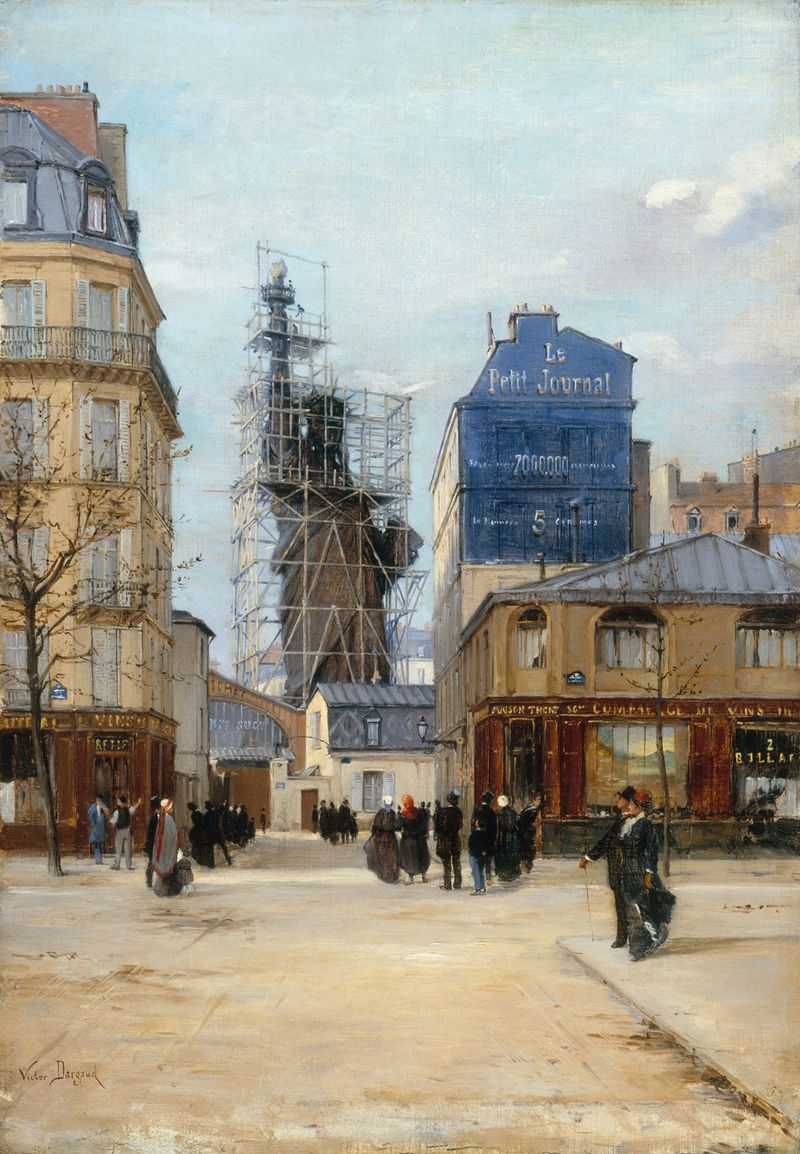
La statue de la Liberté de Bartholdi, dans l’atelier du fondeur Gaget, rue de Chazelles
Paul-Joseph-Victor Dargaud
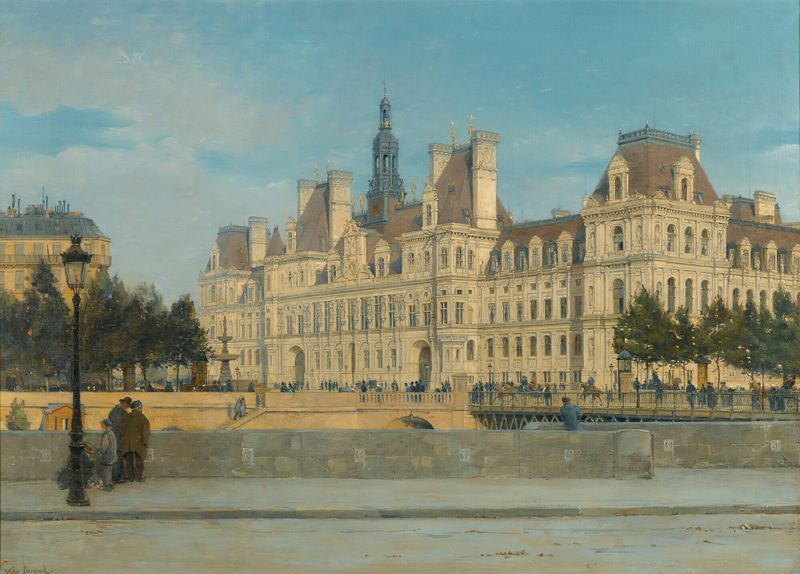
L’hôtel de Ville de Paris
Paul-Joseph-Victor Dargaud

L’hôtel du Prévôt, Passage Charlemagne
Paul-Joseph-Victor Dargaud

Hôtel de Balzac. Entrée et façade sur la rue Fortunée, aujourd’hui rue Balzac
Paul-Joseph-Victor Dargaud
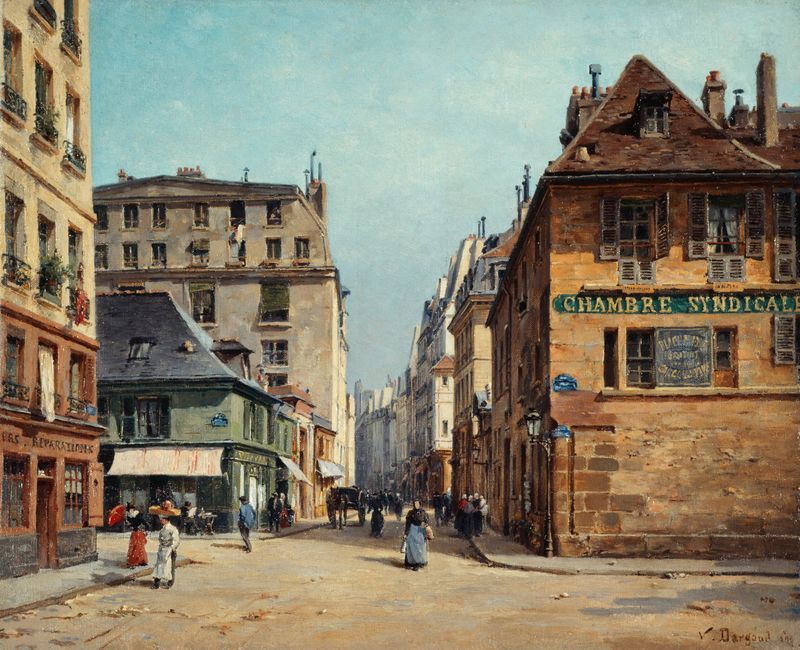
La Rue Saint-Paul
Paul-Joseph-Victor Dargaud
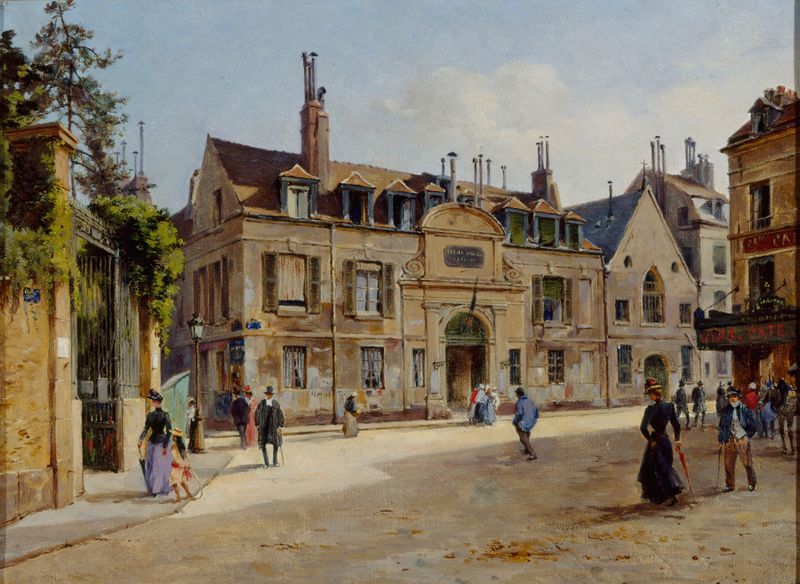
L’Ancien Hôpital de la Pitié, rue Lacépède
Paul-Joseph-Victor Dargaud
L’hôtel de Ville en Reconstruction
Paul-Joseph-Victor Dargaud

La Cour de Rohan
Paul-Joseph-Victor Dargaud
La Sorbonne
Paul-Joseph-Victor Dargaud
More Architecture Art
Browse all →
The statue of Liberty
Frédéric Auguste Bartholdi

View of Houses in Delft, Known as ‘The Little Street’
Johannes Vermeer

View of Houses in Delft, Known as ‘The Little Street’
Johannes Vermeer

The Cathedral in Rouen. The portal, Grey Weather
Claude Monet

The yellow house
Vincent van Gogh

The Church in Auvers-sur-Oise, View from the Chevet
Vincent van Gogh