Liberty’s Clock — History & Facts
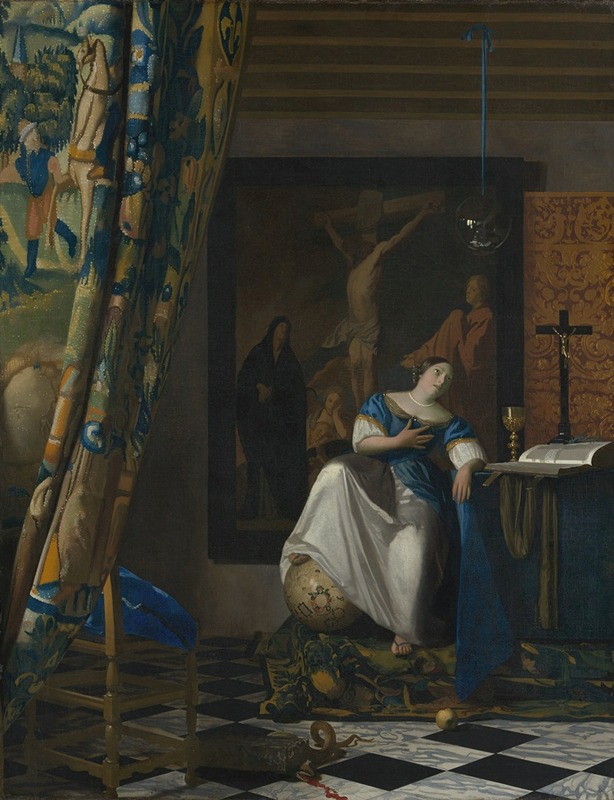
When did color learn to lie? In Liberty’s Clock, a haunting reflection of an era teeters on the edge of truth and illusion, challenging our perception of reality. Focus on the clock face, where Roman numerals stand resolute against a backdrop of muted tones. Notice how the artist skillfully uses light to create a shimmering effect, illuminating the brass surface and casting ethereal shadows that dance around its grandeur. The cool palette evokes a somber mood, while the delicate brushwork invites you to linger—drawing you deeper into the intricate details of the clock’s ornate design. Beneath its surface, the piece whispers of duality.
The clock symbolizes not just the passage of time, but the fleeting nature of liberty itself—a reminder of the sacrifices made for freedom. The juxtaposition of the sturdy clock against the fragile reflections in the glass serves as a poignant comment on the tension between permanence and transience, inviting viewers to contemplate the fragility of ideals we hold dear. In 1909, the artist found himself at a crossroads, grappling with the rise of industrialization and its impact on society. Working in Britain, Muirhead Bone was establishing his reputation as a pioneering printmaker and painter.
During this time, the art world was increasingly turning its gaze towards modernity, mirroring the societal shifts and uncertainties encapsulated in his work.
More Artworks by Muirhead Bone
Browse all →
On the Clyde, 1917-1918; Building a Liner at Greenock
Muirhead Bone
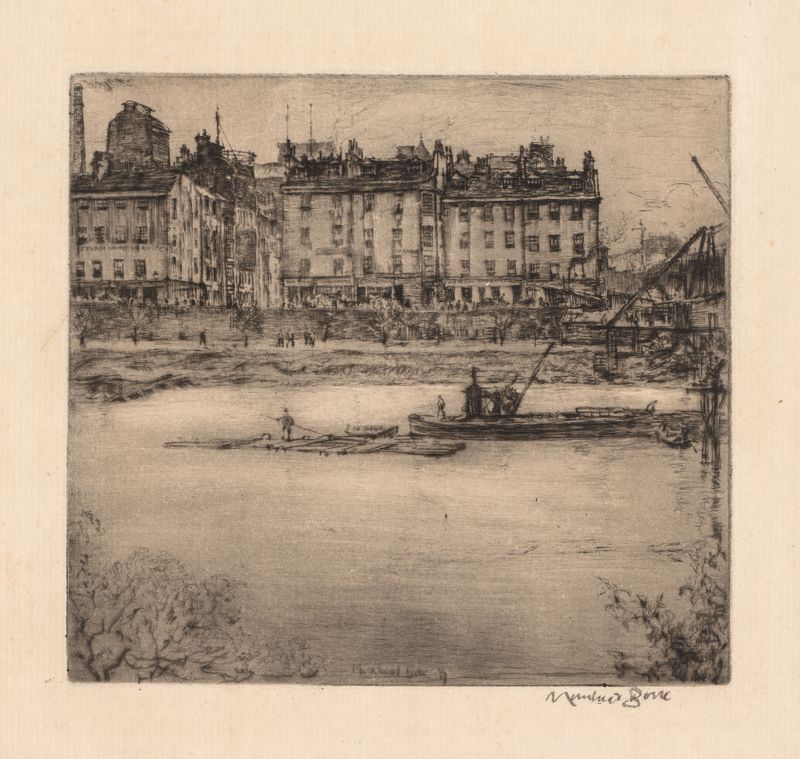
Etchings of Glasgow; Gorbals
Muirhead Bone

On the Clyde, 1917-1918; Reconstructing a Clyde Shipyard
Muirhead Bone

The Great War; Britain’s Efforts and Ideals; Building Ships; A Fitting Out Basin
Muirhead Bone

Picadilly Circus
Muirhead Bone

Demolition of St. James Hall, Exterior
Muirhead Bone
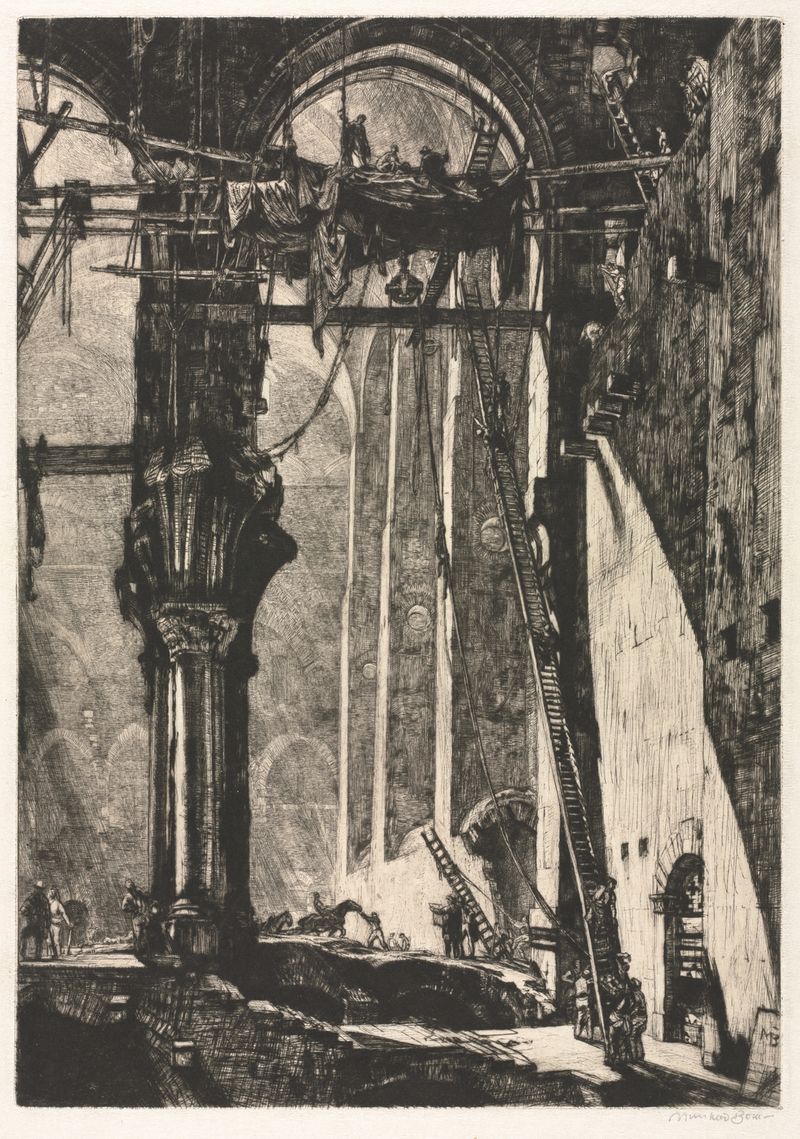
Demolition of St. James Hall, Interior
Muirhead Bone
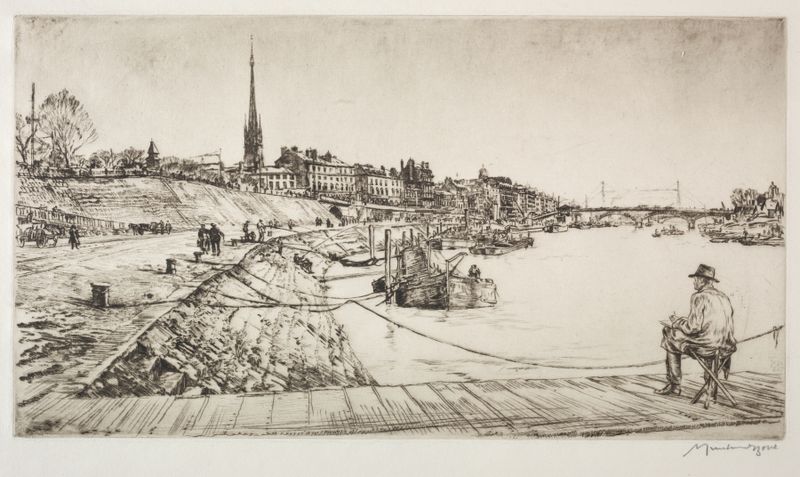
Rouen
Muirhead Bone
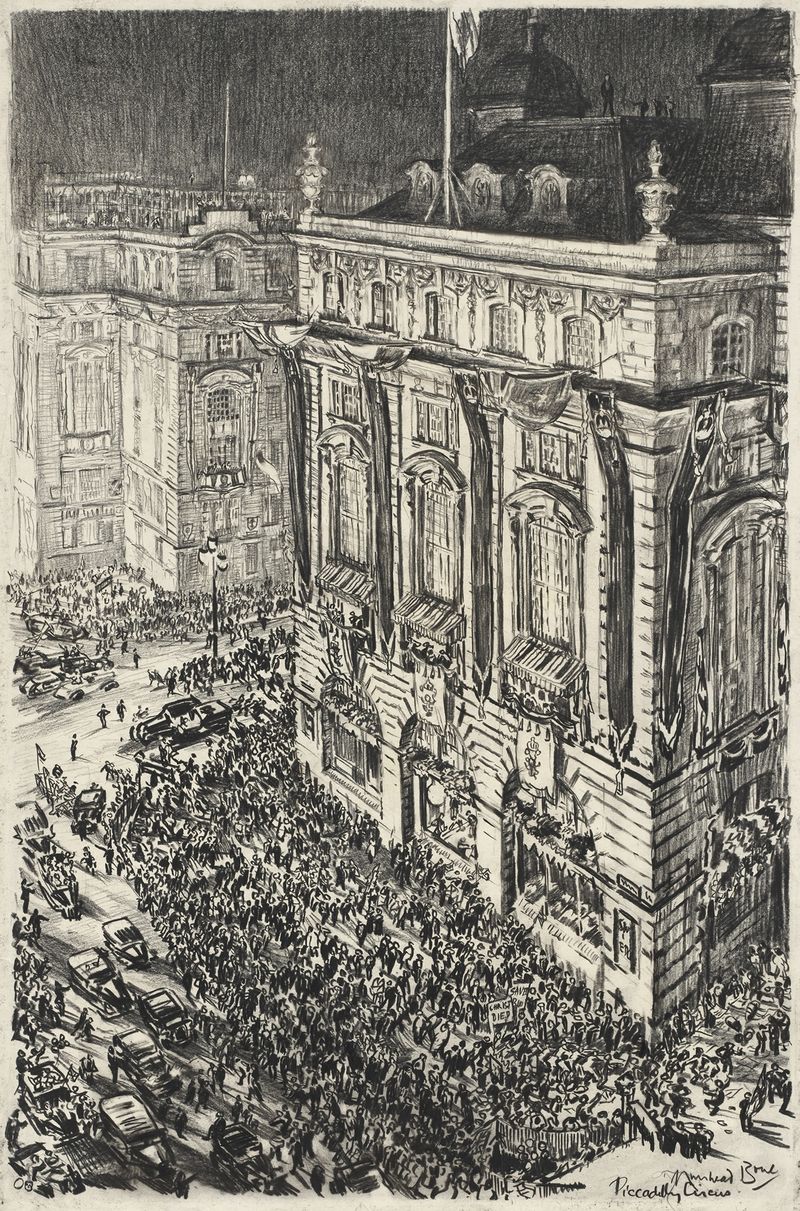
Piccadilly Circus, Eve of the Coronation of George VI
Muirhead Bone
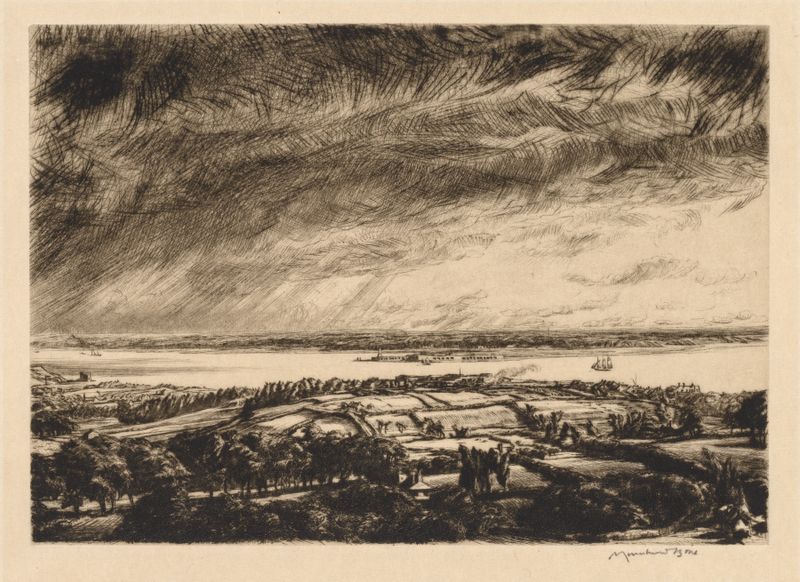
The Solent
Muirhead Bone