
London: Northumberland House — History & Facts
When Canaletto arrived in London in 1746, he found a city eager for images of its own grandeur, and among his most celebrated commissions was a series of views for British aristocrats. London: Northumberland House, painted in 1752, stands out as the only known depiction of this great Strand mansion by the Venetian master, capturing the building before its demolition in 1874. The painting was likely commissioned by the Duke of Northumberland himself, keen to immortalize his family's residence at the heart of fashionable London.
For English collectors, owning a Canaletto was a mark of taste and cosmopolitan sophistication—an Italianate vision of their own city. The scene unfolds on a bright day, with Northumberland House dominating the right side of the canvas, its ornate façade facing the busy Strand. The artist selects a moment of urban animation: carriages and pedestrians traverse the wide street, while the Thames glimmers in the distance. Canaletto’s eye for architectural precision is evident in the crisp lines of the house’s balustrades and the careful rendering of windows, but he also delights in the everyday—figures gossiping, a dog darting, the bustle of city life.
The composition invites comparison with his Venetian views, such as The Grand Canal with the Church of the Salute, yet here the light is softer, the palette cooler, reflecting the northern climate and the sober elegance of London’s stone. The painting’s journey mirrors the fate of the house it depicts. After its creation, London: Northumberland House remained in private British collections for generations, surviving both the demolition of the original building and the shifting tastes of the art market. Its attribution to Canaletto was never seriously doubted, thanks to the artist’s distinctive technique and the existence of related drawings.
Today, the work is held in a major public collection, a testament both to the artist’s London years and to the vanished grandeur of Georgian London. For Canaletto, these city views marked a new chapter, blending his Venetian precision with the urban ambitions of his English patrons.
More Artworks by Canaletto

The Grand Canal, Venice, looking north-west from the Ca' Corner to the Ca' Contarini degli Scrigni, with the campanile of Santa Maria della Carità
Canaletto

Venice, Bacino di San Marco on Ascension Day
Canaletto

Windsor Castle
Canaletto

The Grand Canal looking North-East from the Palazzo Dolfin-Manin to the Rialto Bridge
Canaletto

Venice: The Campo SS. Giovanni e Paolo
Canaletto

Venice: The Grand Canal from the Rialto to the Palazzo Foscari
Canaletto
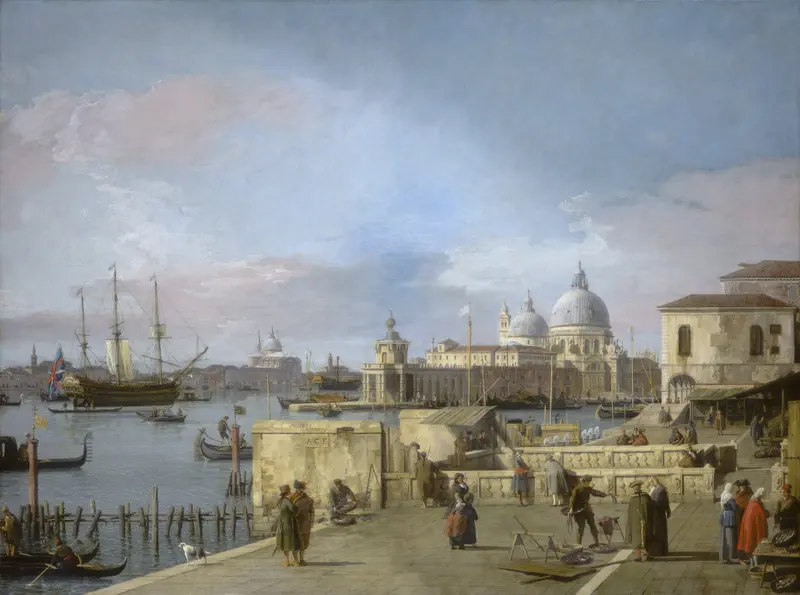
Venice: The Molo towards the Dogana and Santa Maria della Salute
Canaletto

Venice: The Piazzetta
Canaletto
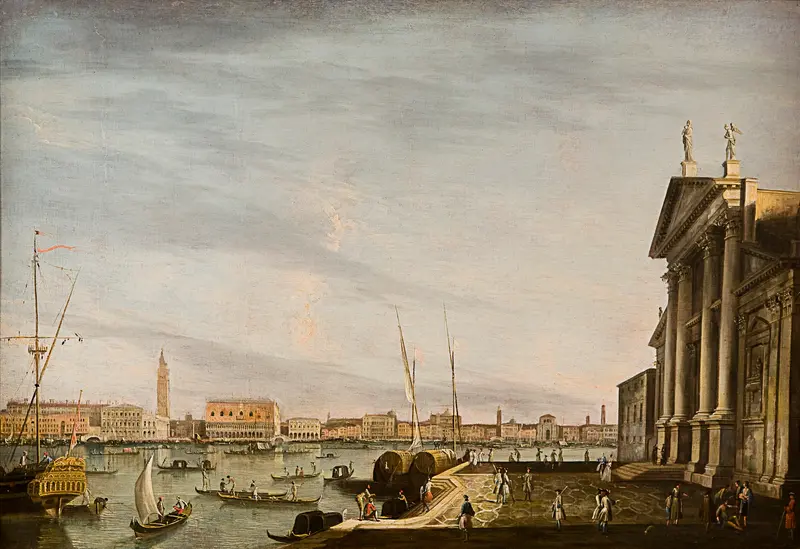
Venice, View of San Giorgio Maggiore
Canaletto

London: The Thames from Somerset House Terrace towards Westminster
Canaletto


