
London: Westminster Bridge under Repair from the North — History & Facts
When Canaletto arrived in London in 1746, he found a city in flux, its landmarks both familiar and rapidly changing. By 1754, Westminster Bridge—London’s second bridge over the Thames—was not only a marvel of modern engineering but also a site of constant repair and improvement. In London: Westminster Bridge under Repair from the North, Canaletto captures a rare moment: the bridge, only recently completed in 1750, already swarming with scaffolding and workers, a testament to the city’s restless ambition.
This painting stands out among his London views for its focus on the bridge’s unfinished state, rather than the completed monument most artists preferred to immortalize. The scene is alive with the bustle of daily life and labor: barges cluster near the riverbank, their cargoes hinting at the city’s commercial pulse, while scaffolding creeps along the bridge’s arches, drawing the eye to the human figures perched above the water. The soft, silvery light falls across the stonework and the rippling Thames, giving equal weight to the grandeur of the bridge and the humbler activity of its repair. Unlike Canaletto’s Venetian scenes, which often celebrate the city’s serene beauty, this view of London is dynamic and practical, emphasizing the city’s ongoing transformation.
In contrast to Samuel Scott’s more formal depictions of the bridge, Canaletto invites the viewer to witness a city still in the making. The exact commission for this work is not documented, but Canaletto was known to cater to the tastes of English patrons eager to possess views of their own city by the famed Venetian. The painting’s whereabouts were uncertain for much of the nineteenth century, as many of his London canvases were dispersed among private collections. Today, it offers a vital record of both the artist’s English period and the city’s evolving face during the Georgian era.
For Canaletto, this work marked a shift from the romanticized vistas of Venice to a more documentary approach, capturing London’s energy and impermanence with the same clarity and precision that made his name.
More Artworks by Canaletto

The Grand Canal, Venice, looking north-west from the Ca' Corner to the Ca' Contarini degli Scrigni, with the campanile of Santa Maria della Carità
Canaletto

Venice, Bacino di San Marco on Ascension Day
Canaletto

Windsor Castle
Canaletto

The Grand Canal looking North-East from the Palazzo Dolfin-Manin to the Rialto Bridge
Canaletto

Venice: The Campo SS. Giovanni e Paolo
Canaletto

Venice: The Grand Canal from the Rialto to the Palazzo Foscari
Canaletto
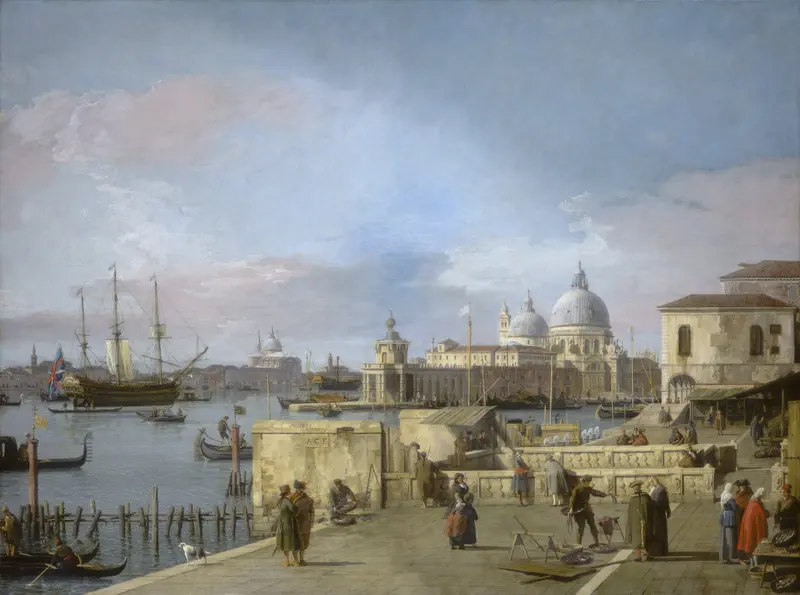
Venice: The Molo towards the Dogana and Santa Maria della Salute
Canaletto

Venice: The Piazzetta
Canaletto
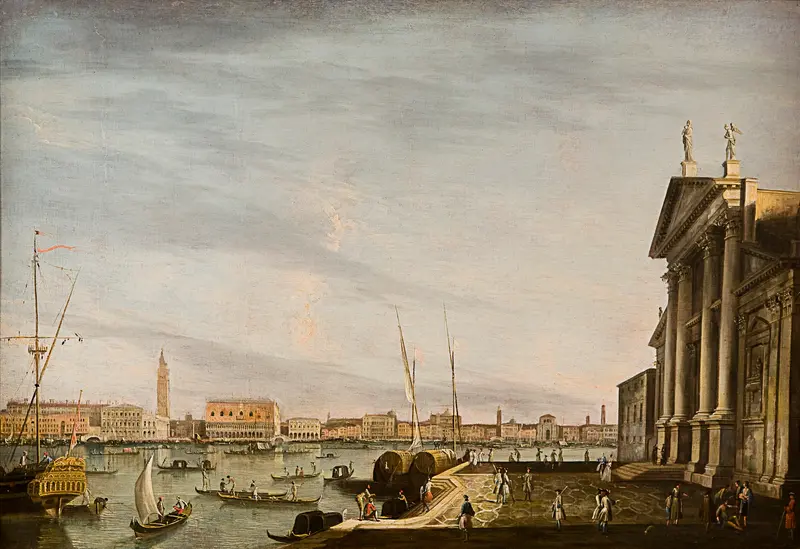
Venice, View of San Giorgio Maggiore
Canaletto

London: The Thames from Somerset House Terrace towards Westminster
Canaletto


