
Louvain — History & Facts
Each stroke of paint, a whisper from the past, beckons us to dive deeper into the intricate world of destiny that unfolds on the surface. Look to the bottom left, where a grey building rises, its shadow stretching across a cobblestone street. The interplay of warm ochres and cool blues creates a vibrant dialogue, inviting you to navigate the path leading into the heart of the scene. Notice the way light dances on the rooftops, suggesting an imminent change, while delicate details emerge in the figures that traverse the street, their expressions caught between hope and uncertainty. The contrast between the bustling life portrayed and the stillness of the architecture embodies a moment of tension, hinting at the fragility of existence.
Each figure seems to carry their own fate, interwoven with the fabric of their environment. The looming structure suggests both shelter and confinement, reminiscent of the socio-political climate of the early 20th century, where the world teetered on the brink of transformation. Painted in 1914, this work emerged from Lepère's studio in France, a time of immense change as Europe was on the cusp of the Great War. Known for his mastery in printmaking and the depiction of urban life, the artist captured this moment of profound uncertainty, reflecting both personal and collective destinies, as the world around him began to unravel.
More Artworks by Auguste Louis Lepère
Browse all →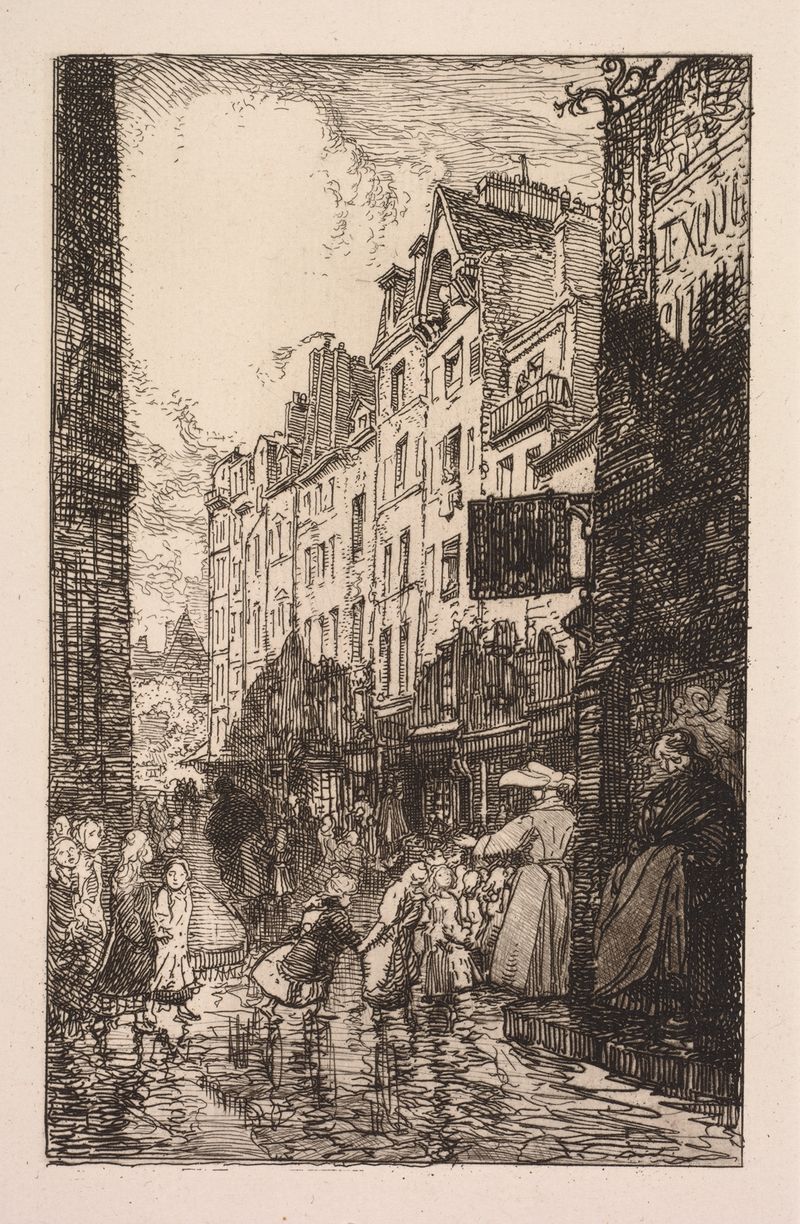
La Rue des Prêtres Saint-Séverin
Auguste Louis Lepère
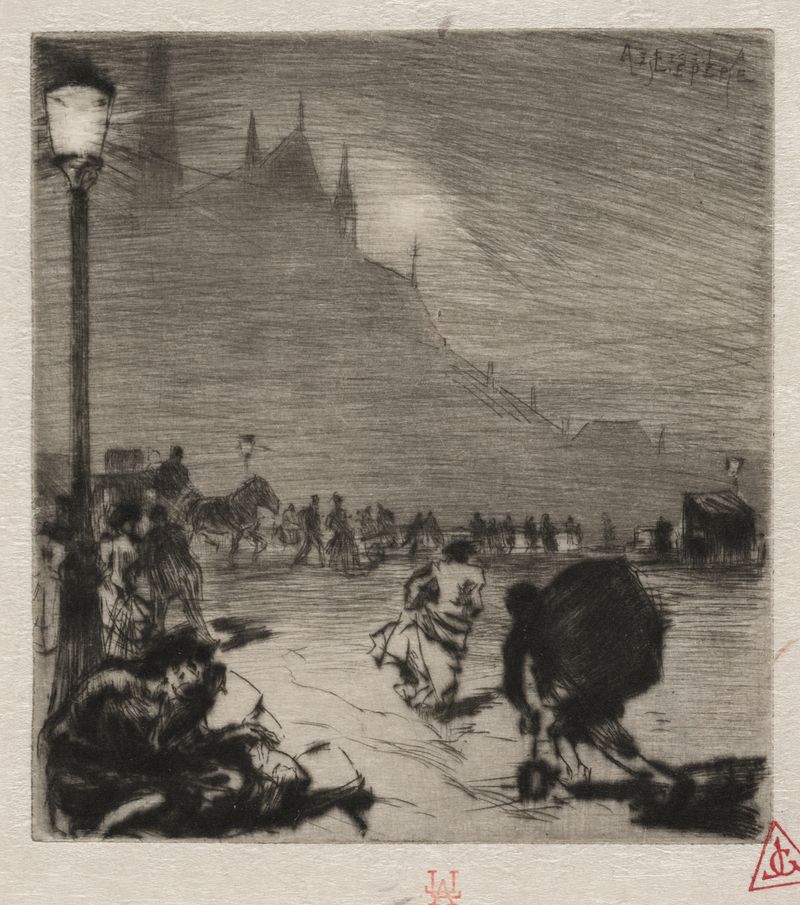
Au Coin du Pont-aux-Doubles
Auguste Louis Lepère
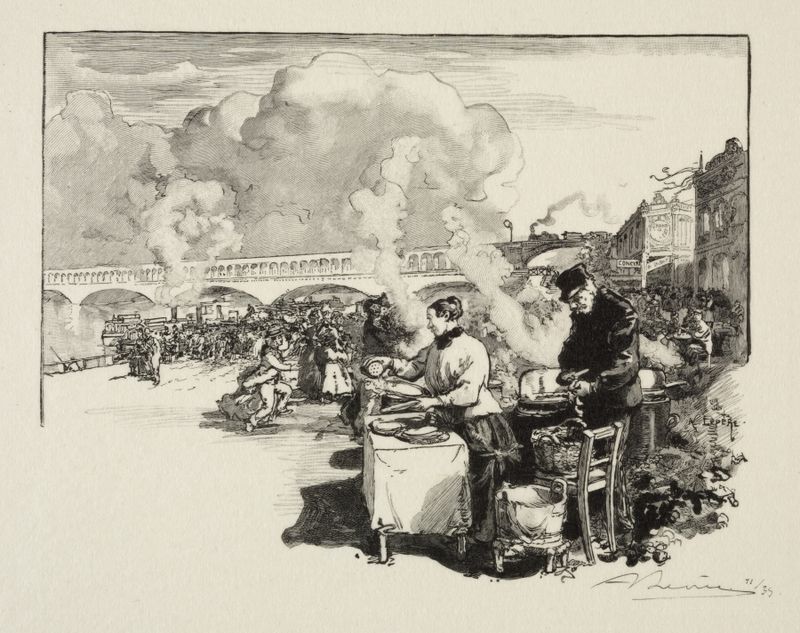
Debarcadère des bateaux-omnibus
Auguste Louis Lepère

La Seine, au quai de la Rapée
Auguste Louis Lepère
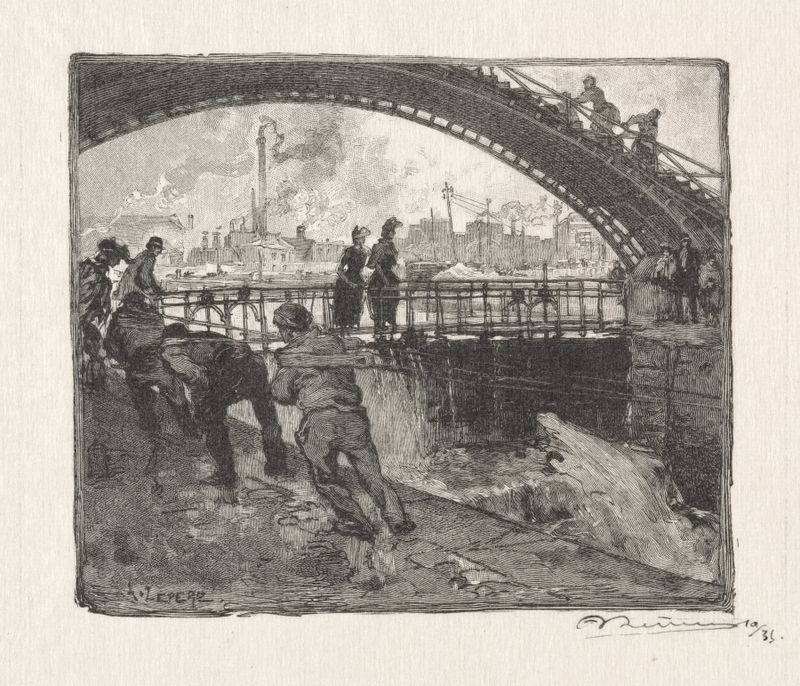
L’Ecluse du Canal St. Martin
Auguste Louis Lepère

Le Boulevard Montmartre, le Soir
Auguste Louis Lepère

Une Chasse au Mont Gérard
Auguste Louis Lepère
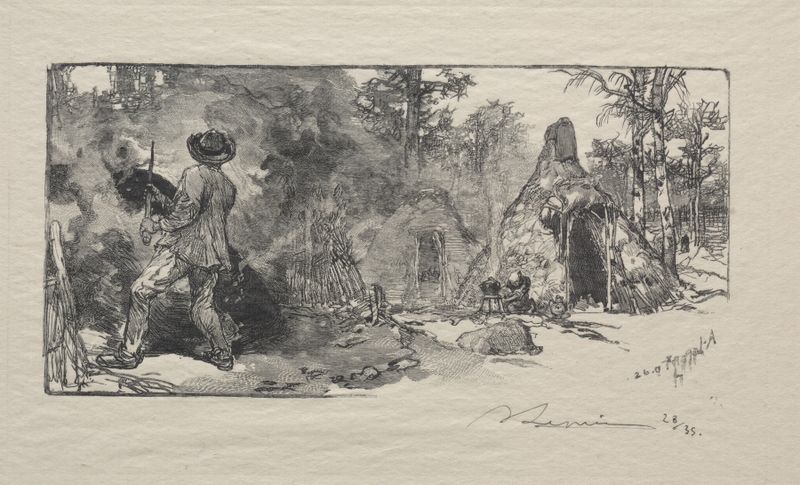
Les Charbonniere
Auguste Louis Lepère
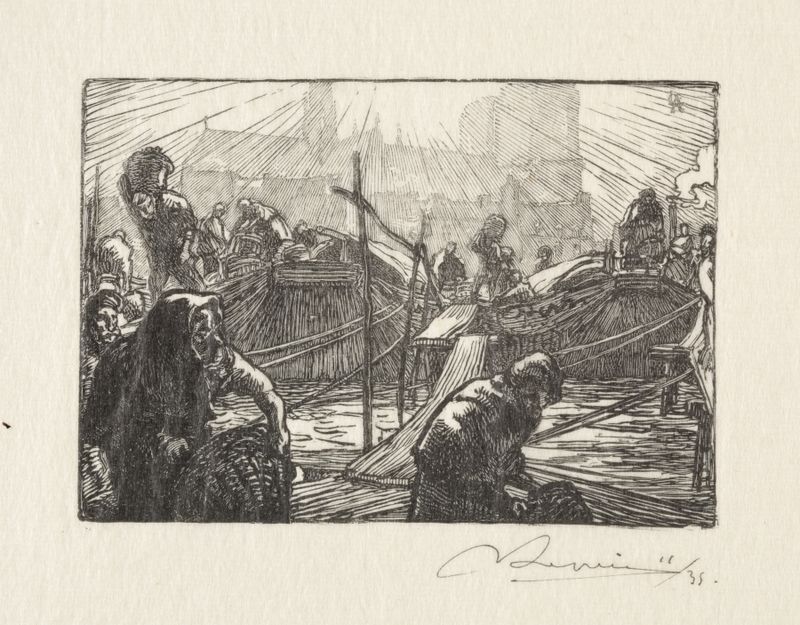
Notre Dame vue du Marché aux pommes
Auguste Louis Lepère

Le Palais des Arts Liberaux, Intèrieur
Auguste Louis Lepère





