Discover insights about this artwork
Low Tide at Pourville, near Dieppe — History & Facts
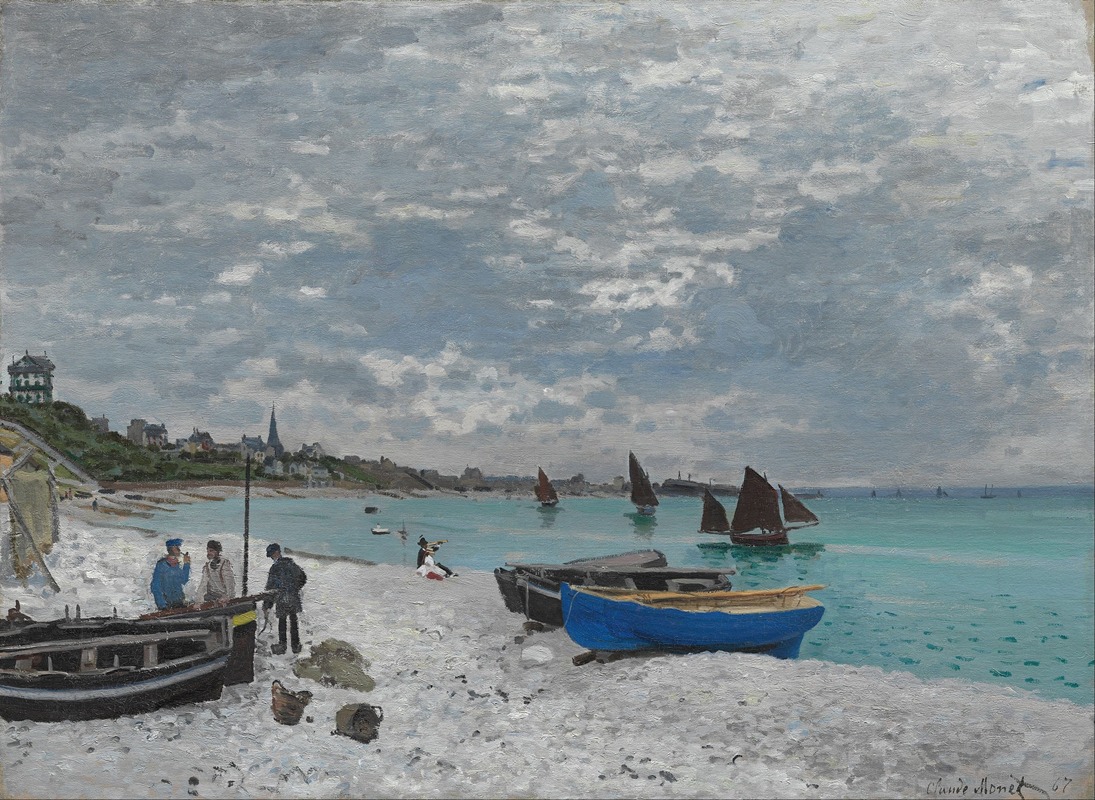
In Low Tide at Pourville, near Dieppe, Claude Monet captures a tranquil coastal scene. The painting features soft blues and greens, depicting the sea and the sandy shore. Gentle waves lap at the beach, while the sky is filled with light, fluffy clouds.
A few figures can be seen walking along the shore, adding a sense of scale to the landscape. The painting is created using oil on canvas, a common medium for Monet's works. The dimensions are approximately 73 x 92 cm, allowing for a detailed view of the scene. Monet's characteristic brushstrokes are evident, with quick, loose applications of paint that create a sense of movement.
The interplay of light and shadow is masterfully handled, typical of the Impressionist style. Claude Monet painted this work during the summer of 1882 while he was in Pourville, a small coastal town in France. This painting is part of a series that Monet created during his time in the area, capturing the changing light and tides. Interestingly, this piece reflects Monet's fascination with the effects of light on water, a recurring theme in his marine paintings.
Today, it is housed in the Musee d'Orsay, a fitting location for such an iconic work.