
Low Water, Springs — History & Facts
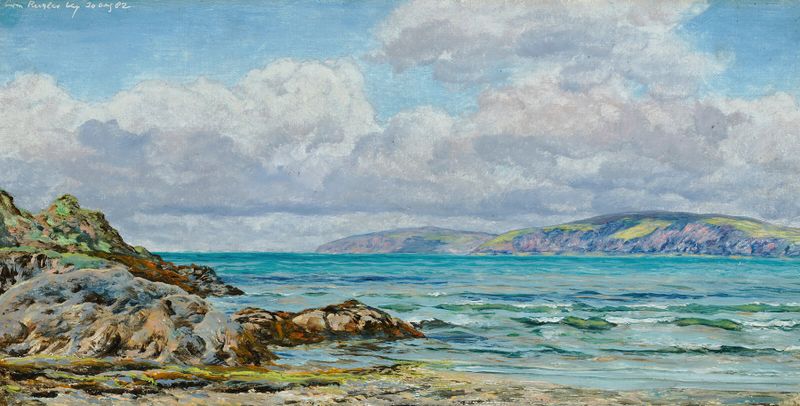
Can paint confess what words never could? In Low Water, Springs, the landscape whispers of longing—a silent yearning that transcends the canvas, echoing in the hearts of those who gaze upon it. Look to the left at the gentle curve of the brook, its water a shimmering ribbon that draws the viewer's eye into the depths of the scene. The soft blues and greens are punctuated by the warm golden hues of sunlight filtering through the trees, creating a harmonious balance that invites contemplation. Notice how the artist’s delicate brushwork captures the texture of the leaves and the smoothness of the stones, lending an almost tactile quality to the painting.
Each stroke is deliberate, revealing both the beauty of nature and the artist's deep emotional connection to it. Delve deeper and you will find a juxtaposition of serenity and solitude. The stillness of the water mirrors an inner reflection, while the distant hills seem to cradle the scene in a protective embrace. There is a sense of absence—a longing for something just beyond reach, perhaps the fleeting moments of joy that life offers.
The carefully rendered details serve as reminders of both what is present and what is lost, urging the viewer to confront their own yearnings and memories. In 1891, Brett worked on Low Water, Springs in England, during a time when the Pre-Raphaelite movement was evolving. He sought to blend naturalism with an emotional resonance, drawing inspiration from the changing landscapes around him. At this period, he was grappling with the complexities of modern life while simultaneously celebrating the untouched beauty of nature, reflecting a transition in both his personal journey and the broader art world.
More Artworks by John Brett
Browse all →
The Cornish Coast Near Newquay
John Brett

A View of Felixstowe
John Brett
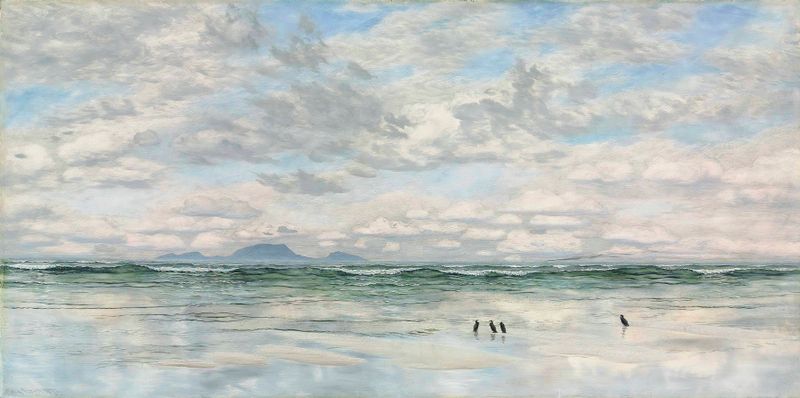
A Summer Day, Whitesands Bay, Pembrokeshire, South Wales
John Brett

Heavy Squall off the Start Lighthouse
John Brett

Kynance
John Brett

Entrance To Yarmouth Harbour
John Brett
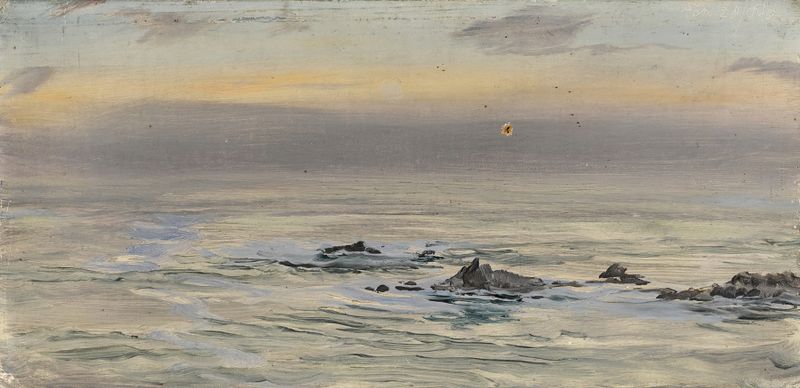
The Close Of A Summer Day
John Brett
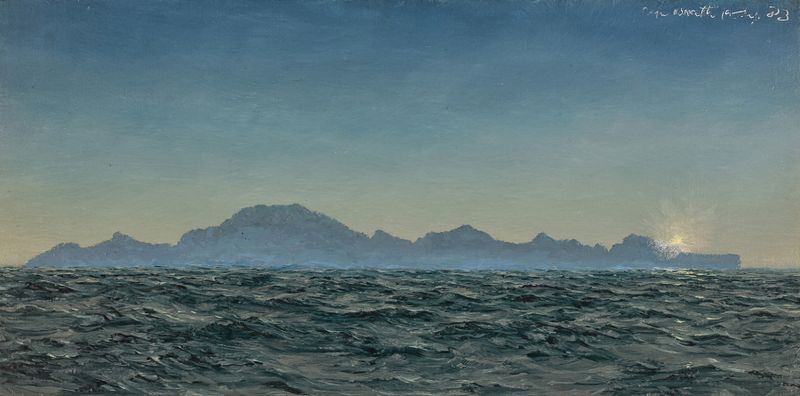
Cape Wrath
John Brett
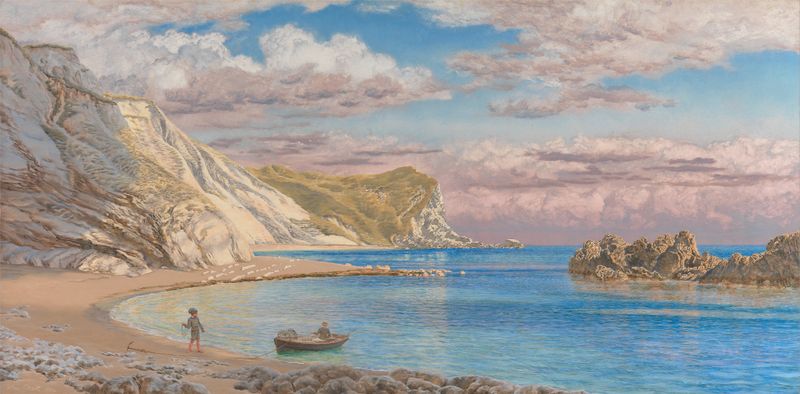
Man of War Rocks, Coast of Dorset
John Brett
Cwm-yr-Eglwys Bay
John Brett





