
Lower Yellowstone Range — History & Facts
In this stillness, the essence of nature's splendor resides, whispering the timeless legacy of the American West. Look to the foreground, where the rugged, undulating terrain rises from the earth, painted in rich earth tones that summon a profound sense of place. The mountains loom majestically, their summits kissed by soft, ethereal clouds that seem to dance in the serene blue sky. Notice how light spills across the canvas, illuminating the peaks while casting shadows that embrace the valleys, creating a dynamic interplay between light and dark that invites the viewer to journey deeper into this breathtaking landscape. Yet, within this representation of nature's grandeur lies an exploration of humanity's place within it.
The towering heights symbolize the aspirations of exploration and adventure, while the valleys reflect the quieter moments of reflection and solitude. The contrast between the vibrant colors of the landscape and the muted tones of the foreground serves to emphasize the coexistence of beauty and danger, a duality reminiscent of the untamed spirit of the wilderness. Each brushstroke captures not only the physical attributes of the land but also the emotional connection it evokes. In 1875, Moran created this masterpiece during a pivotal period of American art, as the nation was beginning to embrace the wilderness as a source of inspiration for identity and pride.
The artist was part of the Hudson River School, which celebrated the American landscape, and he was influenced by the exploration of the West, an era marked by the growing appreciation for national parks. This work is a testament to that moment, capturing the beauty that would become a vital part of America's legacy.
More Artworks by Thomas Moran
Browse all →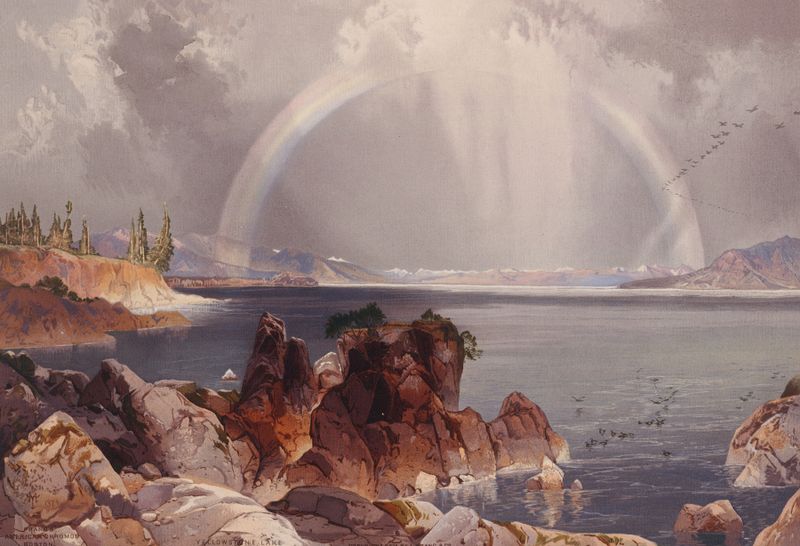
Yellowstone Lake
Thomas Moran

Grand Canyon of the Colorado River
Thomas Moran

Grand Canyon, Colorado River
Thomas Moran

The Towers of Tower Falls, Yellowstone
Thomas Moran
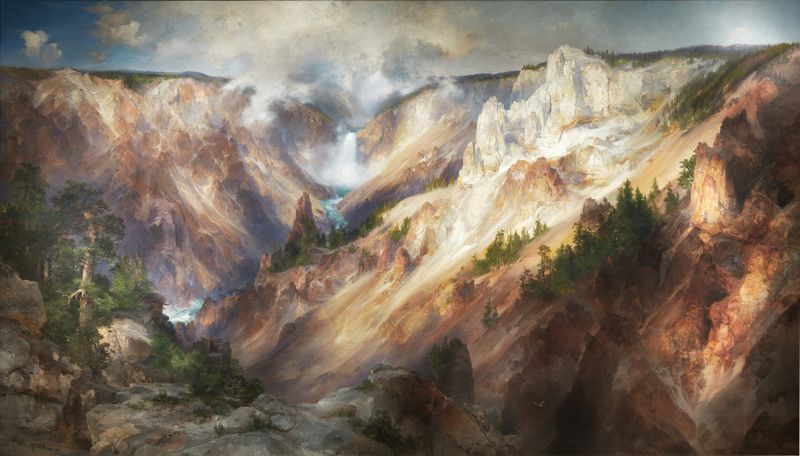
The Grand Canyon Of The Yellowstone
Thomas Moran

Mountain of the Holy Cross
Thomas Moran

Cliffs Of The Upper Colorado River, Wyoming Territory
Thomas Moran
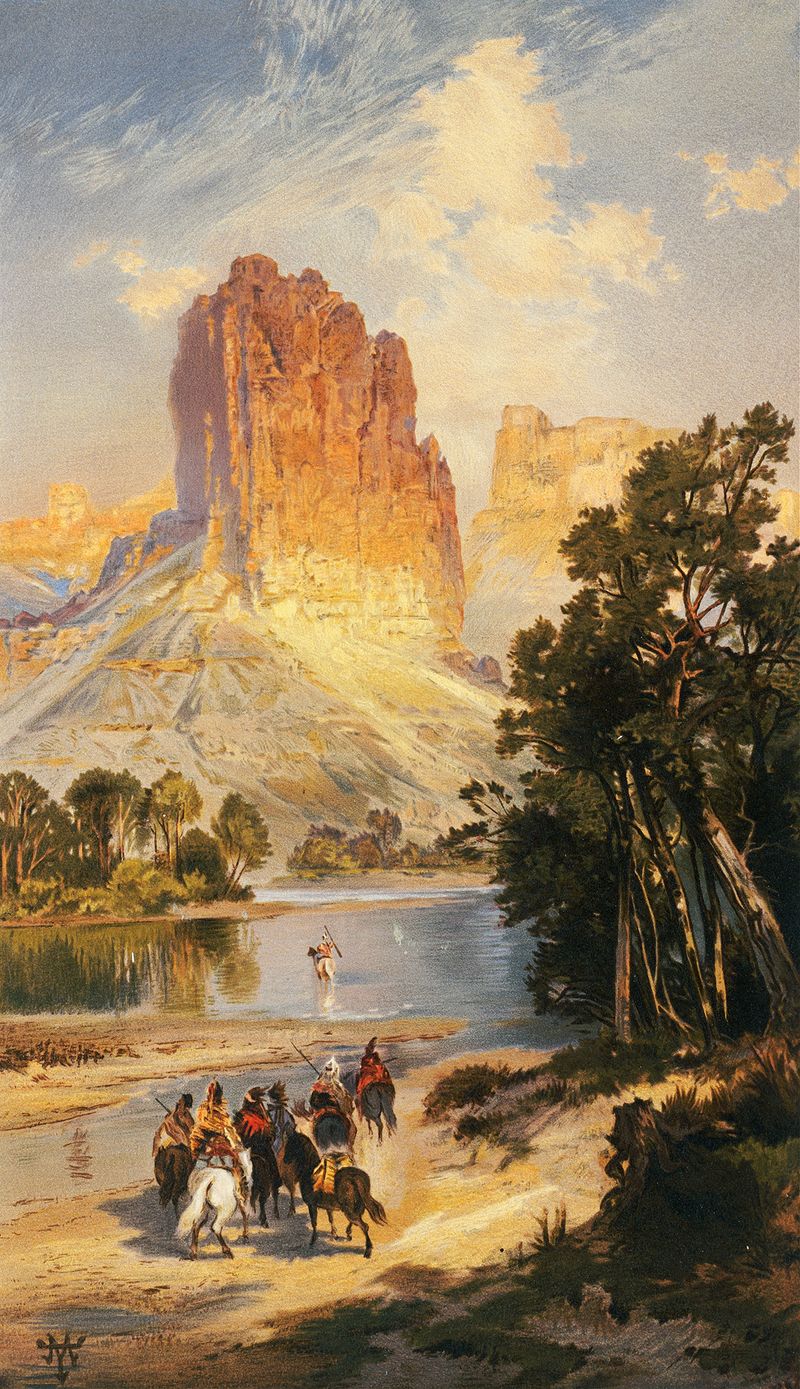
Cliffs of the Upper Colorado River, Wyoming Territory
Thomas Moran

Mammoth Hot Springs, Yellowstone
Thomas Moran
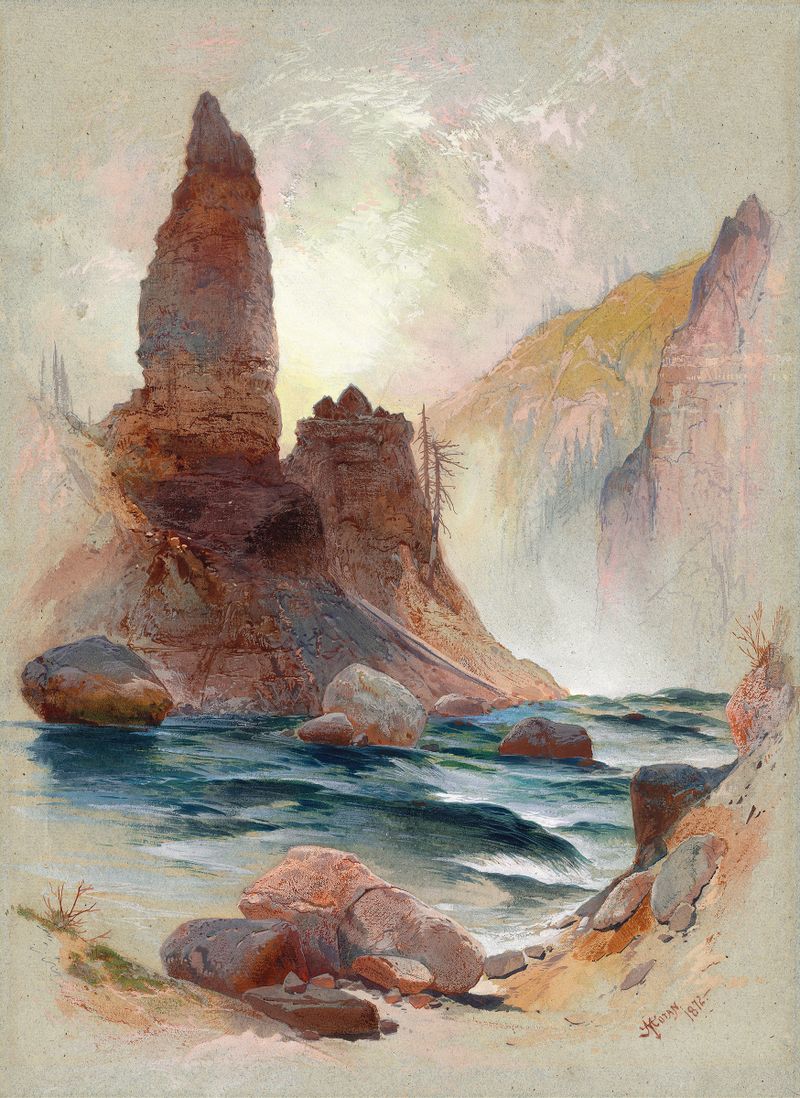
Tower at Tower Falls, Yellowstone
Thomas Moran





