
Lower Yellowstone Range — History & Facts
In the vastness of nature, the absence of sound speaks volumes, echoing legacies both seen and unseen. Thomas Moran’s Lower Yellowstone Range captures a moment where the land, steeped in history, invites contemplation and reverence. Look to the center of the canvas, where rugged peaks rise majestically against a delicate sky. The interplay of shadow and light breathes life into the scene, while deep greens and vibrant blues draw your eye through the landscape.
Notice how Moran employs sweeping brushstrokes to mimic the undulating terrain, creating a sense of motion that belies the stillness of the moment. Each detail, from the wispy clouds to the textured foothills, invites the viewer into a world that feels both majestic and intimate. Beneath the surface, this work reflects the tension between human presence and the untouched wilderness. The imposing mountains stand as guardians of time, hinting at nature’s permanence against fleeting human endeavors.
The brilliant colors speak not just of beauty but of the urgency to protect such landscapes and honor their legacy. In every shadow cast by the mountains, one finds whispers of stories untold—of the indigenous peoples who once thrived here and the promise of what is yet to come. In 1874, as America grappled with its identity and expansion into the West, Moran painted this scene during a pivotal time in his career. He was part of the Hudson River School, a movement capturing the grandeur of American landscapes.
The country was on the brink of transformation, with the Yellowstone region pushing the boundaries of what was considered wild and sacred. Moran’s work ignited a passion for conservation, leaving a lasting impact on how we perceive nature’s splendor.
More Artworks by Thomas Moran
Browse all →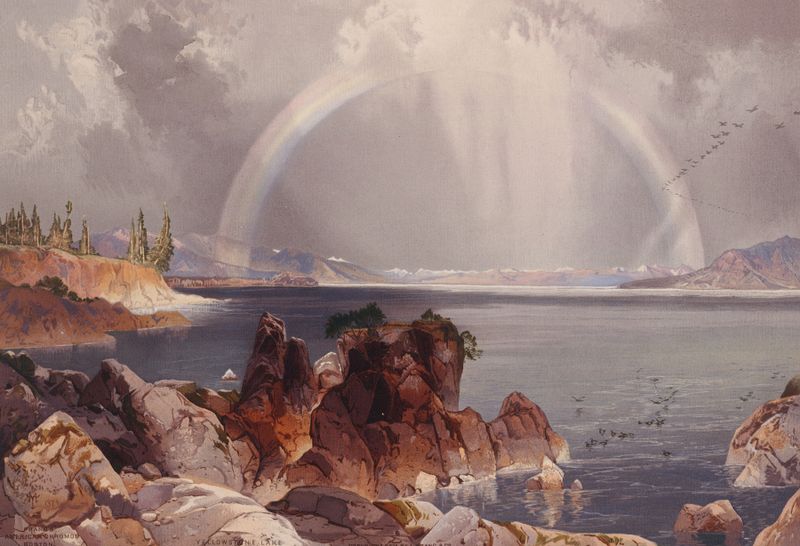
Yellowstone Lake
Thomas Moran

Grand Canyon of the Colorado River
Thomas Moran

Grand Canyon, Colorado River
Thomas Moran

The Towers of Tower Falls, Yellowstone
Thomas Moran
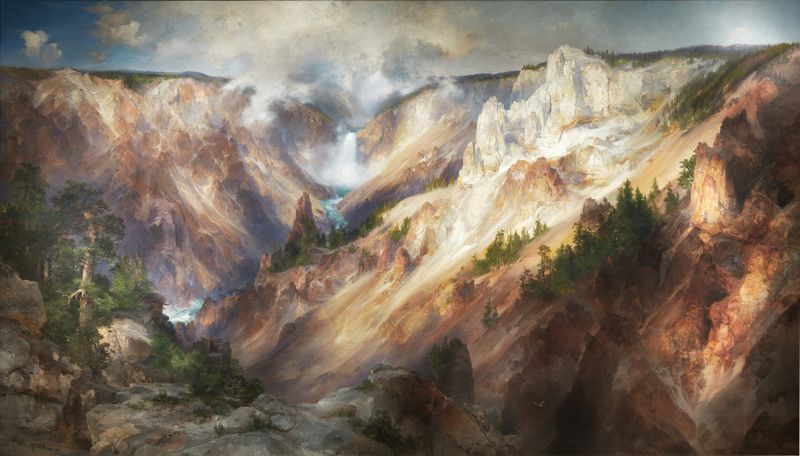
The Grand Canyon Of The Yellowstone
Thomas Moran

Mountain of the Holy Cross
Thomas Moran

Cliffs Of The Upper Colorado River, Wyoming Territory
Thomas Moran
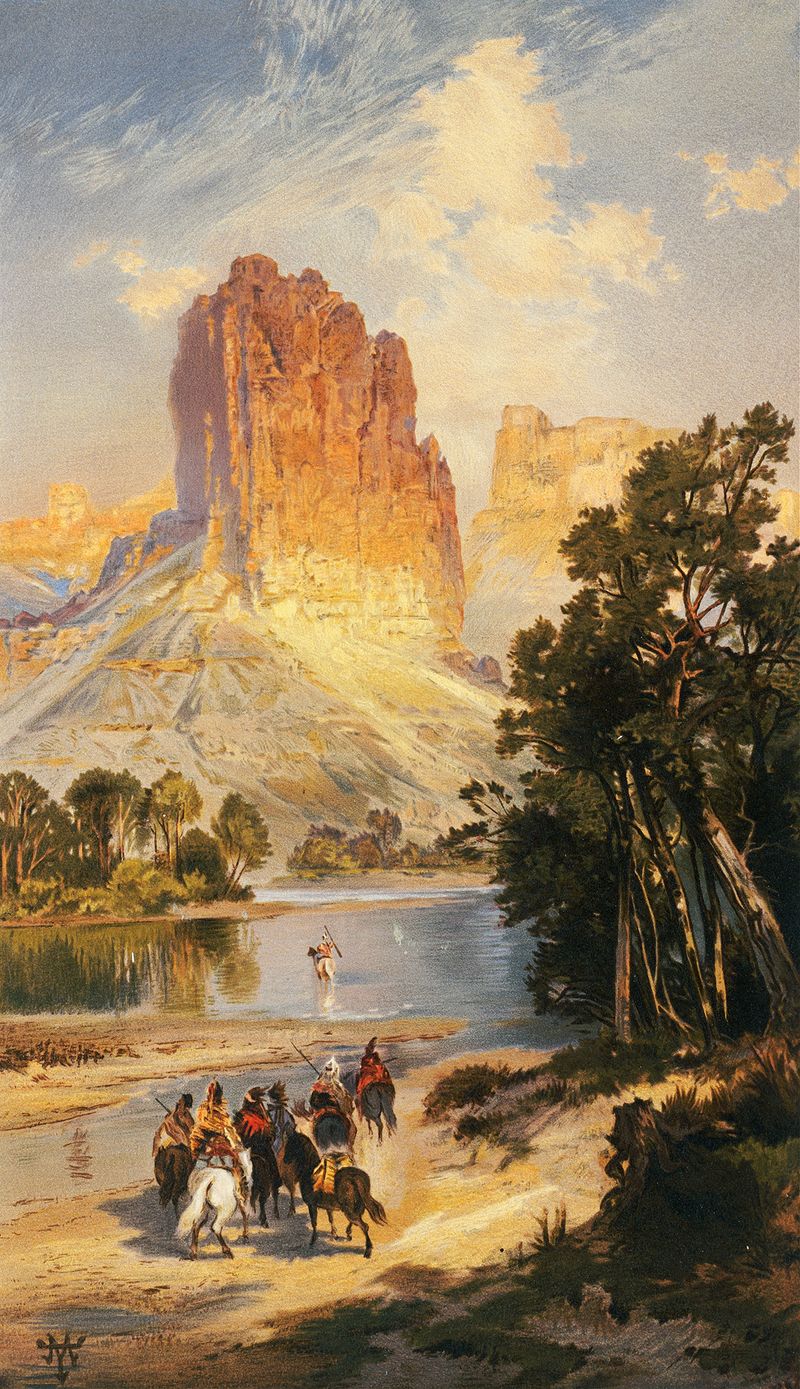
Cliffs of the Upper Colorado River, Wyoming Territory
Thomas Moran

Mammoth Hot Springs, Yellowstone
Thomas Moran
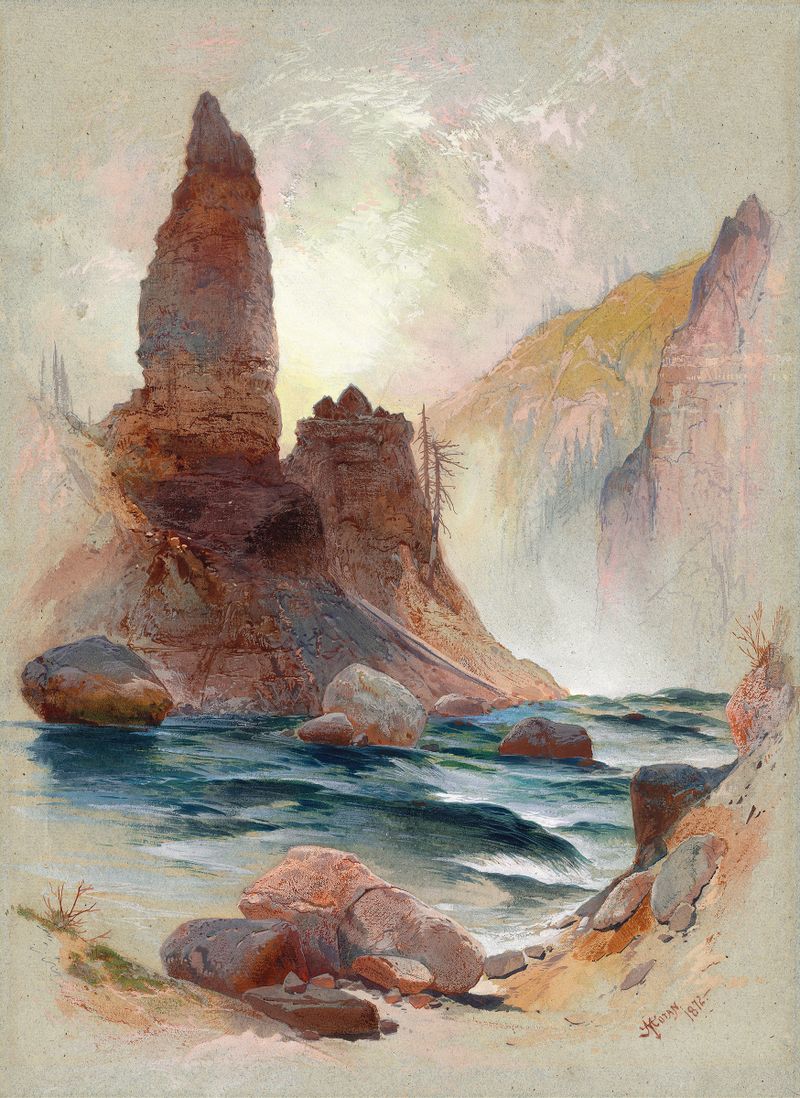
Tower at Tower Falls, Yellowstone
Thomas Moran





