
Madonna with the Blue Diadem — History & Facts
A young woman in a blue diadem sits at the center, gently lifting a transparent veil above a sleeping infant who lies on a vivid blue cloth. Her head is bowed in a tender gesture, her gaze fixed on the child, while her right arm encircles another child who kneels at her side with hands pressed in prayer. The kneeling child, with curly hair and a slender reed cross, looks up in adoration, his small form pressed close to the woman's lap.
The infant rests with one arm curled behind his head and the other draped across his body, his peaceful face framed by soft, golden hair. Behind them, a landscape stretches into the distance, with lush green grass in the foreground and the ruins of a classical arch rising to the left. Through the broken stonework, two tiny figures stand silhouetted against the sky, while further back, a blue haze envelops distant hills and a city.
The light falls from the left, illuminating the woman's pale face and the baby's body, while casting gentle shadows that model the folds of their garments. The woman's robe is painted in soft blue and rose, with creamy highlights that suggest the smoothness of the fabric and the subtle play of light. Her veil and the infant's bedding are rendered with delicate, almost translucent brushwork, contrasting with the solid masonry of the ruins behind them.
The composition is carefully balanced, with the three figures forming a gentle arc that echoes the curve of the ruined arch in the background. Small details, such as the fine strands of the woman's hair and the intricate leaves of the plants at her feet, reveal the artist's attention to naturalistic effects. The blue diadem on the woman's head stands out as a striking accent, its color echoed in the infant's bedding and the distant sky. The title Madonna with the Blue Diadem identifies this scene as the work of Raphael.
The artist arranges the figures in a serene outdoor setting, surrounded by ancient ruins and a luminous sky, creating a sense of calm and timelessness. The painting is attributed to Raphael, whose mastery is evident in the harmonious composition and the subtle gradations of color and light. The overall effect is one of quiet intimacy, as the figures are united by gentle gestures and soft, glowing light.
More Artworks by Raphael

Madonna of the Goldfinch
Raphael

Madonna with the Fish
Raphael
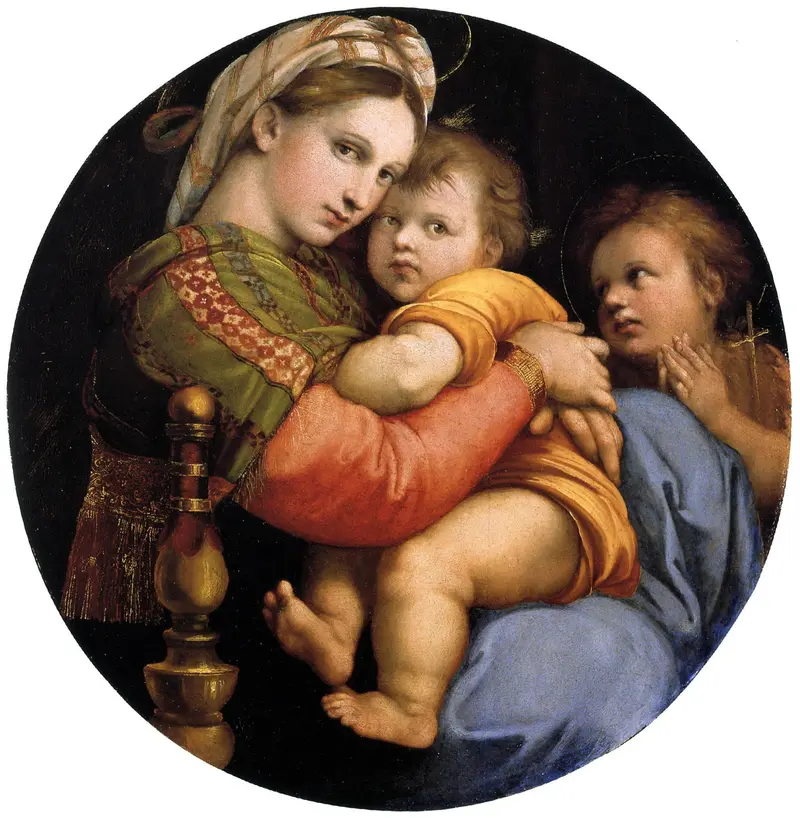
Madonna and Child (Madonna della Seggiola)
Raphael
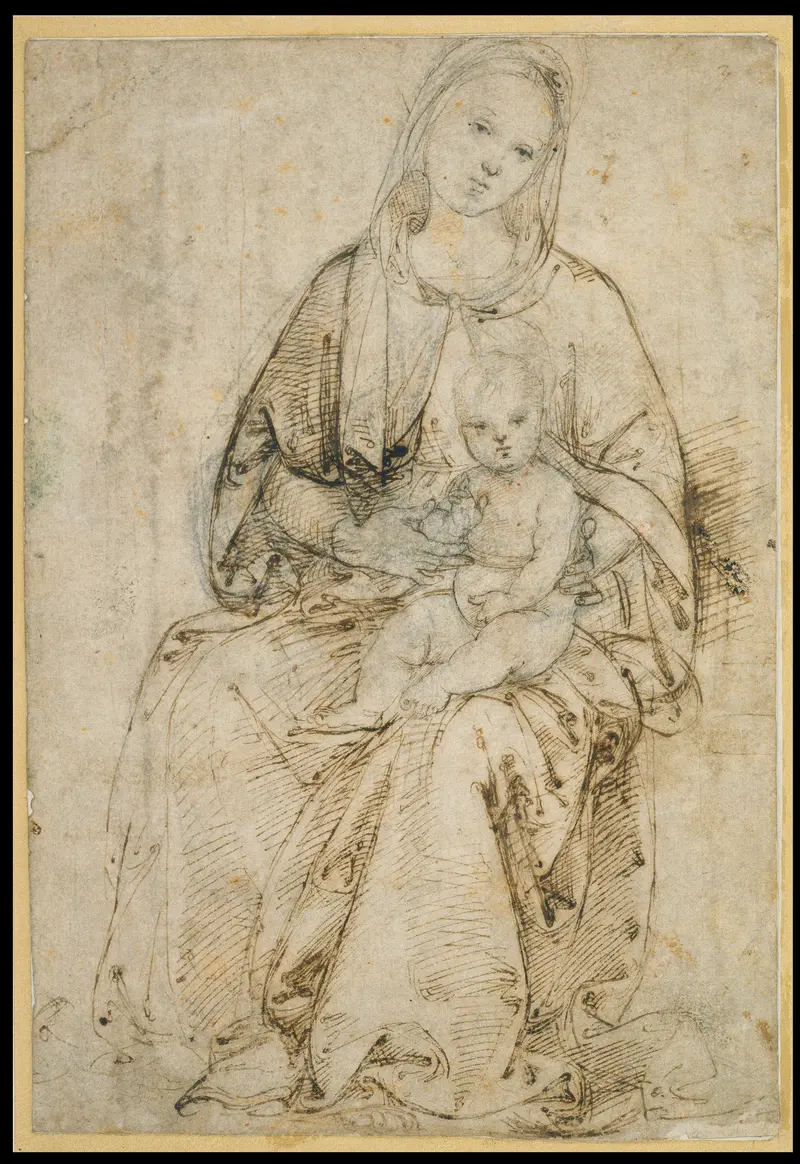
Seated Madonna and Child
Raphael
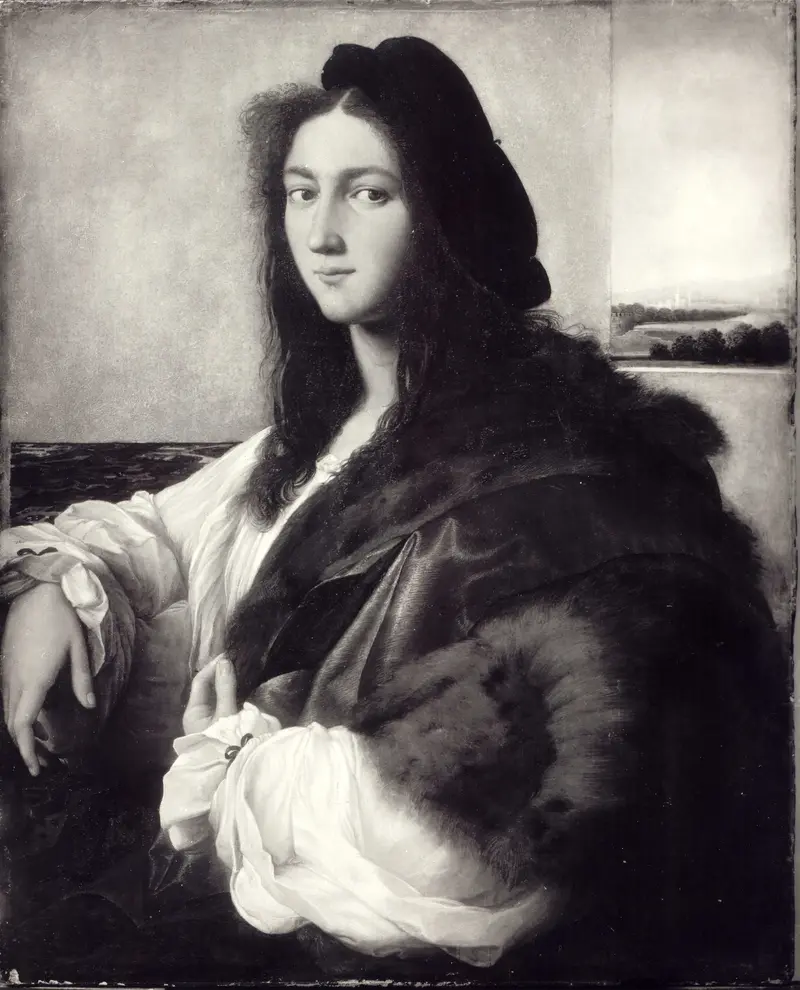
Portrait of a Young Man
Raphael
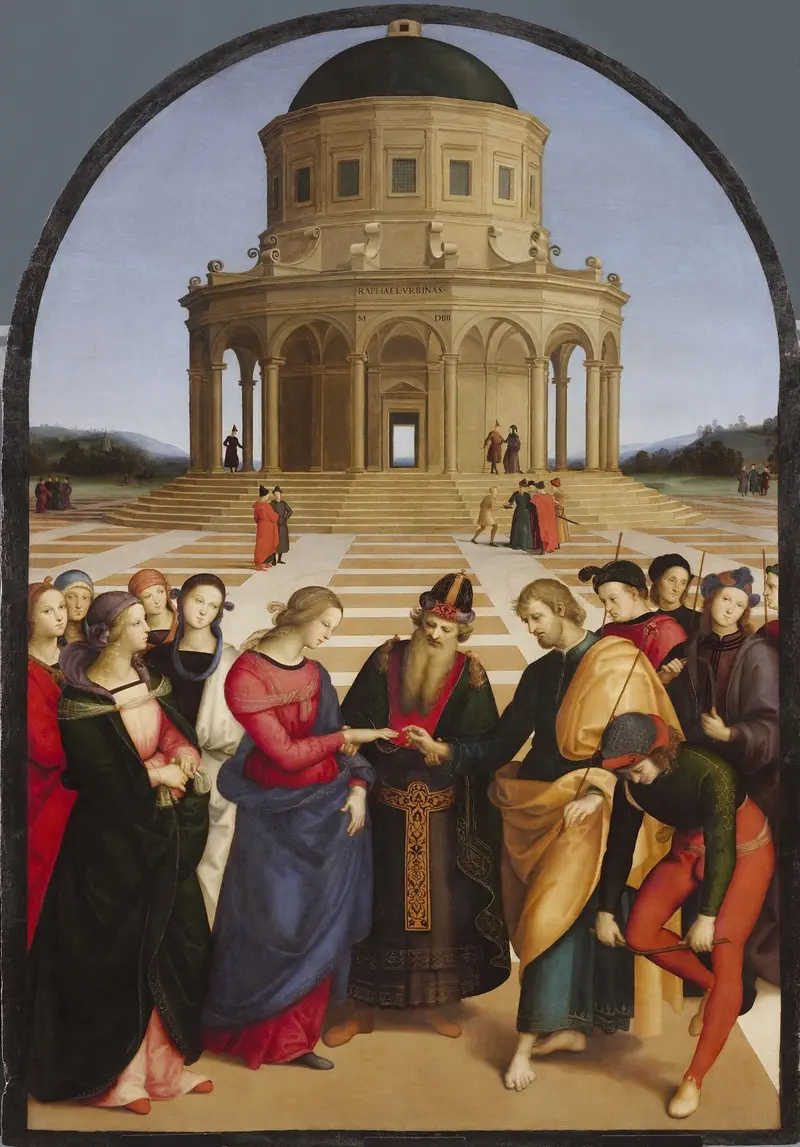
The Marriage of the Virgin
Raphael
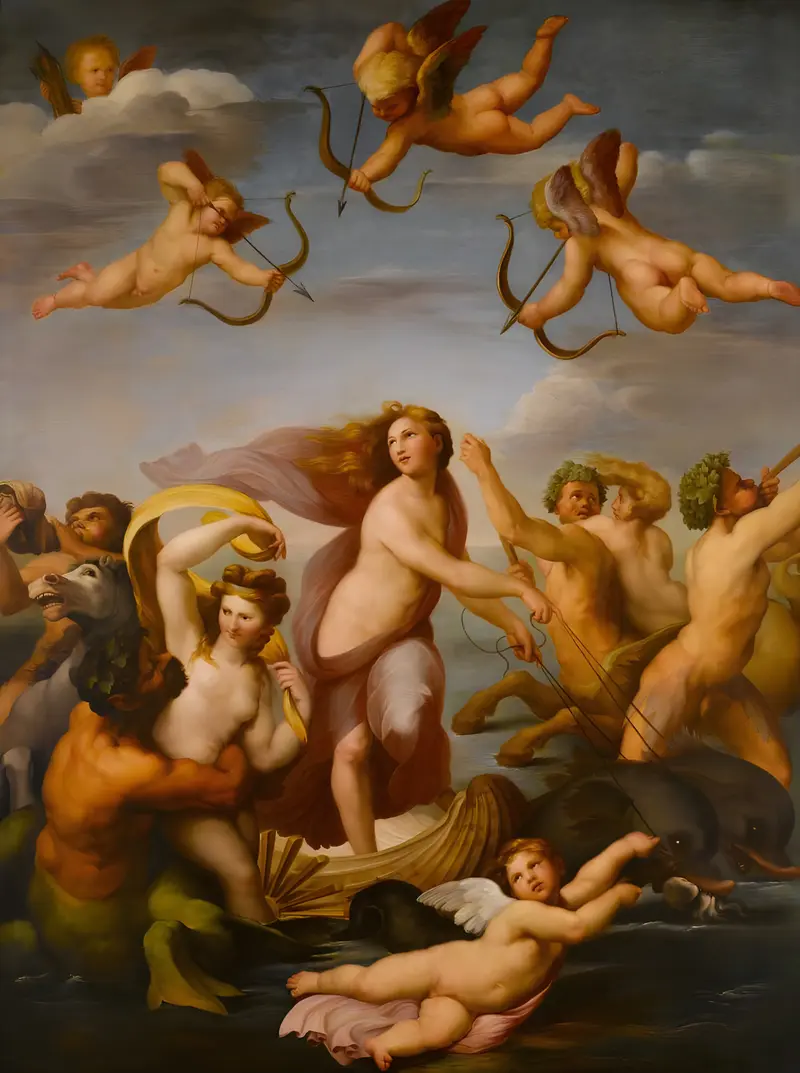
The Triumph of Galatea (copy after Raphael)
Raphael
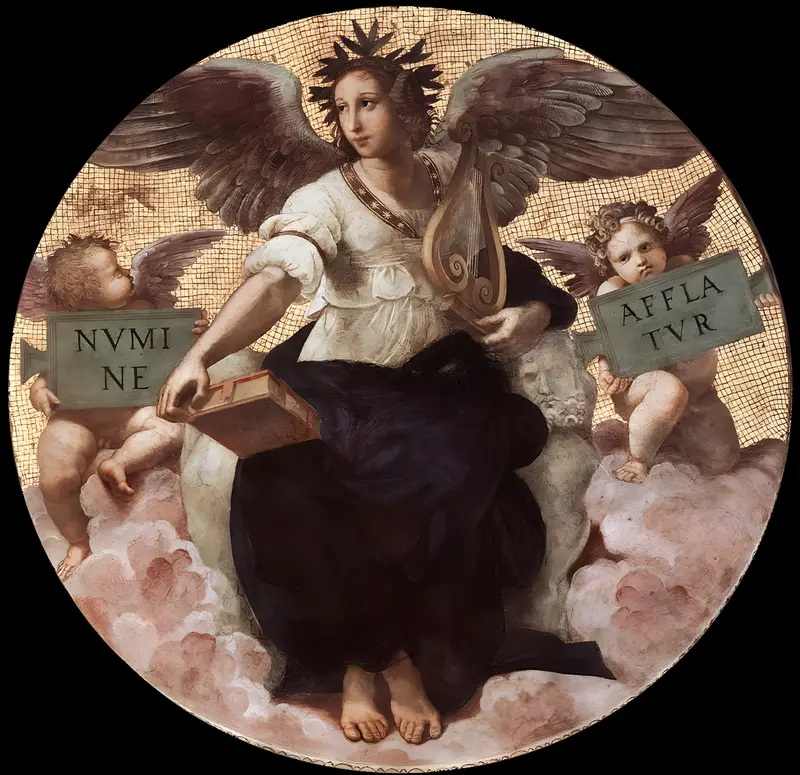
Poetry
Raphael
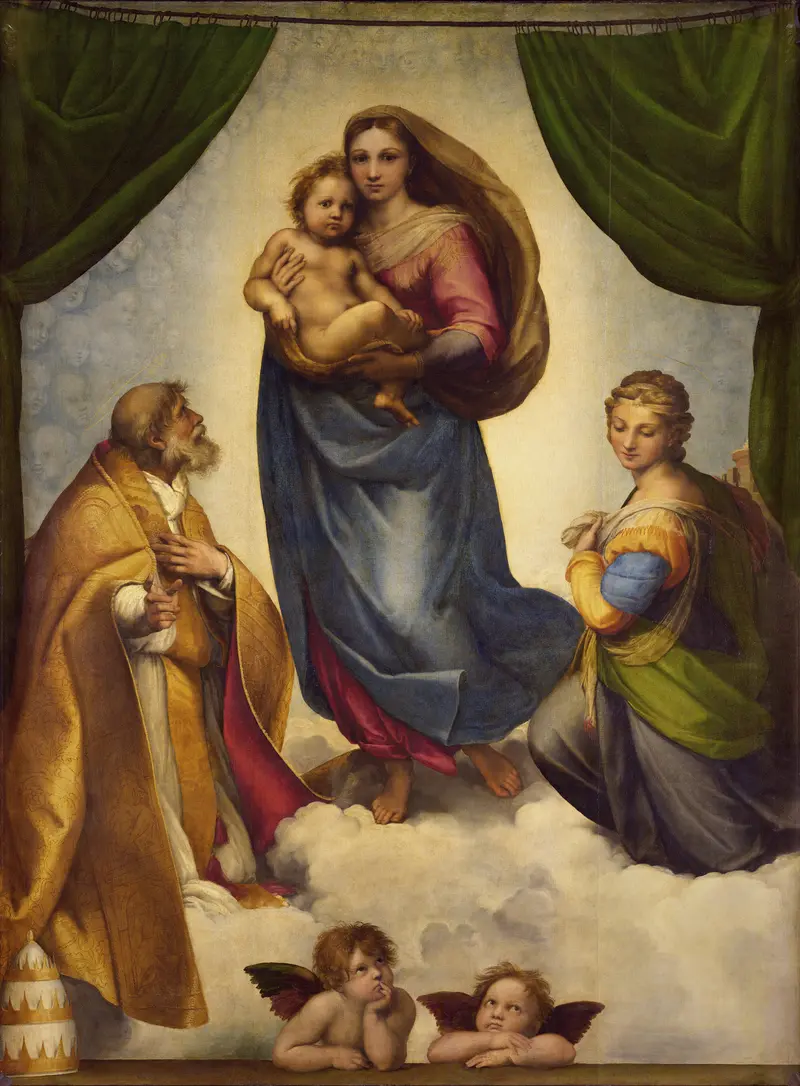
Sistine Madonna
Raphael
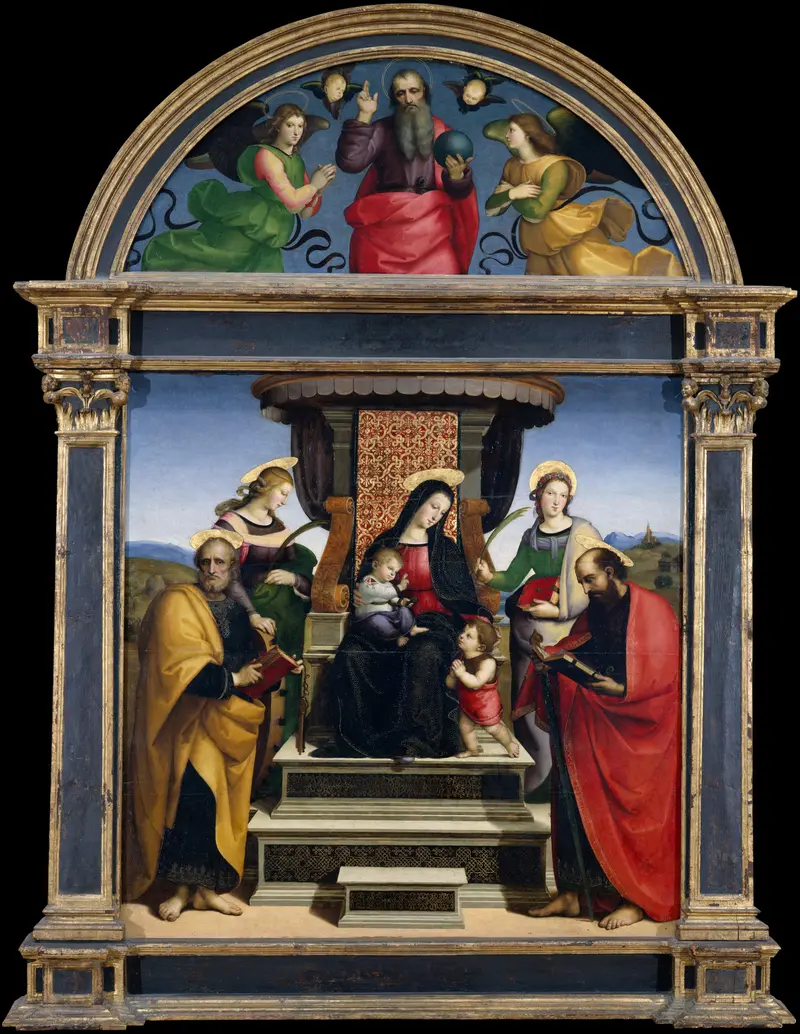
Madonna and Child Enthroned with Saints
Raphael




