
Maisaka — History & Facts
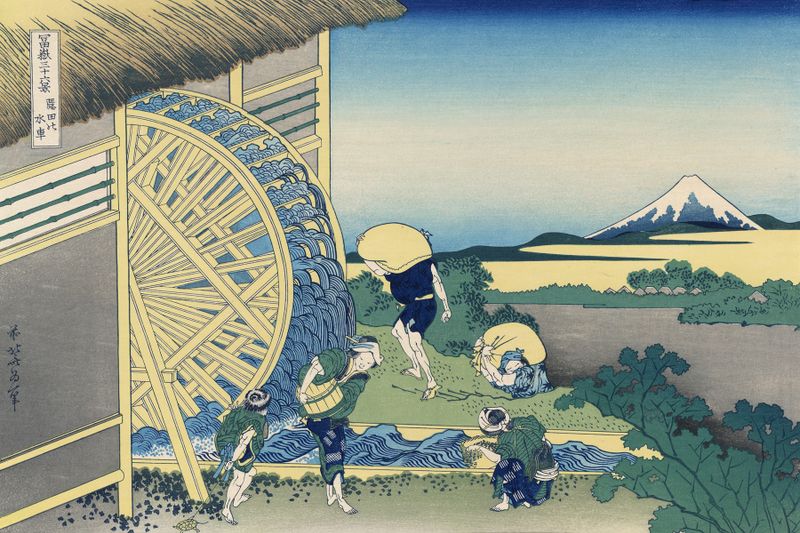
In the stillness of this artwork, divinity emerges from the mundane, reminding us of the profound beauty nestled within the everyday. Look closely at the delicate waves curling across the surface of the water. Notice how the azure and white hues blend seamlessly, creating a rhythmic dance that draws the eye toward the horizon. The composition is masterfully balanced, with towering mountains framing a tranquil waterfront scene, while tiny figures lend a sense of scale and humanity, their forms almost lost in nature's grandeur. Beneath this serene facade lies a complex interplay of human aspiration and the vastness of the divine.
The juxtaposition of the diminutive figures against the expansive landscape evokes a sense of humility in the face of nature’s power. The use of layered colors and intricate detailing not only showcases the artist’s technical prowess but also speaks to a universal longing for connection with something greater than oneself. Painted in 1804 during the Edo period in Japan, this piece reflects Hokusai's transition toward a more personal and expressive style. At this time, he was immersed in the artistic movements of his era, seeking to capture both the beauty of everyday life and the spiritual essence that underpins it.
This work emerges from a moment when Japan was beginning to open up to new influences, yet still retained a deep reverence for its cultural roots, making it a poignant reflection of its time.
More Artworks by Katsushika Hokusai
Browse all →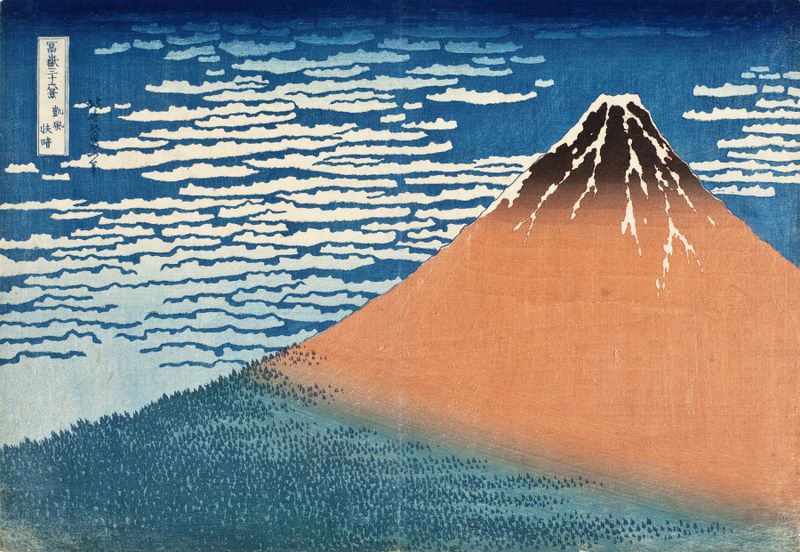
South Wind, Clear Dawn
Katsushika Hokusai

South Wind, Clear Weather
Katsushika Hokusai

Clear Weather with a Southerly Wind
Katsushika Hokusai
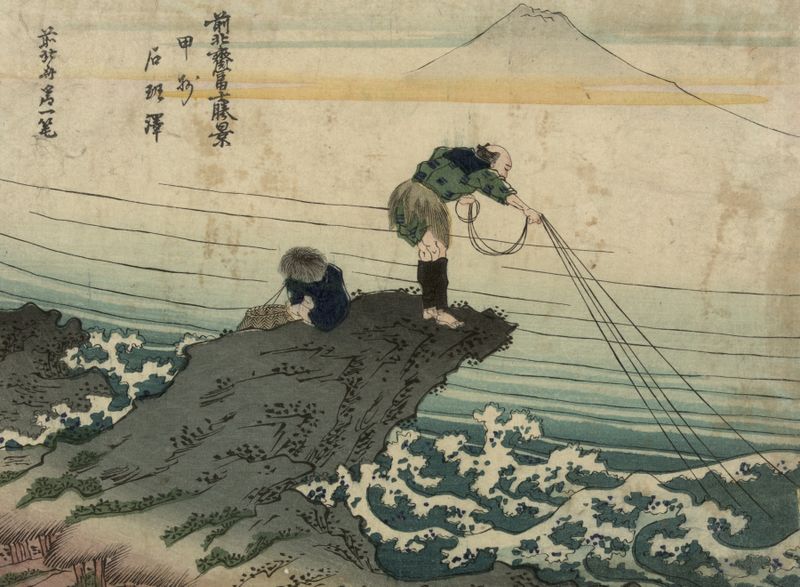
Kōshū kajikazawa
Katsushika Hokusai

Rainstorm beneath the Summit (Sanka Haku-u)
Katsushika Hokusai

Kōshū kajikazawa 2
Katsushika Hokusai
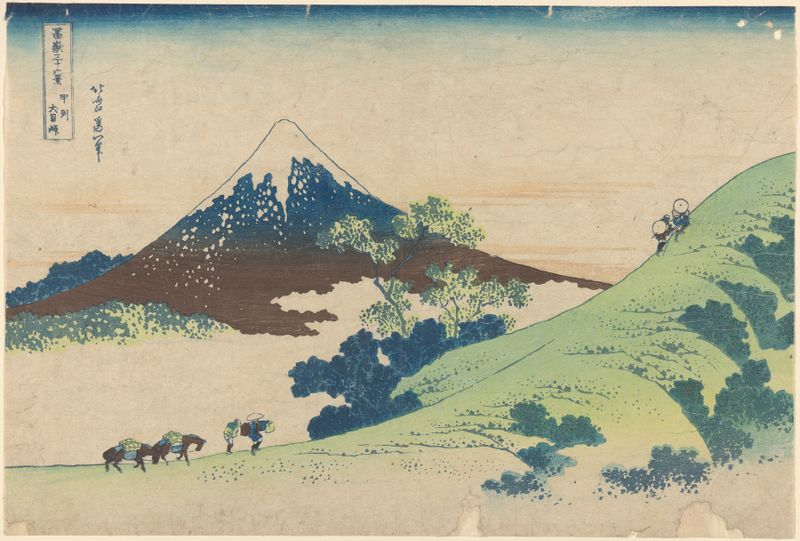
Inume Pass in Kai Province (Kôshû inume-tôge)
Katsushika Hokusai

Yoro Falls in Mino Province (Mino no Yoro no taki), from the series "A Tour of Waterfalls in Various Provinces (Shokoku taki meguri)"
Katsushika Hokusai
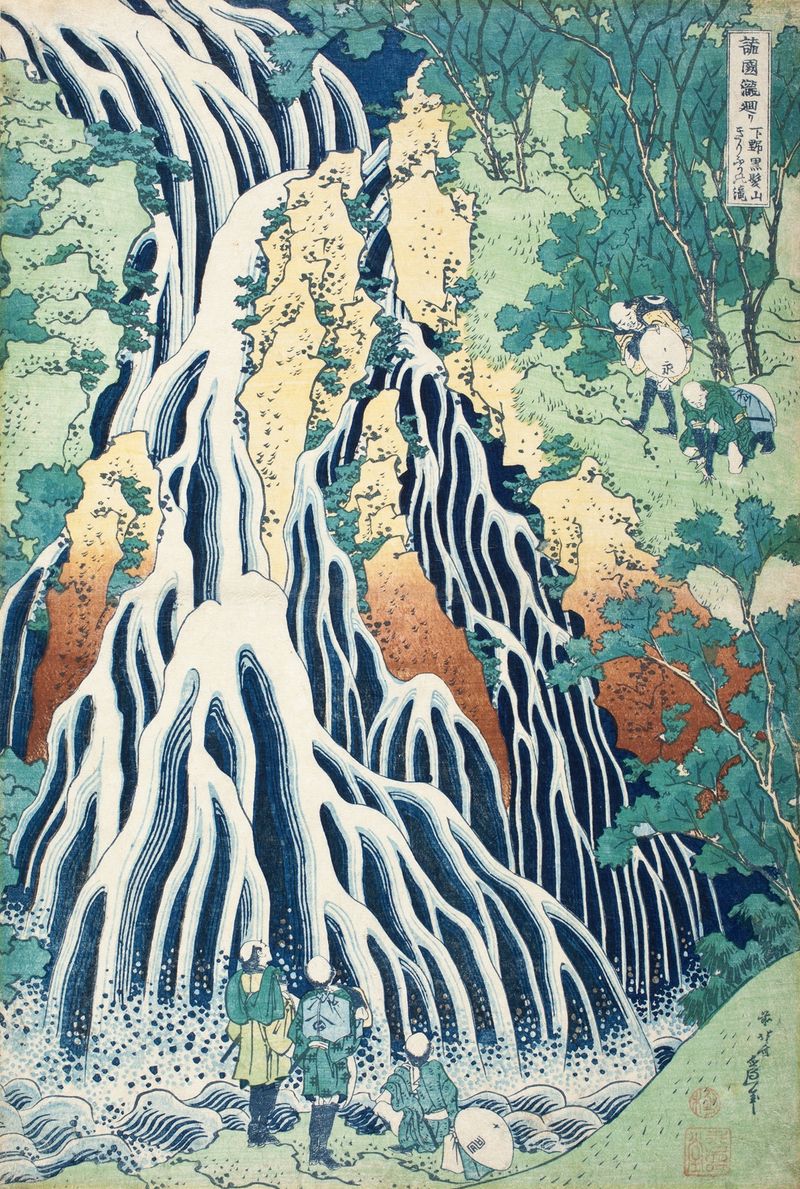
Falls of Kirifuri at Mt. Kurokami, Shimotsuke Province
Katsushika Hokusai
Onden no suisha
Katsushika Hokusai





