Man met saterkop op gesp — History & Facts
What secret hides in the quiet of the canvas? In Man met saterkop op gesp, Giovanni Domenico Tiepolo invites us into a realm where obsession intertwines with everyday life, suggesting that the mundane can harbor the extraordinary. Look to the central figure, a man adorned with a satyr’s head, balanced precariously on a pin or clasp—a striking juxtaposition of the bizarre and the ordinary. The warm earthy tones dominate the palette, creating an inviting atmosphere, yet the sharp detailing of the satyr’s features pulls us into a disconcerting tension. Notice how the light dances along the man’s face, highlighting the uncertainty of his expression as he gazes outward, caught between the world he knows and the fantastical element that distorts it. The contrast between the human and the mythical raises questions about identity and desire—what compels one to adopt a facade that is simultaneously alluring and grotesque? The satyr’s whimsical grin adds a layer of dark humor, a reminder of the thin veil between sanity and madness.
This tension serves as a commentary on obsession; it is both a spectacle and a burden, laying bare the complexities of aspiration and self-perception. Painted in 1774, this work emerged during a period of cultural transformation in Venice, where Tiepolo was deeply engaged in depicting theatrical and allegorical scenes. At this time, he stood at the height of his career, balancing the influence of Rococo aesthetics with the burgeoning Neoclassical movement. The art world was in flux, mirroring Tiepolo's exploration of contrasting themes, and his work became a reflection of an age straddling the line between fantasy and reality.
More Artworks by Giovanni Domenico Tiepolo
Browse all →
Engel met scapulier
Giovanni Domenico Tiepolo
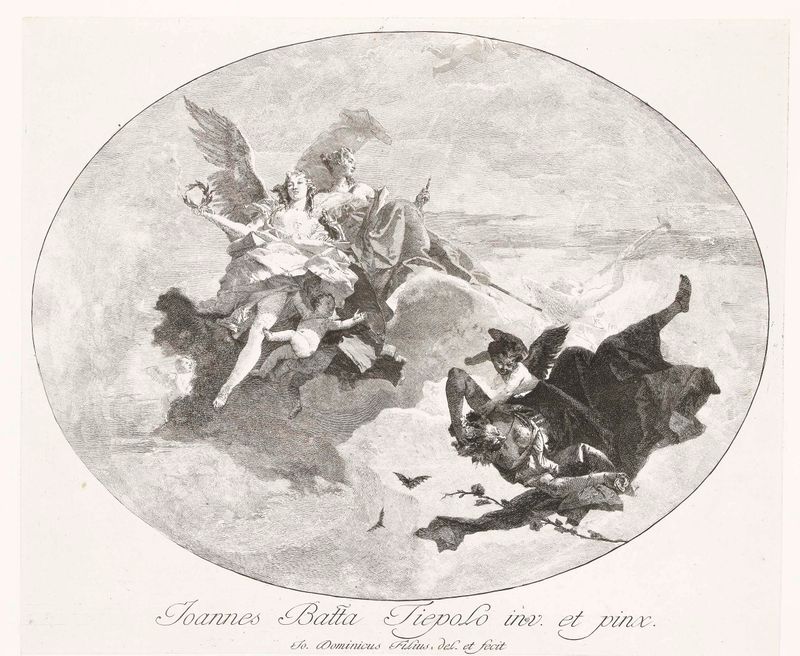
Deugd en Faam verjagen Gierigheid
Giovanni Domenico Tiepolo
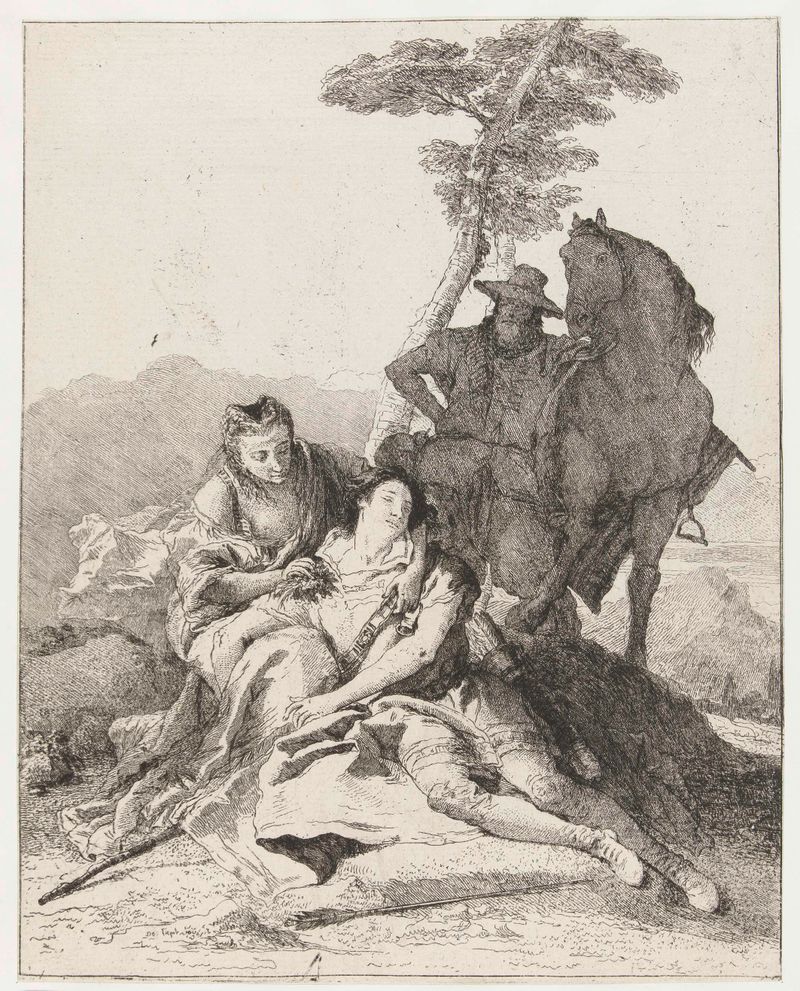
Angelica geneest de wond van Medoro
Giovanni Domenico Tiepolo
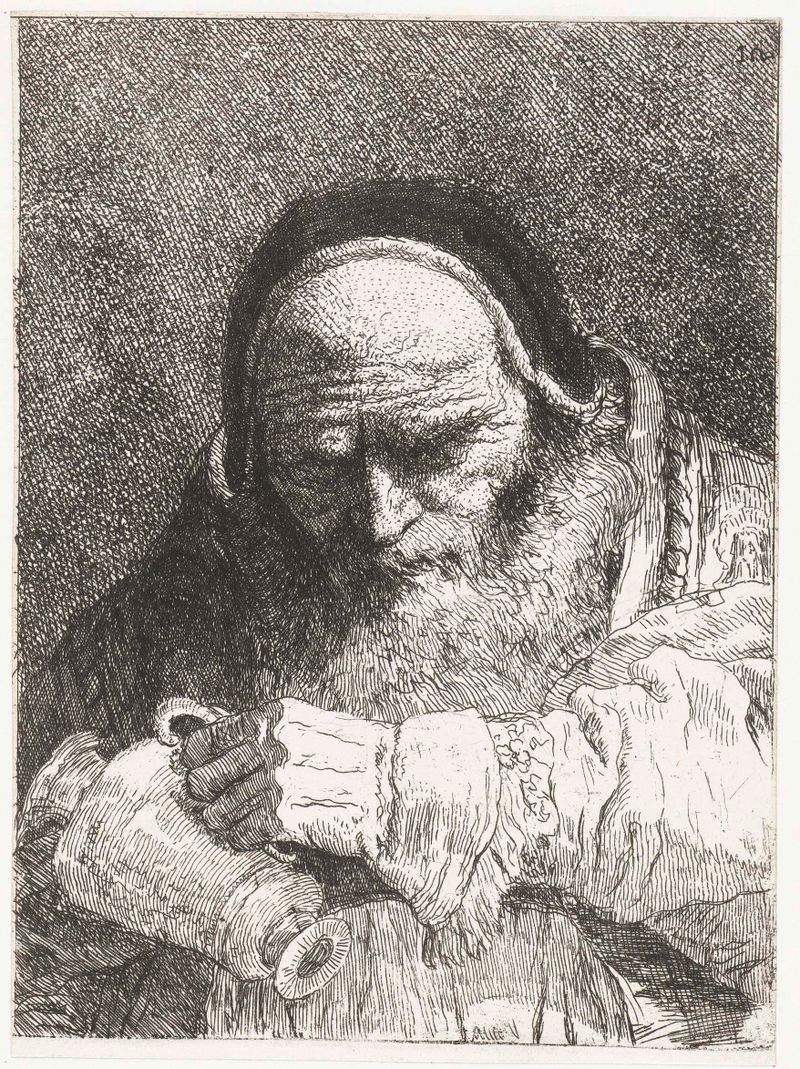
Paus met schenkkan
Giovanni Domenico Tiepolo

Heilige familie vertrekt door een stadspoort
Giovanni Domenico Tiepolo
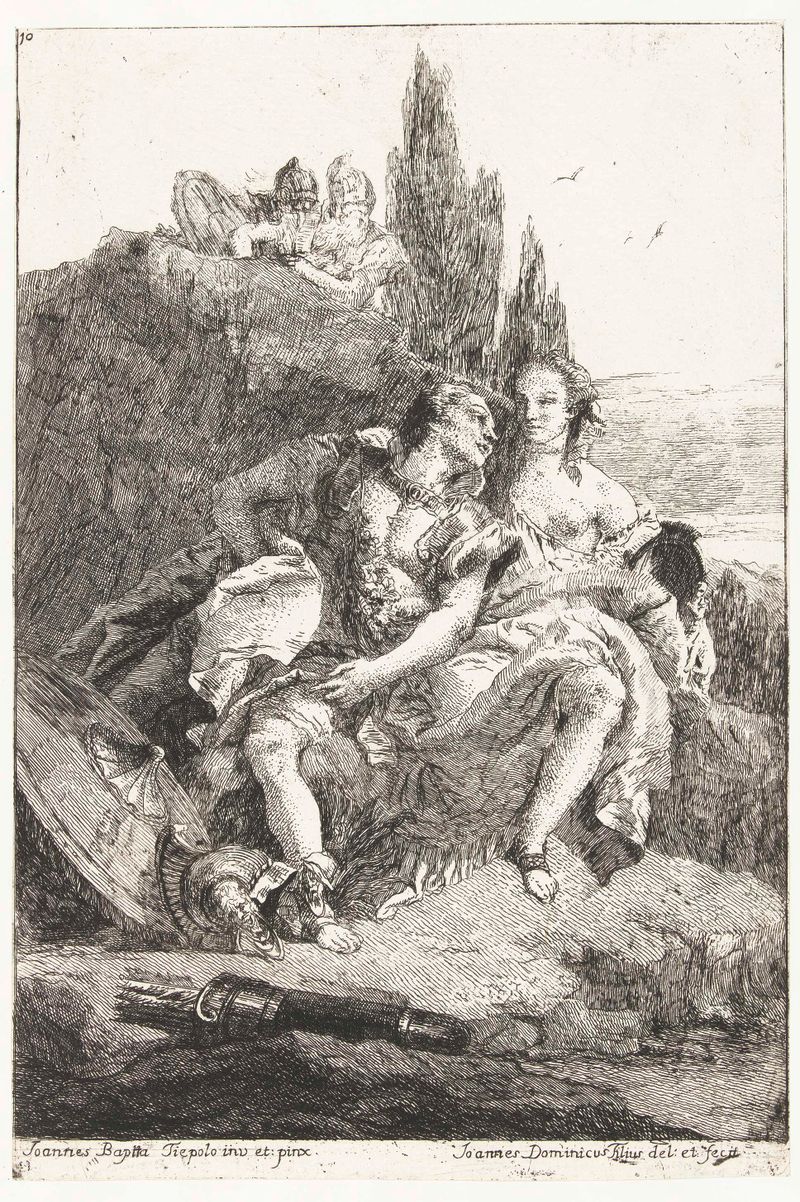
Rinaldo en Armida als liefdespaar aangetroffen bij een meer door twee ridders
Giovanni Domenico Tiepolo
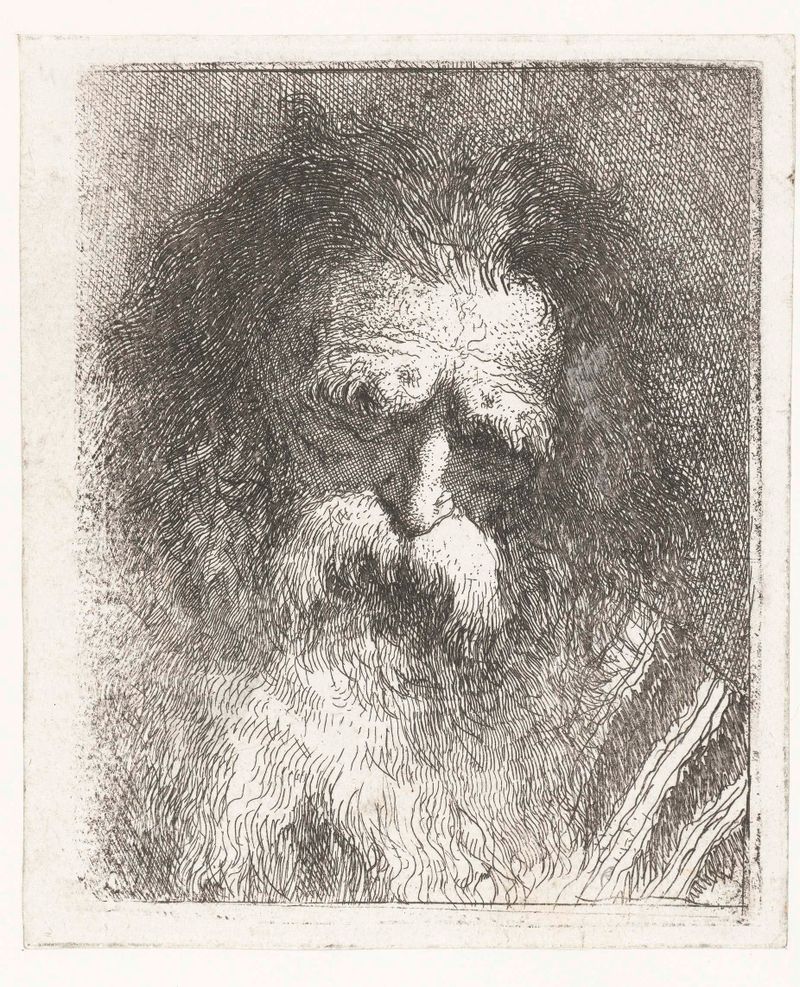
Oude man met borstelige wenkbrauwen en baard
Giovanni Domenico Tiepolo

Man met zwaard
Giovanni Domenico Tiepolo

Man met lange haren en zonder hoofddeksel
Giovanni Domenico Tiepolo

Man met ontblote schouder
Giovanni Domenico Tiepolo