
Mann im Kohlfeld – Wannseegarten — History & Facts
In the soft embrace of early spring, life emerges anew, calling to each of us with a promise of awakening. Begin by directing your gaze to the left, where a solitary figure, clad in muted tones, stands amidst the verdant expanse of a cabbage field. The artist's brushstrokes bring to life the lush greens and earthy browns, contrasting with the vibrant yellows that hint at burgeoning blossoms. Liebermann’s use of light is masterful; it bathes the scene in a gentle glow, suggesting the warmth of the sun filtering through the clouds, illuminating the essence of renewal and the quiet labor of nature. As you absorb the scene, consider the duality of solitude and community.
The man's pensive stance in the field embodies both the weight of responsibility and the peace found in simple toil. Nearby, the sense of hidden life throbs; tender shoots break through the soil, awakening not just the garden but also the man’s connection to the earth. The tension between human presence and the untamed beauty of nature resonates deeply, reminding us that amidst our struggles, there is solace in growth. In 1917, during a turbulent time in Europe, Max Liebermann painted this piece in Germany, reflecting not only his personal journey but also the broader emotional landscape of a war-torn society seeking refuge in the tranquility of nature.
His work encapsulates the spirit of post-impressionism while championing the everyday, a movement toward simplification and the profound appreciation of the natural world as a source of renewal and hope.
More Artworks by Max Liebermann
Browse all →
Die Blumenterrasse in Wannsee mit Blick auf den Fischotterbrunnen
Max Liebermann
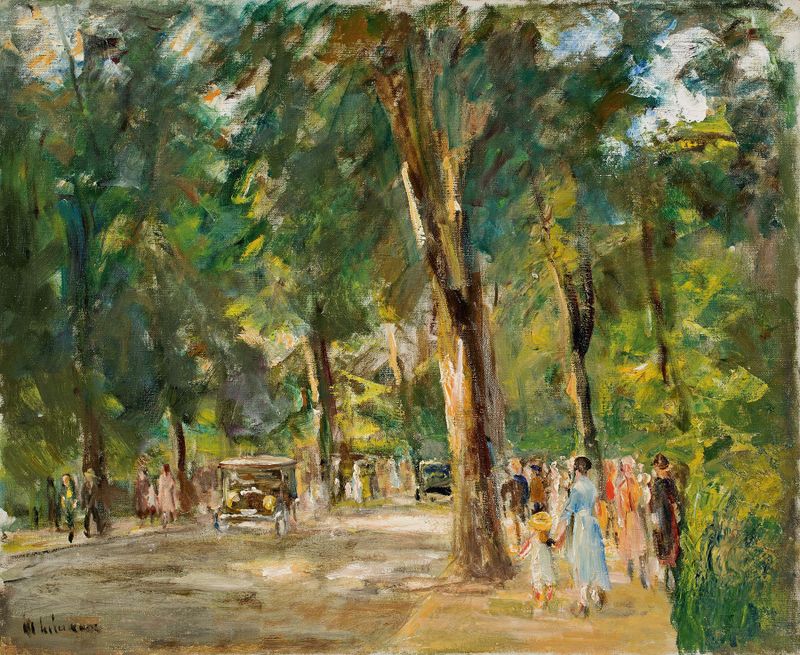
Die Große Seestraße in Wannsee mit Spaziergängern
Max Liebermann

Seitlicher Blick in den Wannseegarten
Max Liebermann

Der Rosengarten in Wannsee
Max Liebermann

Allee mit Spaziergängern und Automobilen
Max Liebermann

Blick in meinen Garten
Max Liebermann
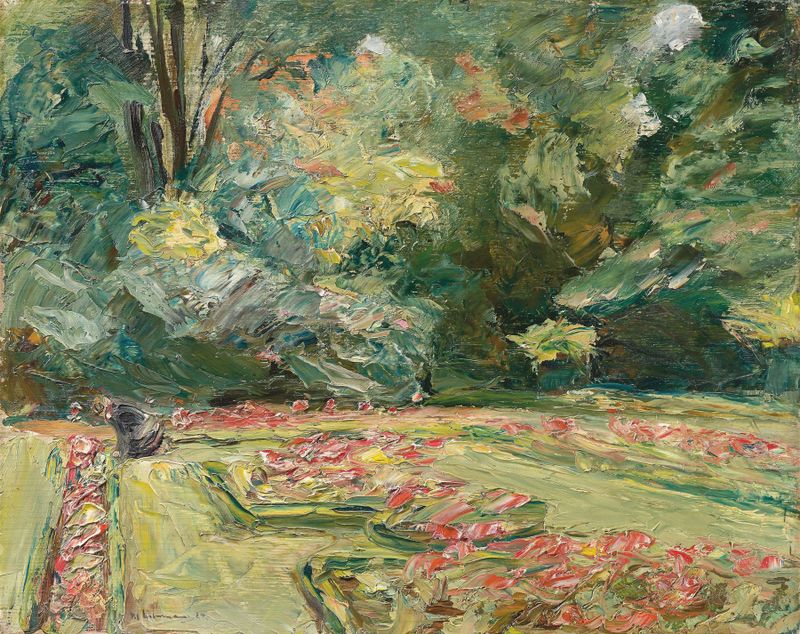
Die Blumenterrasse im Wannseegarten nach Norden
Max Liebermann

Spielende Kinder am Strand
Max Liebermann
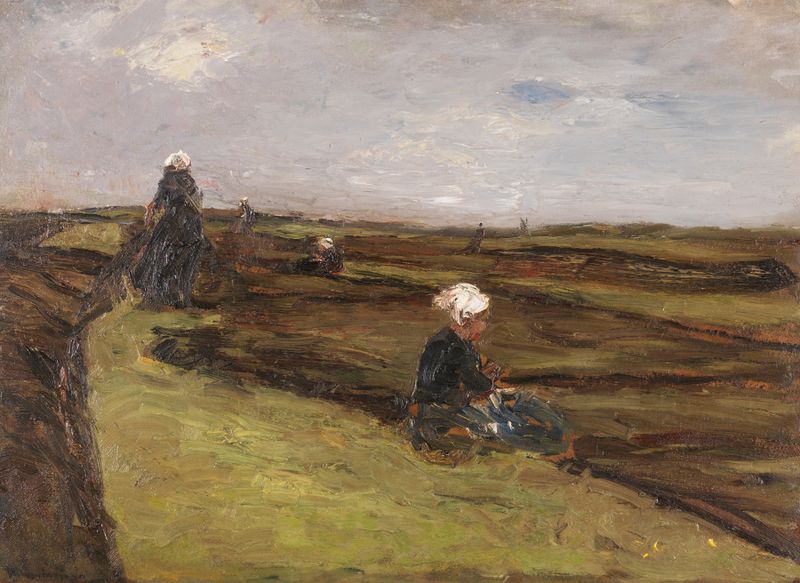
Die Netzflickerinnen
Max Liebermann

Am Strand von Noordwijk
Max Liebermann





