
Manosan yowa no tsuki — History & Facts
In Manosan yowa no tsuki, the viewer is greeted by a tranquil night scene. The colors are soft, with shades of blue and gray dominating the composition. Figures are depicted in traditional clothing, set against a serene backdrop of a moonlit landscape.
The overall atmosphere conveys a sense of calm and introspection. This artwork is a woodblock print, a technique that allows for intricate details and vibrant colors. The use of layering in the printing process creates depth and texture, enhancing the visual experience. The figures are carefully rendered, showcasing Yoshitoshi's skill in capturing the essence of his subjects.
The print exemplifies the Ukiyo-e style, known for its focus on beauty and fleeting moments. Tsukioka Yoshitoshi was a prominent figure in the Ukiyo-e movement during the late Edo and early Meiji periods. Manosan yowa no tsuki reflects his mastery in depicting night scenes, a theme he often explored. An interesting fact about this work is that it captures the beauty of nature and human emotion, a hallmark of Yoshitoshi's art.
His works continue to influence contemporary artists and are celebrated for their historical significance.
More Artworks by Tsukioka Yoshitoshi

Frost fills the air and the autumn air is still/lines of returning geese cross the moon in the third hour-Kenshin, from the series Twelve Aspects of the Moon
Tsukioka Yoshitoshi
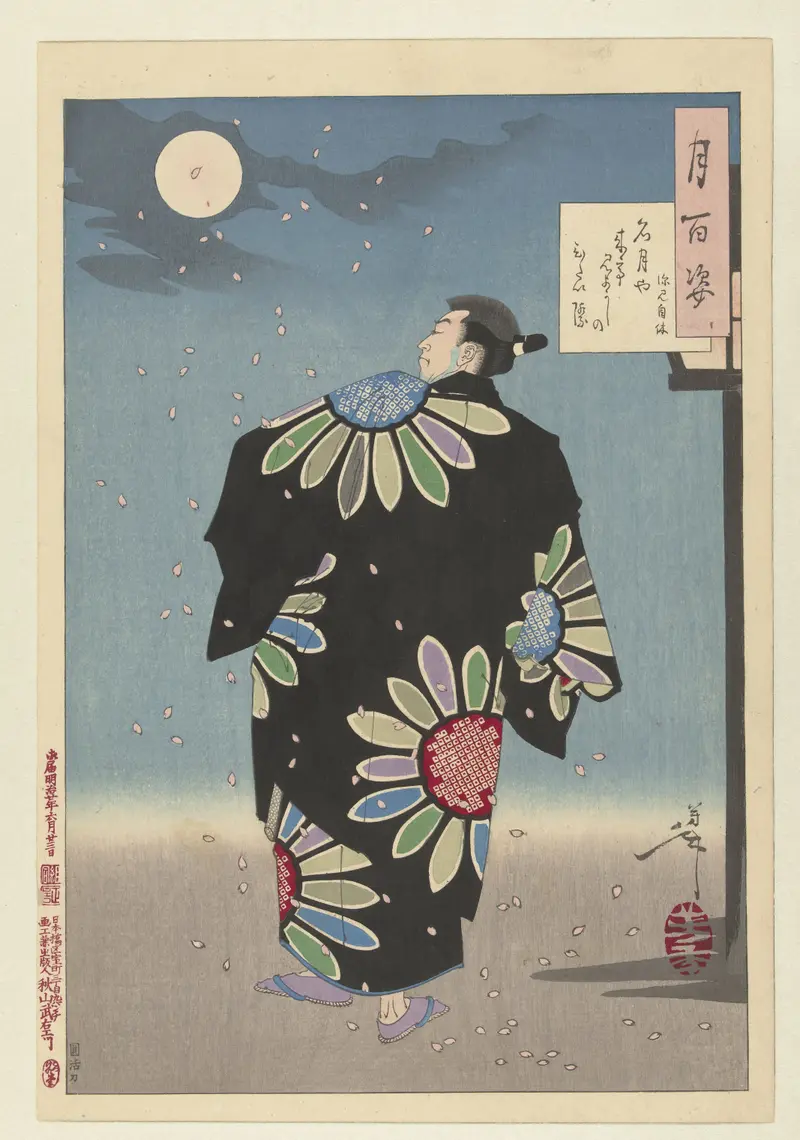
Fukami Jikyu in maanlicht
Tsukioka Yoshitoshi
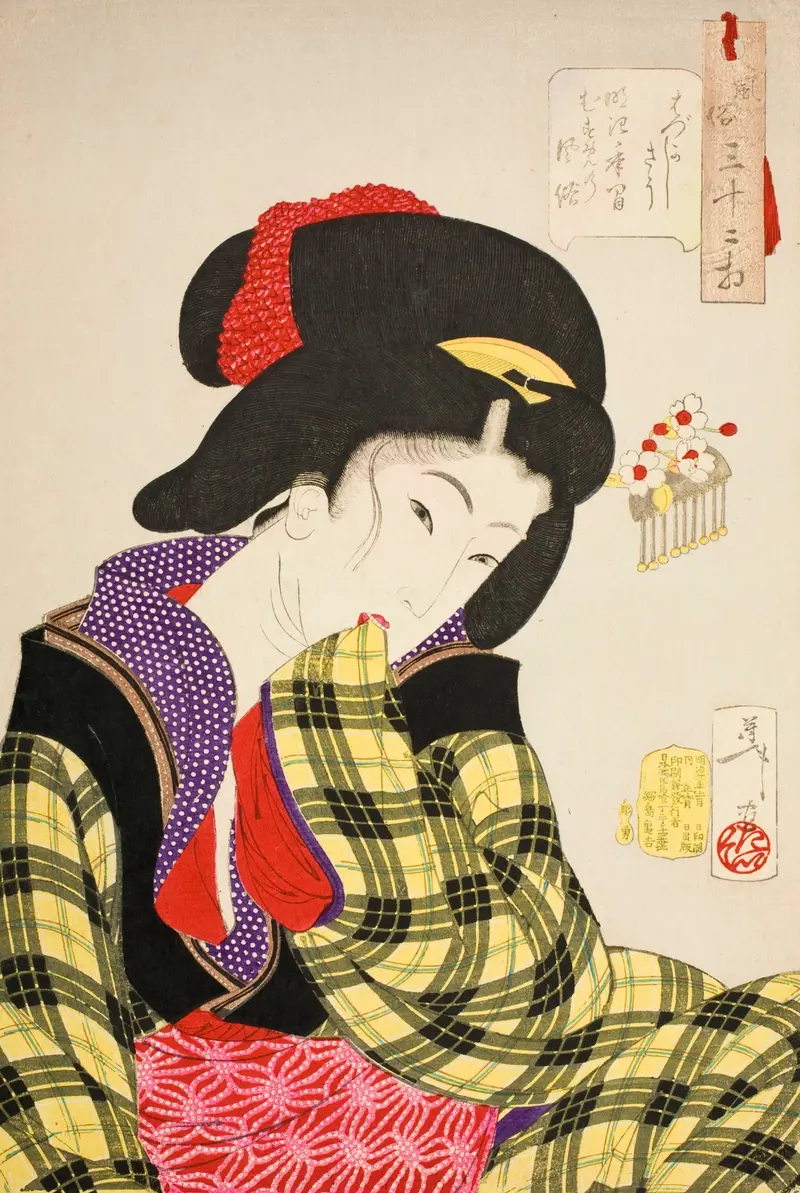
Looking Shy; The Manners of a Young Girl of the Meiji Era
Tsukioka Yoshitoshi
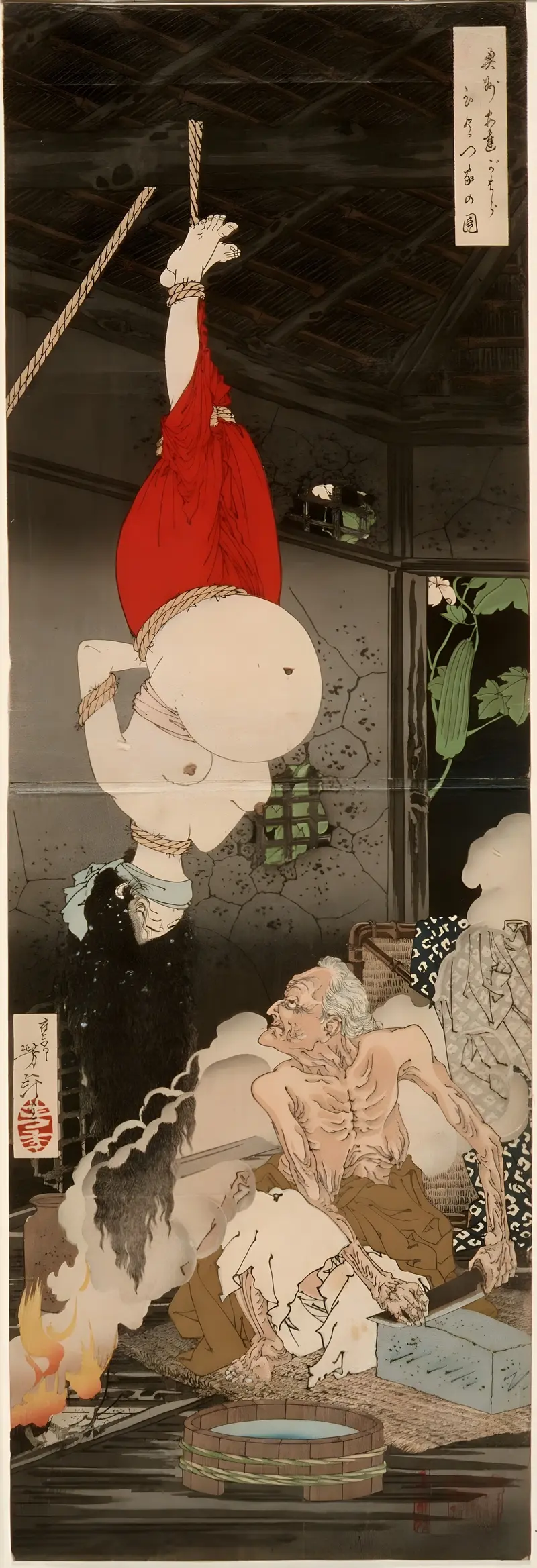
The Lonely House on Adachi Moor in Northern Japan
Tsukioka Yoshitoshi
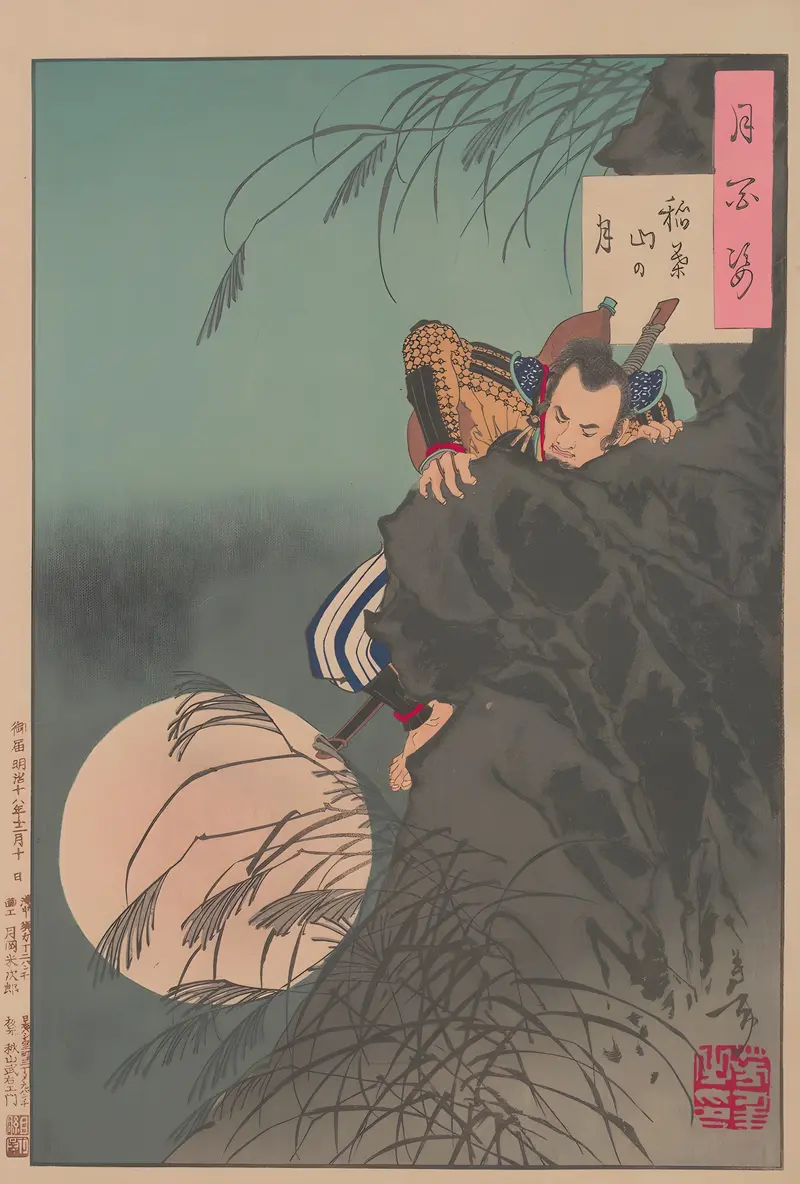
Inaba Mountain moon (Inabayama no tsuki)
Tsukioka Yoshitoshi
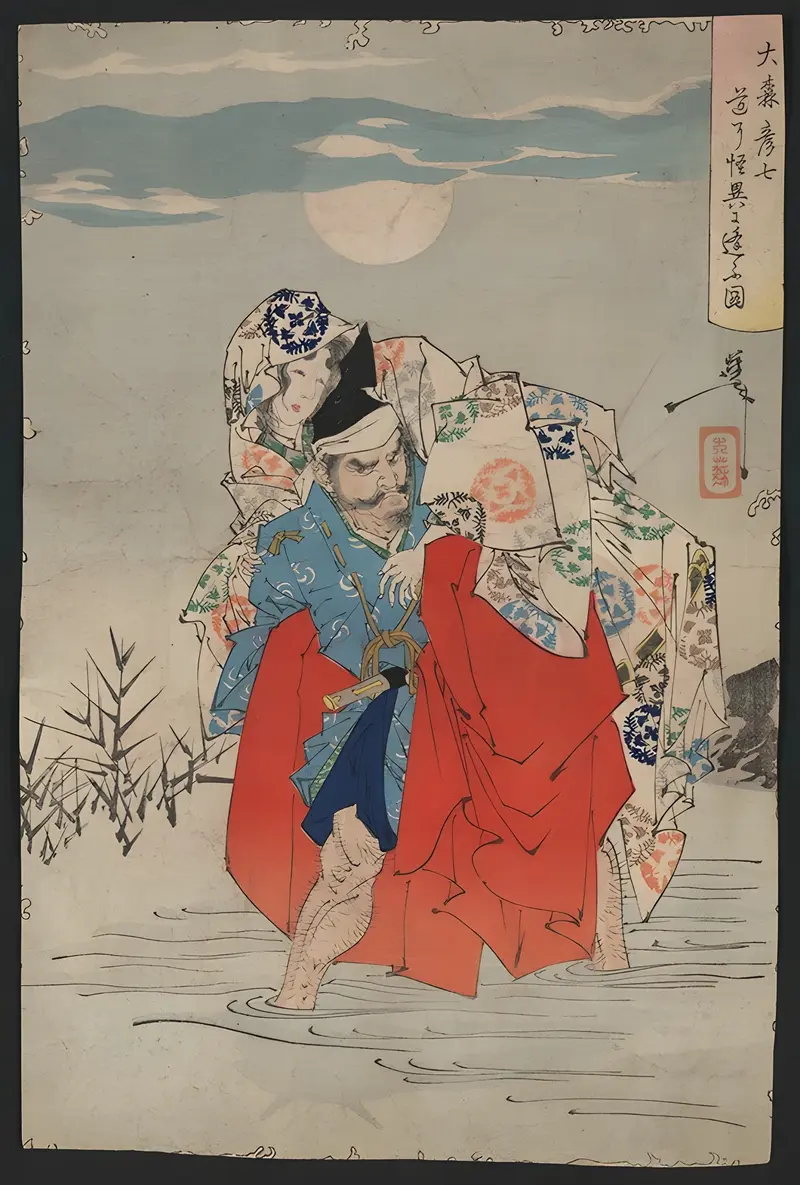
Omori Hikoshichi
Tsukioka Yoshitoshi
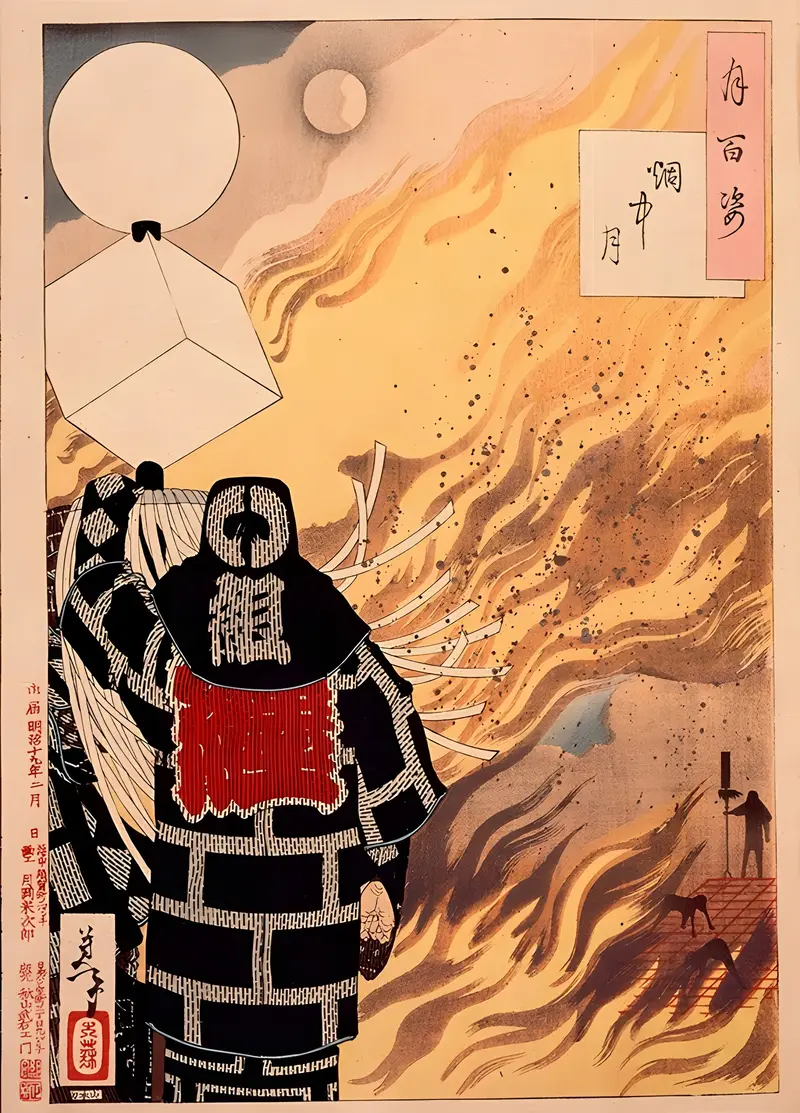
One Hundred Aspects of the Moon
Tsukioka Yoshitoshi
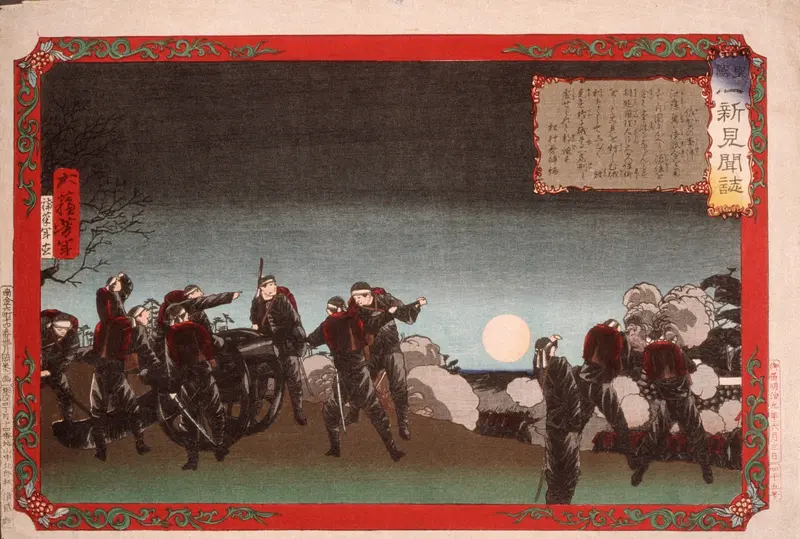
The Saga Incident
Tsukioka Yoshitoshi
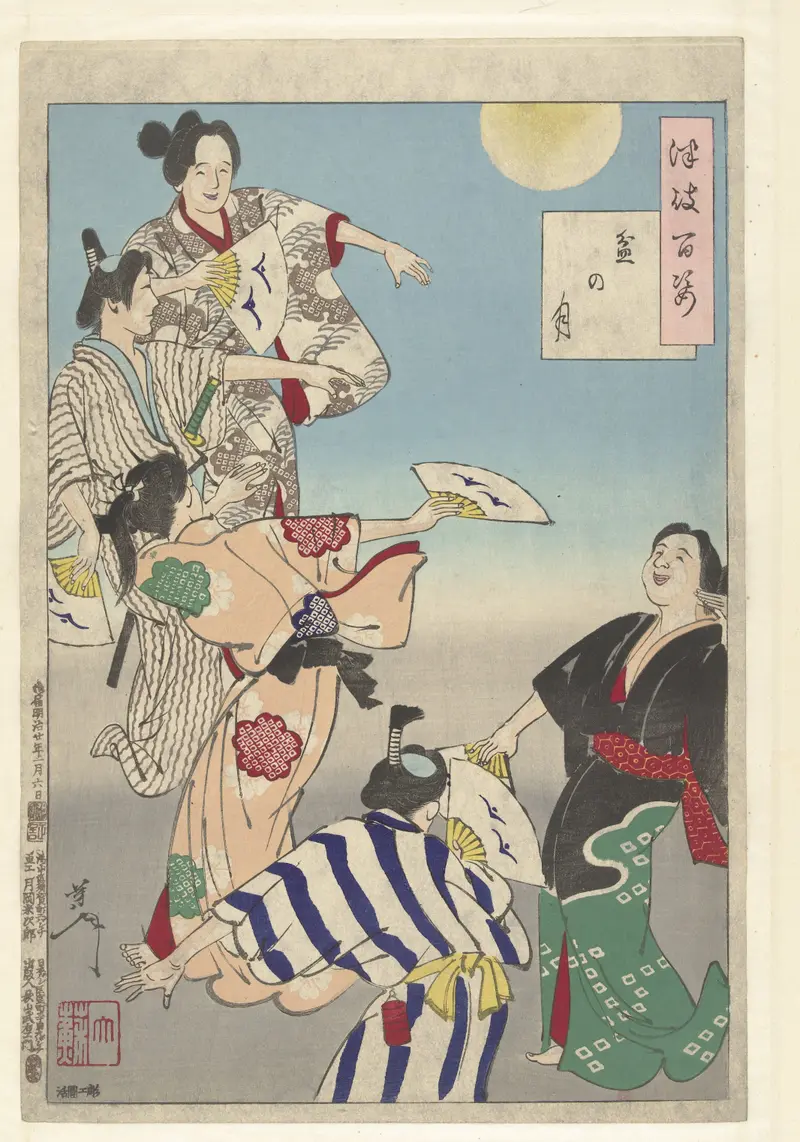
Bon Festival Moon (Bon no tsuki)
Tsukioka Yoshitoshi
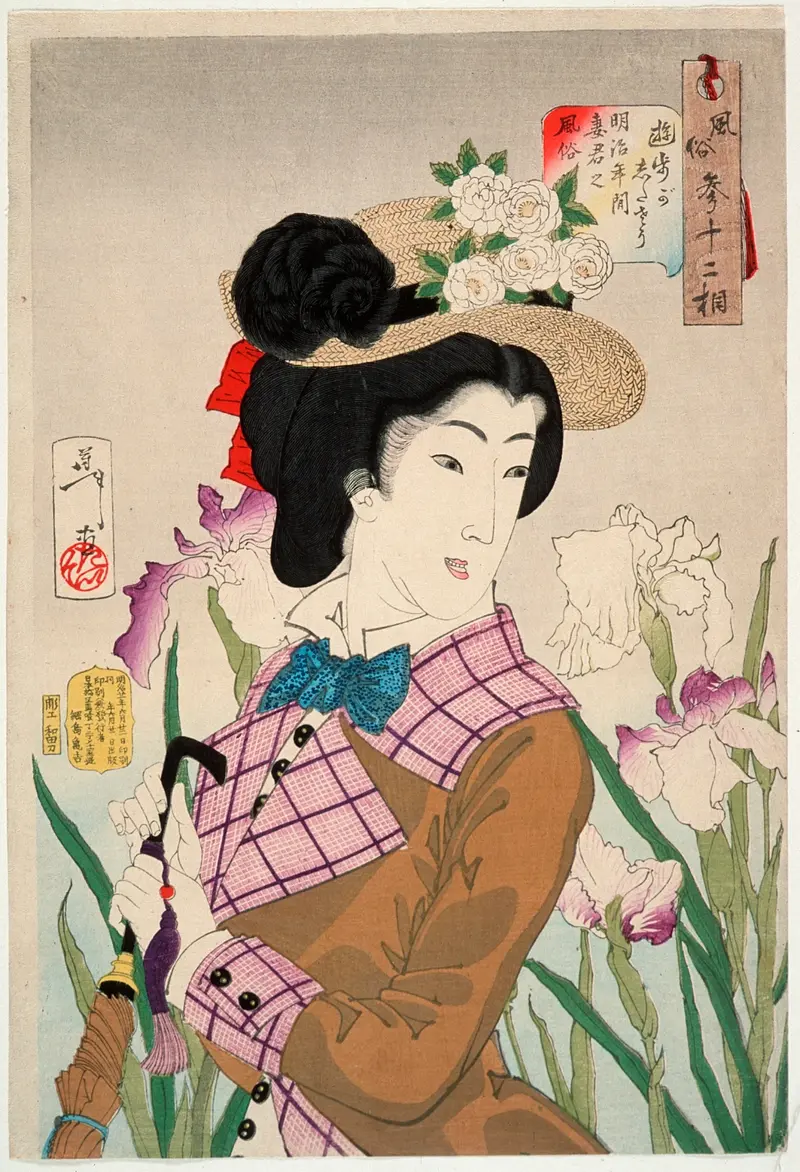
Preparing to Take a Stroll; The Wife of a Nobleman of the Meiji Period
Tsukioka Yoshitoshi



