
Maria als koningin der engelen — History & Facts
In the stillness of Albrecht Dürer’s Maria als koningin der engelen, a profound sense of decay lingers beneath the radiant surface. The image beckons viewers to confront the fleeting nature of beauty, echoing a timeless truth about existence and devotion. Look to the left at the ethereal figure of Mary, her serene expression illuminating the canvas. Dürer’s masterful strokes render her robe a cascade of luminous blues and whites, contrasting vividly with the warm golds of the celestial angels surrounding her.
The delicate interplay of light and shadow creates a palpable depth, inviting you to explore the intricate details of the angels' expressions, all while their wings shimmer with divine grace. Subtle yet powerful, the juxtaposition of Mary’s calm presence against the frenzied movements of the angels suggests a tension between stability and chaos. The flowers at her feet, sacred yet wilting, symbolize the impermanence of life and the inevitability of decay. Each petal, vibrant yet fading, serves as a reminder that even in sanctity, beauty is ephemeral, encapsulating the fragility of the human experience. Dürer painted this work in 1518 during a period of personal and artistic growth in Nuremberg.
The Renaissance was in full bloom, and artists were increasingly exploring themes of spirituality and realism. At this time, Dürer was solidifying his influence as a leading figure in Northern Renaissance art, merging intricate detail with profound symbolism, all while grappling with his own evolving understanding of the divine and the human condition.
More Artworks by Albrecht Dürer
Browse all →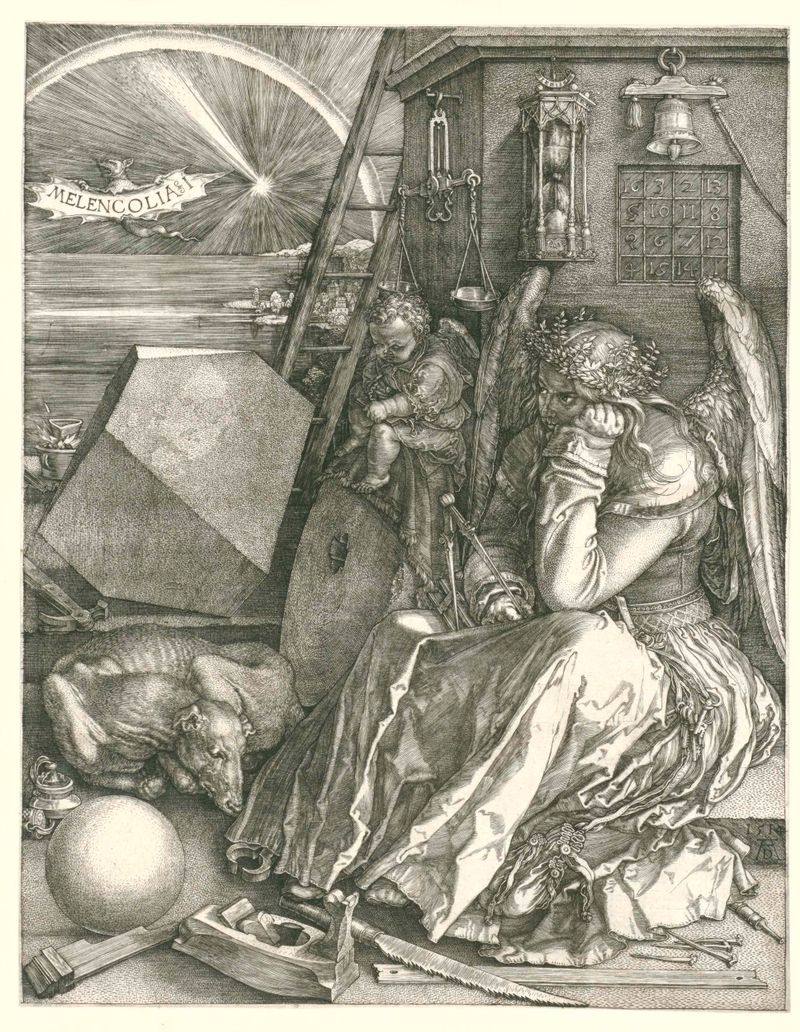
Melancholia
Albrecht Dürer
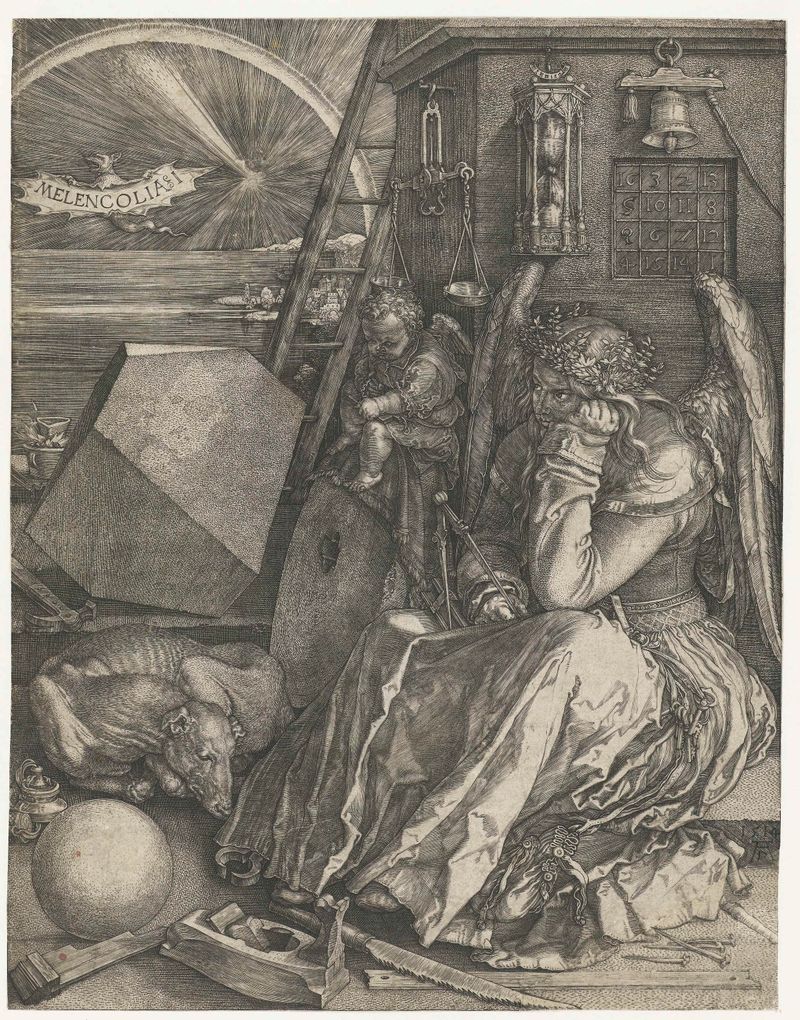
Melancholie
Albrecht Dürer

Neushoorn
Albrecht Dürer
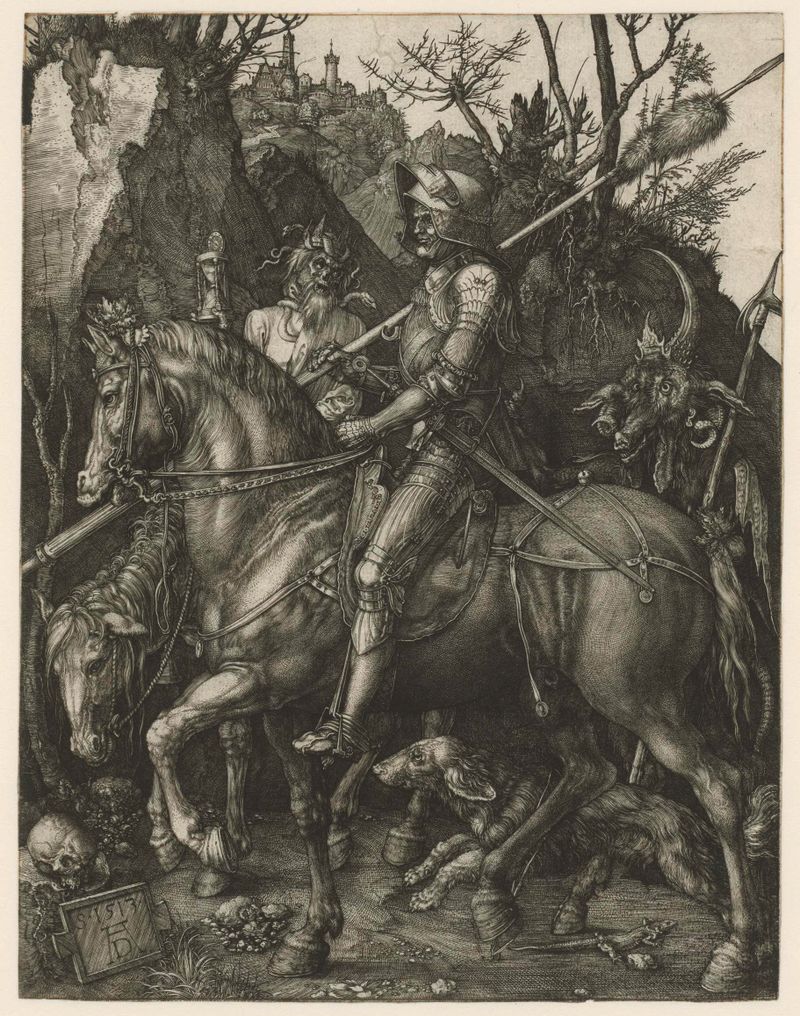
Knight, Death, and the Devil
Albrecht Dürer

De vier ruiters van de apocalyps
Albrecht Dürer

De vier ruiters van de apocalyps
Albrecht Dürer
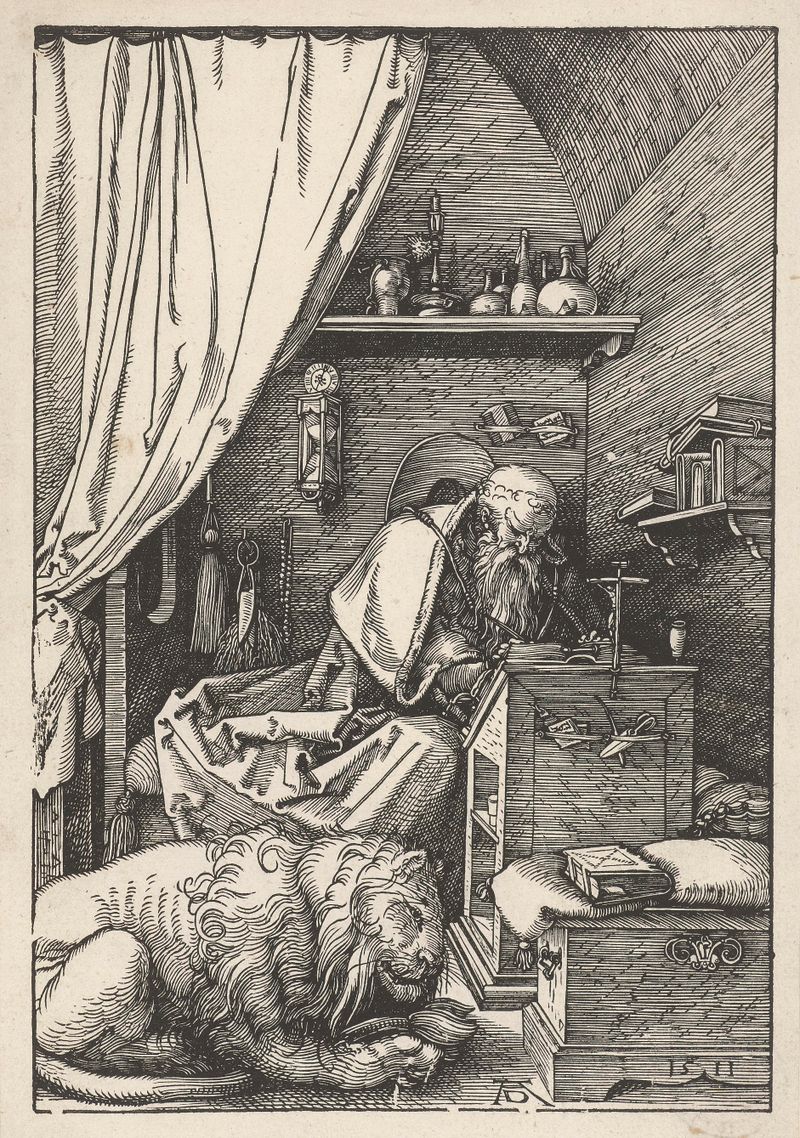
De Heilige Hiëronymus in zijn studeervertrek
Albrecht Dürer
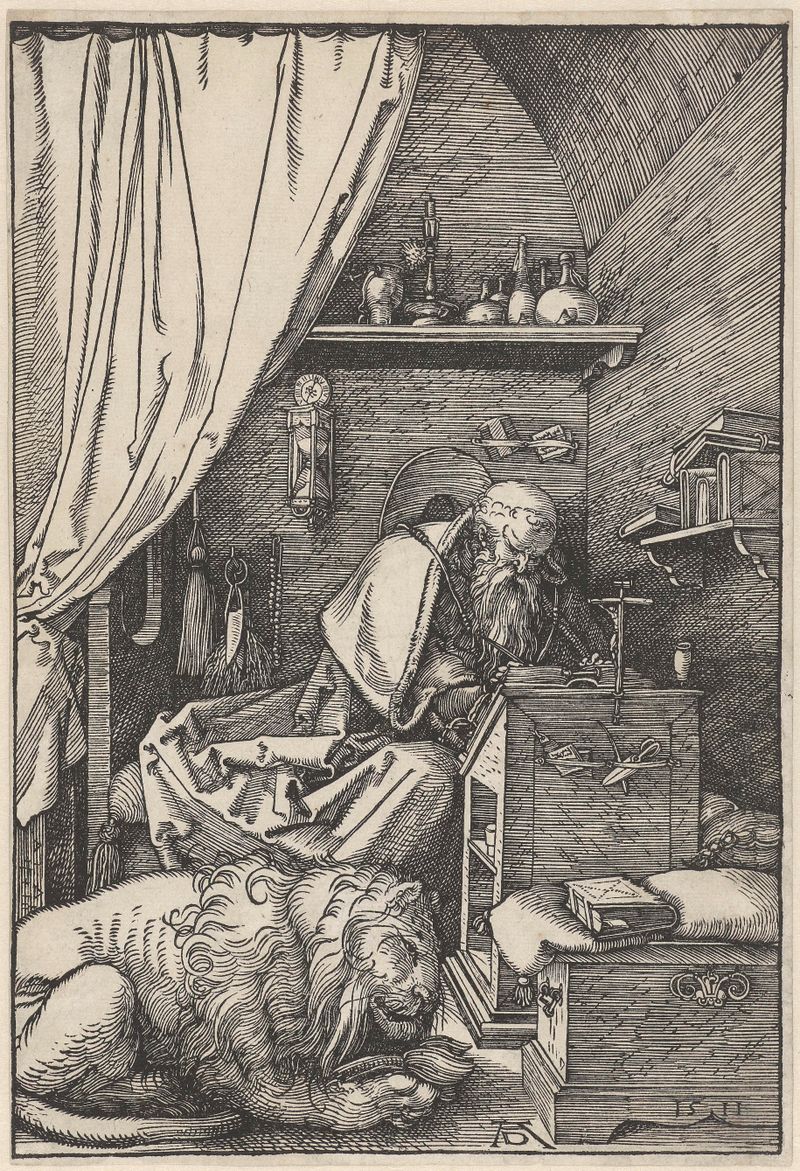
De Heilige Hiëronymus in zijn studeervertrek
Albrecht Dürer
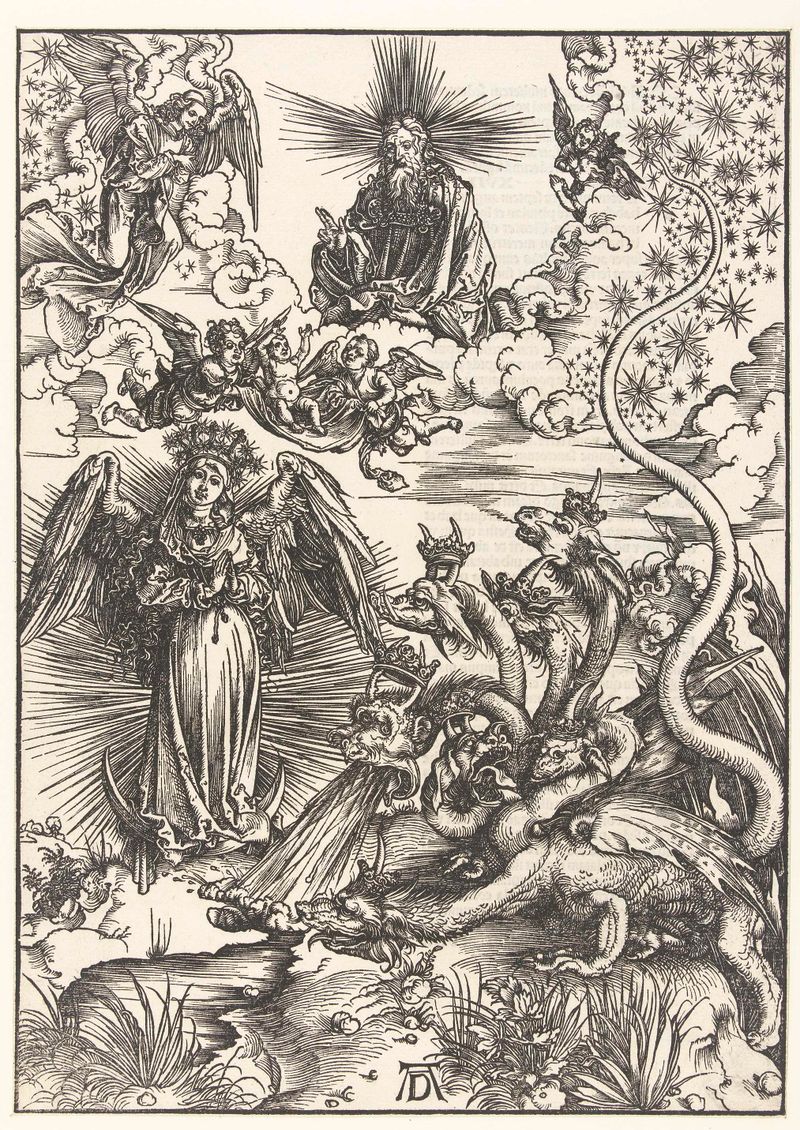
De apocalyptische vrouw en de zevenkoppige draak
Albrecht Dürer
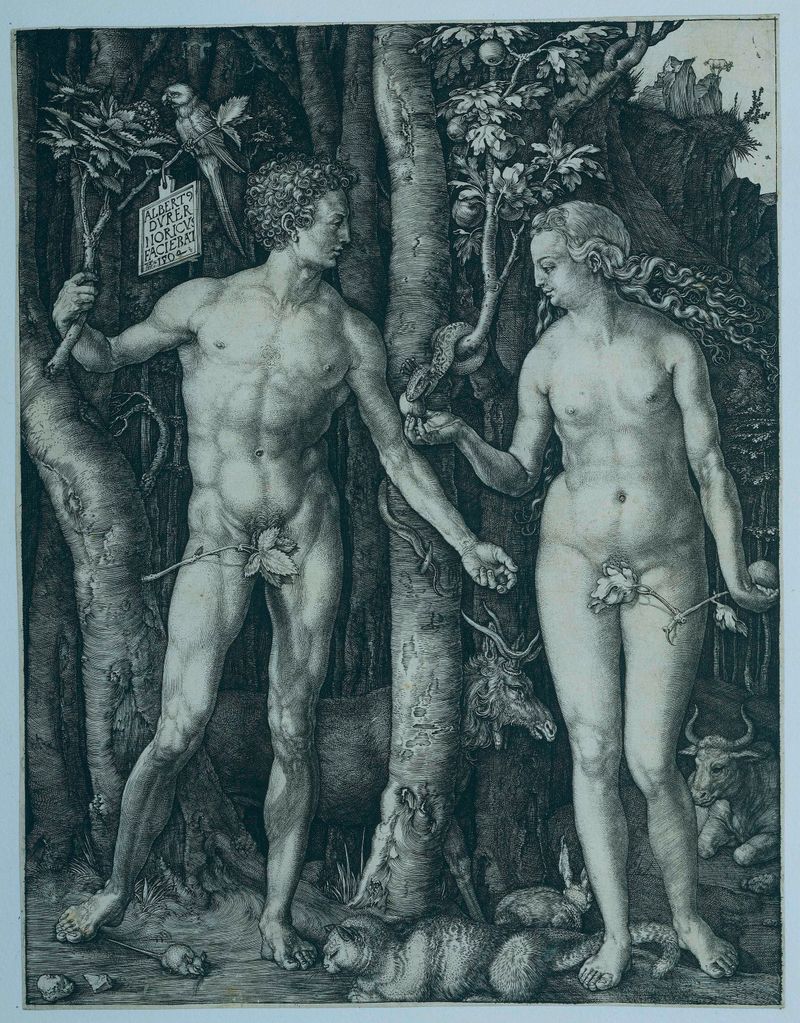
Adam en Eva
Albrecht Dürer
More Religious Art
Browse all →
The Return of the Prodigal Son
Rembrandt van Rijn

The Garden of Earthly Delights
El Bosco

Count Orgaz’ funeral
El Greco

The Hundred Guilder Print: the central piece with Christ preaching, the plate arched
Rembrandt van Rijn

The Descent from the Cross
Rogier van der Weyden

The return of the prodigal son
Rembrandt van Rijn