
Maria als koningin der engelen — History & Facts
Can paint confess what words never could? In Maria als koningin der engelen, Dürer captures a moment of divine ecstasy, where the ethereal and the earthly converge in a resonant silence. Look to the center of the canvas, where the serene figure of the Virgin Mary, adorned in rich, flowing robes, commands your gaze. Surrounding her, a chorus of angels encircles the composition, their delicate wings unfolding in a harmonious dance of light and shadow. Notice how the soft, golden hues illuminate Mary's face, creating a sacred glow that contrasts sharply with the muted tones of the background, enhancing her celestial presence.
The meticulous details in the texture of her garments and the expressions of the angels reveal Dürer’s mastery in both form and emotion. Deeper insights emerge in the juxtaposition of innocence and reverence. The serene expression of Mary embodies both maternal love and divine authority, suggesting her dual role as both queen and caretaker. The angels, with their diverse expressions of adoration, reflect the complex emotions tied to faith and devotion, creating a dialogue of spiritual yearning.
The subtle play of light—casting halos and ethereal glimmers—hints at the transcendent connection between the celestial and the mortal realms. Created in 1518 during a time when Dürer was cementing his reputation as a leading figure in the Northern Renaissance, this work reflects his exploration of religious themes amidst the broader shifts in European art. Living in Nuremberg, he was influenced by the burgeoning Reformation and the changing sentiments towards spirituality, which colored his portrayal of sacred figures with a depth of emotion and realism that resonates through the ages.
More Artworks by Albrecht Dürer
Browse all →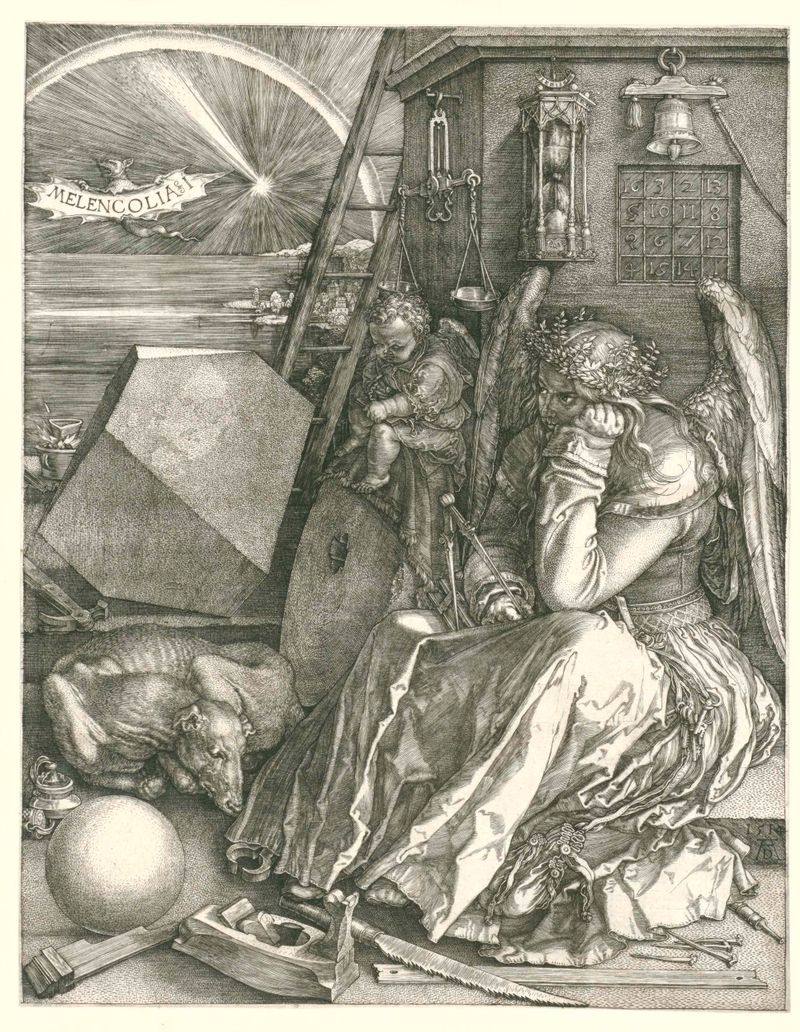
Melancholia
Albrecht Dürer
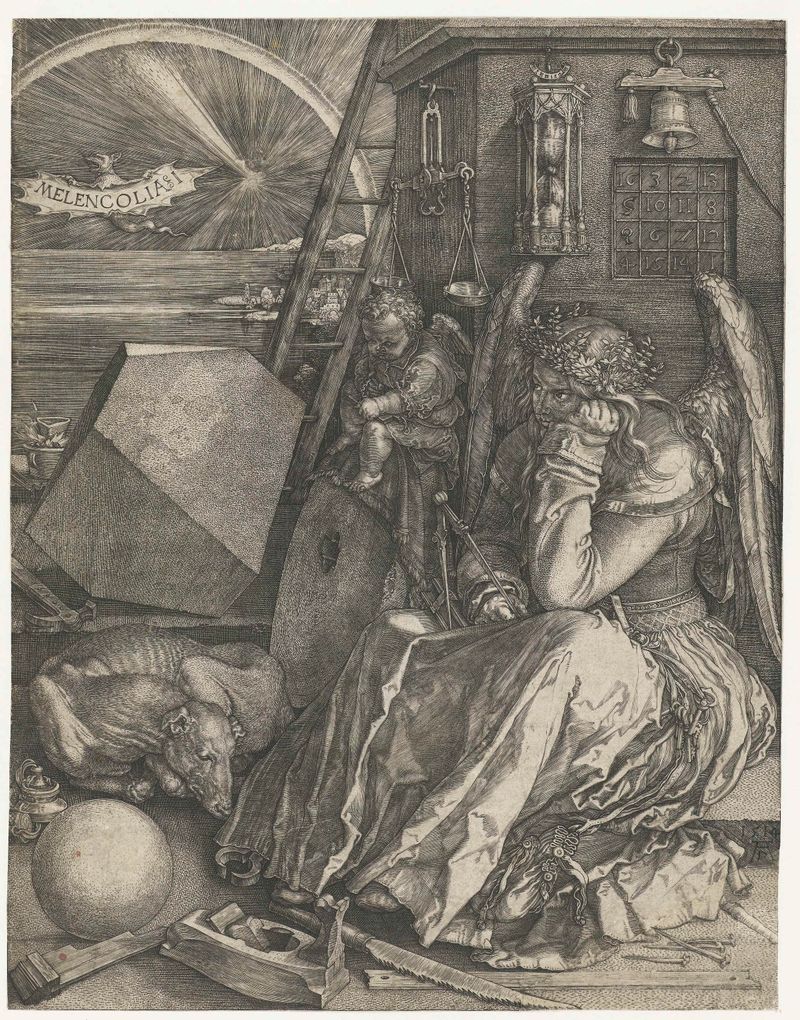
Melancholie
Albrecht Dürer

Neushoorn
Albrecht Dürer
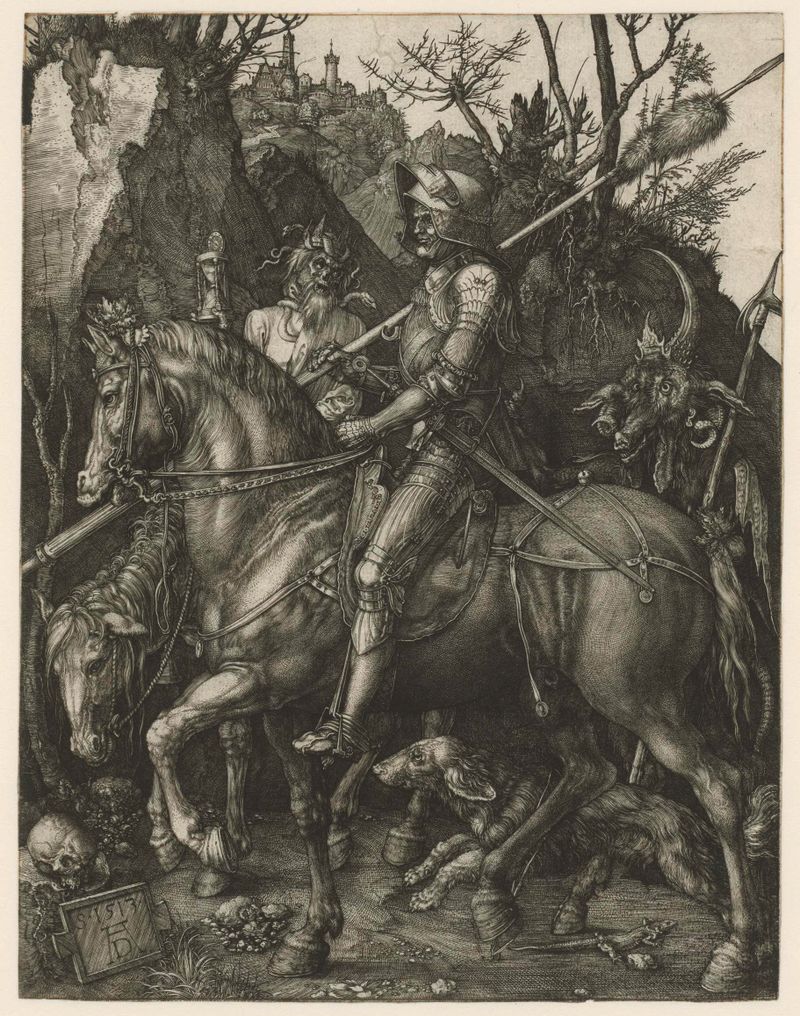
Knight, Death, and the Devil
Albrecht Dürer

De vier ruiters van de apocalyps
Albrecht Dürer

De vier ruiters van de apocalyps
Albrecht Dürer
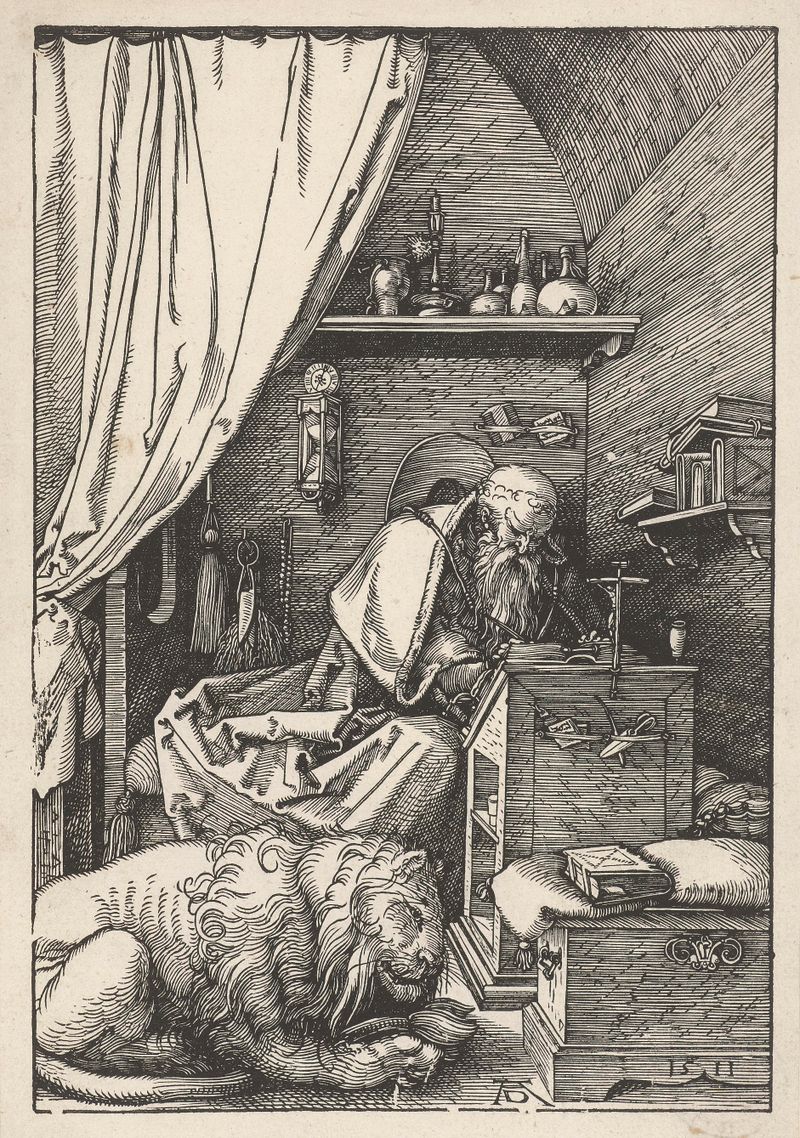
De Heilige Hiëronymus in zijn studeervertrek
Albrecht Dürer
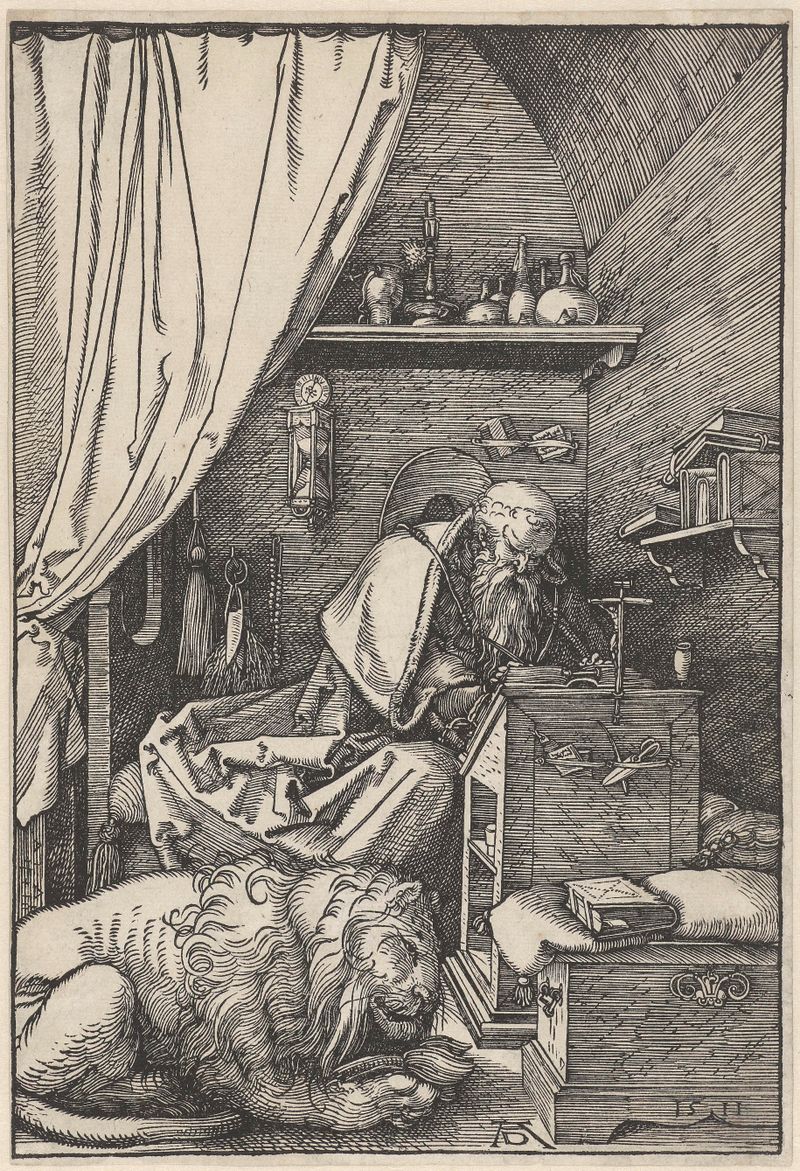
De Heilige Hiëronymus in zijn studeervertrek
Albrecht Dürer
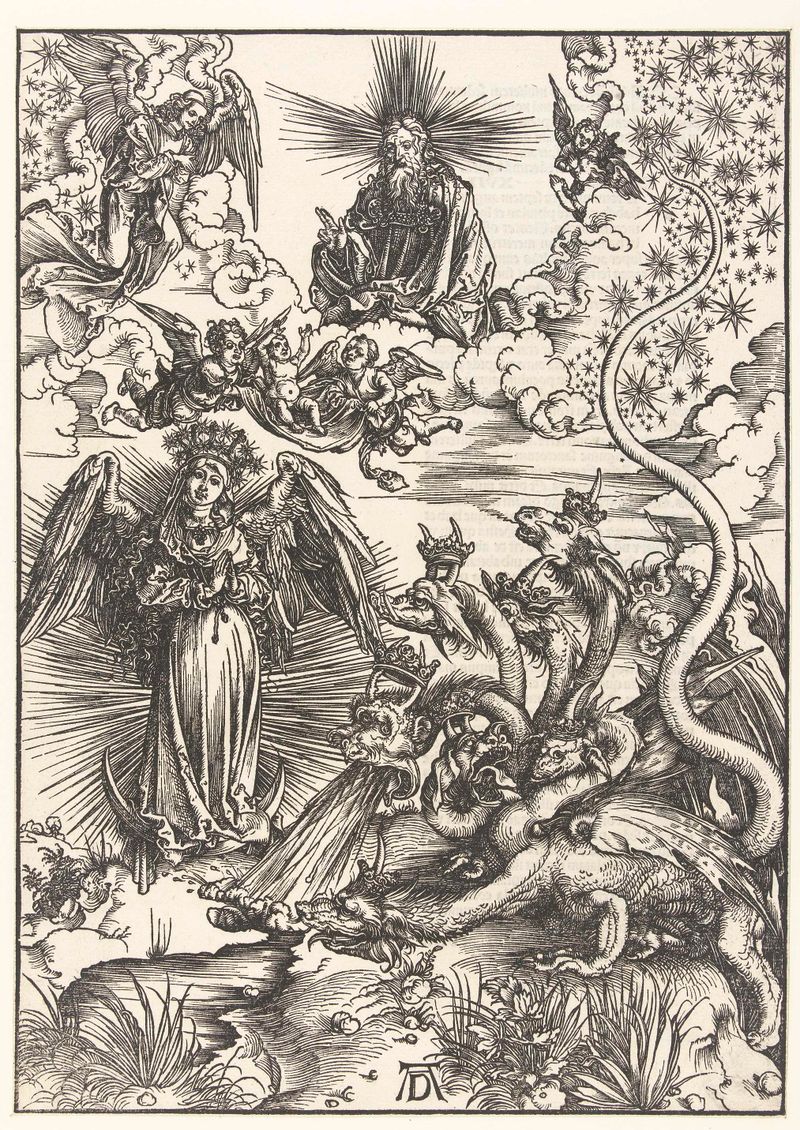
De apocalyptische vrouw en de zevenkoppige draak
Albrecht Dürer
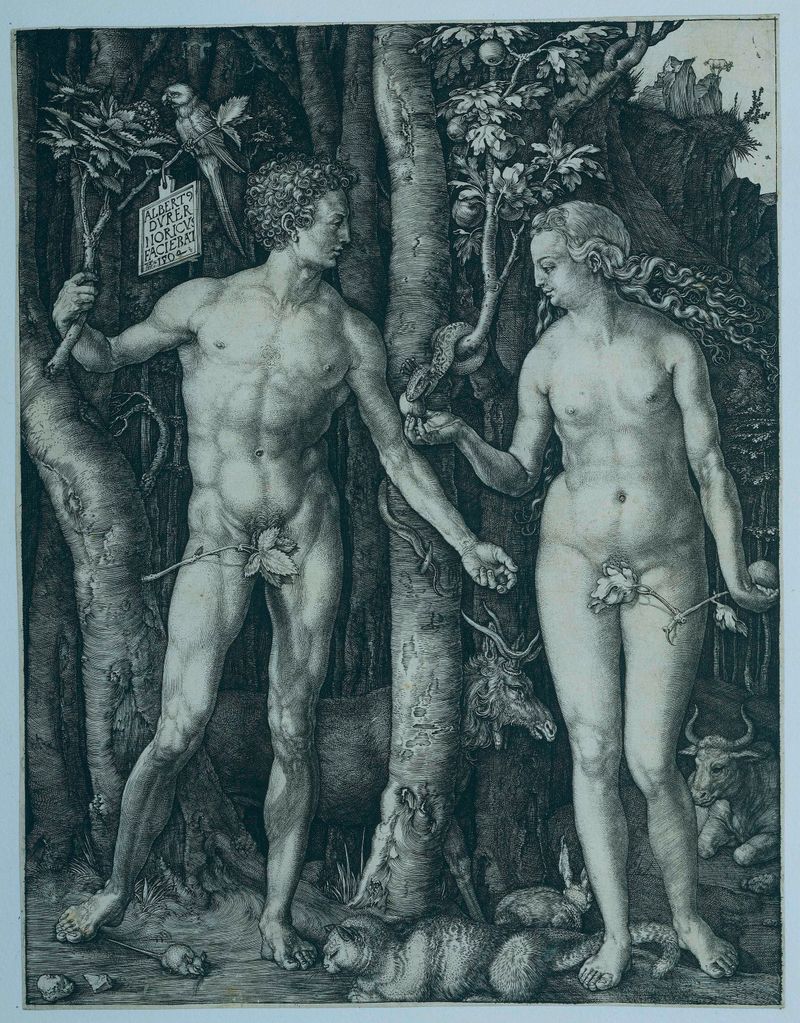
Adam en Eva
Albrecht Dürer
More Religious Art
Browse all →
The Return of the Prodigal Son
Rembrandt van Rijn

The Garden of Earthly Delights
El Bosco

Count Orgaz’ funeral
El Greco

The Hundred Guilder Print: the central piece with Christ preaching, the plate arched
Rembrandt van Rijn

The Descent from the Cross
Rogier van der Weyden

The return of the prodigal son
Rembrandt van Rijn