
Maria met kind aan de borst bij een hek — History & Facts
What if beauty was never meant to be finished? In Maria met kind aan de borst bij een hek, Albrecht Dürer captures a moment that feels suspended in time, teetering on the edge of completion and vulnerability, inviting both reverence and trepidation. Look to the center of the piece, where Maria cradles her child, the tenderness of her gesture stark against the wooden gate behind her. Notice how light cascades down, illuminating their forms while casting delicate shadows that hint at the depths of their bond. The rich tones of Maria's garments contrast beautifully with the earthy hues of the fence, inviting the viewer to explore this intimate yet guarded space, echoing themes of protection and exposure. Beneath the surface, a poignant tension simmers.
The barrier of the gate symbolizes both safety and confinement, evoking the duality of motherhood—a nurturing embrace tightly held yet filled with the fear of what lies beyond. The child, serene in innocence, stands in stark contrast to the potential dangers that lurk outside this sanctuary. Dürer masterfully intertwines these elements, balancing the profound beauty of the moment with underlying apprehension. In 1503, Dürer was at the height of his career in Nuremberg, having recently returned from his travels to Italy, where he absorbed the Renaissance's innovative techniques.
This period marked a shift in his work, as he began to fuse Northern European precision with the emotive qualities he encountered in Italian art. The painting reflects not only his personal growth but also the broader transition in the art world, where the exploration of human emotion began to take precedence over mere representation.
More Artworks by Albrecht Dürer
Browse all →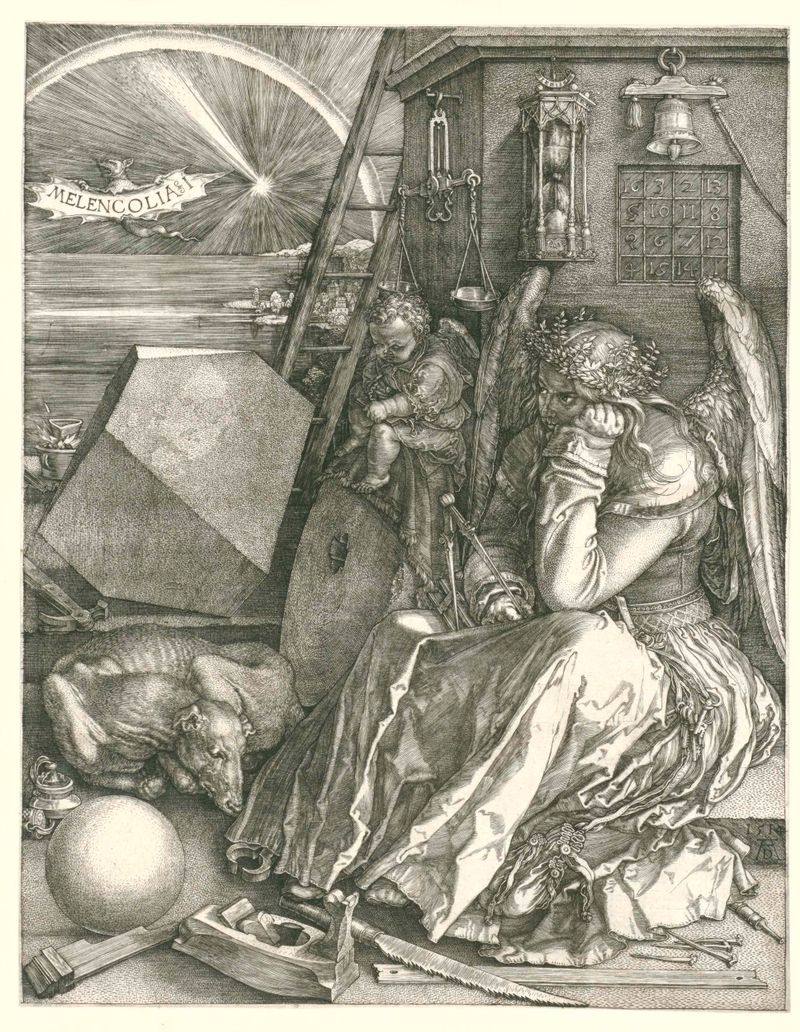
Melancholia
Albrecht Dürer
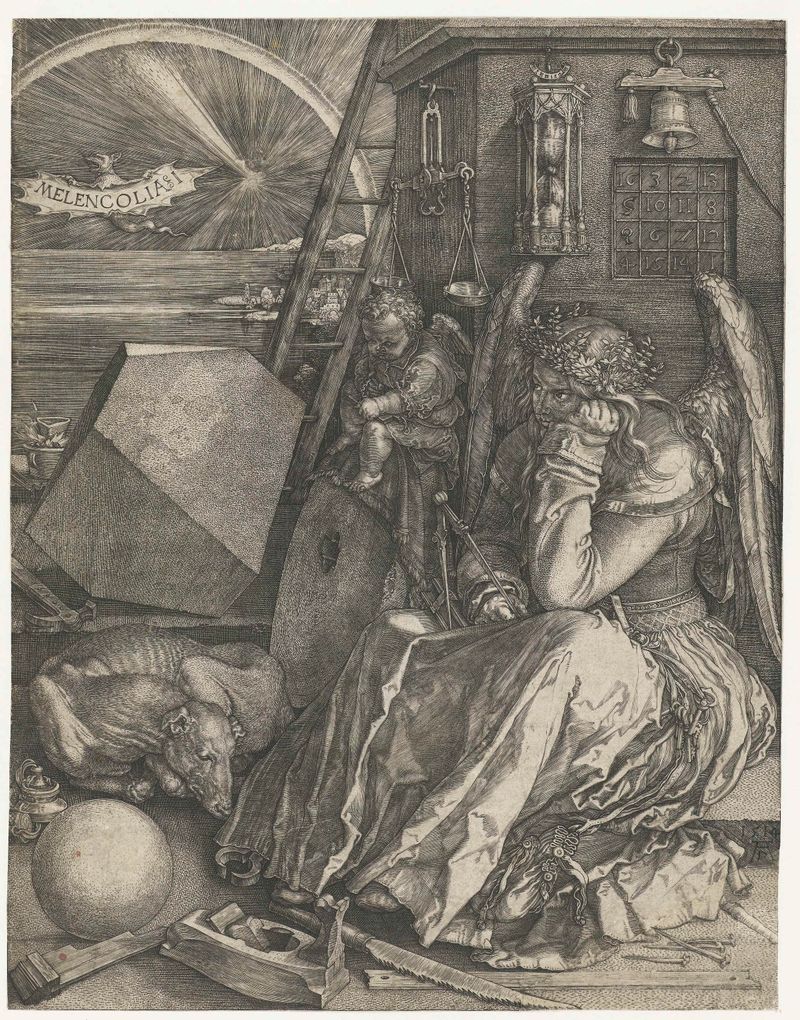
Melancholie
Albrecht Dürer

Neushoorn
Albrecht Dürer
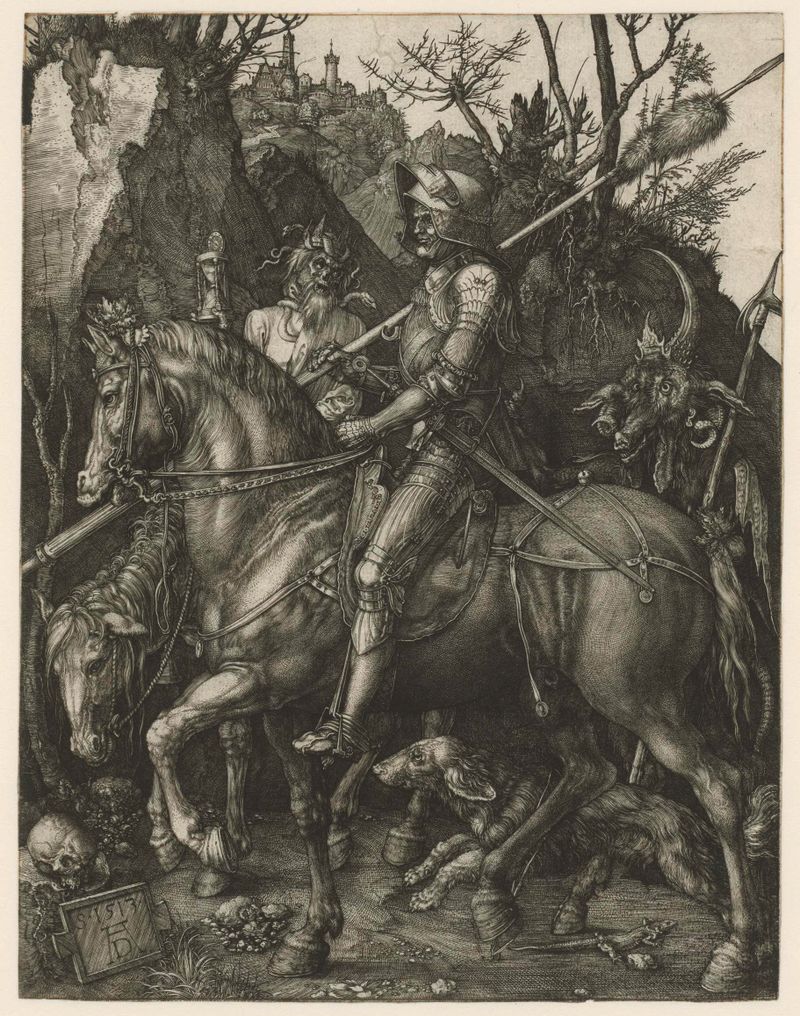
Knight, Death, and the Devil
Albrecht Dürer

De vier ruiters van de apocalyps
Albrecht Dürer

De vier ruiters van de apocalyps
Albrecht Dürer
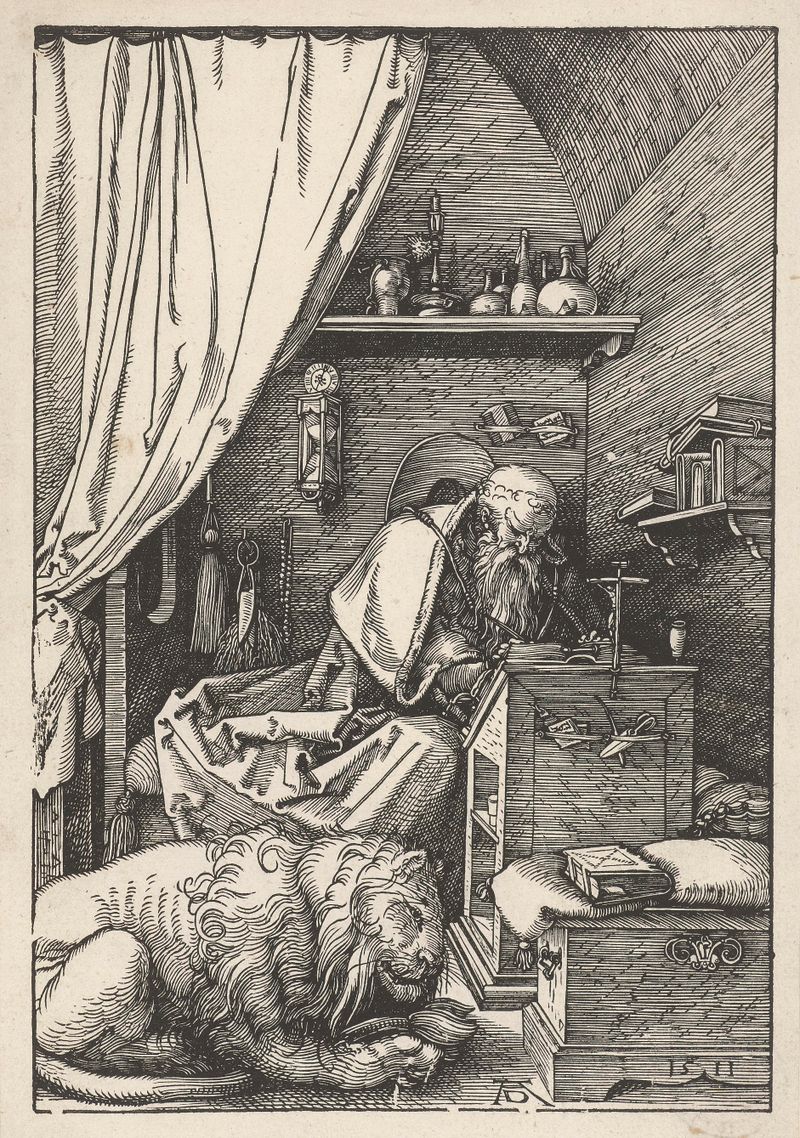
De Heilige Hiëronymus in zijn studeervertrek
Albrecht Dürer
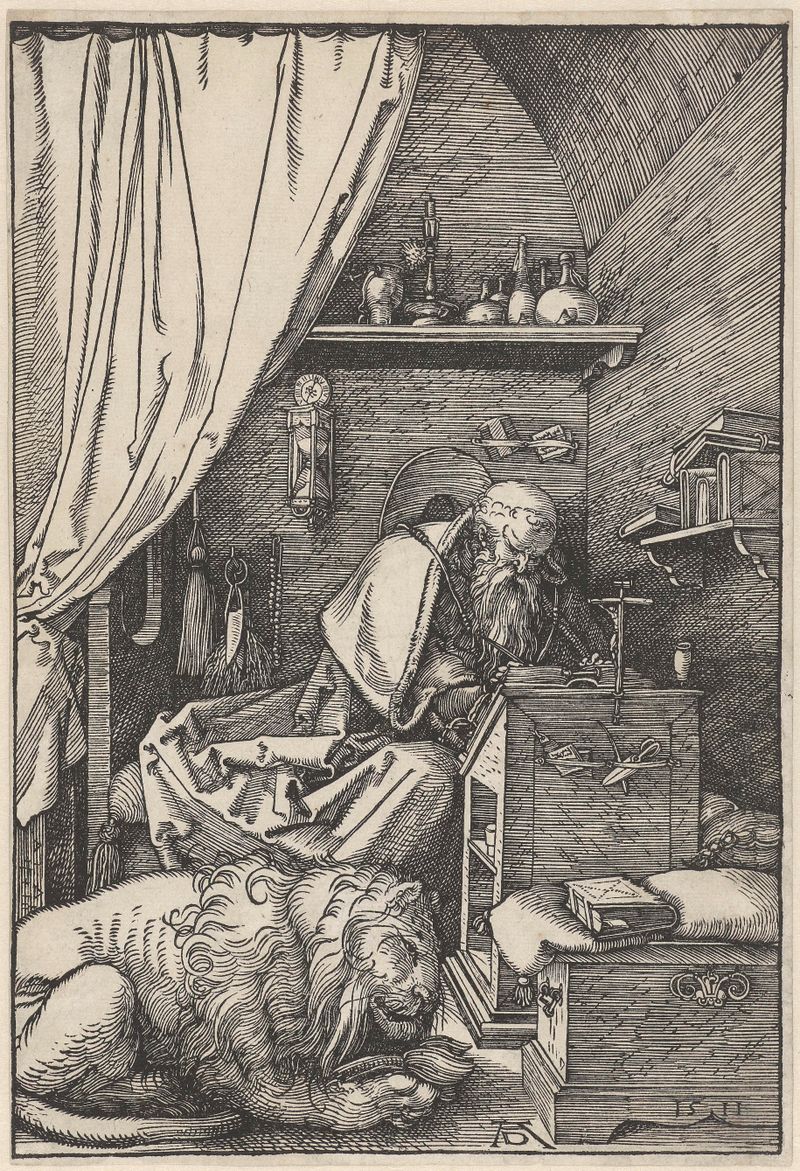
De Heilige Hiëronymus in zijn studeervertrek
Albrecht Dürer
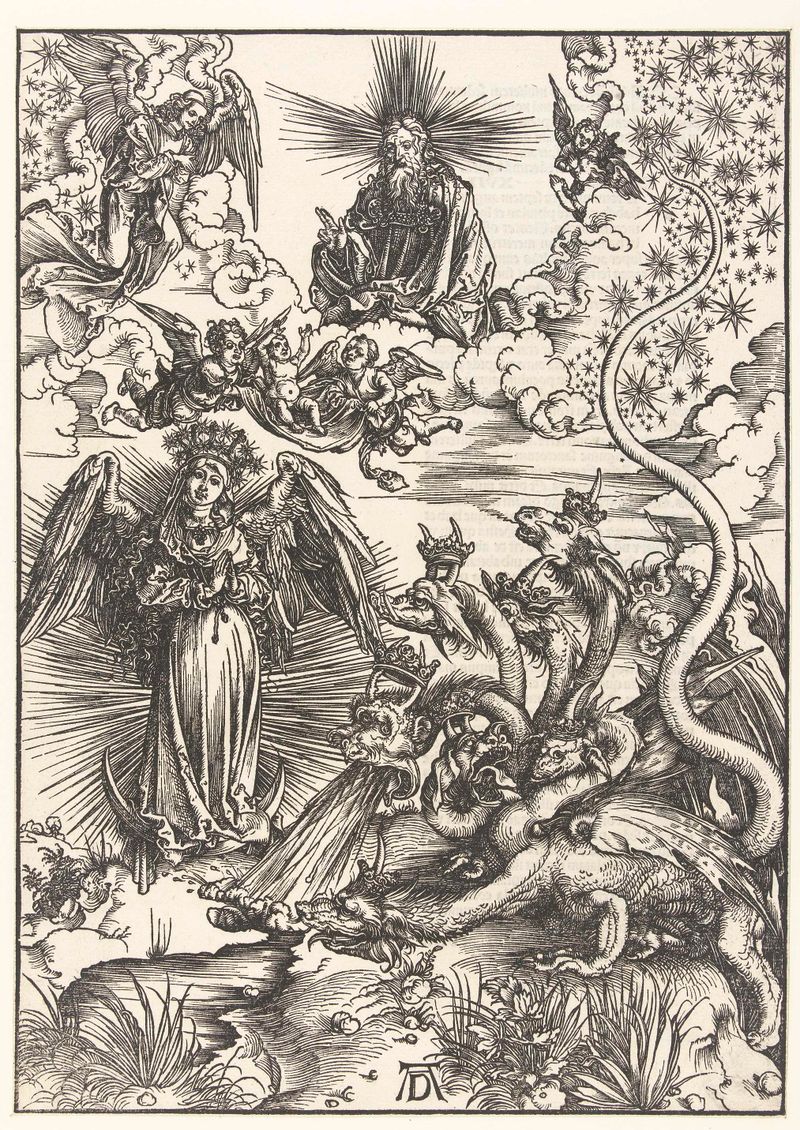
De apocalyptische vrouw en de zevenkoppige draak
Albrecht Dürer
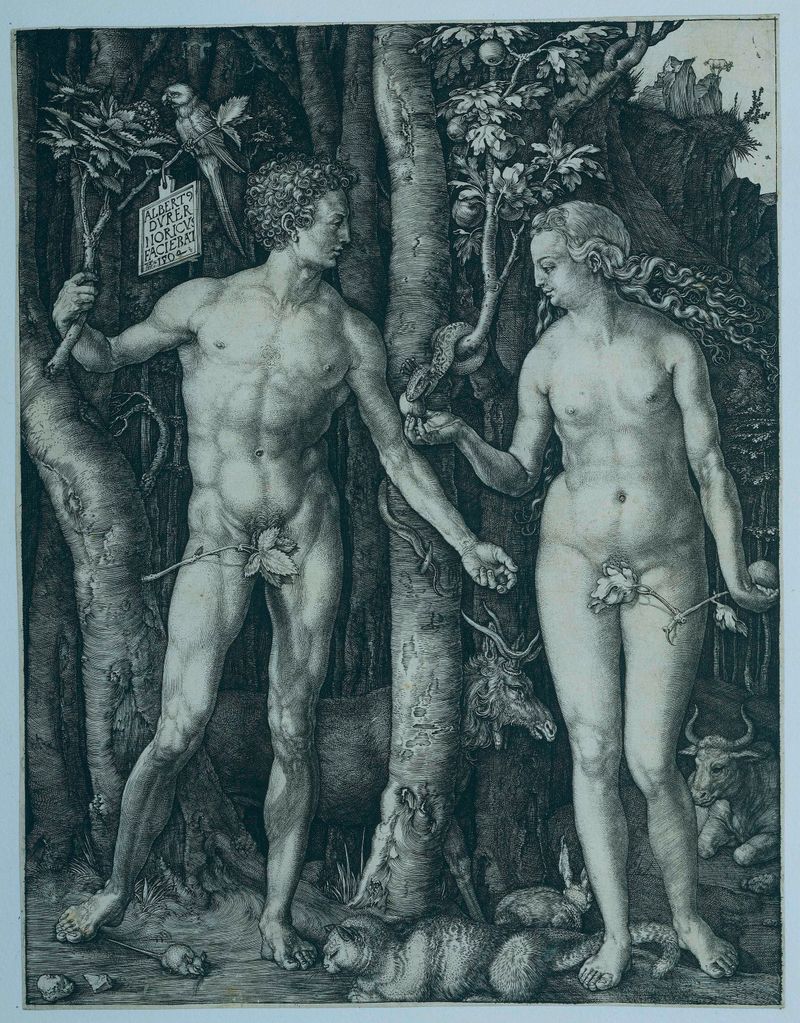
Adam en Eva
Albrecht Dürer
More Religious Art
Browse all →
The Return of the Prodigal Son
Rembrandt van Rijn

The Garden of Earthly Delights
El Bosco

Count Orgaz’ funeral
El Greco

The Hundred Guilder Print: the central piece with Christ preaching, the plate arched
Rembrandt van Rijn

The Descent from the Cross
Rogier van der Weyden

The return of the prodigal son
Rembrandt van Rijn