
Market in Constantinople — History & Facts
The first thing that seizes the eye in Market in Constantinople is the sheer bustle of life pressed against the sweep of the Bosphorus, all under a sky so wide it seems to promise stories beyond the city’s edge. The painter draws you in through a tangle of masts and sails, their pale fabric catching the sunlight and echoing the domes and minarets that rise in the distance. Figures in bright robes cluster in conversation, a yellow-clad woman glancing back as if she’s just left a secret behind; nearby, merchants lean over their wares, intent on the day’s bargains.
The ships and mosque domes, painted with a clarity that borders on reverence, anchor the scene in a specific place and time, while the haze of activity and the angled shadows suggest a city forever in motion, never quite at rest. Painted in 1868, this vision of Istanbul belongs to a period when European artists were fascinated by the Ottoman world, seeking out its markets, harbors, and street life for their color and complexity. Works like this were often commissioned or eagerly collected by Western patrons hungry for glimpses of distant cities at a time when travel was still an adventure for the few. Market in Constantinople stands as a record of that era’s curiosity, painted with a precision that hints at both observation and longing.
Today, it forms part of the collection at www.museothyssen.org, a reminder that history has kept few traces of the everyday lives behind grand monuments. Let your eye wander from the sails to the faces, and imagine the conversations lost to the sea breeze.
More Artworks by Alberto Pasini

Mercato in Oriente
Alberto Pasini
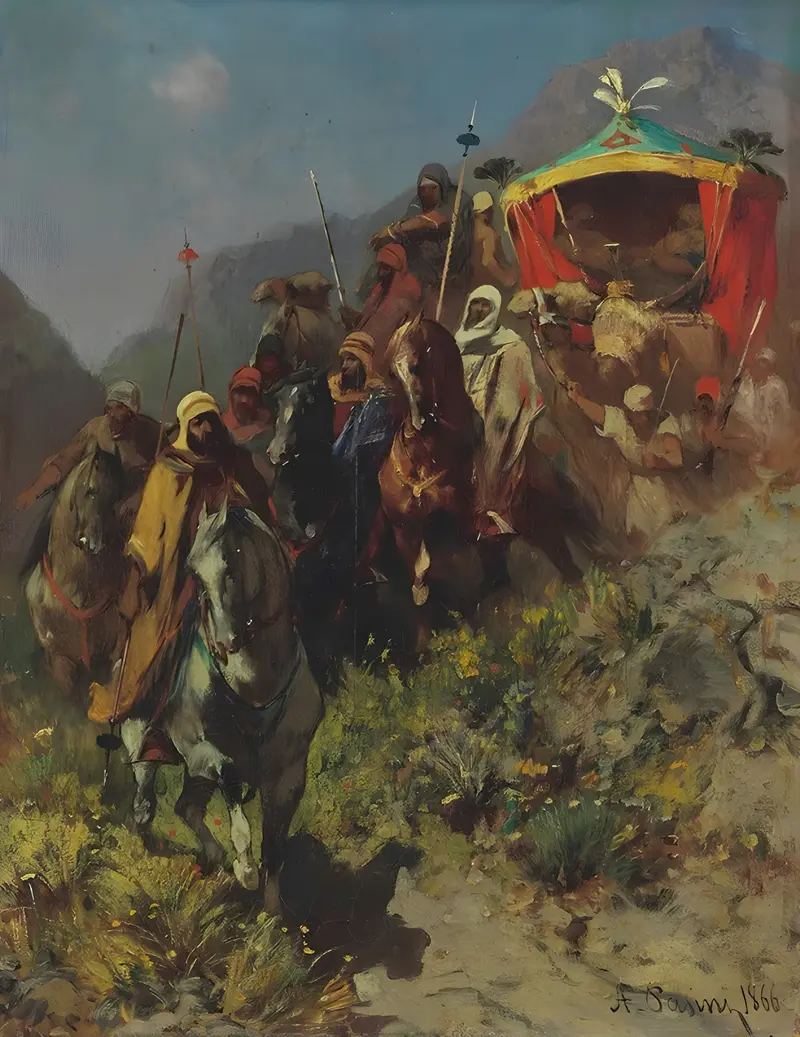
A Caravan on a Mountain Pass
Alberto Pasini

The blacksmith’s shop
Alberto Pasini
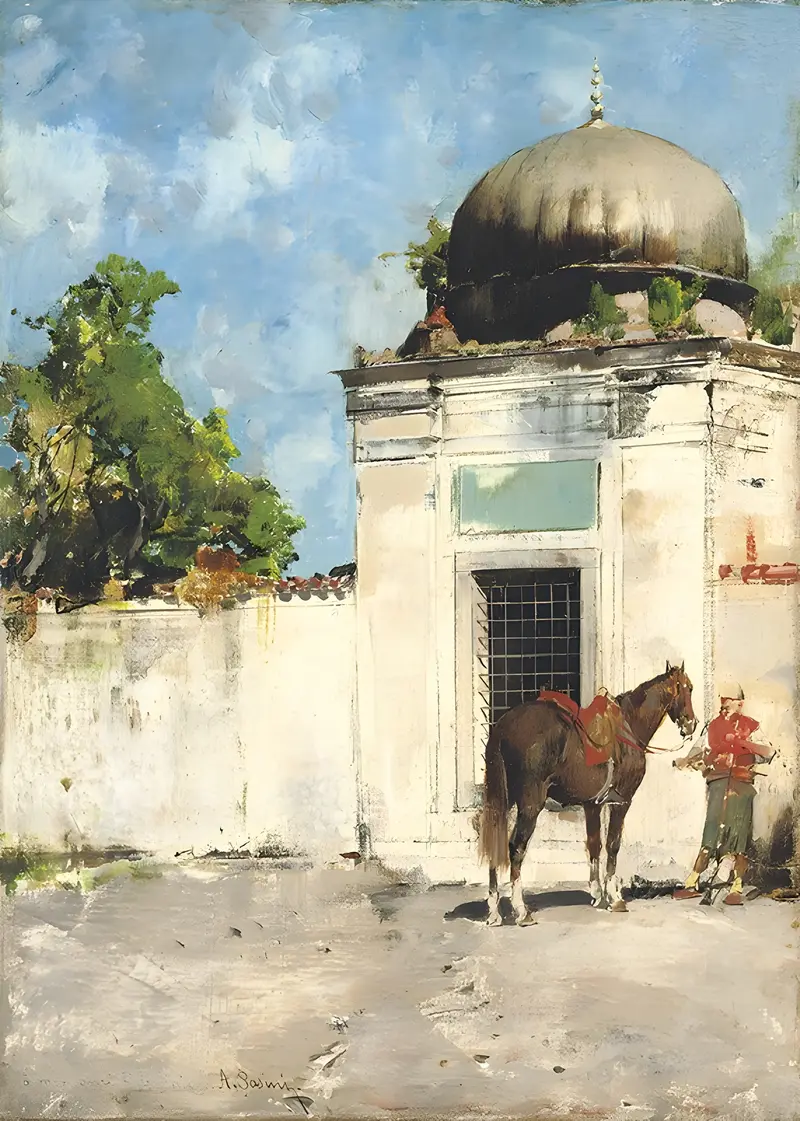
The Sentinel
Alberto Pasini
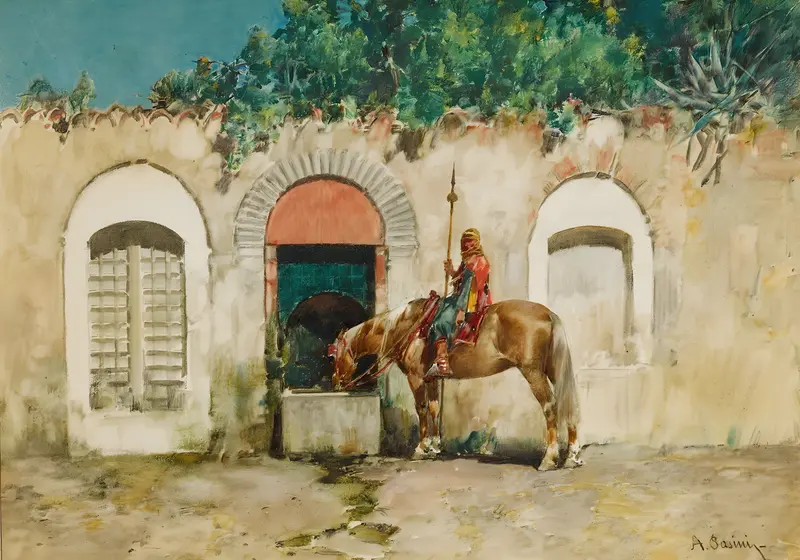
Horseman At A Fountain
Alberto Pasini
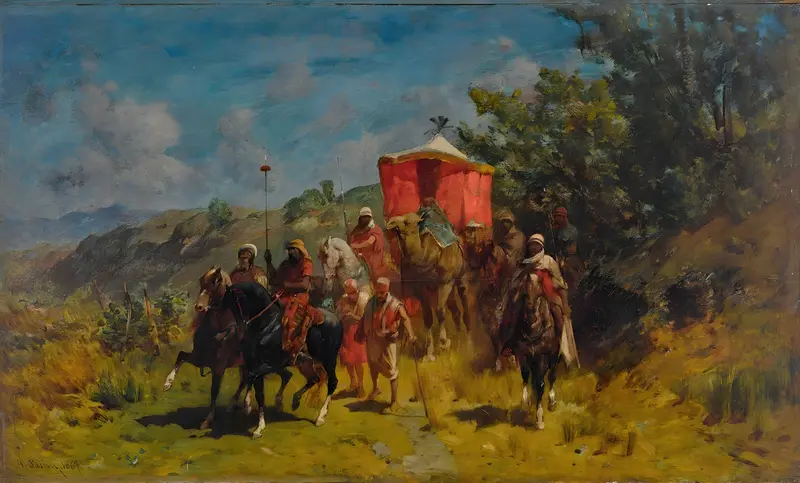
An Arab Caravan
Alberto Pasini
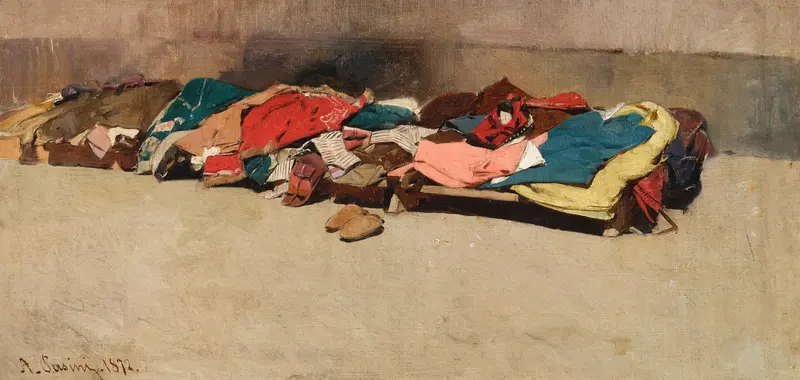
Mercato
Alberto Pasini
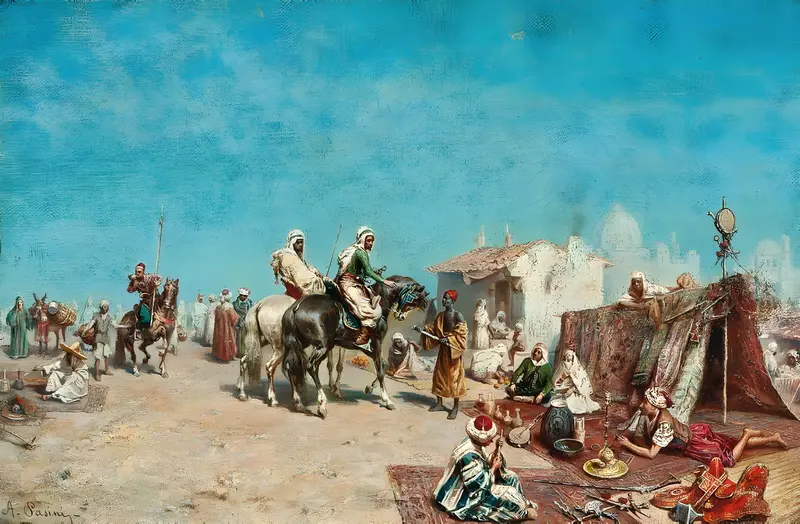
Arab merchants at a market by the city walls
Alberto Pasini
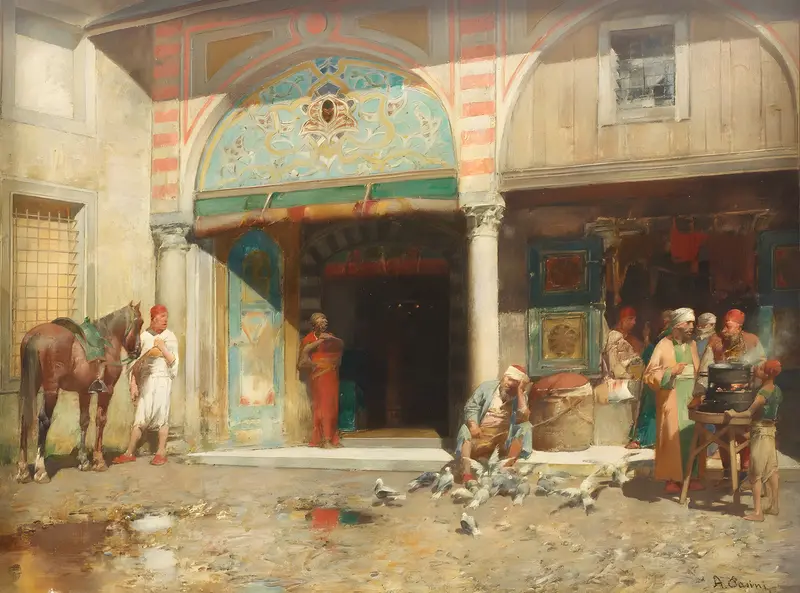
Outside the mosque
Alberto Pasini
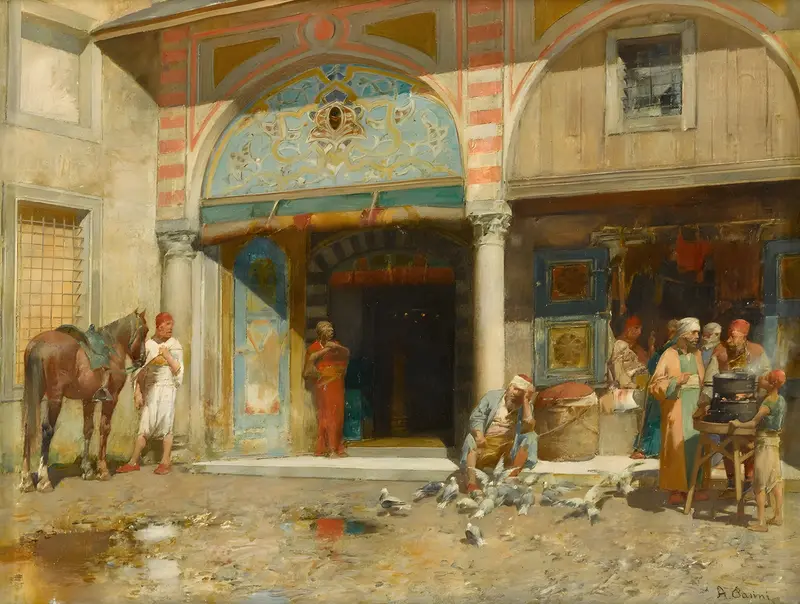
Outside the Mosque
Alberto Pasini
More Genre Scene Art

Banquet of the Officers of the St George Civic Guard
Frans Hals

Rembrandt and Saskia in the Scene of the Prodigal Son
Rembrandt van Rijn

Bal du moulin de la Galette
Pierre-Auguste Renoir

Quadrille at the Moulin Rouge
Henri de Toulouse-Lautrec

A Burial at Ornans
Gustave Courbet

When Will You Marry?
Paul Gauguin