
Martigues, La Voile Blanche — History & Facts
The stillness of the harbor whispers secrets of loss and longing, where the gentle lapping of water masks the weight of betrayal lingering beneath the surface. In this serene landscape, one can almost feel the ache of memories hidden in the folds of the sail and the soft hues of twilight. Focus first on the vibrant white sail that stands out against the rich, enveloping blues of the water and sky. The sail captures the last rays of sunlight, illuminating its fabric and creating a striking contrast with the shadows that creep along the wooden boats.
Look closely at the brushwork, where layers of delicate strokes intertwine, giving life to the gentle undulations of the waves. The warm ochres and cool ceruleans blend harmoniously, inviting the viewer into a moment suspended in time. Yet, amidst this tranquil beauty lies an undercurrent of tension. The stillness of the boats suggests a pause, as if they are caught in a moment of reflection or regret.
The distant horizon, shrouded in soft clouds, hints at an imminent storm—both in nature and in human relationships. Each element, from the solitary sail to the tranquil water, evokes a deep sense of introspection, forcing us to confront the silent betrayals that often go unspoken. During the years 1890 to 1895, Ziem painted this piece while residing primarily in Venice and France, where his exploration of light and color flourished. This period marked a transition in art, as Impressionism began to dominate, challenging traditional boundaries.
Ziem, influenced by this movement yet rooted in academic training, sought to merge his love for landscape with burgeoning modern techniques, reflecting both the physical beauty of Martigues and the emotional weight it carries.
More Artworks by Félix Ziem
Browse all →
Venise
Félix Ziem
Coucher De Soleil À Venise
Félix Ziem
Constantinople
Félix Ziem
La place Saint-Marc, inondation de 1863
Félix Ziem
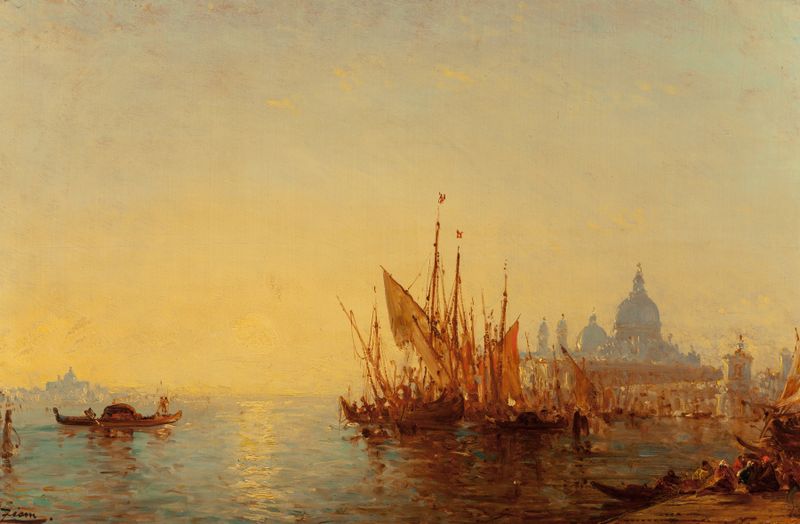
Bacino di San Marco
Félix Ziem
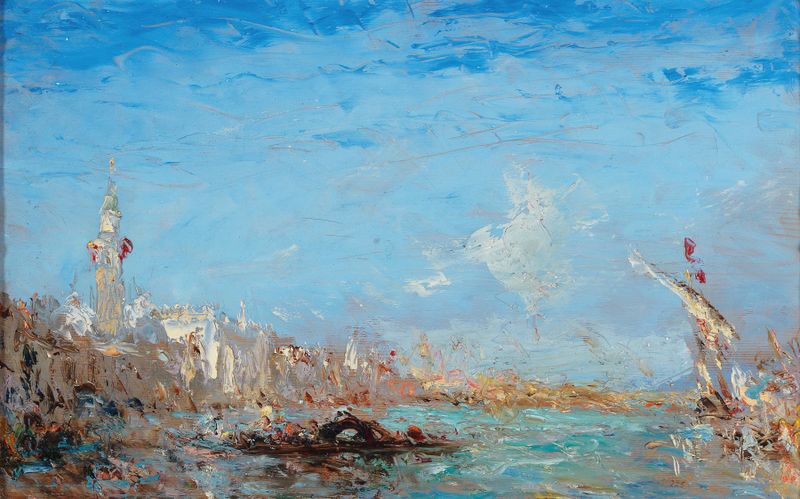
Canal Grande
Félix Ziem
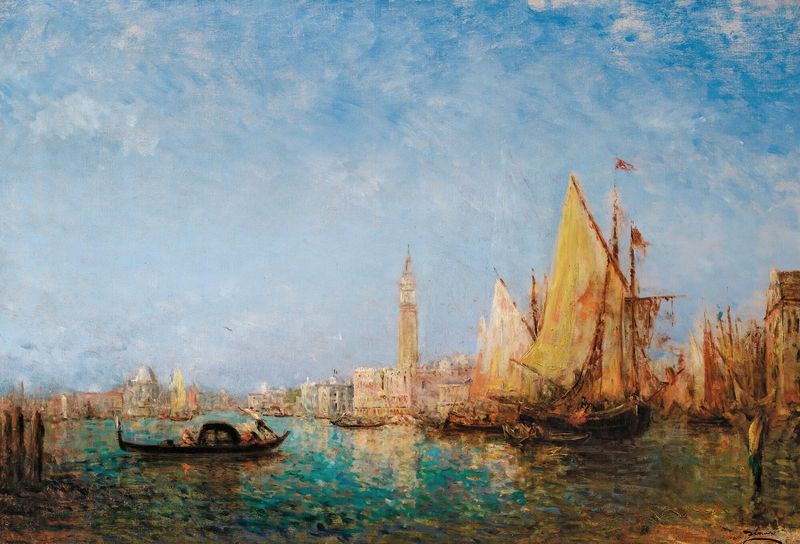
Le Palais Du Doge, Venise
Félix Ziem
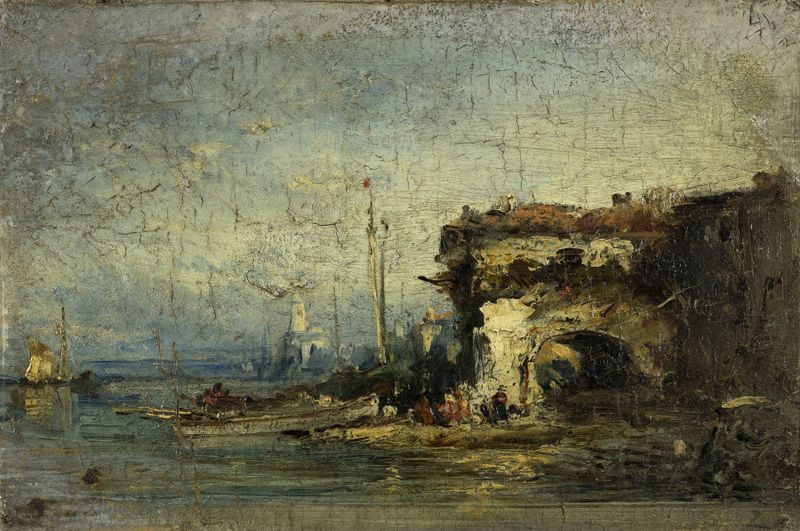
Vue d’Italie; la vieille porte
Félix Ziem
San Simeone Piccolo Au-Delà Du Grand Canal, Venis
Félix Ziem
Venise, gondole et voiliers devant le Palais des doges et San Giorgio Maggiore
Félix Ziem





