
Matlock High Tor — History & Facts
In the gentle embrace of twilight, the artist unravels a dialogue steeped in solitude and introspection. Look to the left at the towering cliffs, their rugged edges softened by a wash of ochre and umber tones. These majestic formations cradle the scene, while the river below reflects the waning light, creating a serene yet melancholic interplay. Notice how the clouds, tinged with hues of rose and lavender, stretch across the sky, suggesting a transition between day and night.
The meticulous brushwork captures both the grandeur of the landscape and the intimate stillness that envelops it, inviting contemplation. Delve deeper into the painting's emotional landscape—the starkness of the cliffs contrasts poignantly with the tranquil waters, mirroring the tension between isolation and serenity. The lone figure, small against the vastness, embodies the essence of loneliness, evoking a sense of yearning and reflection. Every stroke and color choice speaks to the artist's intent, revealing the silent weight of existence amidst the beauty of nature. In 1784, John Warwick Smith painted this scene while residing in England, a time when the Romantic movement began to reshape the landscape of art.
Emerging as a prominent figure in watercolor, he navigated the worlds of nature and emotion, seeking to express the sublime through his works. As the art world shifted toward exploring personal experience and feelings, this painting became a testament to his ability to capture the profound solitude inherent in the human experience.
More Artworks by John Warwick Smith
Browse all →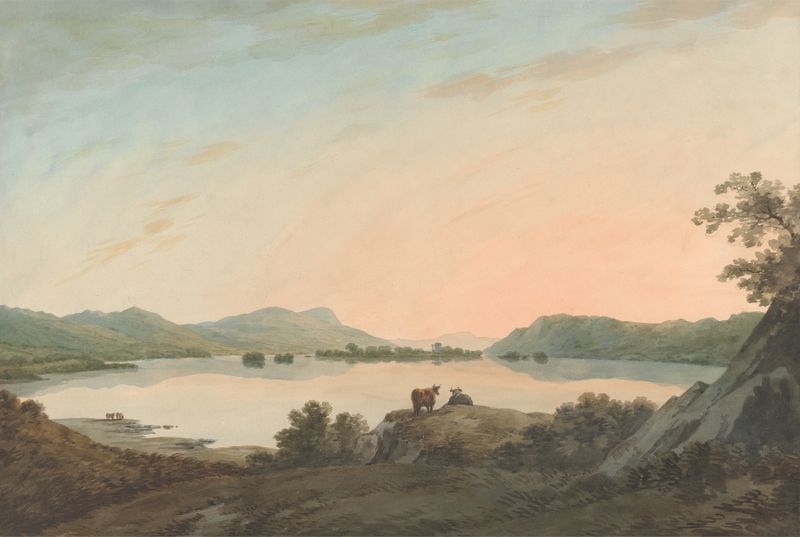
Lake Windermere from Calgarth with Belle Isle
John Warwick Smith
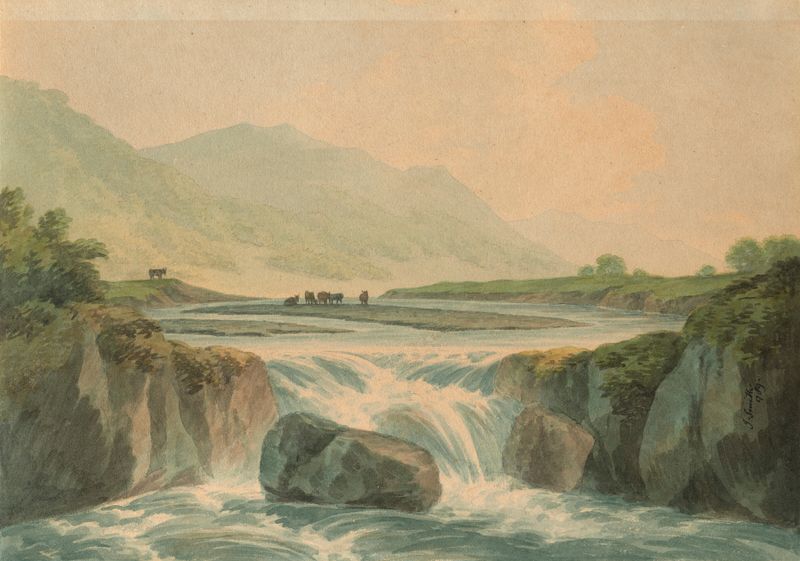
A waterfall on the River Rheidol, with cattle in the distance, North Wales
John Warwick Smith
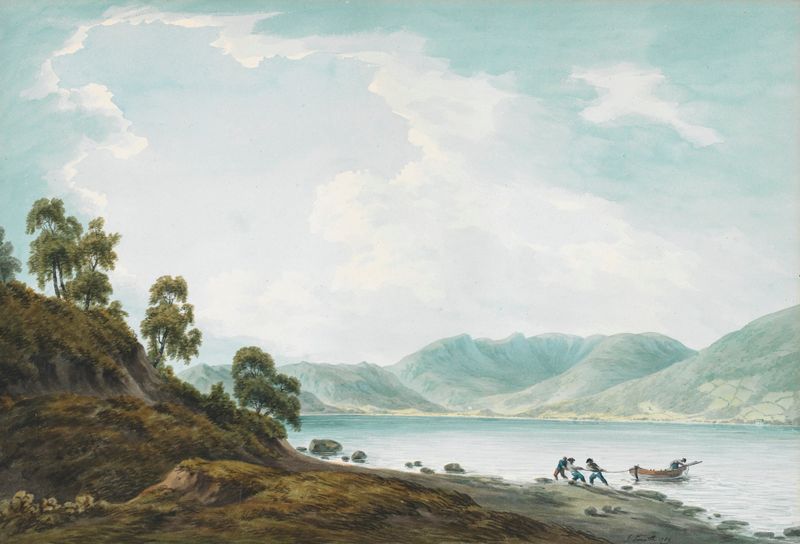
Head of Windermere from Belle Grange Farm
John Warwick Smith
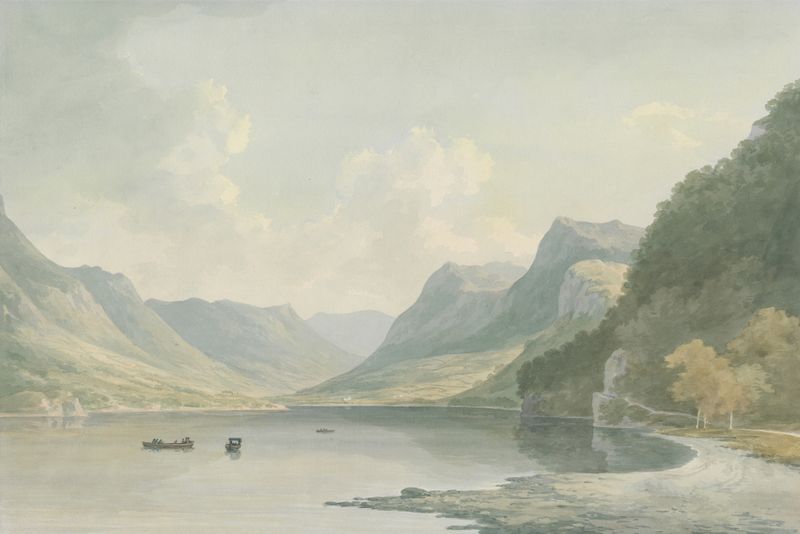
Ullswater, Looking toward Patterdale
John Warwick Smith
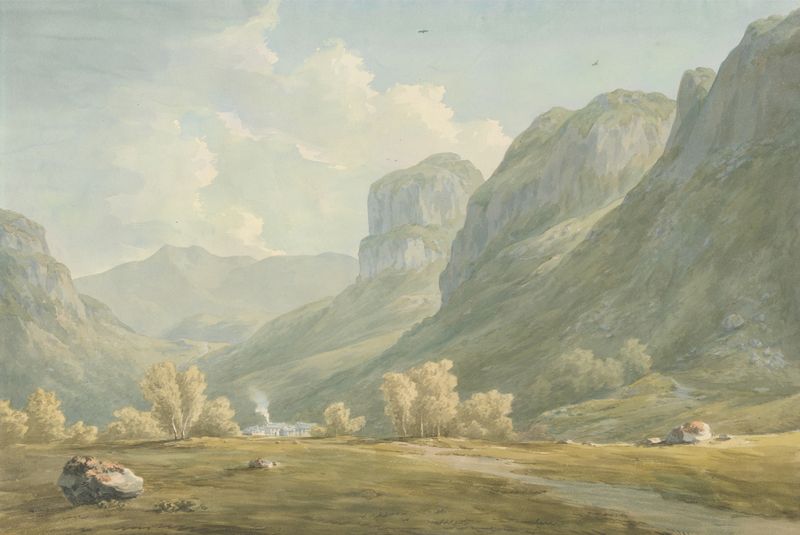
Village of Stonethwaite and Eagle Cragg, Borrowdale
John Warwick Smith
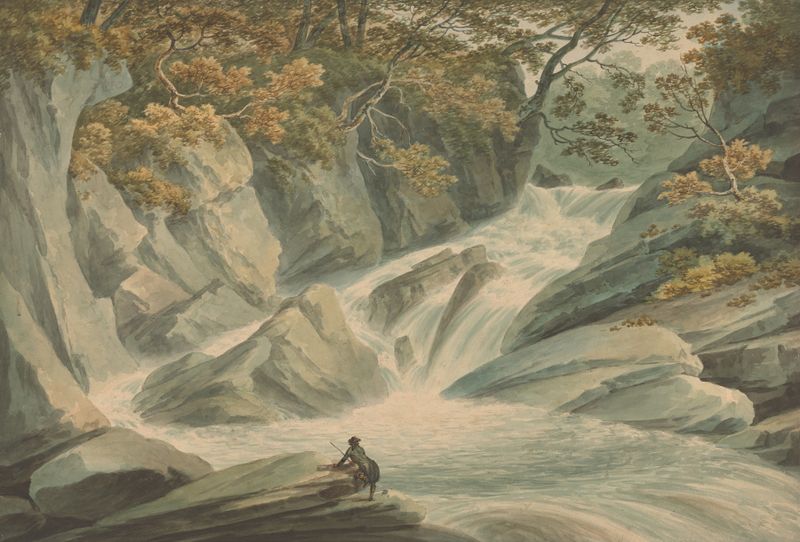
Hafod; Upper Part of Cascade
John Warwick Smith
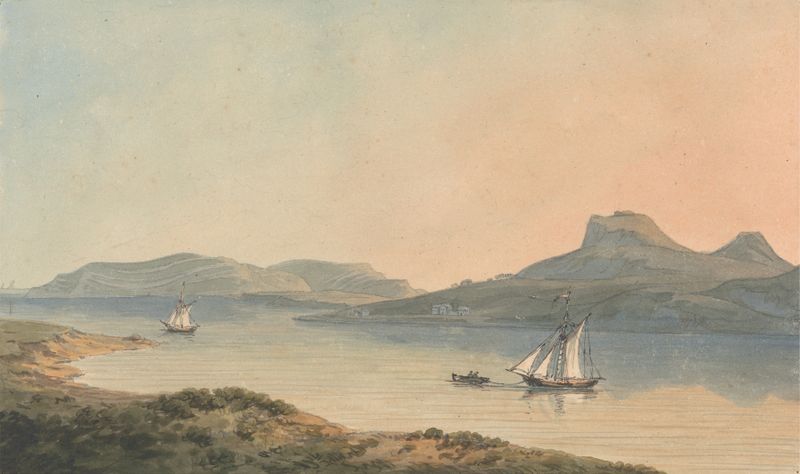
View of the Early Castle of Diganwy
John Warwick Smith
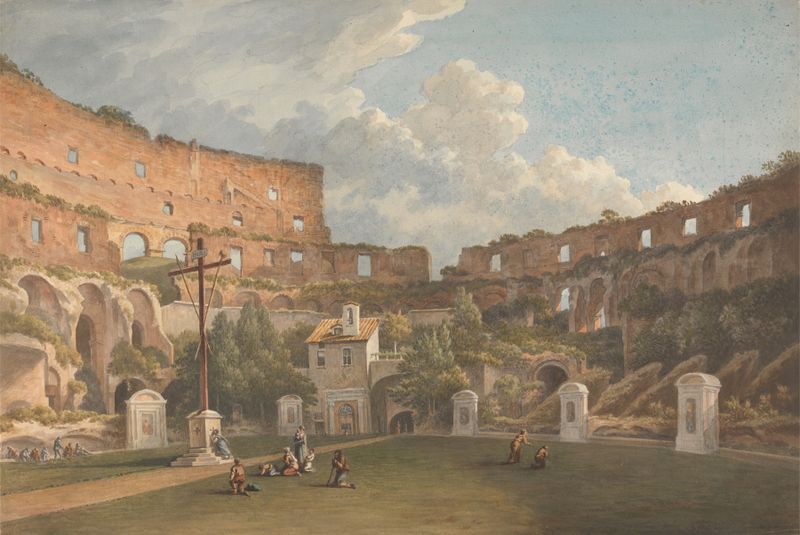
An Interior View of the Colosseum, Rome
John Warwick Smith
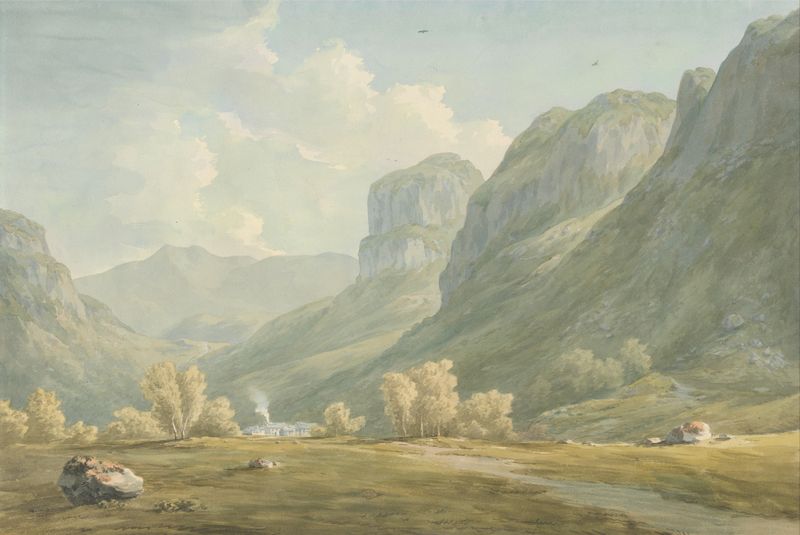
Village of Stonethwaite and Eagle Cragg, Borrowdale
John Warwick Smith
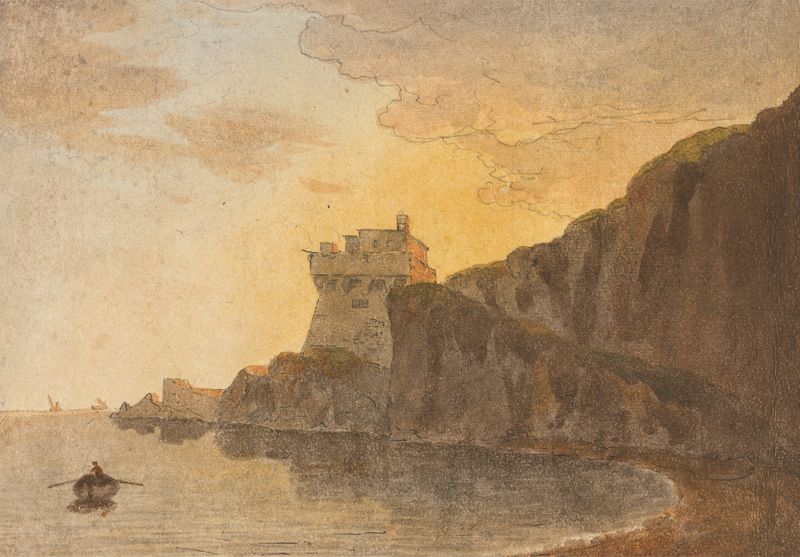
In the Bay of Salerno, near Vietri
John Warwick Smith





