
Maturity — History & Facts
The face in Maturity refuses to settle into a single mood. Its eyes, impossibly wide and dark, seem both to confront and to retreat, drawing the viewer into a silent conversation. The artist, Alexej von Jawlensky, builds the head from blocks of color—emerald, ochre, violet, and crimson—each patch of paint a deliberate choice that shapes the sitter’s presence.
The thick, black outlines do not so much contain the colors as set them vibrating against each other, giving the entire surface a restless energy. Light here is not natural; it is psychological, casting the face into a state of perpetual arrival. The background, a field of yellow and orange, presses forward, refusing to let the figure recede. Created in 1912, this work belongs to a moment when artists across Europe were searching for new ways to paint the human spirit.
Jawlensky was part of the Expressionist movement, which rejected realism in favor of color and form as carriers of emotional truth. Portraits like this were rarely commissions; instead, they were acts of self-inquiry and experiment, intended for the artist’s circle or for progressive collectors who sought the shock of the new. The painting now resides in the Lenbachhaus collection, a fitting home for a work that helped define Munich’s avant-garde.
Look again at those eyes: they hold the viewer, asking what it means to be seen and to see.
More Artworks by Alexej von Jawlensky

Murnau
Alexej von Jawlensky
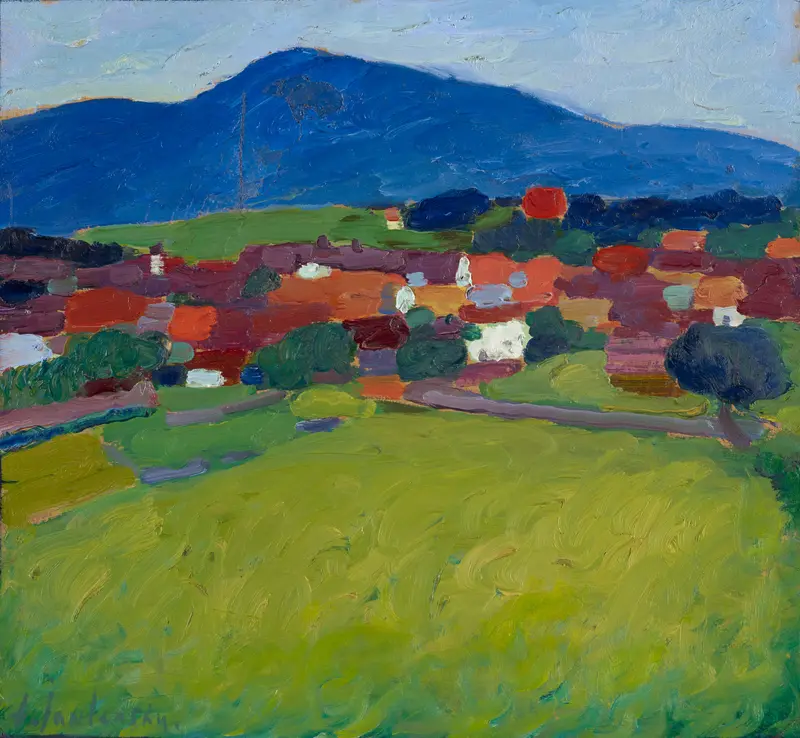
The Village Of Murnau
Alexej von Jawlensky
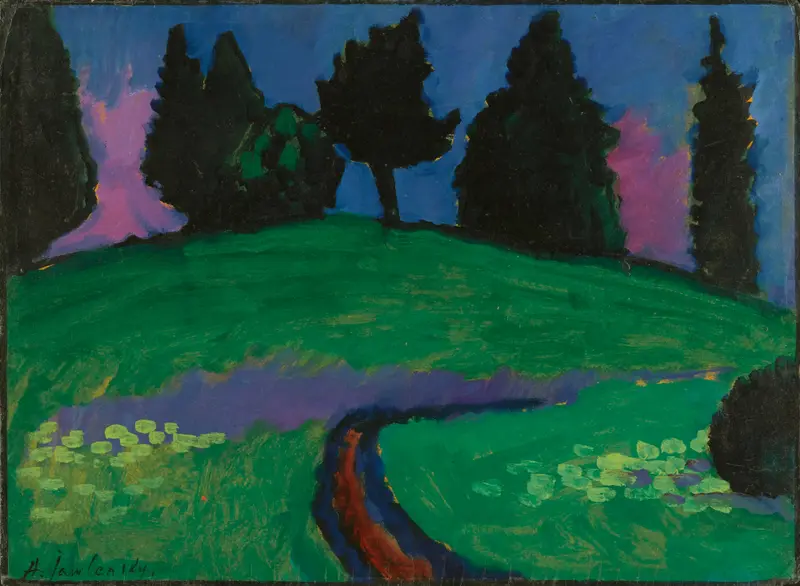
Dunkle Bäume über Grünem Hang (Dark Trees Over Green Slope)
Alexej von Jawlensky
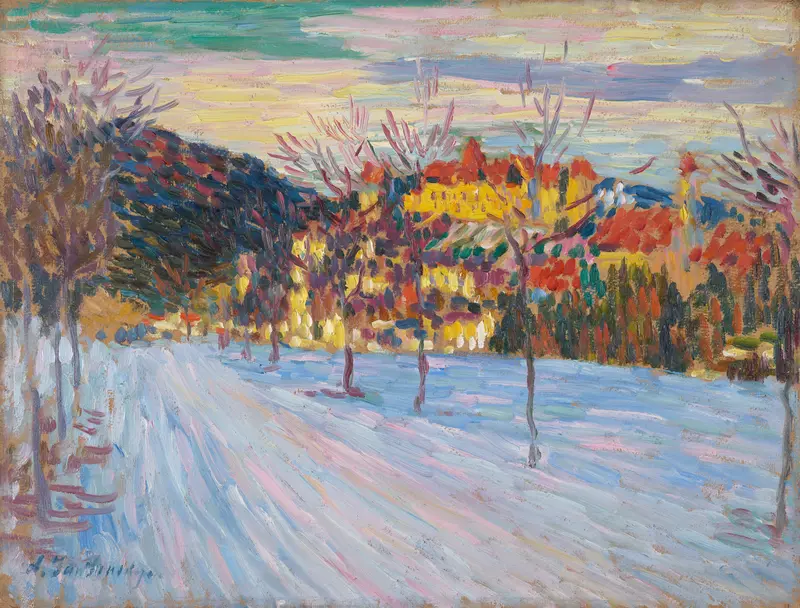
Füssen
Alexej von Jawlensky
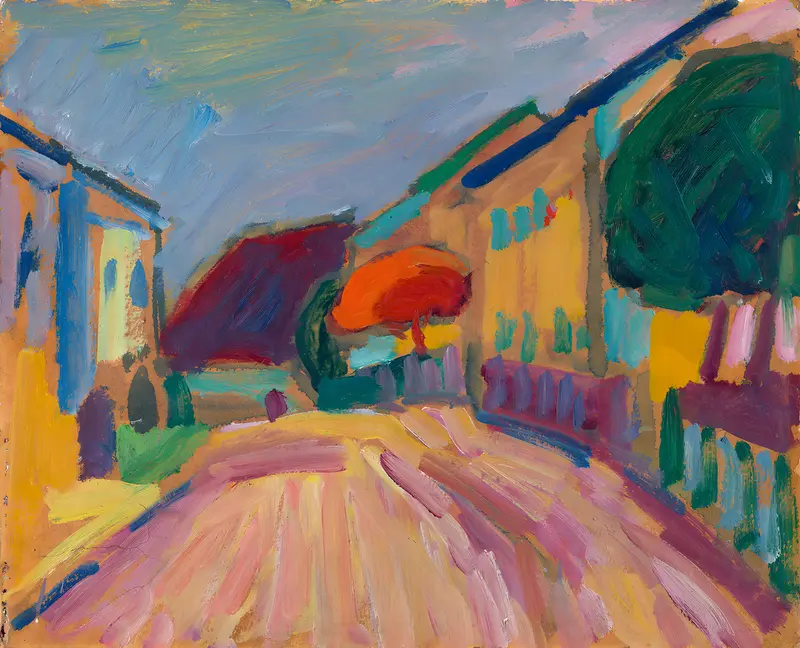
Sketch from Murnau
Alexej von Jawlensky
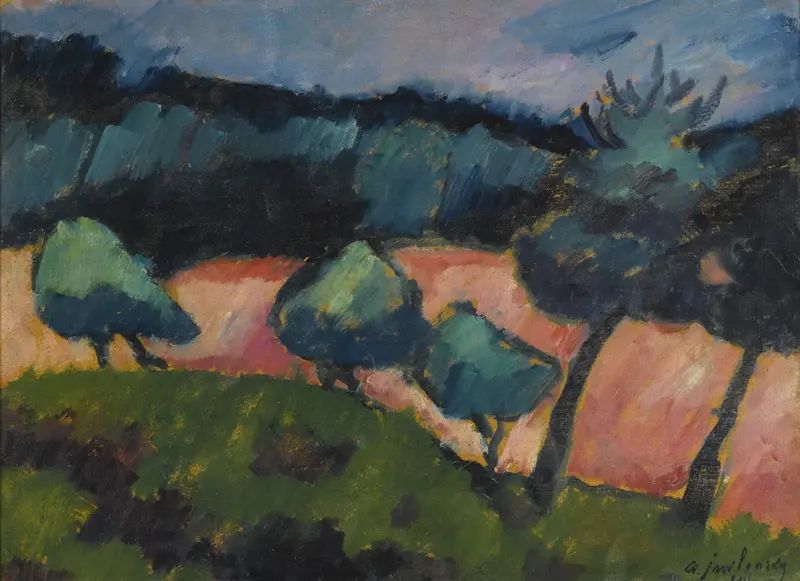
Bäume und Dünen in Prerow (Trees and dunes in Prerow)
Alexej von Jawlensky
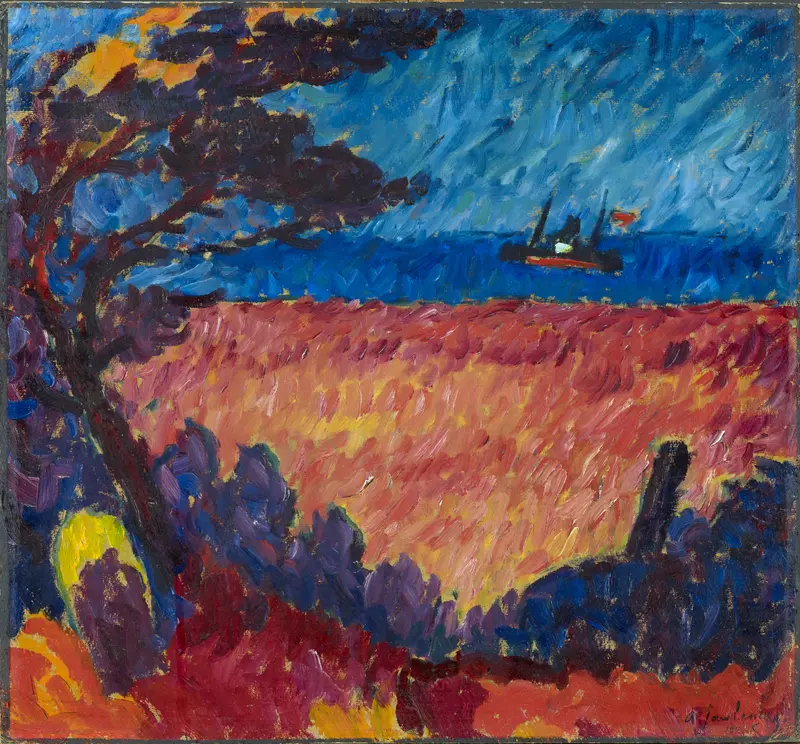
At The Baltic Sea
Alexej von Jawlensky
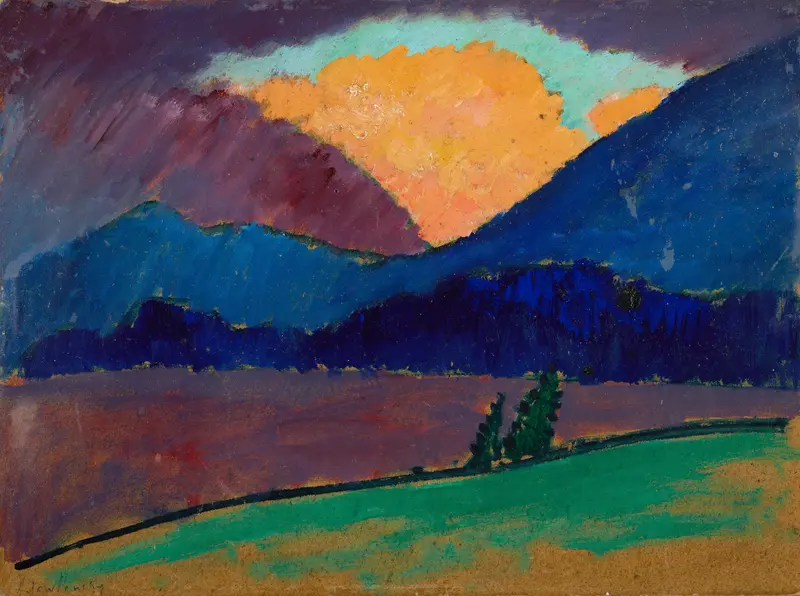
Summer evening in Murnau
Alexej von Jawlensky
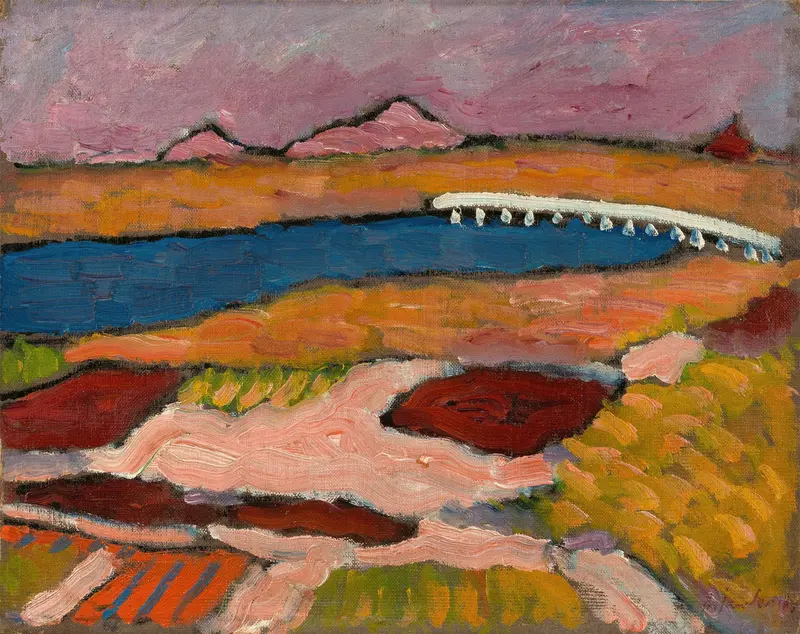
Prerow (Darß), Pommern
Alexej von Jawlensky
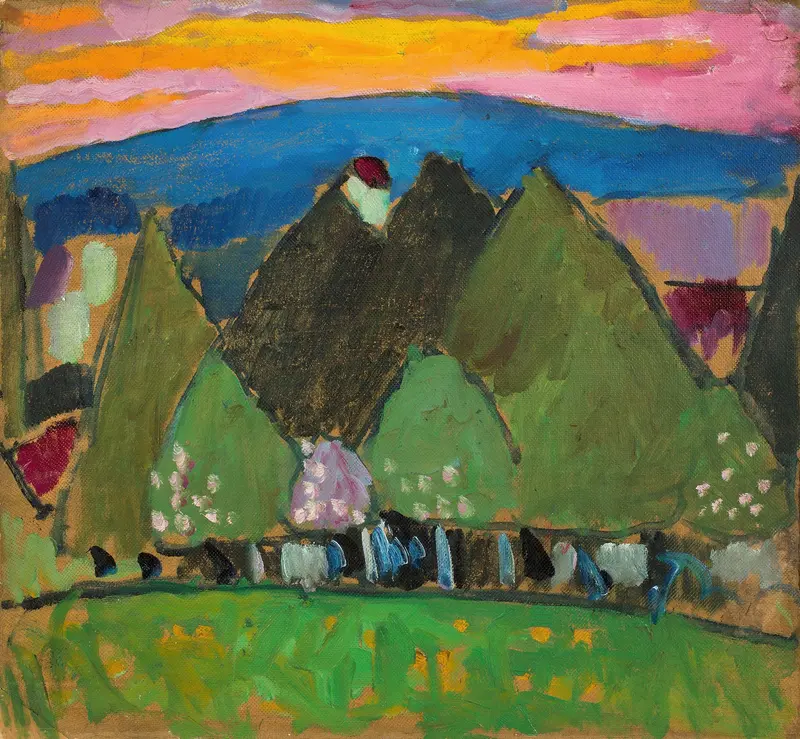
Landschaft mit Bäumen
Alexej von Jawlensky





