
Merry-Go-Round in a Park — History & Facts
What secret hides in the quiet of the canvas? In Merry-Go-Round in a Park, the stillness speaks volumes of emptiness, a stark contrast to the vibrant joys often depicted on such rides. Look to the right at the brilliantly painted carousel structure, its colors muted yet deliberate, hinting at forgotten laughter. Notice how the light falls upon the surrounding park, casting gentle shadows that stretch languidly, invoking a sense of stillness rather than motion. The meticulous detail in the individual horses stands out; their expressions hold a silent yearning, frozen in time, as the viewer’s gaze lingers on the vacant seats. This stark portrayal conjures a deep sense of nostalgia, evoking a bittersweet memory of joy now lost.
The contrast between the lively form of the carousel and the empty surroundings creates an emotional tension that resonates with viewers, pushing them to reflect on the fleeting nature of happiness. Each brushstroke seems to echo the absence of children’s laughter and the palpable silence that envelops the scene, transforming a once-vibrant locale into a haunting reminder of what has faded away. In 1938, Franciszek Bartoszek painted this scene during a turbulent period in Europe, marked by rising tensions and the impending threat of war. Living in Poland, he was already grappling with a cultural landscape fraught with uncertainty.
The artwork captures not only a moment in time but also a profound commentary on the socio-political climate, where the innocence of childhood glee stands in stark contrast to the darkness that loomed over the continent.
More Artworks by Franciszek Bartoszek
Browse all →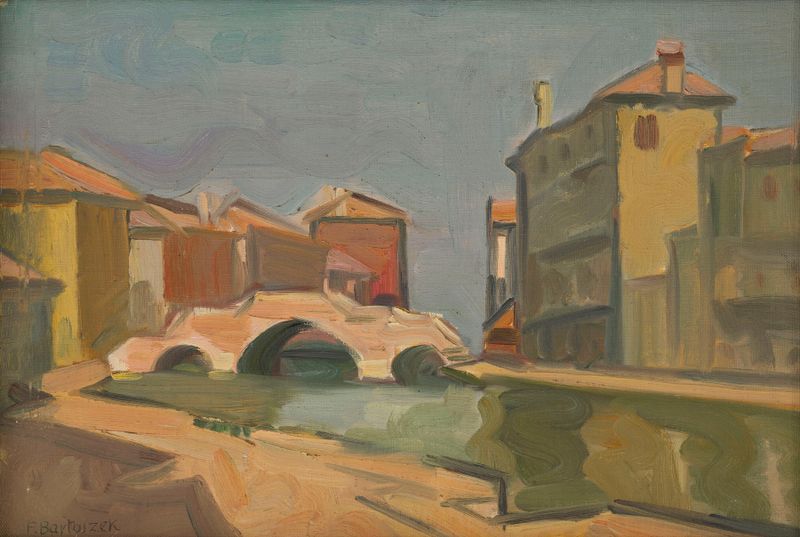
Venice
Franciszek Bartoszek

View of San Marco and Campanillo
Franciszek Bartoszek
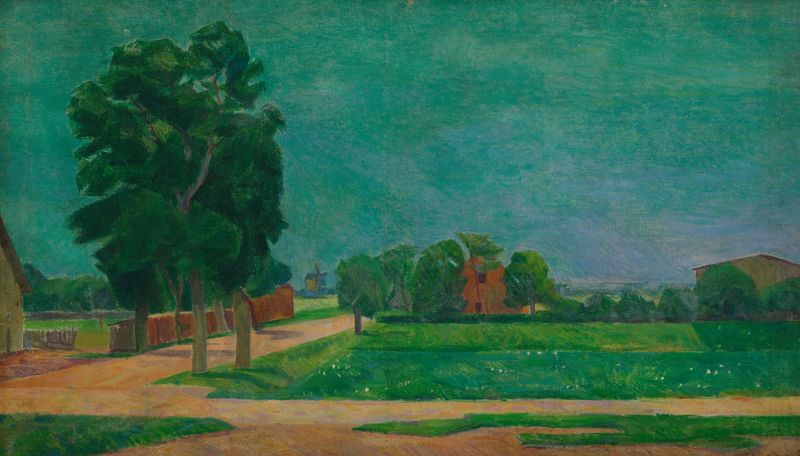
Landscape
Franciszek Bartoszek

Venice
Franciszek Bartoszek

Landscape with Pine Trees
Franciszek Bartoszek
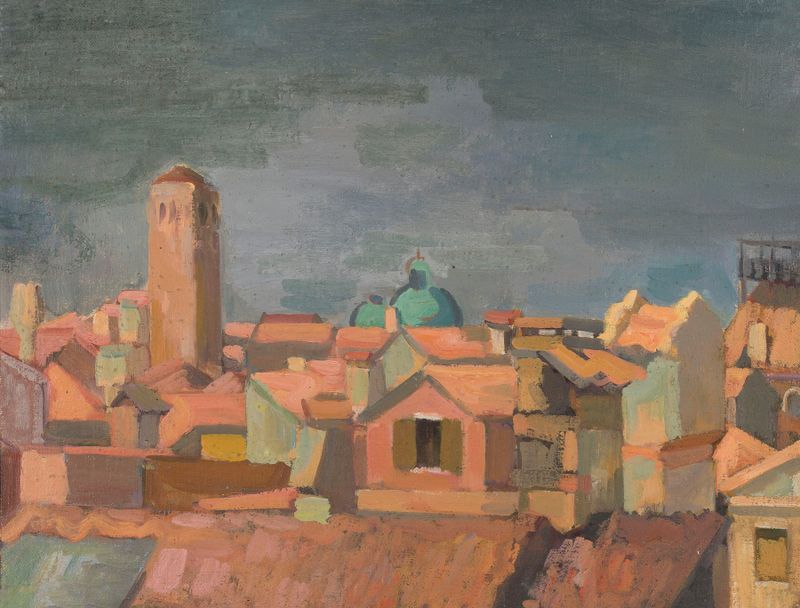
View of an Italian city
Franciszek Bartoszek
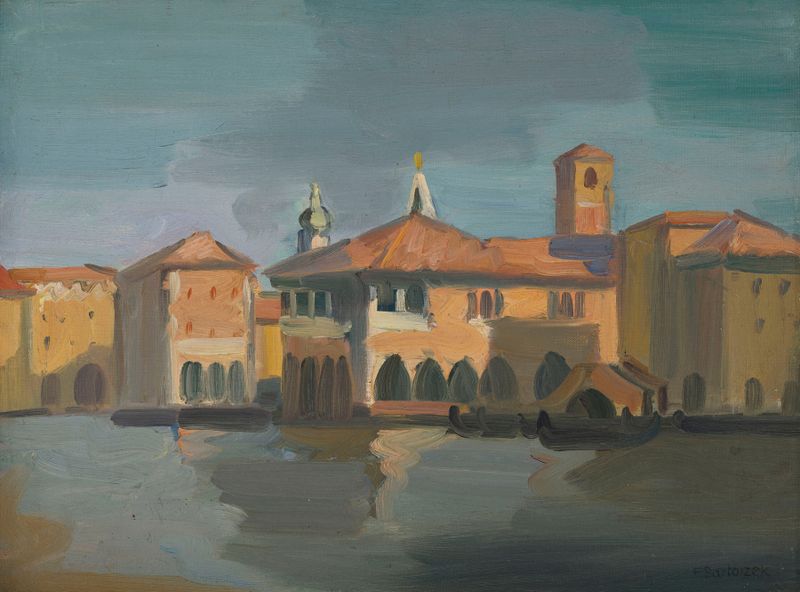
Venice II
Franciszek Bartoszek
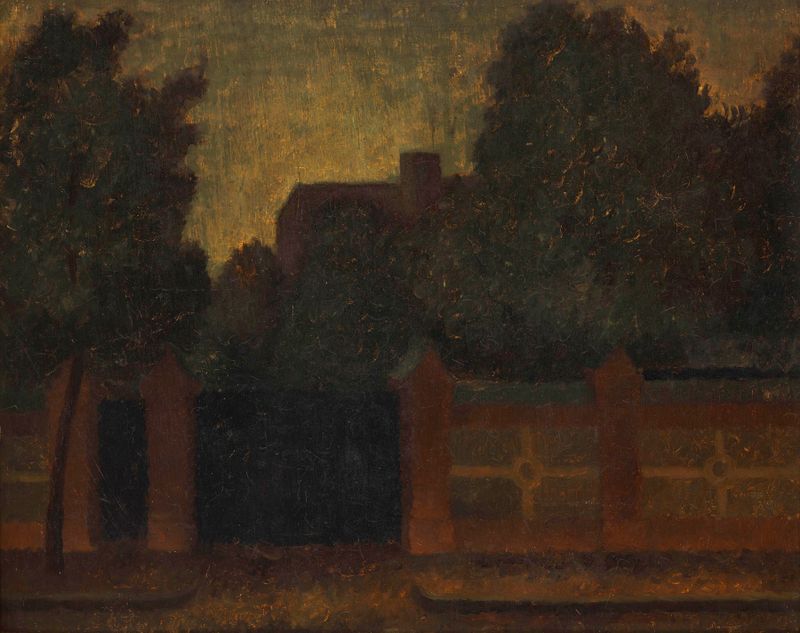
Landscape – Road behind a Fence
Franciszek Bartoszek

Venice (Canal)
Franciszek Bartoszek
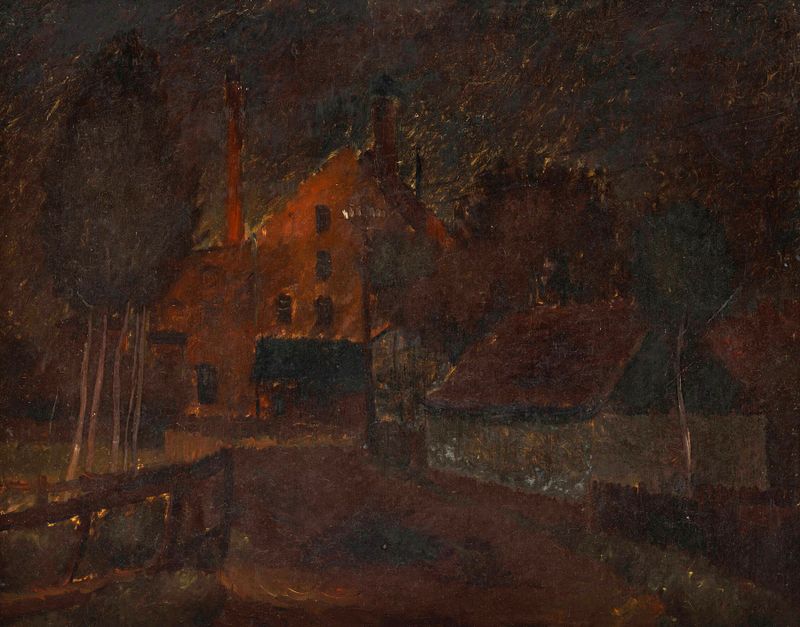
Brewery in Czarnków
Franciszek Bartoszek





