
Mi-carême à Paris — History & Facts
In the heart of Paris, beneath the hazy canopy of nostalgia, the delicate dance of memory unfolds, capturing an ephemeral moment in time. Look to the center of the composition where revelers dance joyously, their colorful garments swirling like confetti in the spring air. The artist uses a soft palette of pastel hues to evoke warmth and gaiety, while dappled light cascades through the trees, creating a dreamlike atmosphere. The expertly rendered figures invite the viewer's gaze, their expressions brimming with delight, as if they are caught in a whirlpool of celebration, timeless in their bliss. Beneath this buoyant exterior lies a poignant contrast—much like the bittersweet blend of joy and melancholy in life.
The celebration hints at the fleeting nature of happiness, as the figures' smiles mask the encroaching shadows of change in a world on the brink of tumult. The gentle brushwork conveys a sense of movement, suggesting that these moments of unity and laughter, much like the seasons, are destined to fade into memory. In 1912, Luigi Loir was deeply entrenched in the vibrant art scene of Paris, where the afterglow of Impressionism intersected with burgeoning modernist ideas. While the city thrived with energy, global tensions simmered beneath the surface, heralding the changes that would soon engulf Europe.
It was during this delicate balance of joy and foreboding that Mi-carême à Paris emerged, capturing a moment of fleeting happiness against the backdrop of an uncertain future.
More Artworks by Luigi Loir
Browse all →
Marché aux fleurs sous la neige
Luigi Loir

Le Louvre, Paris
Luigi Loir
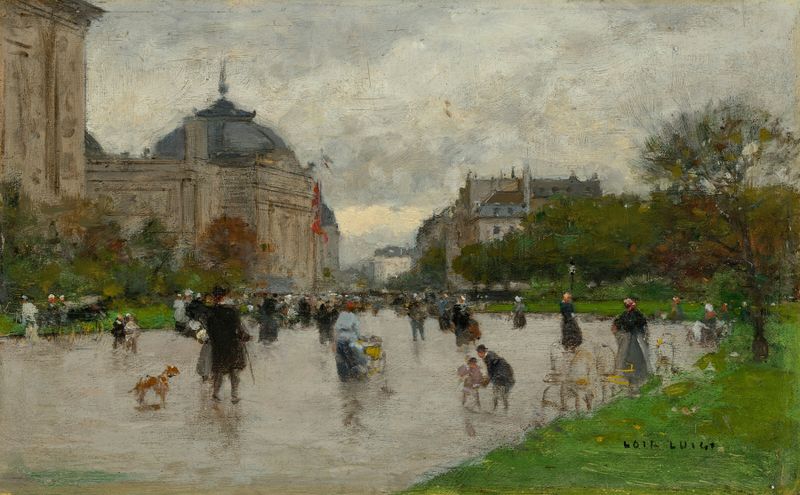
The Champs Élysées, Paris
Luigi Loir
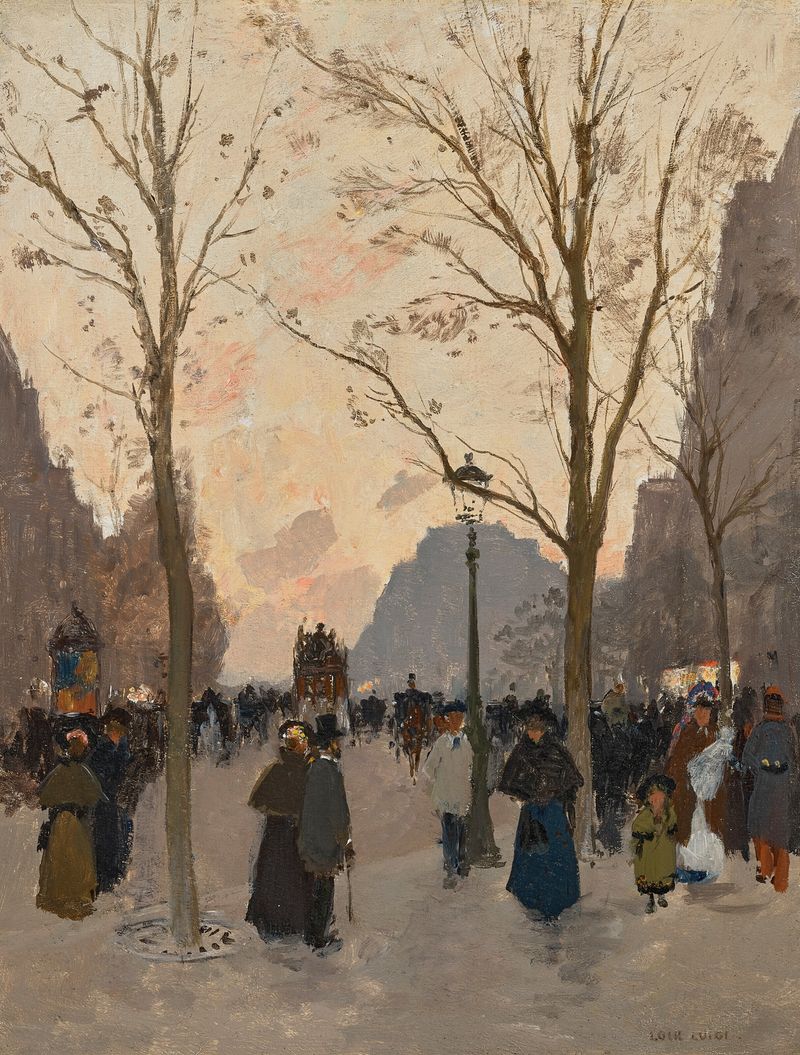
La Place de la République, Paris
Luigi Loir

Le boulevard du Palais, vu de la place Saint-Michel
Luigi Loir

La fête foraine
Luigi Loir
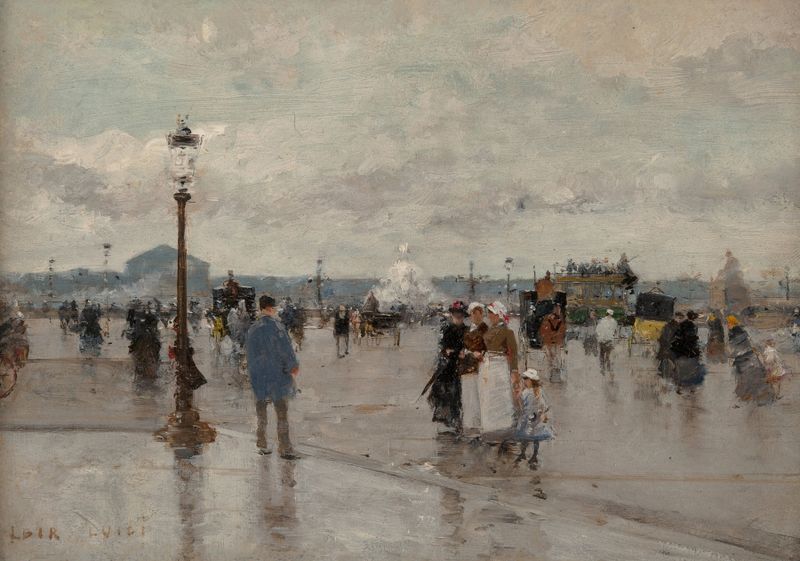
La sortie de Paris, Porte d’Asnières
Luigi Loir
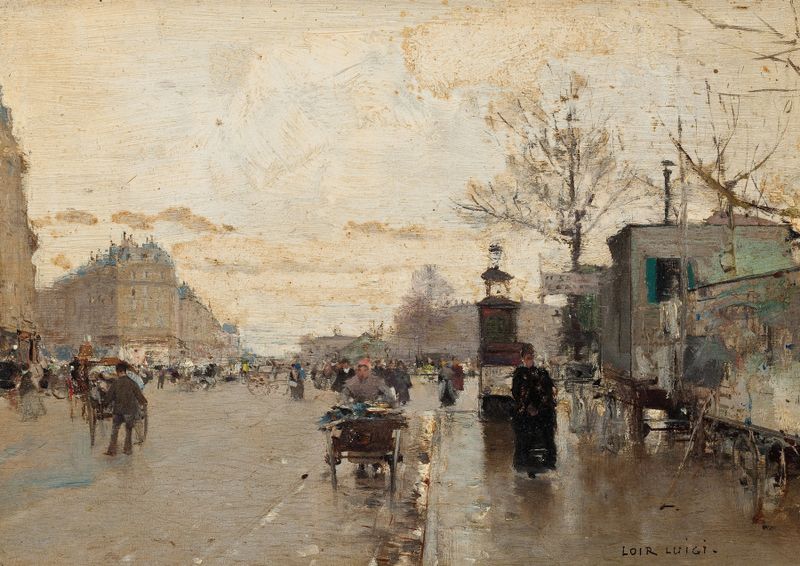
Parisian Street Scene
Luigi Loir

Les Quais De La Seine, 1900
Luigi Loir
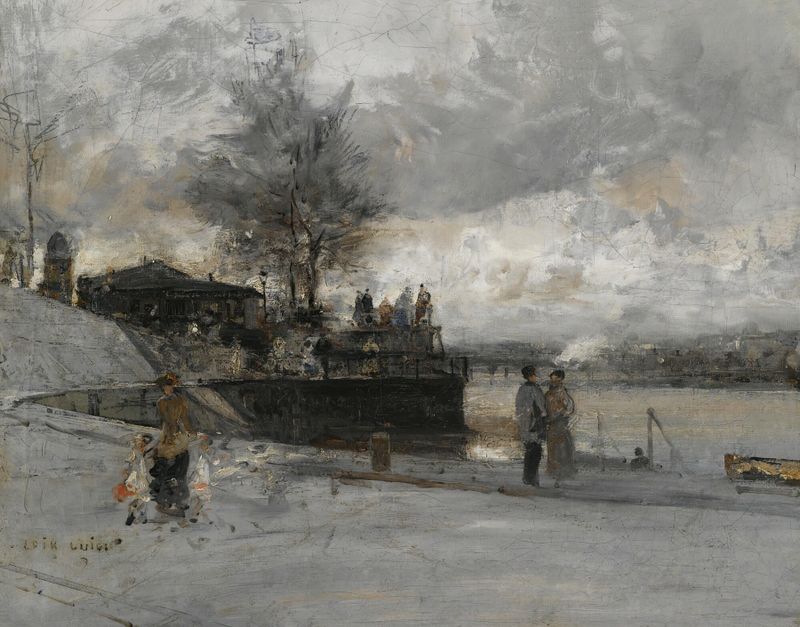
Quai Au Bord De La Seine, Paris
Luigi Loir





