Midsummer Dance at Rättvik — History & Facts
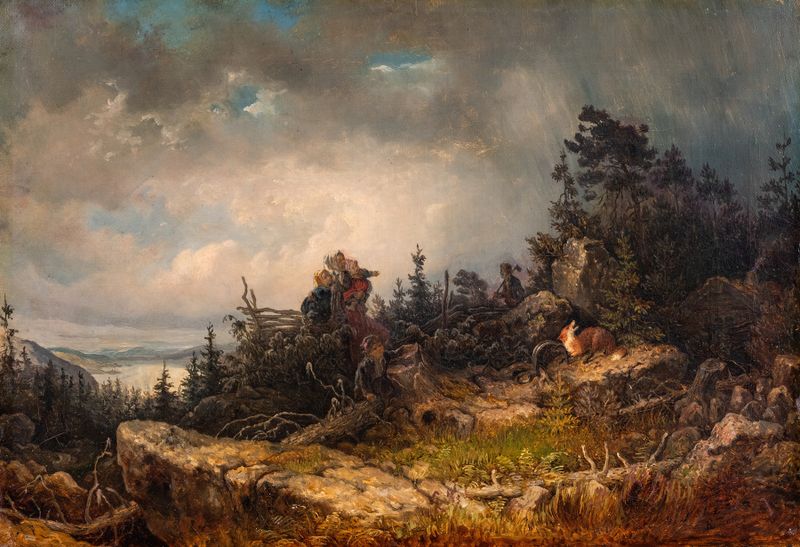
In the joyful dance of life, shadows lurk, whispering the violence of what is unwritten and unspoken. Look closely at the vibrant figures swirling through the center of this lively composition. The dancers, clad in traditional garments, create a kaleidoscope of movement, their skirts and sashes flowing like water caught in a swift current. Notice how the warmth of sunlight dapples their faces, illuminating joyous expressions that contrast sharply with the encroaching darkness of the surrounding forest.
The use of rich colors, especially the deep greens of the foliage, evokes a sense of nature reclaiming its space as the festivity unfolds, suggesting the duality of celebration and impending loss. Yet, beneath this lively surface, there is an underlying tension. The joyful gathering feels ephemeral, the participants blissfully unaware of the shadowy figures lurking in the background, hinting at the violence of history that could erupt at any moment. The tension between light and dark not only serves to heighten the vibrancy of the scene but also acts as a reminder of deeper truths; peace is often a fleeting moment within a larger, more chaotic narrative.
The dissonance of joy and violence invites the viewer to question what lies beneath the surface of human experience, revealing the fragility of happiness. In 1852, Kilian Zoll painted this scene while residing in Germany, a time when Romanticism dominated the art world. His works often explored themes of nature and folklore, reflecting a societal yearning for connection amidst the rapid changes of the industrial age. As Europe grappled with the echoes of conflict and transformation, Zoll's depictions of communal joy also captured the undercurrents of anxiety, ensuring that history would remember what many would prefer to forget.