
Militärparade vor Kaiser Franz Joseph I. — History & Facts
On a crisp morning in Vienna, Emperor Franz Joseph I would often review his troops with the same precision and ceremony that defined his long reign. Militärparade vor Kaiser Franz Joseph I. by Tadeusz Ajdukiewicz captures one such parade, a spectacle that was both a public demonstration of imperial power and a carefully choreographed ritual. These grand military reviews, especially frequent in the late 19th century, were more than displays—they were moments when the empire’s unity and might were put on parade before the eyes of its citizens and dignitaries.
The painting stands as a testament to the pageantry and discipline that underpinned the Austro-Hungarian monarchy at its height. Ajdukiewicz fixes his gaze on the instant when the emperor, resplendent in his uniform, acknowledges the passing regiments. The composition is alive with the shimmer of sabers, the glint of brass buttons, and the rhythmic alignment of horses and men. The emperor's upright bearing and the officers’ crisp salutes reinforce the strict hierarchy and order of the imperial court.
The use of light draws the viewer’s eye to Franz Joseph himself, set slightly apart from the massed ranks, underscoring his singular authority. While other artists, like Franz von Matsch in his own imperial scenes, often favored grand architectural backdrops, Ajdukiewicz brings the focus tightly onto the human drama of command and obedience. Little is known about the precise circumstances of this painting’s commission or its early history, and the exact date and medium remain uncertain. What is clear is that Tadeusz Ajdukiewicz was a favored portraitist and military painter among European courts, moving between Vienna, St.
Petersburg, and Bucharest. Works like this one contributed to his reputation as a chronicler of ceremonial life, blending accuracy with a keen sense for the theatrical. Today, Militärparade vor Kaiser Franz Joseph I. is recognized as part of the tradition of late 19th-century court painting, valued for its window onto the rituals that defined an empire now vanished.
More Artworks by Tadeusz Ajdukiewicz
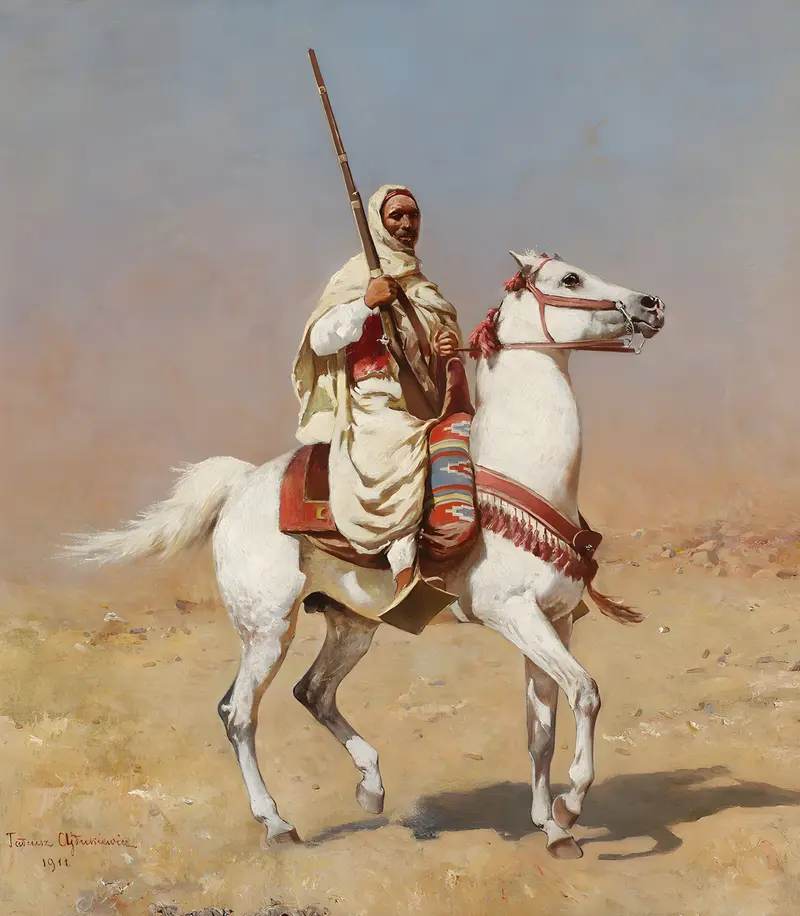
Arab on a grey horse
Tadeusz Ajdukiewicz
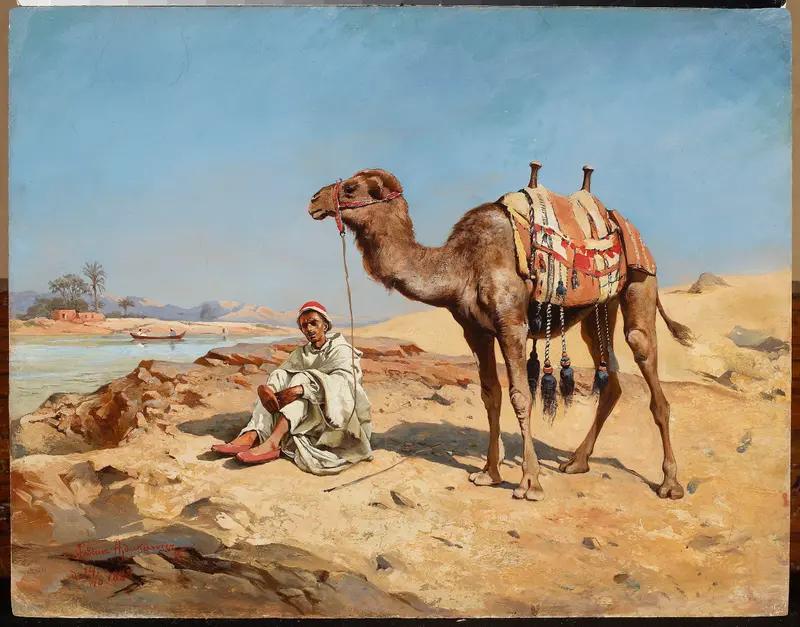
Arab in the desert
Tadeusz Ajdukiewicz
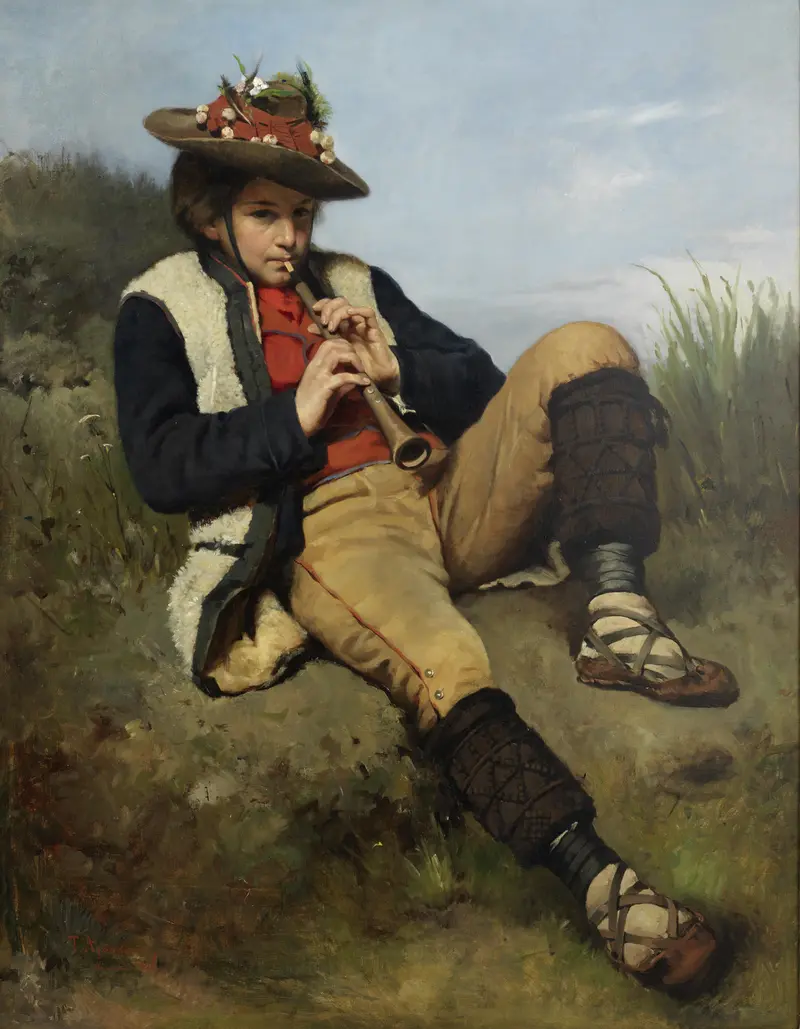
The shepherd boy
Tadeusz Ajdukiewicz

A Parforce Rider in the Forest
Tadeusz Ajdukiewicz
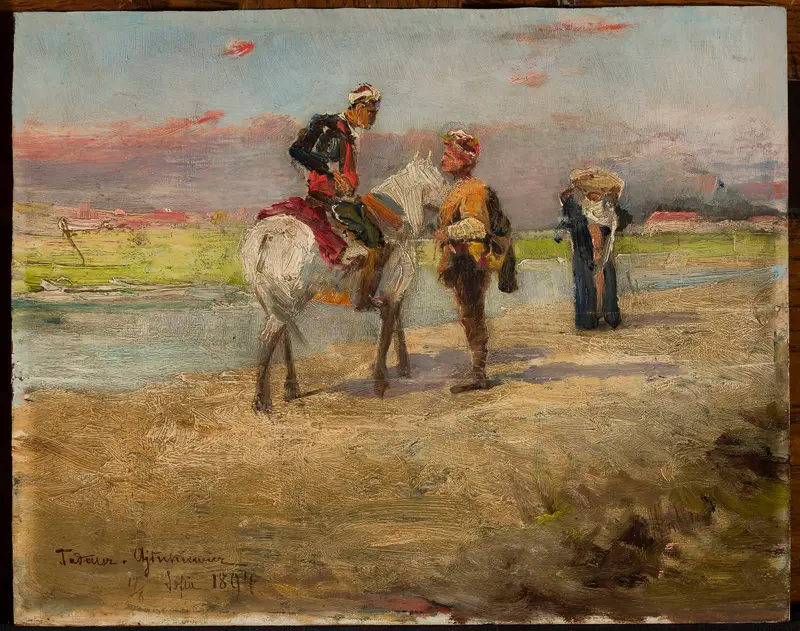
Eastern scene against a landscape
Tadeusz Ajdukiewicz
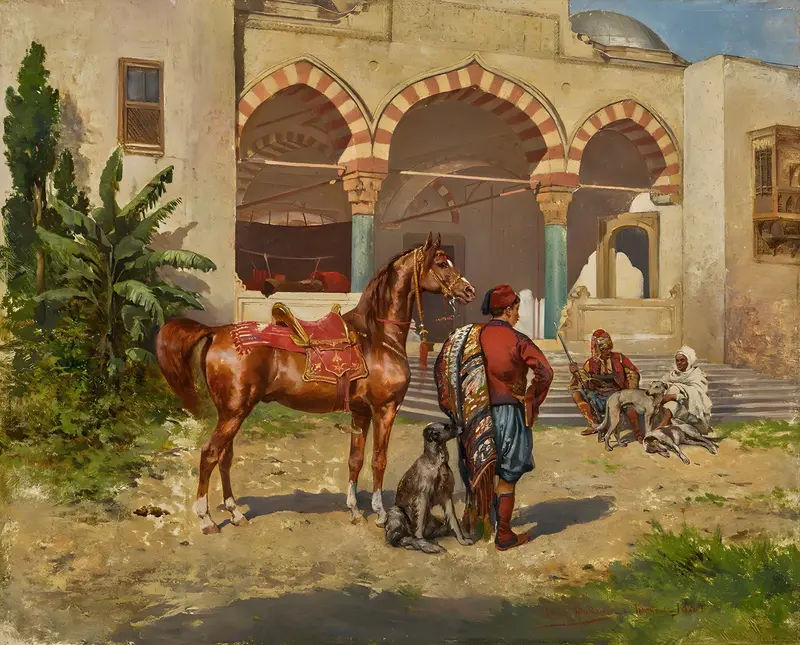
A turkish courtyard
Tadeusz Ajdukiewicz
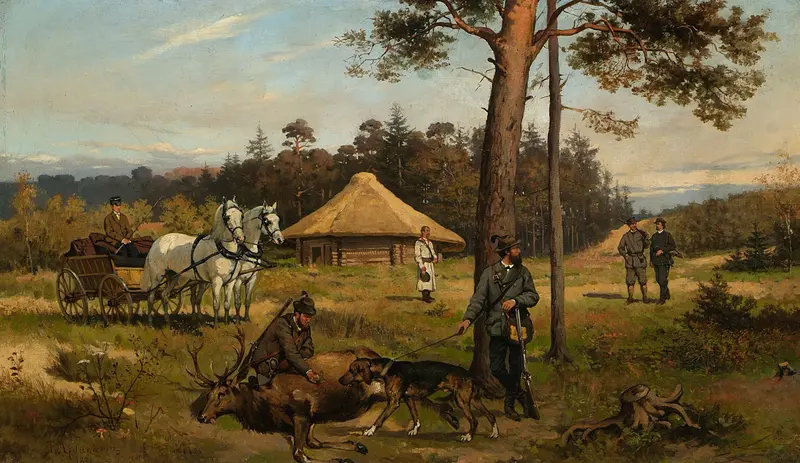
After hunting for a deer
Tadeusz Ajdukiewicz
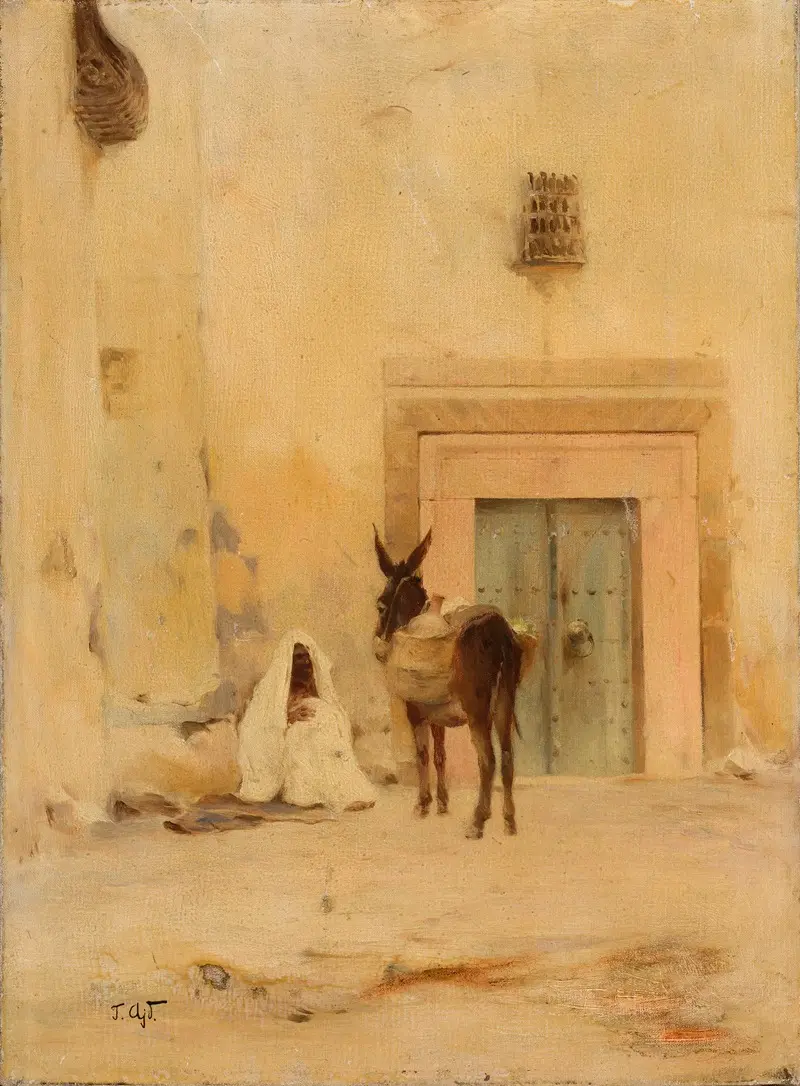
Arab and a donkey at the wall of a house
Tadeusz Ajdukiewicz
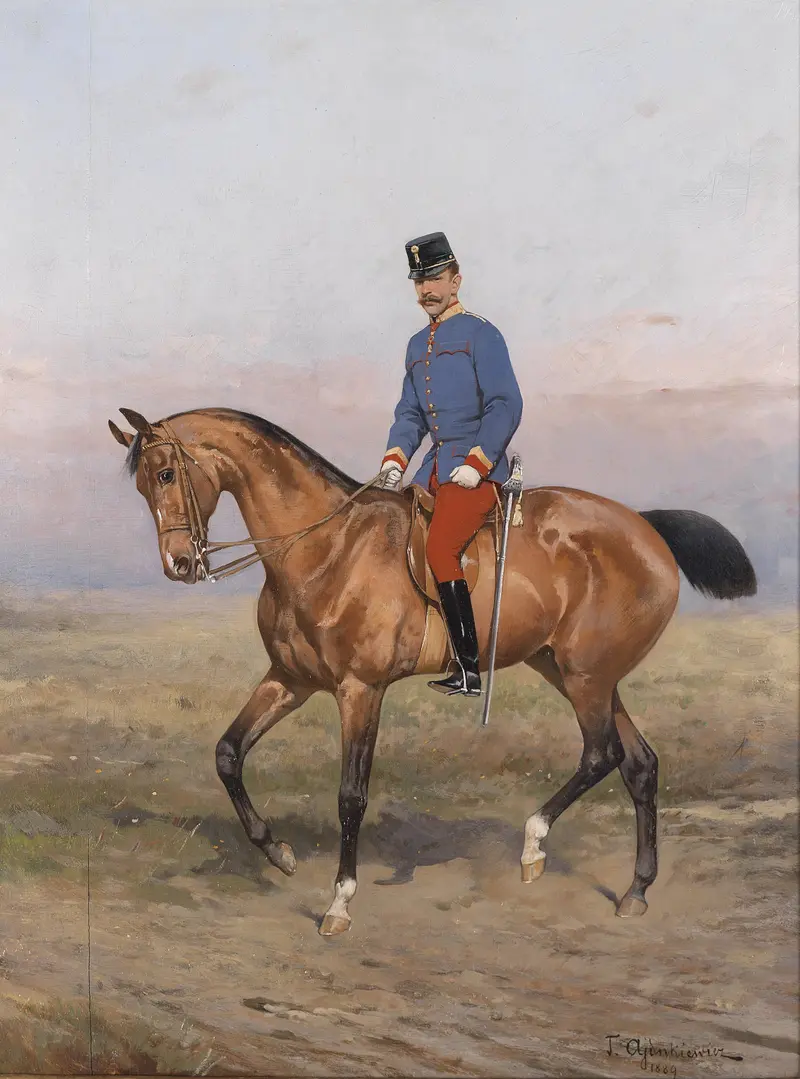
Kronprinz Rudolf zu Pferd
Tadeusz Ajdukiewicz
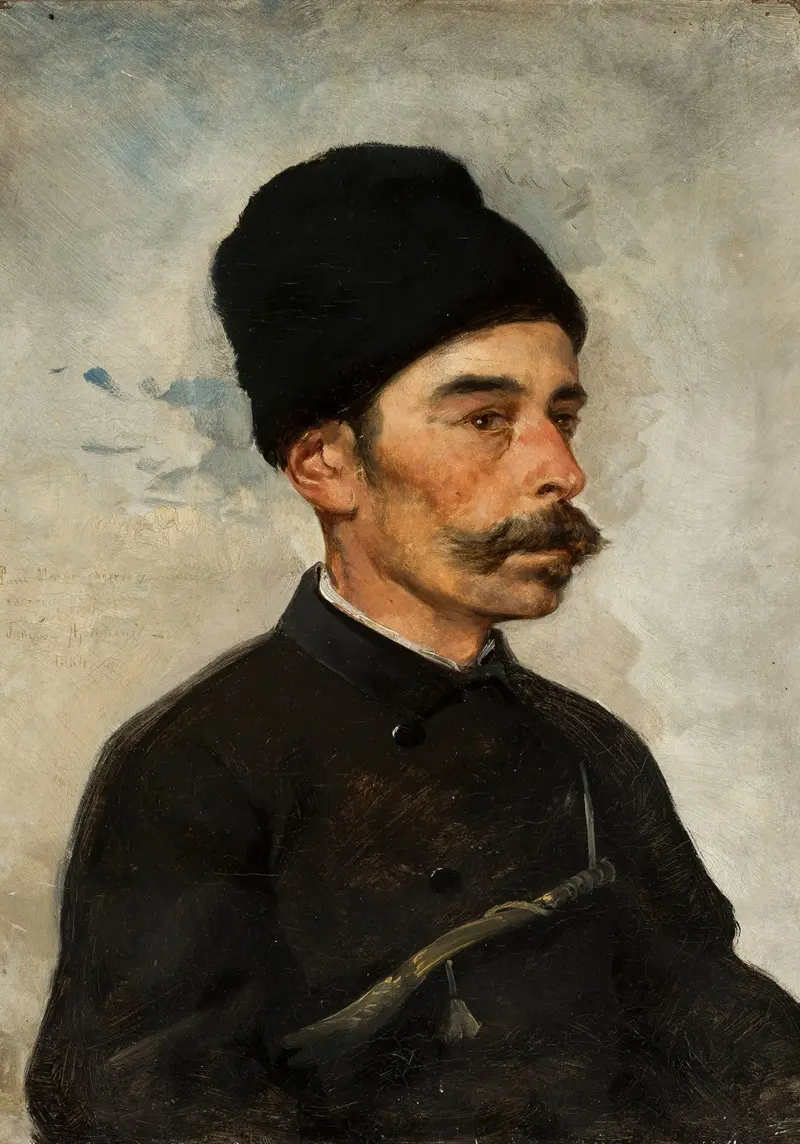
Study of a hunter
Tadeusz Ajdukiewicz





