
Kronprinz Rudolf zu Pferd — History & Facts
The fate of Kronprinz Rudolf zu Pferd is inseparable from the tragic story of its subject: Crown Prince Rudolf of Austria, heir to the Habsburg throne, whose mysterious death at Mayerling in 1889 shocked Europe and ended a dynasty’s hopes. Painted by Tadeusz Ajdukiewicz, a Polish artist renowned for his equestrian portraits of European nobility, the work captures Rudolf at the height of his promise, before scandal and despair overtook his life. The portrait stands as a rare visual testament to a figure whose life and death inspired novels, operas, and conspiracy theories.
Its creation, likely intended as a diplomatic gesture or commemorative gift, reflects the era’s fascination with royal pageantry and the cult of personality surrounding the Habsburgs. In this scene, Rudolf sits astride his horse in full military regalia, the animal poised mid-stride, both rider and steed exuding a sense of discipline and restless energy. The crisp uniform, complete with medals and sashes, signals his status as both soldier and prince, while the controlled handling of the reins hints at the pressures of royal duty. The backdrop—perhaps a parade ground or a sweeping landscape—serves to isolate Rudolf, drawing the eye to his upright posture and distant gaze.
Unlike the romanticized equestrian portraits of Franz Xaver Winterhalter, Ajdukiewicz’s approach is more restrained, emphasizing the tension between public expectation and private uncertainty. The light, falling evenly across horse and rider, denies any sense of triumph, instead suggesting the weight of responsibility. The precise origins and early history of Kronprinz Rudolf zu Pferd remain uncertain, as is often the case with Ajdukiewicz’s commissions for the Habsburg court and its circle. It is likely that the painting once hung in a palace or private residence connected to the imperial family, part of a tradition of courtly display.
Over time, as the empire dissolved and collections dispersed, the work’s whereabouts became less clear, and today it is known mainly through reproductions and exhibition records. Within Ajdukiewicz’s career, the painting stands as a testament to his reputation as a favored portraitist of European aristocracy, capturing not only likeness but also the shifting fortunes of a vanished world.
More Artworks by Tadeusz Ajdukiewicz
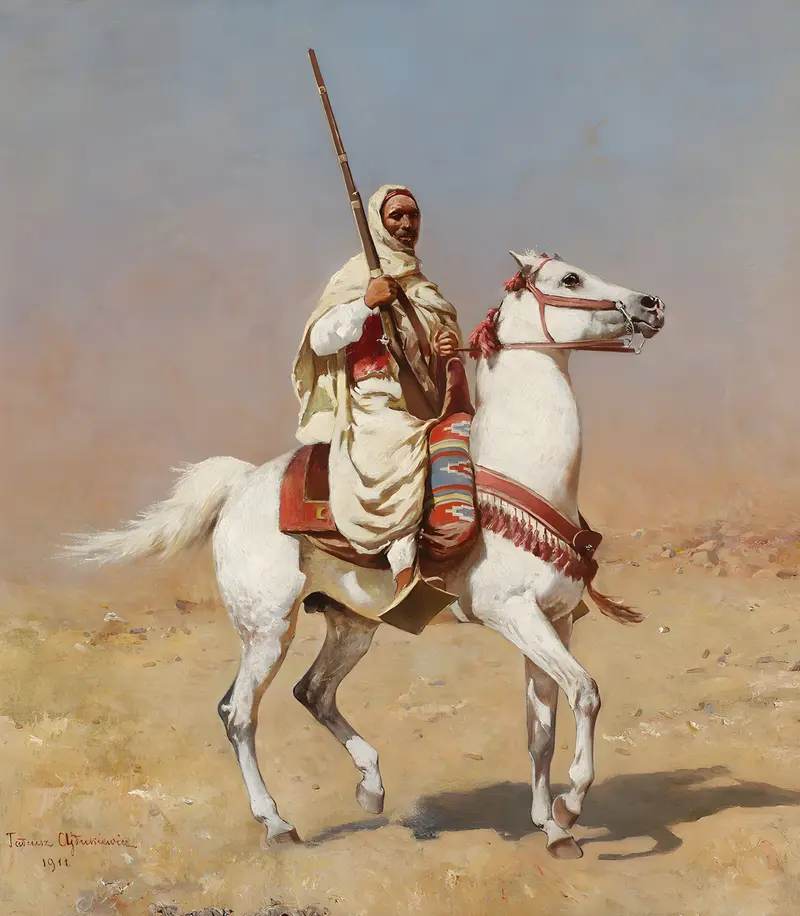
Arab on a grey horse
Tadeusz Ajdukiewicz
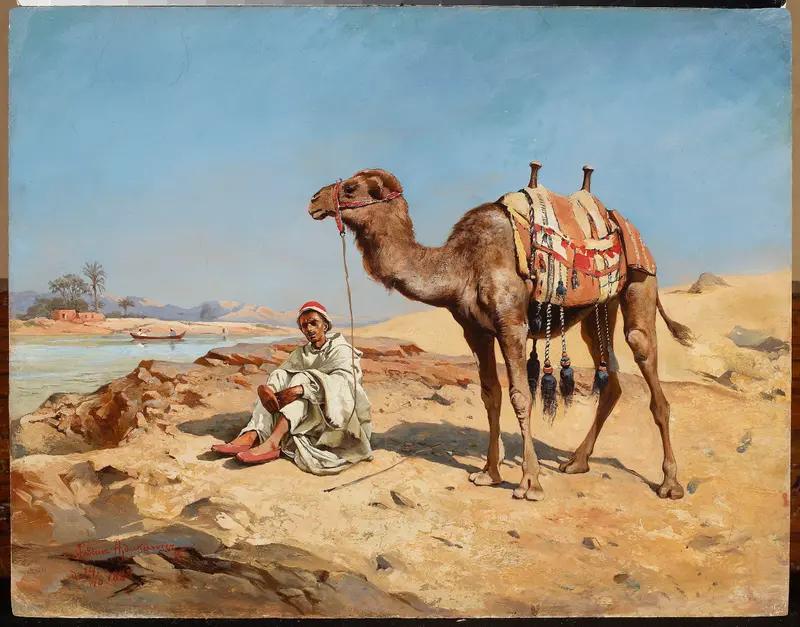
Arab in the desert
Tadeusz Ajdukiewicz
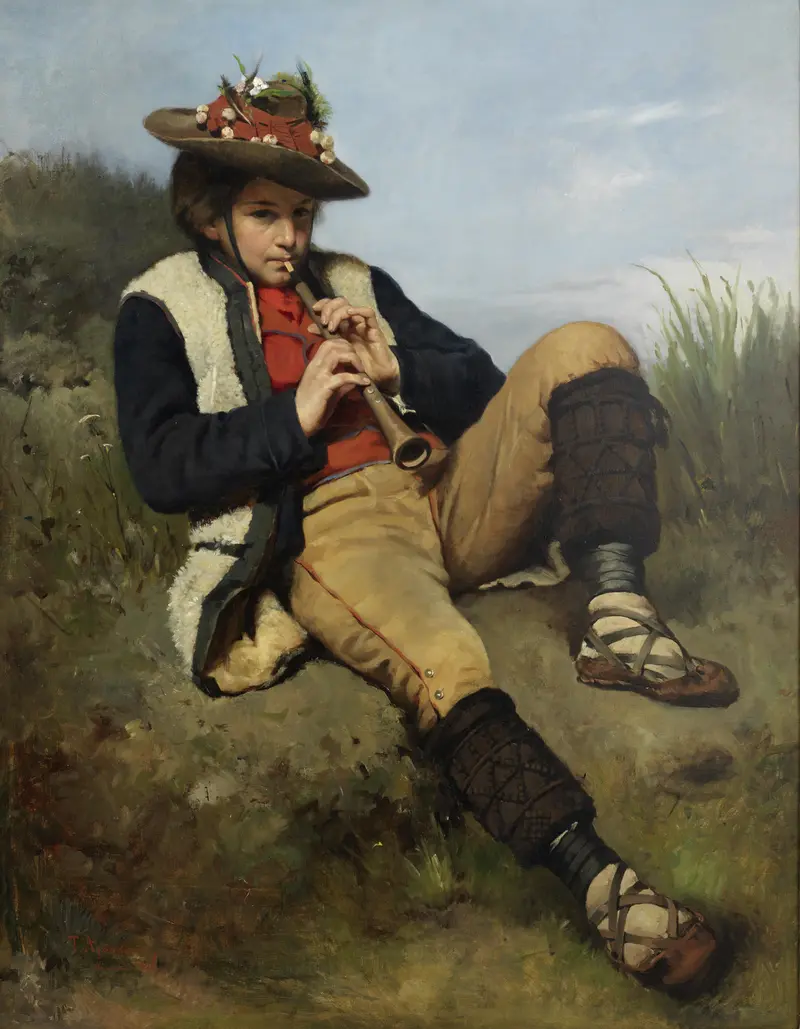
The shepherd boy
Tadeusz Ajdukiewicz

A Parforce Rider in the Forest
Tadeusz Ajdukiewicz
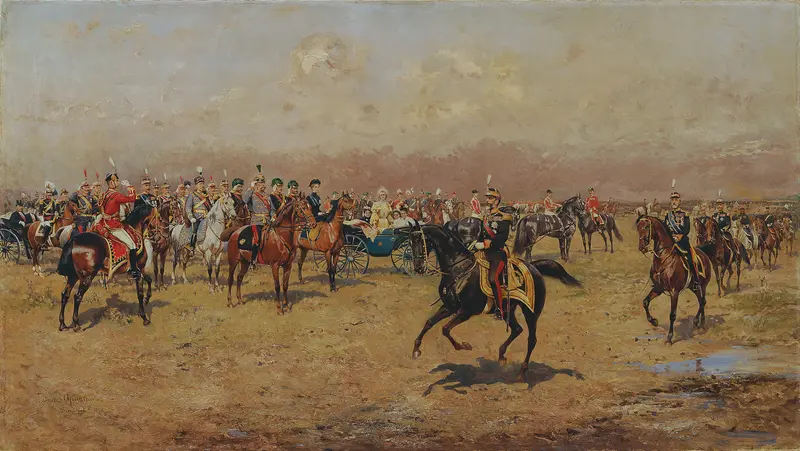
Militärparade vor Kaiser Franz Joseph I.
Tadeusz Ajdukiewicz
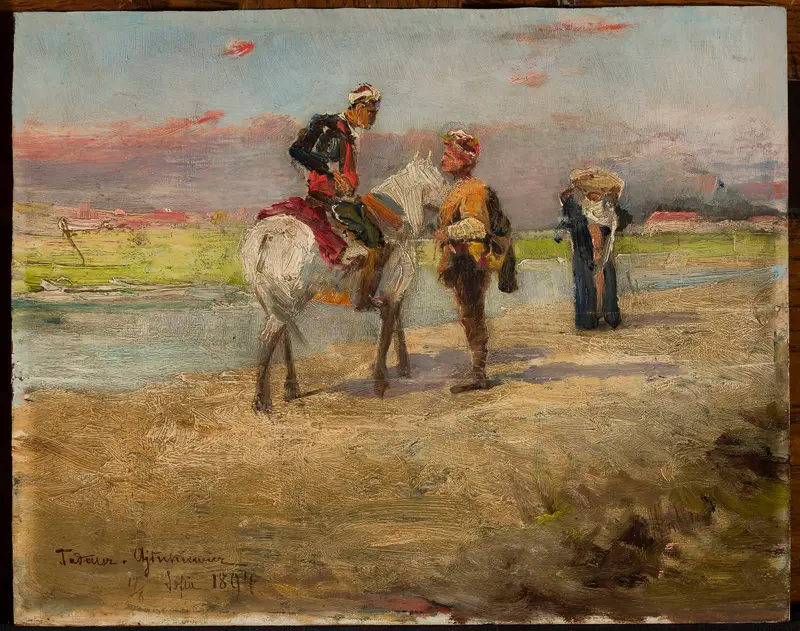
Eastern scene against a landscape
Tadeusz Ajdukiewicz
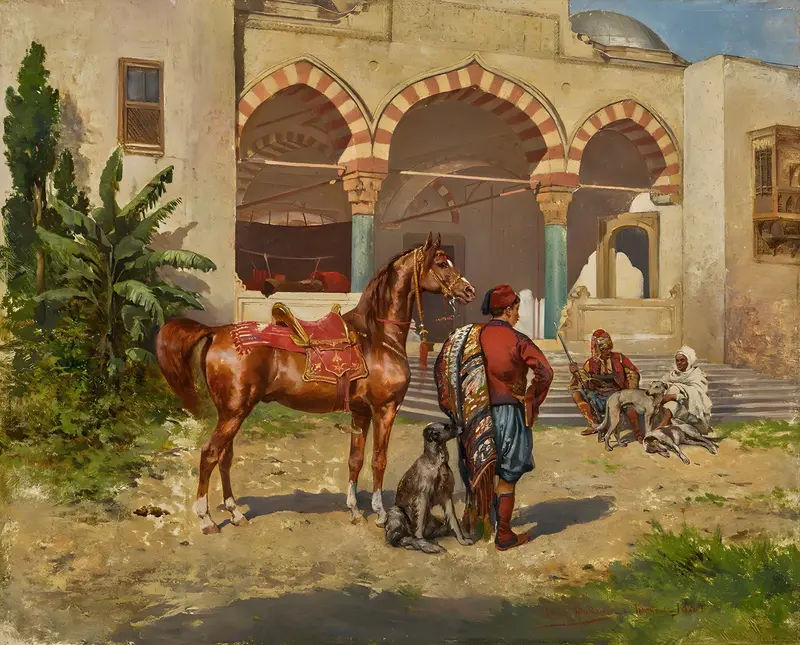
A turkish courtyard
Tadeusz Ajdukiewicz
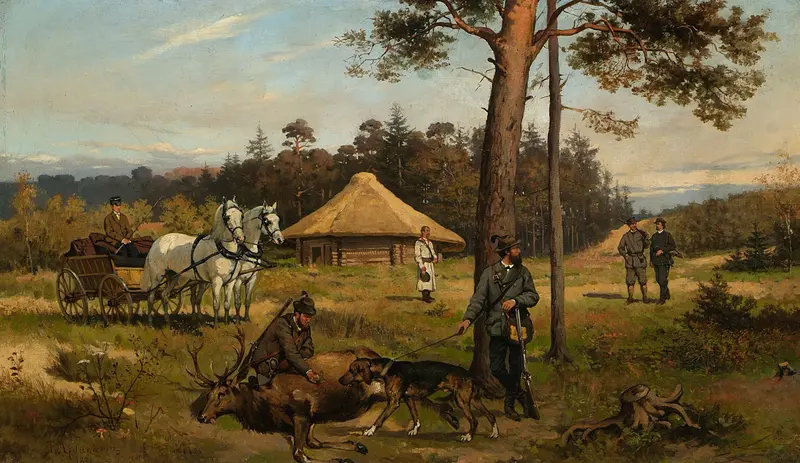
After hunting for a deer
Tadeusz Ajdukiewicz
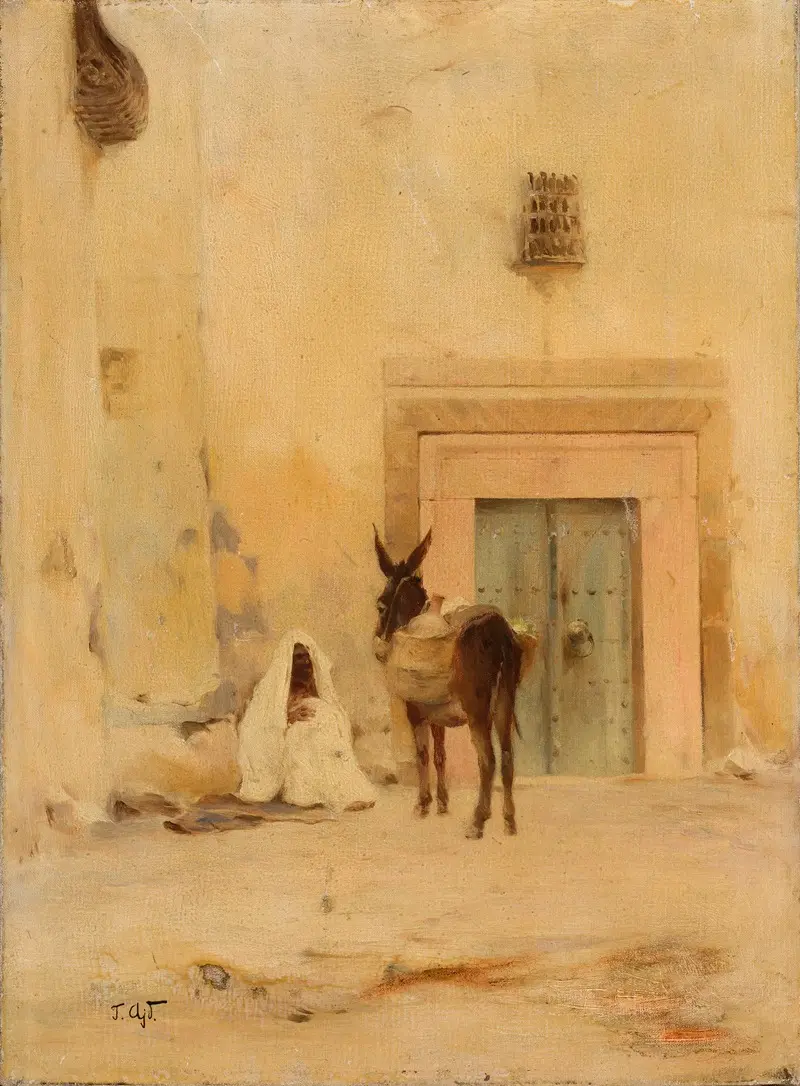
Arab and a donkey at the wall of a house
Tadeusz Ajdukiewicz
Study of a hunter
Tadeusz Ajdukiewicz





