
The shepherd boy — History & Facts
No record survives of who first owned or commissioned The shepherd boy by Tadeusz Ajdukiewicz, and the painting’s date and medium remain uncertain, adding a layer of mystery to its quiet charm. What is certain is that the work stands apart in Ajdukiewicz’s career, better known for grand portraits of aristocrats and military scenes. Here, the artist turns his attention to rural life, a subject rarely found in his oeuvre, and captures a fleeting, everyday moment rather than a grand narrative or commission. At the center of the composition, a young shepherd pauses in the midst of his daily watch, his gaze turned outward as if caught by a distant sound or thought.
The boy’s simple clothing and staff, along with the gentle animals clustered nearby, speak to a life of modest means and constant responsibility. Ajdukiewicz’s careful attention to the boy’s expression and the soft play of light across the landscape invite the viewer to imagine the inner world of a child shaped by solitude and duty. Unlike Jean-François Millet’s peasant figures, who are often shown bowed in labor, Ajdukiewicz’s shepherd stands upright, alert, and quietly dignified. Though the painting’s early history is obscure, its style and subject suggest it was created during the late 19th century, a period when scenes of rural life were gaining popularity across Europe.
The shepherd boy has since become a representative example of Ajdukiewicz’s rare forays into genre painting, offering a glimpse into the everyday realities of the Polish countryside. Today, it is held in a public collection, where it continues to draw viewers with its understated humanity and the unanswered questions of its origin.
More Artworks by Tadeusz Ajdukiewicz
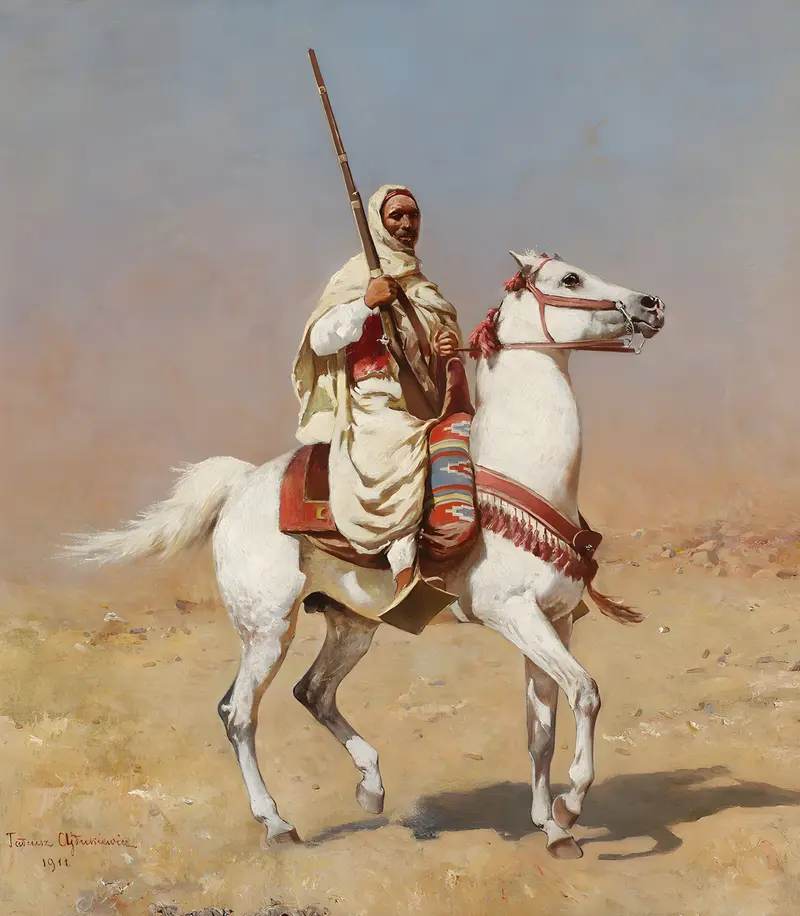
Arab on a grey horse
Tadeusz Ajdukiewicz
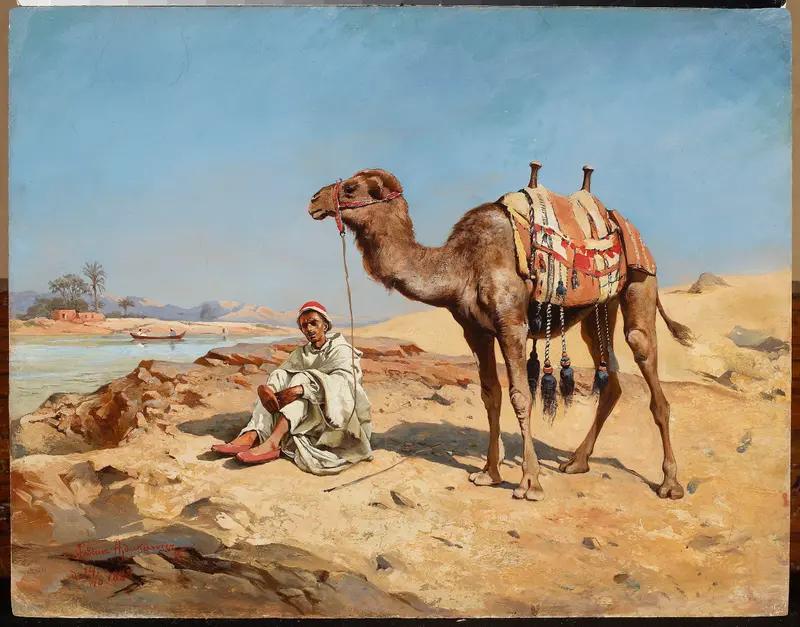
Arab in the desert
Tadeusz Ajdukiewicz

A Parforce Rider in the Forest
Tadeusz Ajdukiewicz
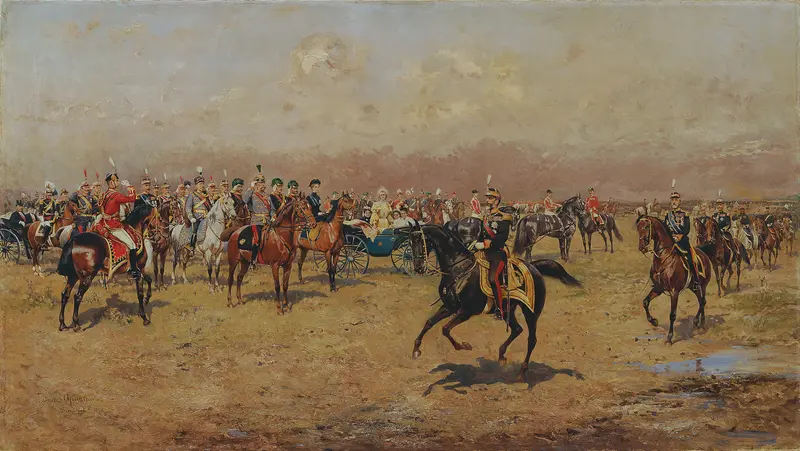
Militärparade vor Kaiser Franz Joseph I.
Tadeusz Ajdukiewicz
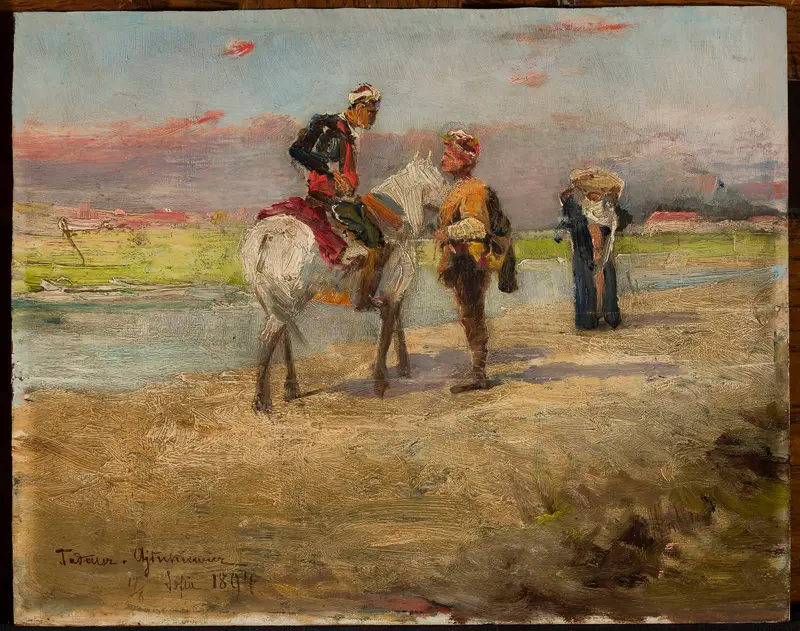
Eastern scene against a landscape
Tadeusz Ajdukiewicz
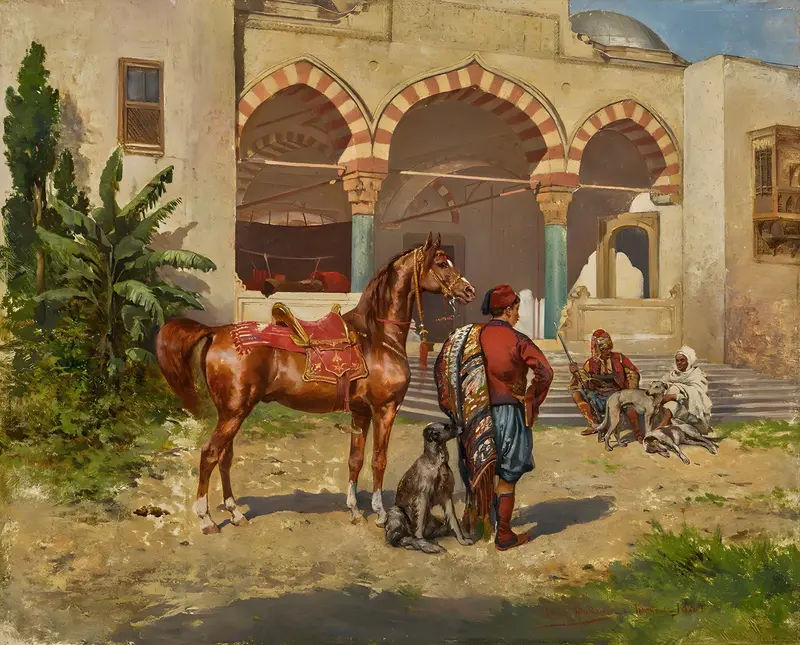
A turkish courtyard
Tadeusz Ajdukiewicz
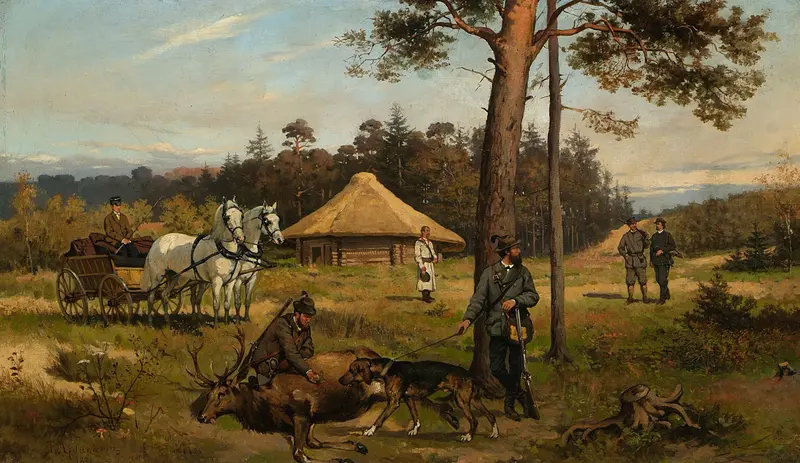
After hunting for a deer
Tadeusz Ajdukiewicz
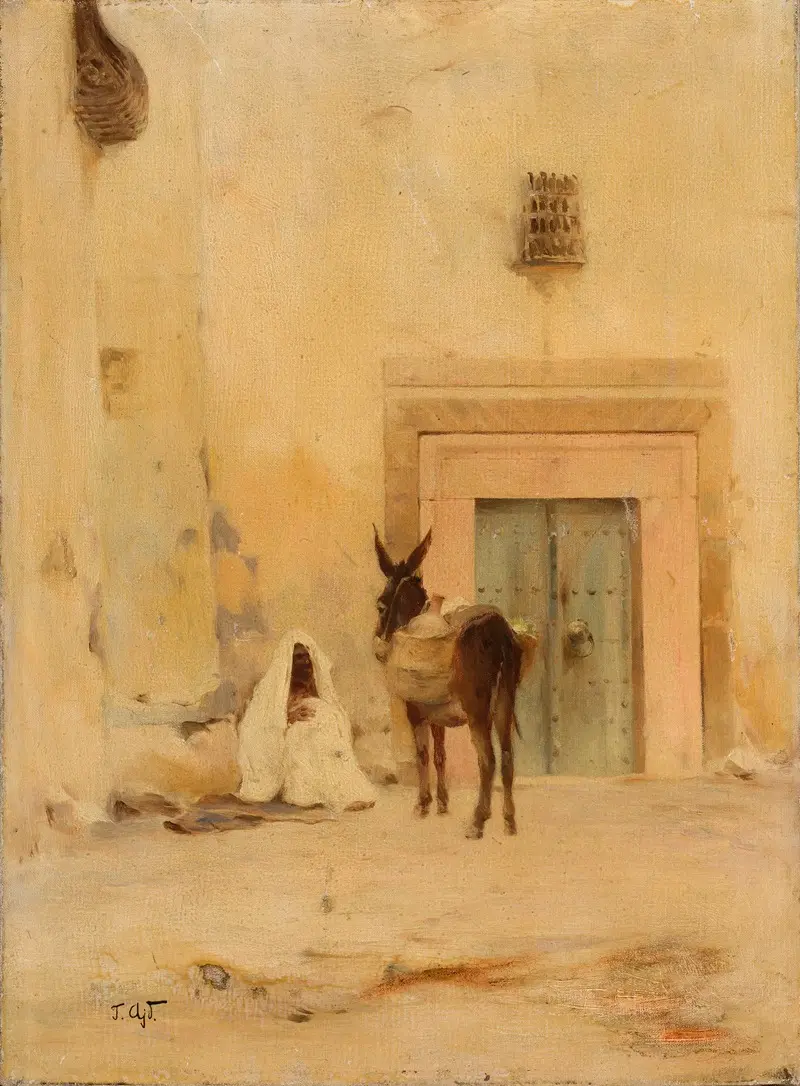
Arab and a donkey at the wall of a house
Tadeusz Ajdukiewicz
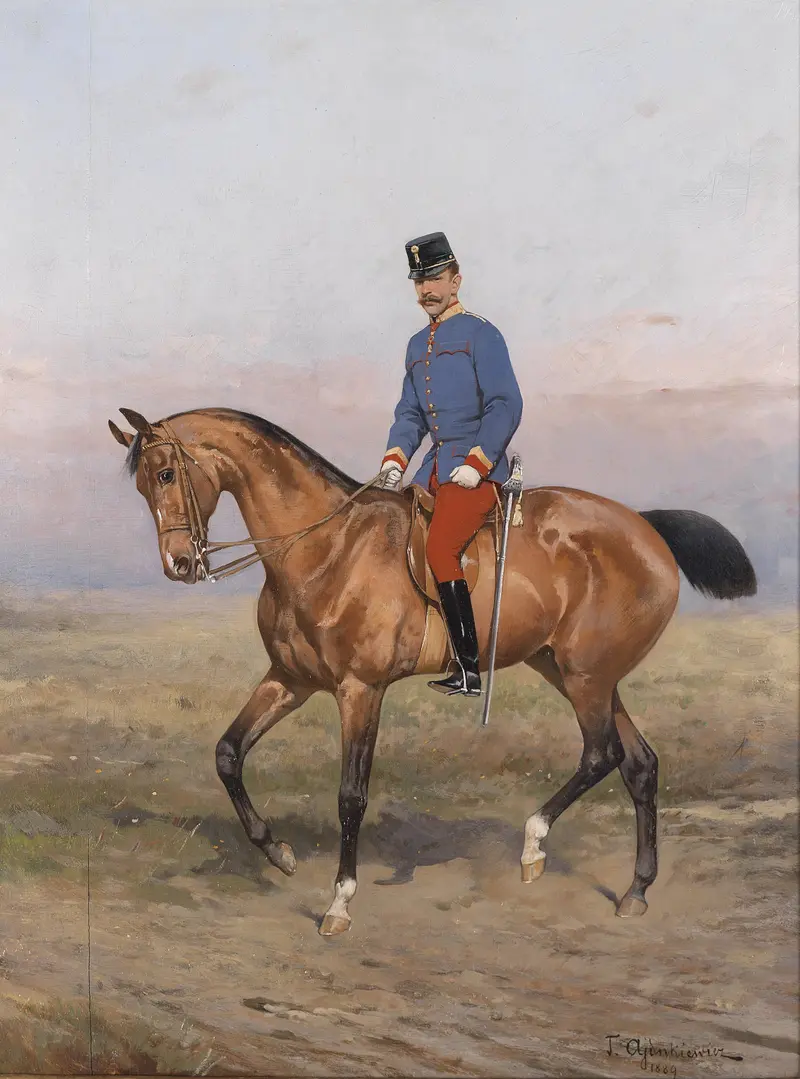
Kronprinz Rudolf zu Pferd
Tadeusz Ajdukiewicz
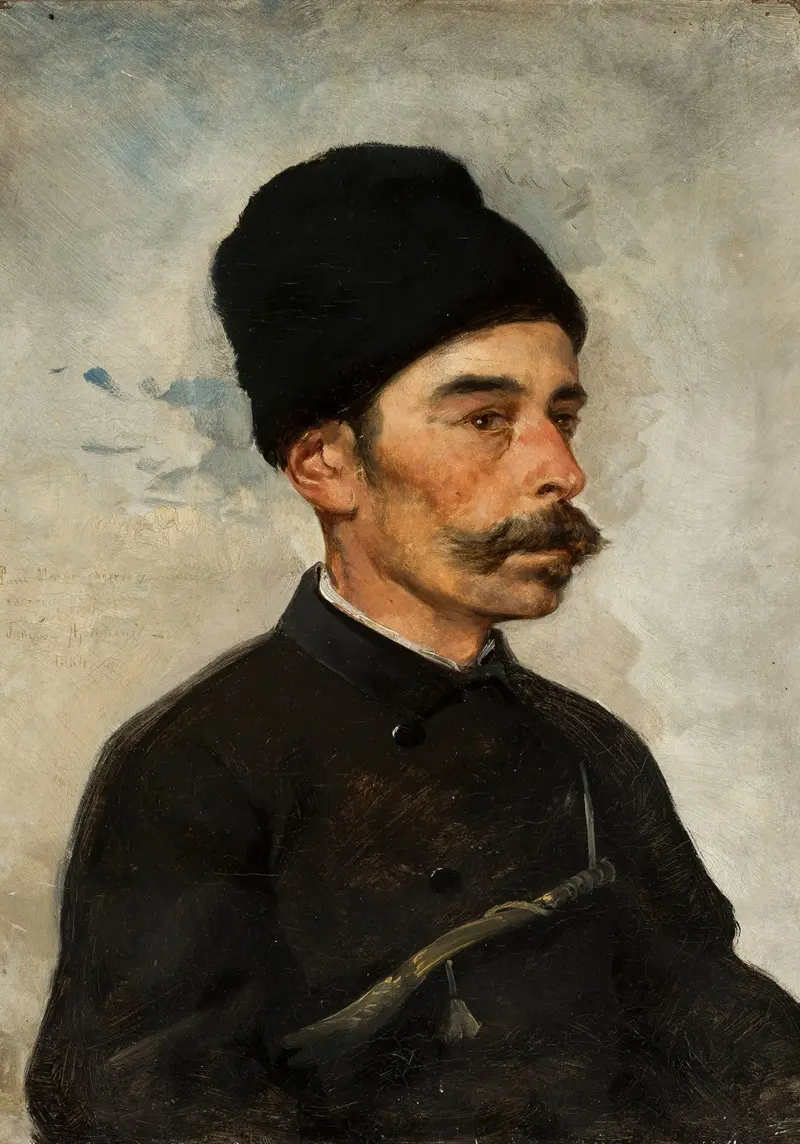
Study of a hunter
Tadeusz Ajdukiewicz
More Genre Scene Art

Banquet of the Officers of the St George Civic Guard
Frans Hals

Rembrandt and Saskia in the Scene of the Prodigal Son
Rembrandt van Rijn

Bal du moulin de la Galette
Pierre-Auguste Renoir

Quadrille at the Moulin Rouge
Henri de Toulouse-Lautrec

A Burial at Ornans
Gustave Courbet

When Will You Marry?
Paul Gauguin