
Eastern scene against a landscape — History & Facts
When Eastern scene against a landscape entered the public eye, it was immediately recognized as a fascinating example of the 19th-century European fascination with the Orient. This painting by Tadeusz Ajdukiewicz stands out because it captures the artist’s personal encounters with the lands and people of the Ottoman Empire, which he visited during his travels as a court painter. Unlike many of his contemporaries who relied on imagination or secondhand accounts, Ajdukiewicz drew directly from life, lending his scenes a rare immediacy and authenticity.
The work’s exact date and medium remain uncertain, adding an air of mystery that continues to intrigue historians and viewers alike. In this composition, a group of figures—perhaps traders or dignitaries—pause in vivid attire against a sweeping, sunlit landscape dotted with distant architecture and palm trees. The central figure, mounted on a richly decorated horse and flanked by attendants, commands attention with his upright posture and elaborate garments, signaling status and authority. The artist’s careful attention to textiles, weaponry, and animal tack reveals a fascination with the material culture of the East, while the broad, luminous sky and gentle modeling of the terrain evoke a sense of place.
Unlike the theatrical drama of Jean-Léon Gérôme’s The Snake Charmer, Ajdukiewicz’s scene is quieter, more observational, emphasizing encounter over spectacle. The painting’s journey through history is less documented than some of Ajdukiewicz’s grand commissions, such as his portraits of European nobility. It likely passed through private hands, reflecting the tastes of collectors drawn to Orientalist subjects in the late 19th and early 20th centuries. Today, Eastern scene against a landscape is valued not only as a window onto a vanished world but also as a testament to Ajdukiewicz’s cosmopolitan career, which bridged Polish, Austrian, and Ottoman spheres.
Its survival and continued exhibition underscore the enduring appeal of cross-cultural encounters in art, even as the details of its creation remain partly veiled.
More Artworks by Tadeusz Ajdukiewicz
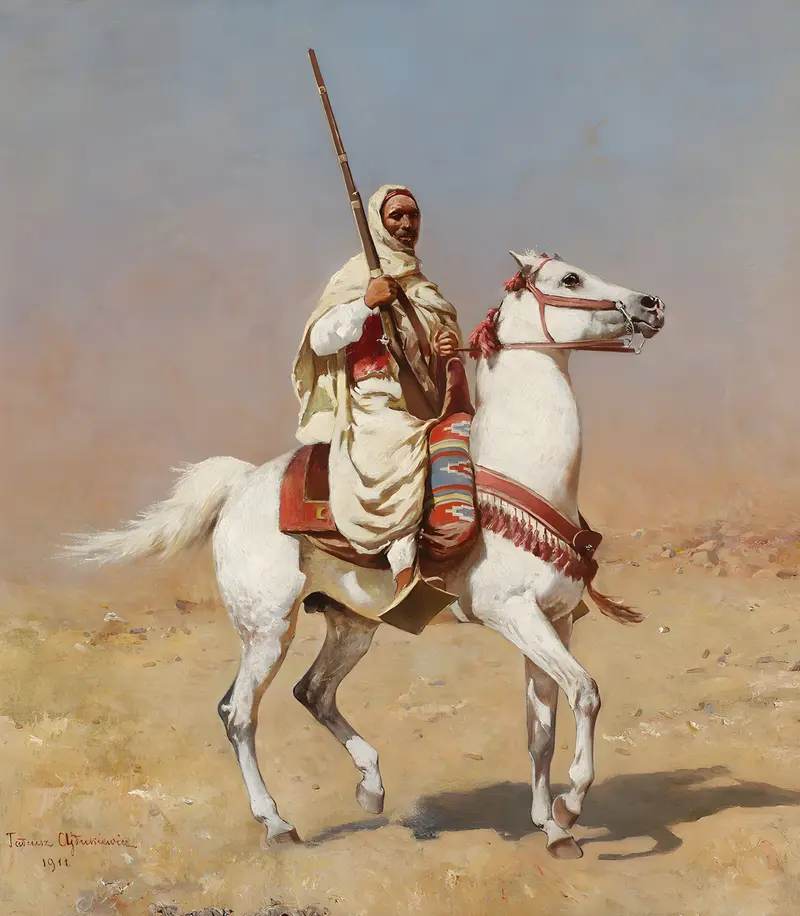
Arab on a grey horse
Tadeusz Ajdukiewicz
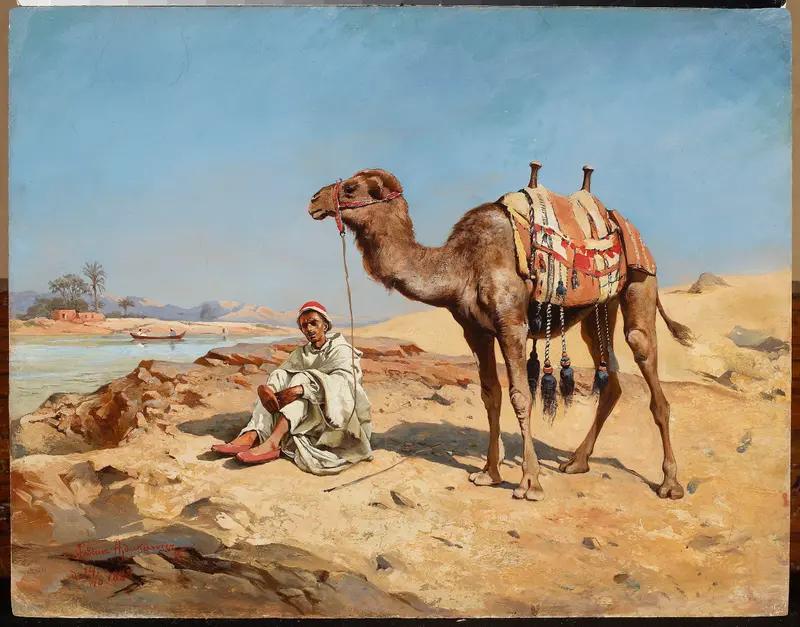
Arab in the desert
Tadeusz Ajdukiewicz
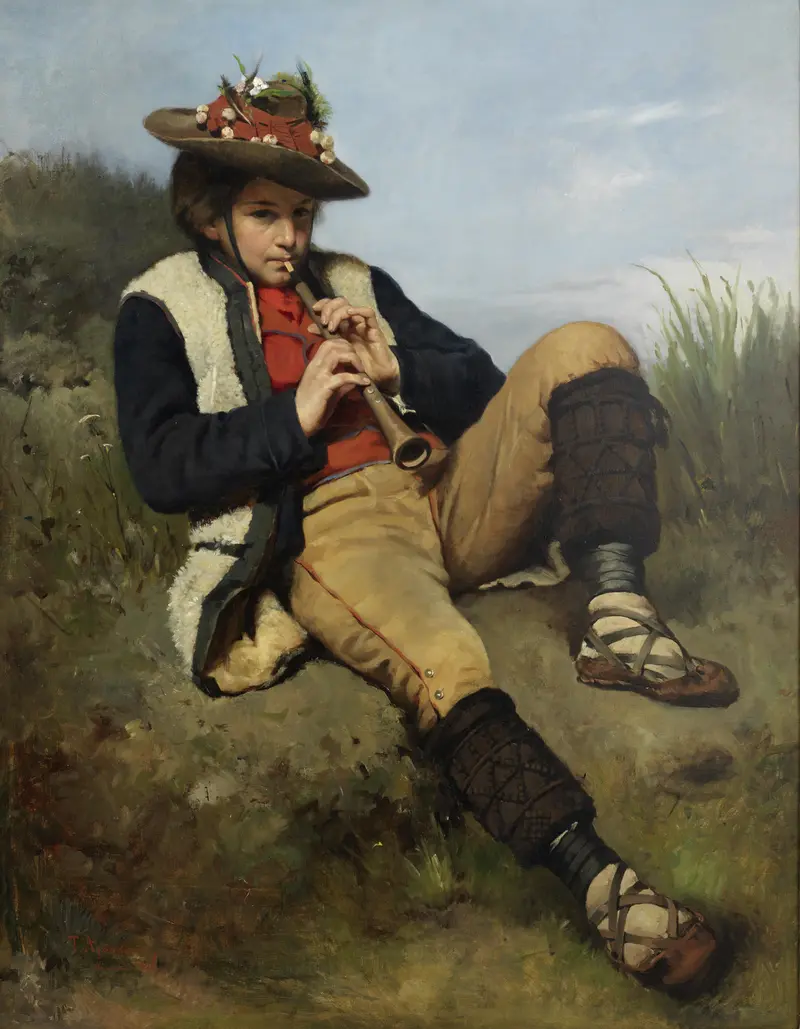
The shepherd boy
Tadeusz Ajdukiewicz

A Parforce Rider in the Forest
Tadeusz Ajdukiewicz
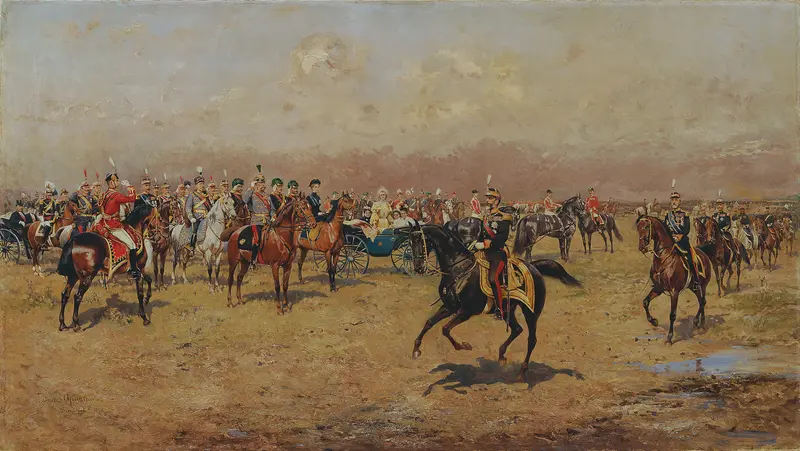
Militärparade vor Kaiser Franz Joseph I.
Tadeusz Ajdukiewicz
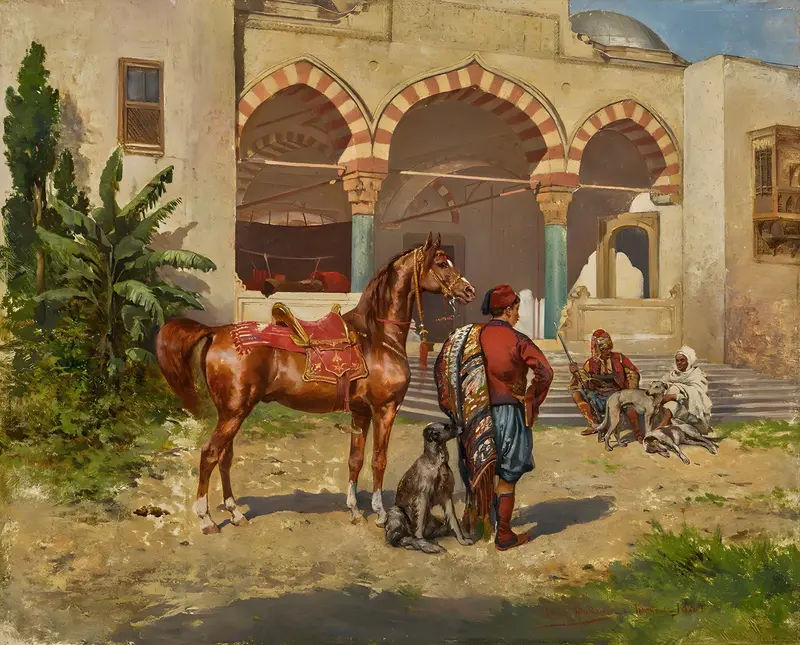
A turkish courtyard
Tadeusz Ajdukiewicz
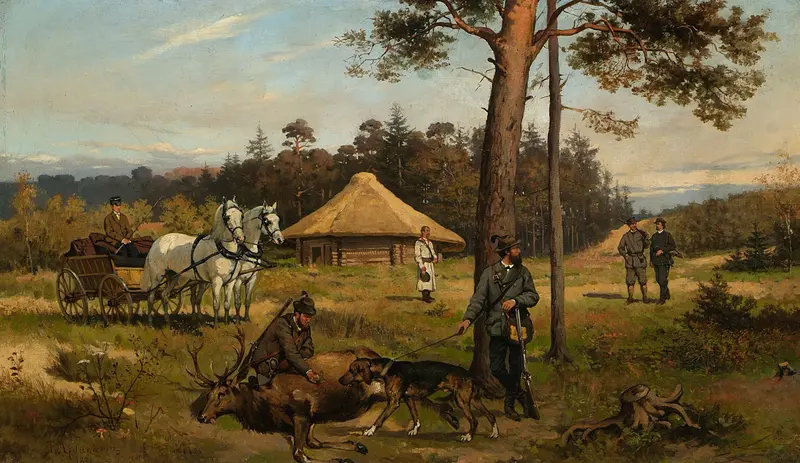
After hunting for a deer
Tadeusz Ajdukiewicz
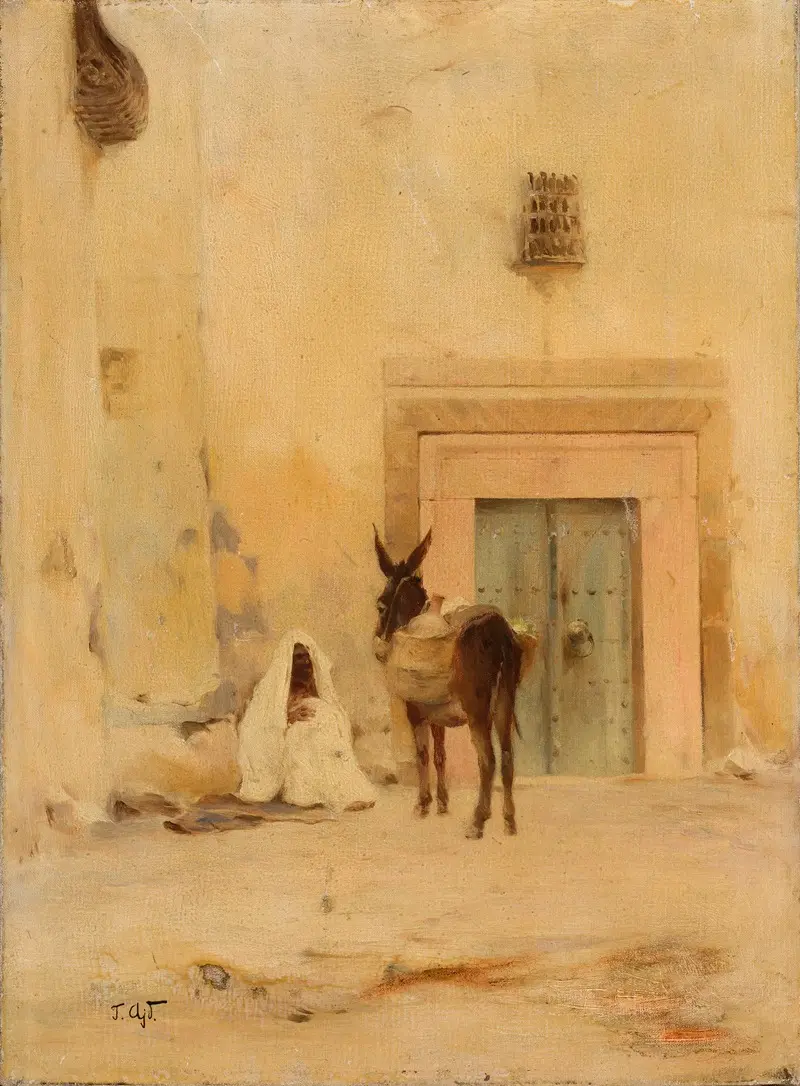
Arab and a donkey at the wall of a house
Tadeusz Ajdukiewicz
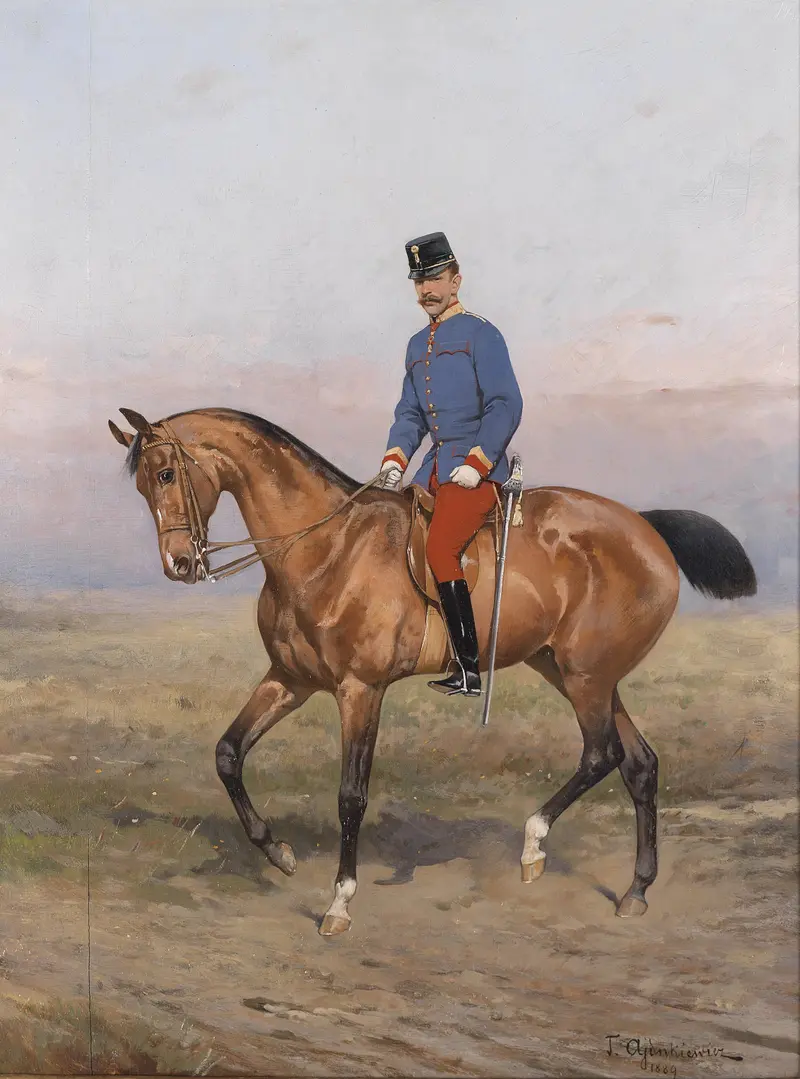
Kronprinz Rudolf zu Pferd
Tadeusz Ajdukiewicz
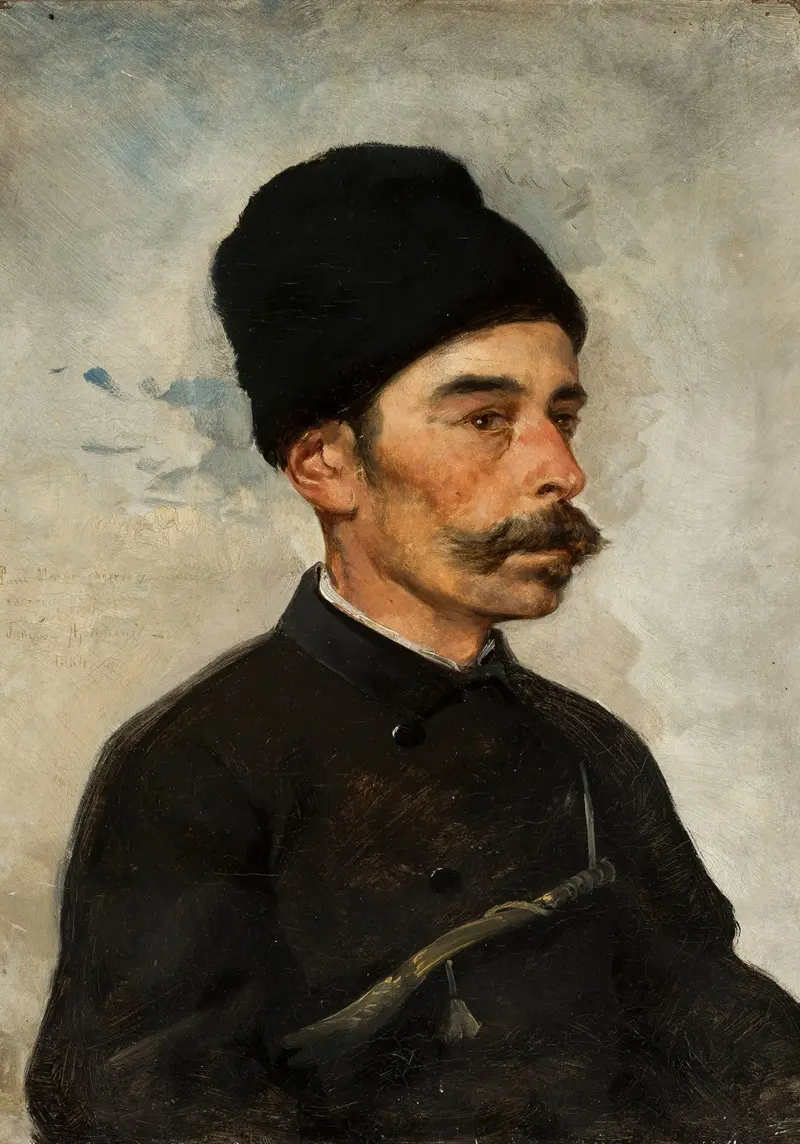
Study of a hunter
Tadeusz Ajdukiewicz
More Genre Scene Art

Banquet of the Officers of the St George Civic Guard
Frans Hals

Rembrandt and Saskia in the Scene of the Prodigal Son
Rembrandt van Rijn

Bal du moulin de la Galette
Pierre-Auguste Renoir

Quadrille at the Moulin Rouge
Henri de Toulouse-Lautrec

A Burial at Ornans
Gustave Courbet

When Will You Marry?
Paul Gauguin