
Münchener Frühling — History & Facts
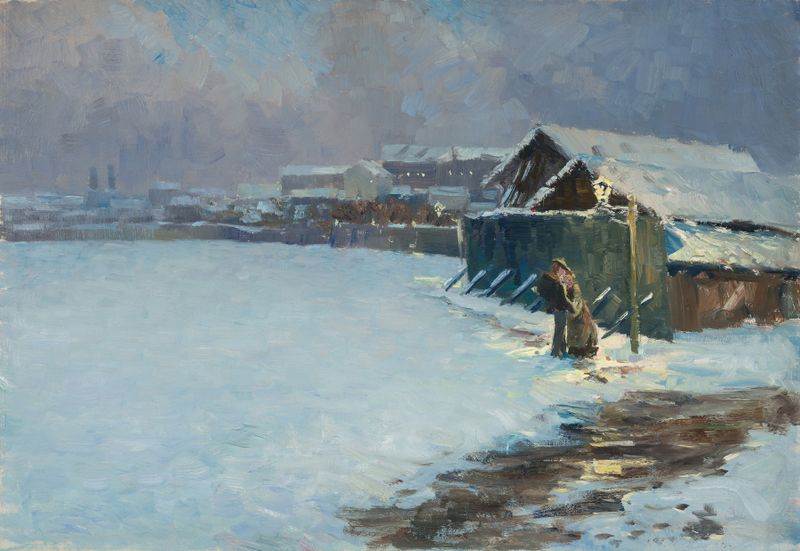
Who listens when art speaks of silence? In Münchener Frühling, the quietude resonates, suggesting a world where shadows hold secrets and whispers. Look to the center, where the interplay of light and shadow creates a delicate dance across the canvas. The subtle gradations of green suggest the lushness of spring, while soft strokes embody the awakening of nature. Notice how the figures are enveloped by softness, their forms slightly obscured as if they are part of the very atmosphere.
The artist’s careful layering of paint draws the eye into an intimate sanctuary, inviting contemplation. Beneath the surface, emotional tensions reveal a deeper narrative. The figures, though seemingly at peace, carry an air of uncertainty, suggesting a moment suspended between hope and nostalgia. The shadows cast by the boughs above symbolize both the beauty of renewal and the weight of what lies beneath—a reflection on impermanence.
Together, these contrasts create a rich tapestry of feeling, where silence speaks louder than words. In 1905, Wilhelm Ludwig Lehmann was deeply engaged with the artistic currents of his time, painting in Munich, a city vibrant with modernist ideas. Artists were exploring the expressive potential of color and form, striving for a deeper connection with the viewer’s emotions. This work emerges from a moment of artistic experimentation and societal change, capturing the essence of early 20th-century thought—a blend of hope, introspection, and the emerging complexities of modern life.
More Artworks by Wilhelm Ludwig Lehmann
Browse all →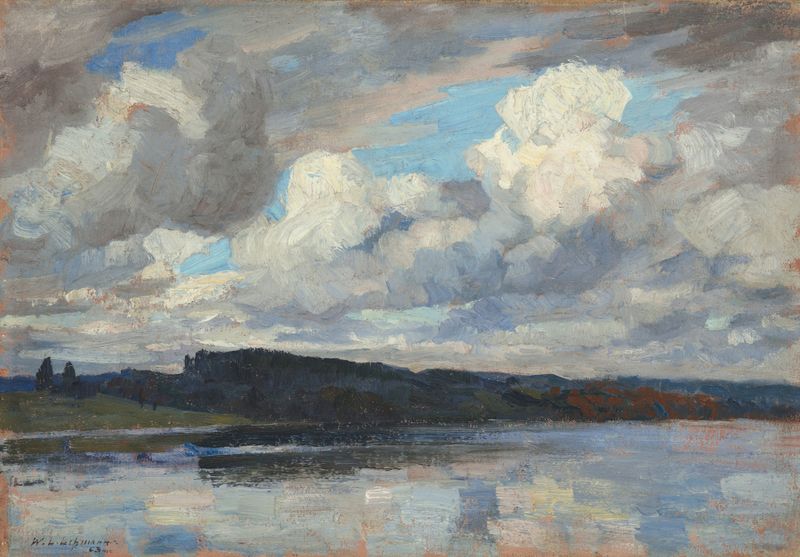
Wolkenstimmung am Chiemsee
Wilhelm Ludwig Lehmann

Feldeinsamkeit
Wilhelm Ludwig Lehmann

Sonntagnachmittag auf Helgoland
Wilhelm Ludwig Lehmann
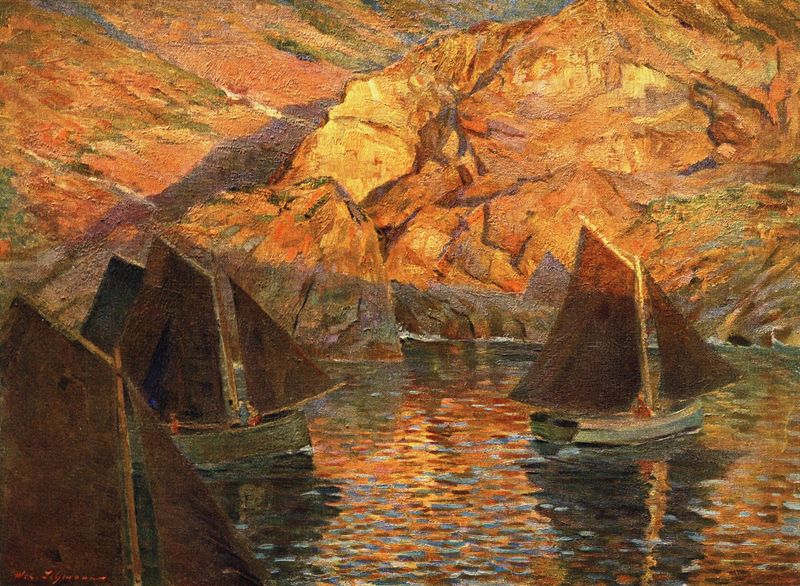
Abendsonne (Bretagne)
Wilhelm Ludwig Lehmann

Mondaufgang (Insel Sylt)
Wilhelm Ludwig Lehmann
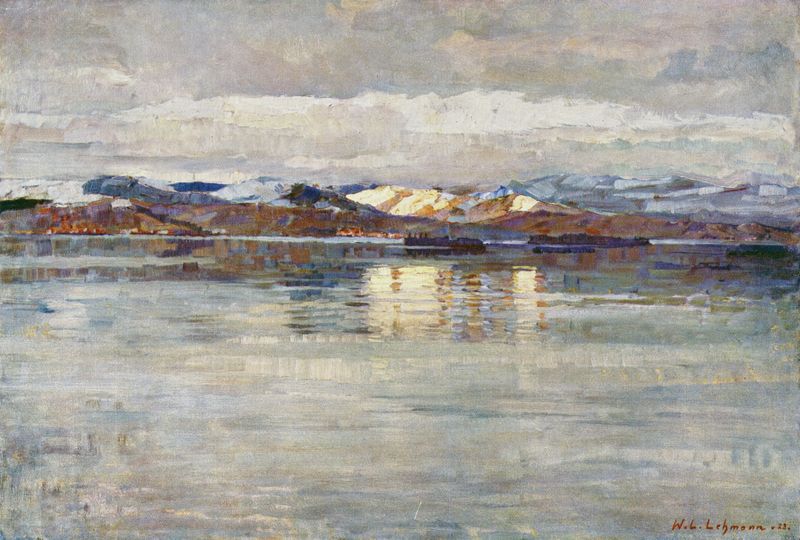
Winterstimmung am Zürichsee
Wilhelm Ludwig Lehmann

Märzsonne (Davos)
Wilhelm Ludwig Lehmann
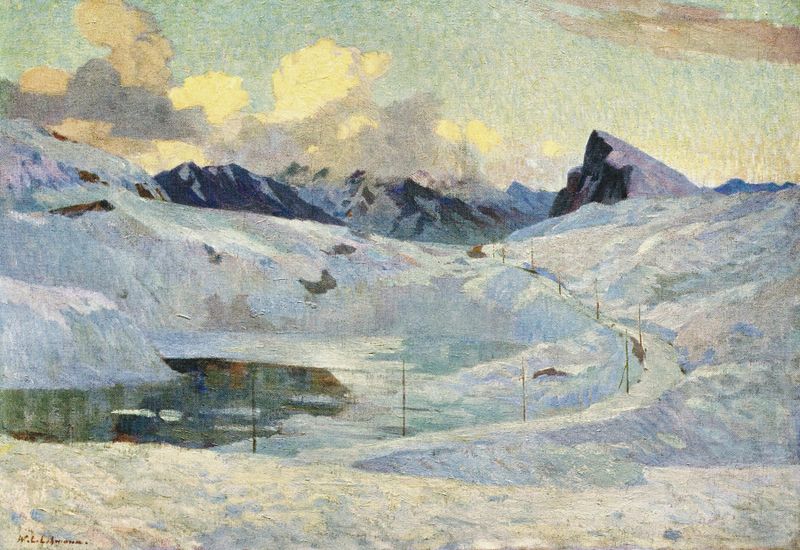
Bernina-Passhöhe
Wilhelm Ludwig Lehmann
Winternacht (München)
Wilhelm Ludwig Lehmann





