
molens; houtzaagmolen De Haan — History & Facts
Can paint confess what words never could? In molens; houtzaagmolen De Haan, a quiet revelation emerges, wrapped in the delicate strokes of an artist who captures more than mere machinery – he unveils the soul of an era. Look to the left at the intricately rendered windmill, its wooden sails poised against a vast, muted sky. Notice how the sun's soft light dances upon the weathered grains of timber, casting gentle shadows that evoke nostalgia. The palette, an earthy blend of browns and greens, speaks of the rural landscape, while the composition draws your eye upward, echoing the windmill's ascent and symbolizing human ambition against nature’s backdrop. Yet, beyond the serene façade lies a tension between tradition and progress, as the windmill stands as a sentinel of a vanishing past.
Small details—the rusted metal mechanisms and the overgrown foliage—whisper of a world slowly receding into memory, while the steadfast structure suggests resilience in the face of change. Eijman’s meticulous attention to these contrasts invites viewers to contemplate the bittersweet nature of evolution, where beauty and decay coexist in harmony. Created between 1930 and 1940, this work emerged during a period of profound transformation in the Netherlands, as industrialization began to reshape the landscape. Eijman, an experienced painter of rural subjects, found himself reflecting on the tension between the old and the new, capturing the essence of a changing world that still revered its roots.
In this context, the painting becomes not merely a representation of a windmill but a poignant statement about continuity and the passage of time.
More Artworks by Johannes Nicolaas Eijman
Browse all →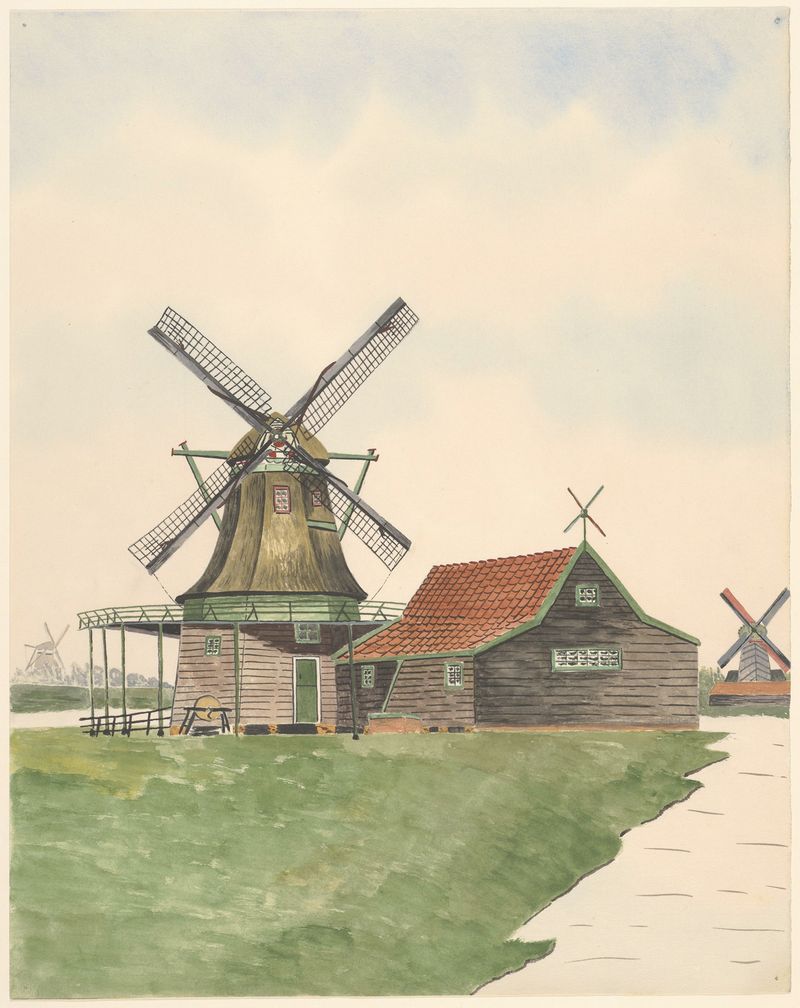
molens; oliemolen De Olievos, aan de Papenpadsloot, gesloopt 1878
Johannes Nicolaas Eijman
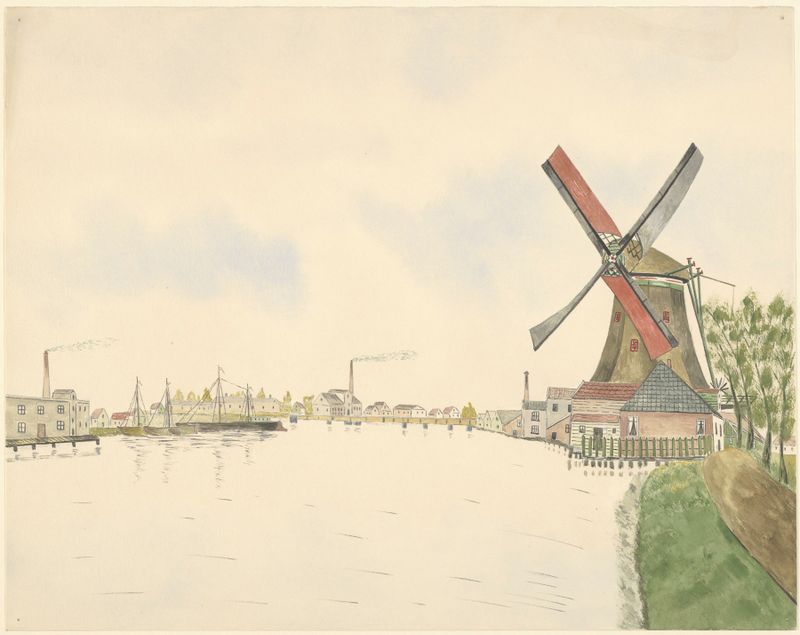
molens; meelmolen De Koker
Johannes Nicolaas Eijman

Papiermolen de Eendracht aan de westzijde van het Zaandammerpad, Wormer
Johannes Nicolaas Eijman
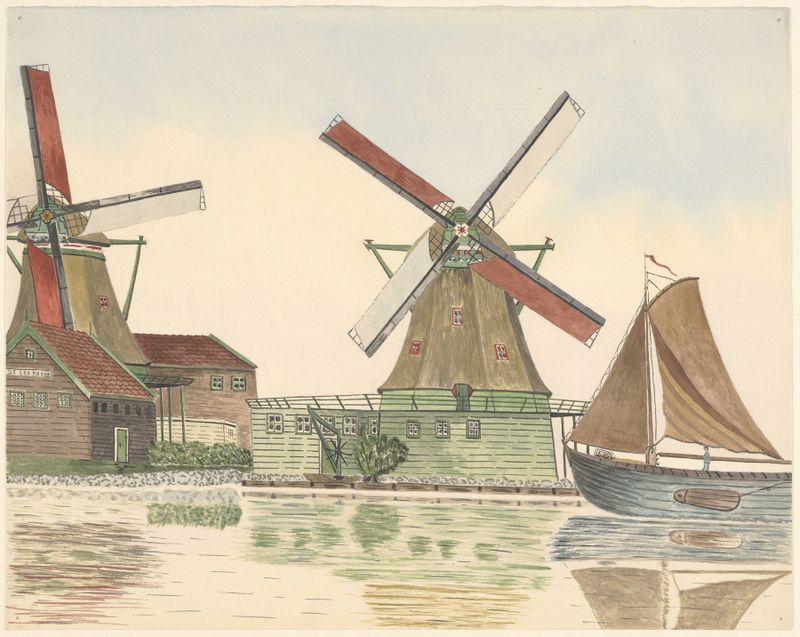
molens; oliemolen De Oude-Zwan, aan de Kalverpoel
Johannes Nicolaas Eijman
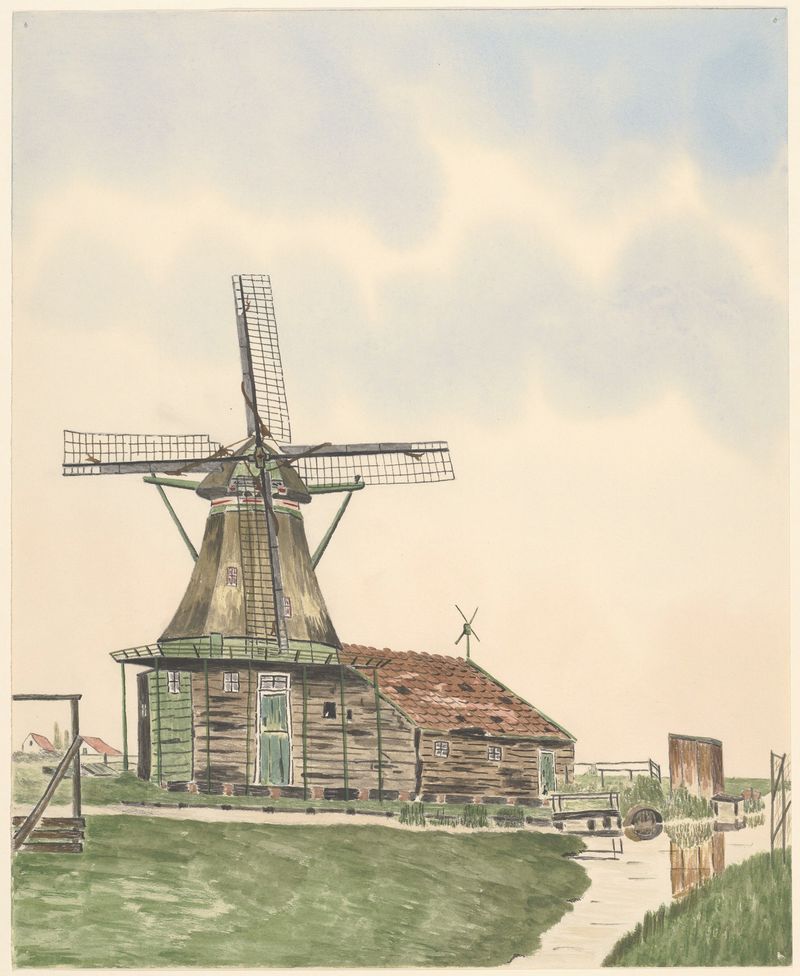
molens; oliemolen Het Oude-Honingvat, Oostzijderveld
Johannes Nicolaas Eijman
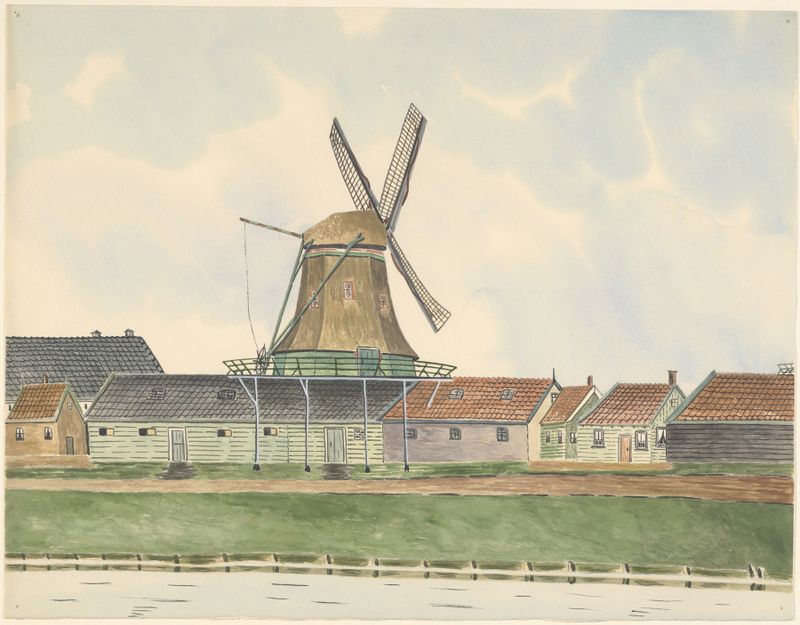
molen; oliemolen Het Witte-Paard aan het Zaandijkerwegje, 1893 gesloopt
Johannes Nicolaas Eijman

Op de voorgrond rechts doppenmolen De Prolpot aan de Hemmes, op de achtergrond links twee andere molens
Johannes Nicolaas Eijman
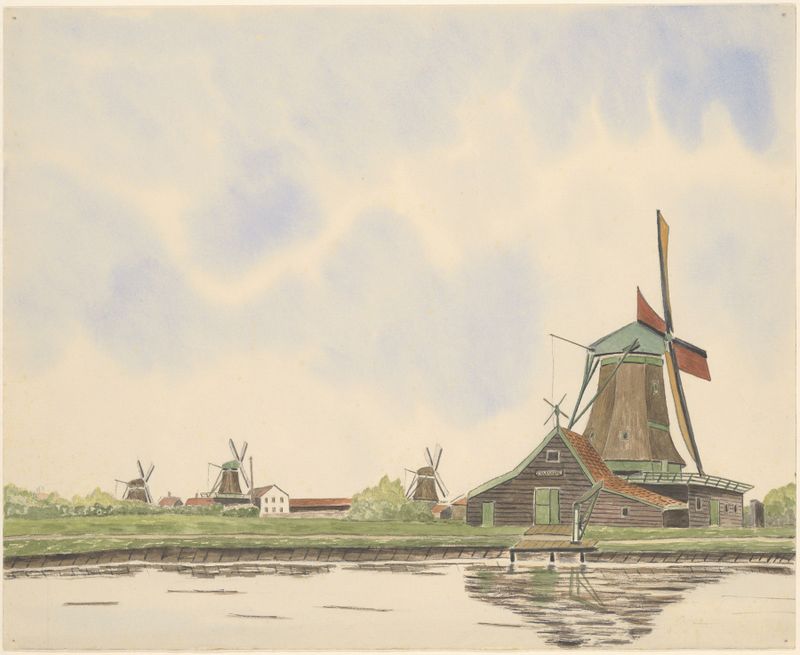
Oliemolen De Kerkuil aan de Zaan, met drie molens op de achtergrond. De Kerkuil stond binnendijks, tegenover de Wormerveerderkerk; afgebroken ca. 1892
Johannes Nicolaas Eijman
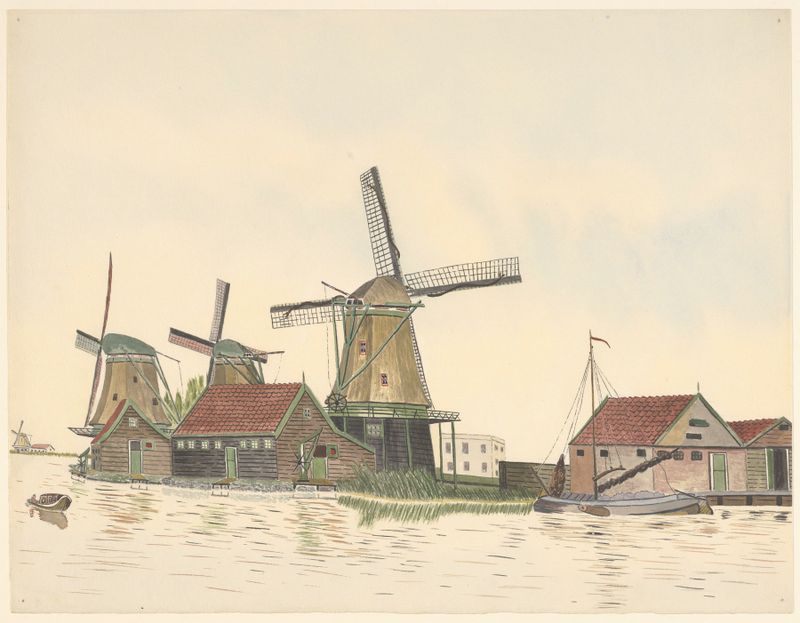
molens; De Ooievaar; De Windhond; De Gans, Kalverringdijk
Johannes Nicolaas Eijman
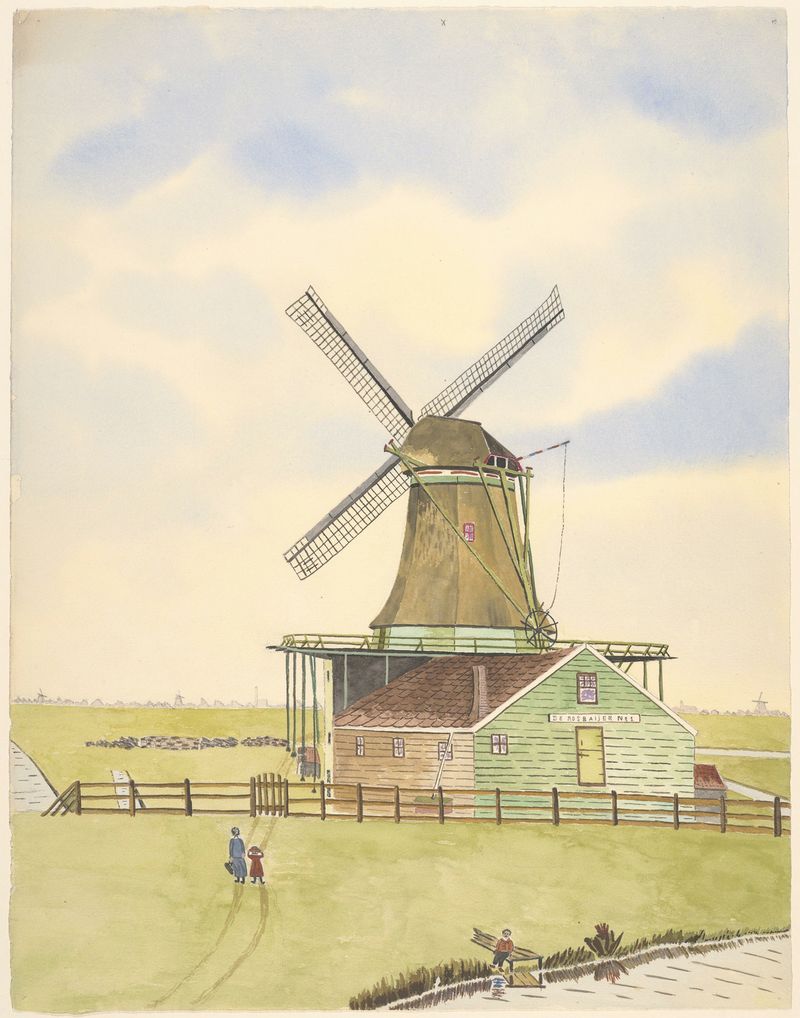
molens; pelmolen De Rosbaaijer, Oostzijderveld
Johannes Nicolaas Eijman





