
molens; oliemolen De Oude-Zwan, aan de Kalverpoel — History & Facts
In a world often torn between illusion and reality, the quest for truth becomes a silent, yet powerful, pursuit. Look to the center where the windmill stands tall, its blades poised against a turbulent sky. The artist uses muted earth tones to ground the structure, while bursts of gold and blue dance around its edges, representing the movement of the wind. Notice how the light breaks through the clouds, casting a gentle glow on the water below, which mirrors the chaos above in a tranquil embrace.
The careful brushwork creates a dynamic tension, inviting the viewer to explore the interplay between the solid windmill and the fluid nature surrounding it. There exists a duality here: the steadfastness of the windmill juxtaposed with the restlessness of the sky. The calm waters reflect not only the landscape but also the emotions evoked by the scene — a yearning for stability in an unpredictable world. Hidden within the composition is a reminder of the resilience of nature, as the windmill remains a constant amidst the wildness of its environment.
This speaks to the human experience, where chaos often provides the backdrop for moments of clarity and truth. During the late 1930s, amidst the economic struggles and societal shifts in the Netherlands, the artist produced this piece, capturing the essence of a changing world. Eijman, influenced by the Dutch tradition of landscape painting, sought to blend realism with emotional depth, reflecting both his personal experiences and the broader context of an evolving society. This work stands as a testament to his ability to find beauty and truth in the simplicity of nature amidst a complex backdrop.
More Artworks by Johannes Nicolaas Eijman
Browse all →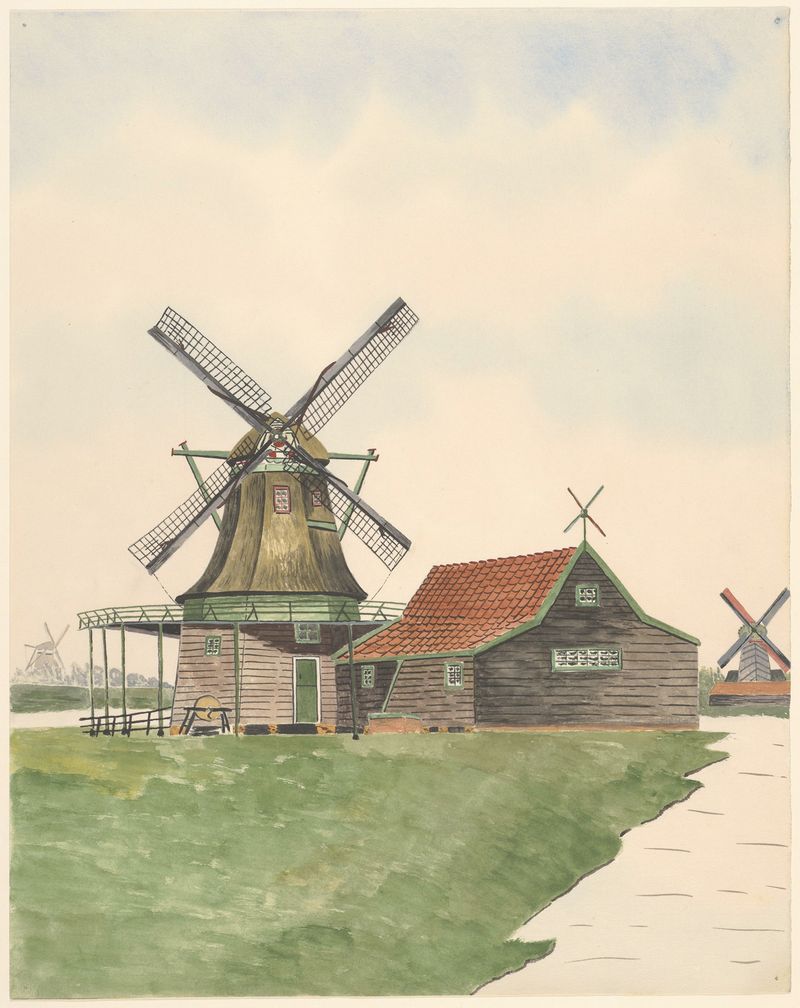
molens; oliemolen De Olievos, aan de Papenpadsloot, gesloopt 1878
Johannes Nicolaas Eijman
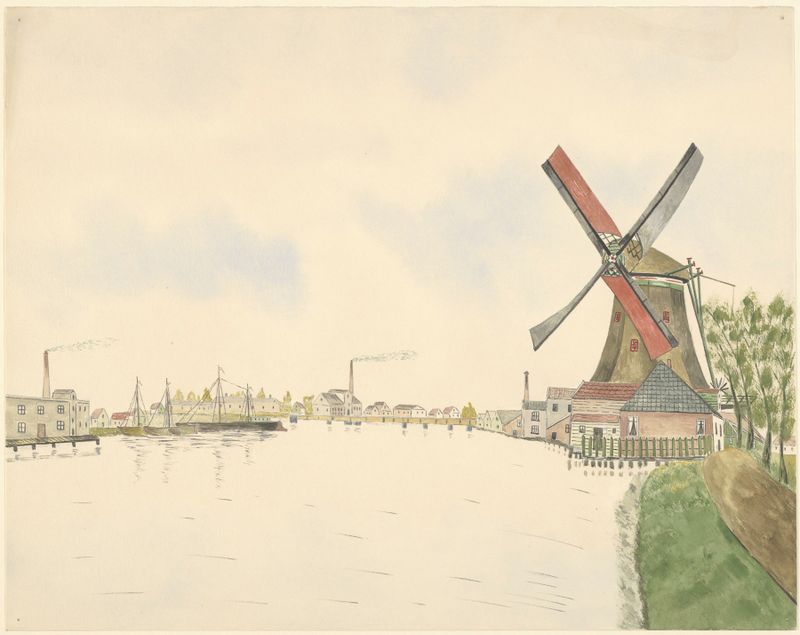
molens; meelmolen De Koker
Johannes Nicolaas Eijman

Papiermolen de Eendracht aan de westzijde van het Zaandammerpad, Wormer
Johannes Nicolaas Eijman
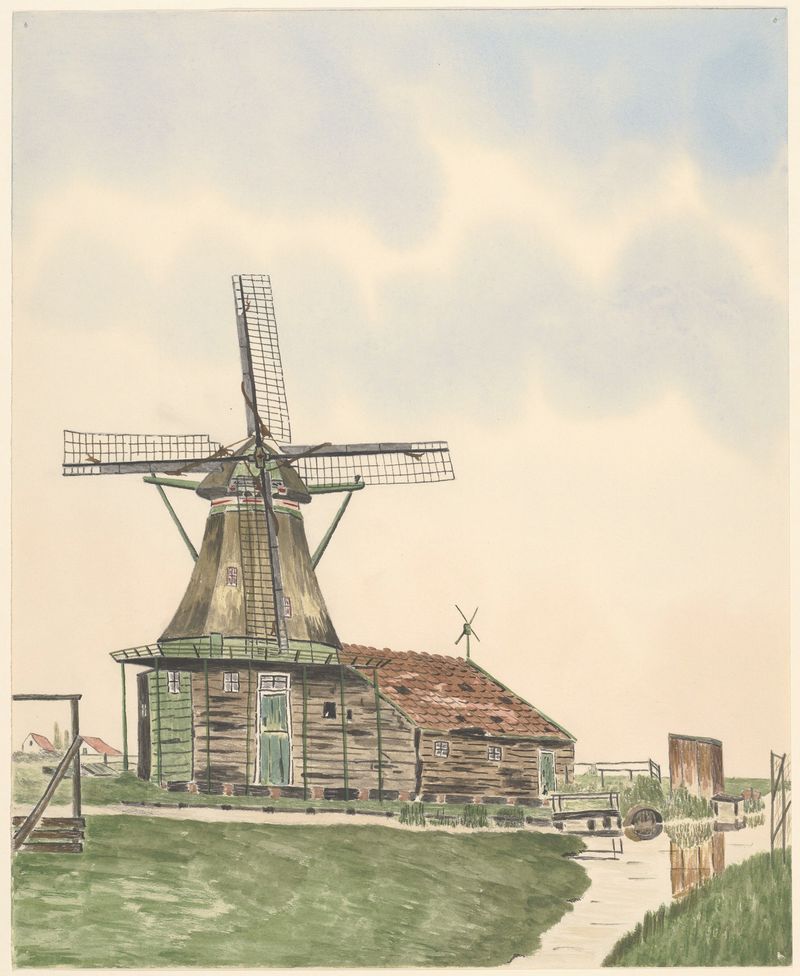
molens; oliemolen Het Oude-Honingvat, Oostzijderveld
Johannes Nicolaas Eijman
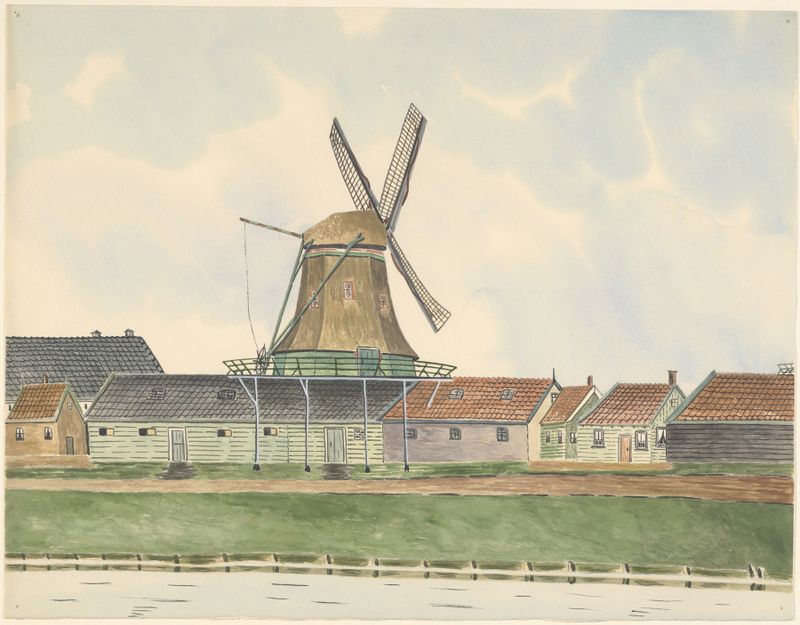
molen; oliemolen Het Witte-Paard aan het Zaandijkerwegje, 1893 gesloopt
Johannes Nicolaas Eijman

Op de voorgrond rechts doppenmolen De Prolpot aan de Hemmes, op de achtergrond links twee andere molens
Johannes Nicolaas Eijman
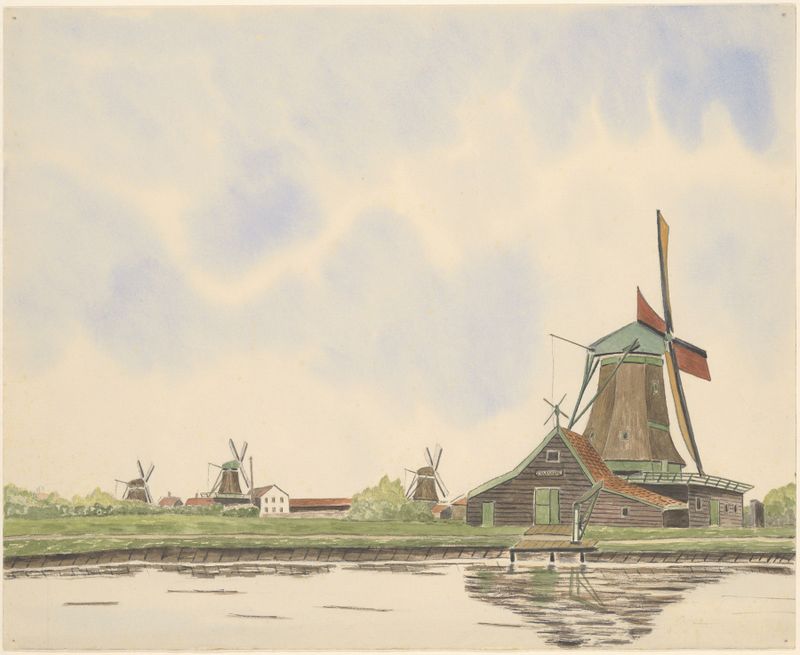
Oliemolen De Kerkuil aan de Zaan, met drie molens op de achtergrond. De Kerkuil stond binnendijks, tegenover de Wormerveerderkerk; afgebroken ca. 1892
Johannes Nicolaas Eijman
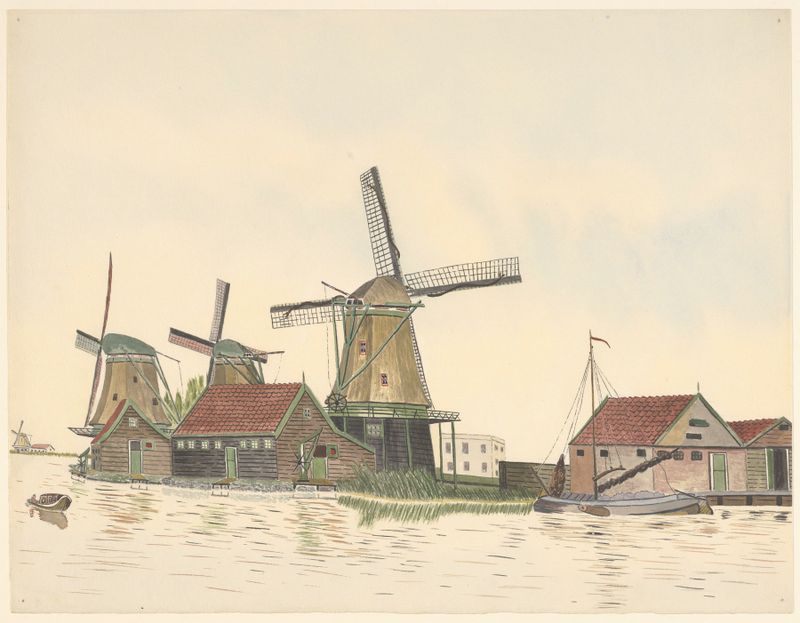
molens; De Ooievaar; De Windhond; De Gans, Kalverringdijk
Johannes Nicolaas Eijman
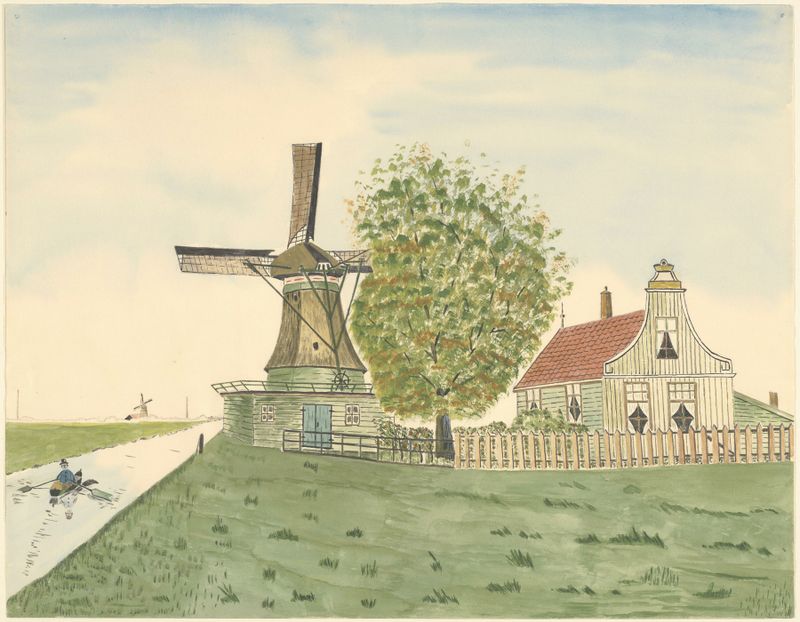
molens; houtzaagmolen De Haan
Johannes Nicolaas Eijman
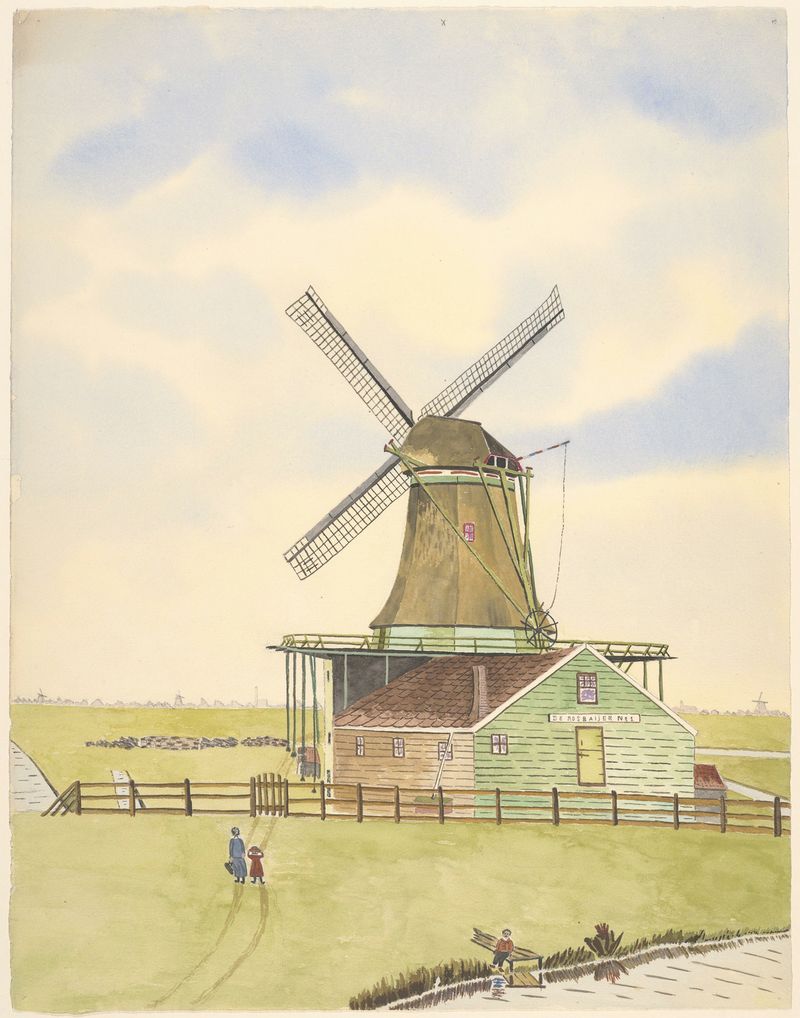
molens; pelmolen De Rosbaaijer, Oostzijderveld
Johannes Nicolaas Eijman





