
Monogram van Christus — History & Facts
In Monogram van Christus, the viewer is confronted by a striking interplay of faith and fear, a reminder of the eternal struggles that accompany devotion. Look to the center of the composition where the intricate monogram elegantly intertwines the letters “IHS,” a traditional symbol for Jesus. This delicate arrangement is rendered in bold, dark lines that draw the eye, surrounded by an ethereal glow that hints at divine presence. Notice how the colors shift subtly from the deep, somber tones of the background to the luminous highlights on the letters, encapsulating the tension between the divine and the mortal.
The meticulously crafted details, from the adornments to the delicate textures, illustrate Dürer’s exceptional skill in woodcut and engraving, inviting viewers to pause and reflect. Yet, beneath this surface beauty lies an undercurrent of fear. The juxtaposition of the sacred monogram against a shadowy background suggests the weight of doubt and human frailty in the face of faith. The sharp edges of the letters seem to pierce through the darkness, evoking a sense of urgency and struggle for spiritual clarity.
Each line conveys not just artistry but also the existential fear of loss and the quest for redemption, resonating deeply within the human experience. During the early 1500s, Albrecht Dürer was immersed in a world of transformation, influenced by the Renaissance’s surge in artistic exploration and religious upheaval. Creating this work around 1500-1510, he was at the forefront of a movement that sought to reconcile the spiritual with the material, reflecting the tensions of a society grappling with faith, knowledge, and the human condition. His innovative techniques cemented his legacy as a pivotal figure in art history, capturing not just images but the very essence of human emotion.
More Artworks by Albrecht Dürer
Browse all →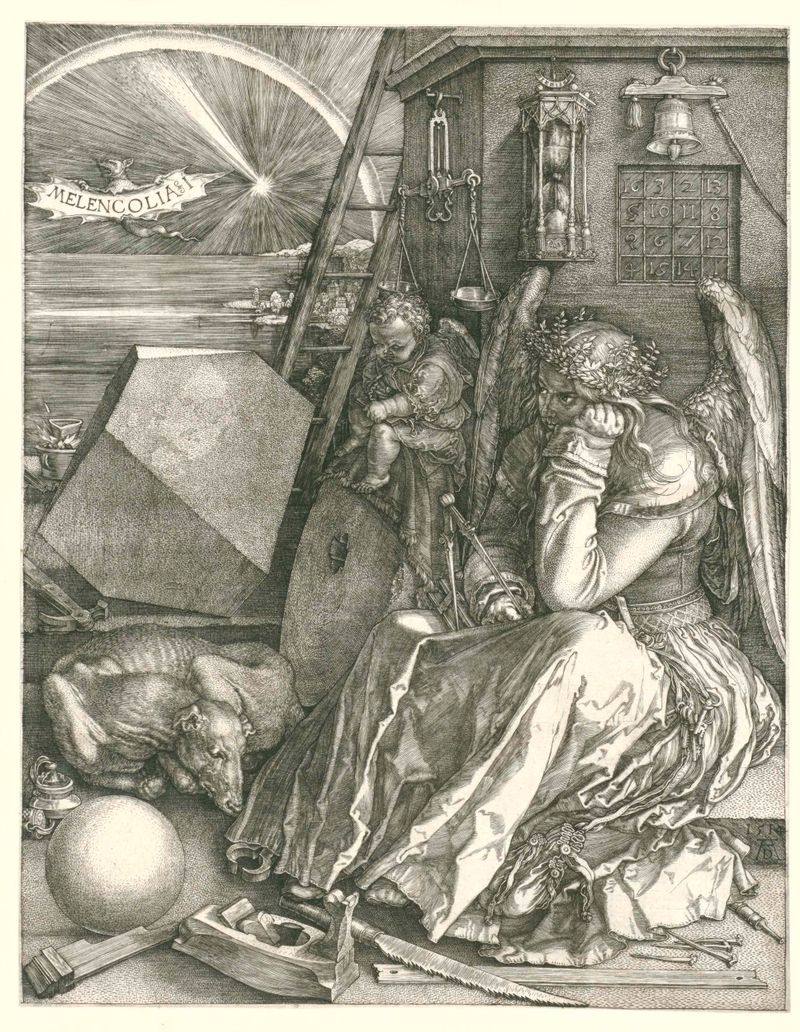
Melancholia
Albrecht Dürer
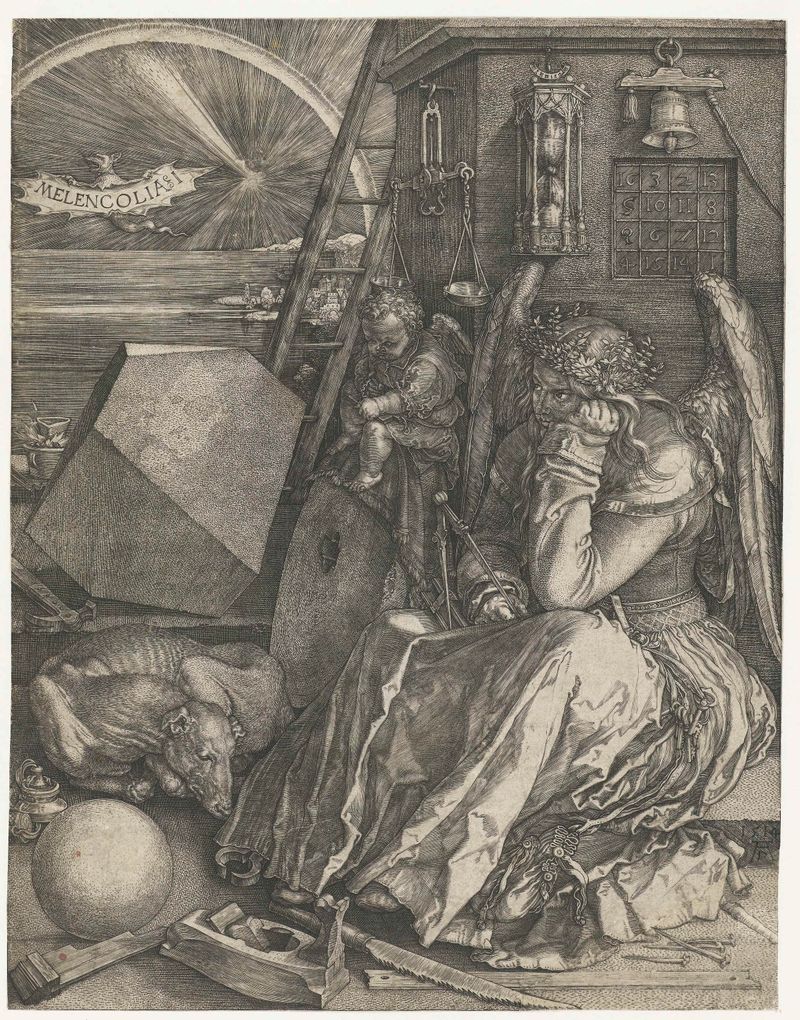
Melancholie
Albrecht Dürer
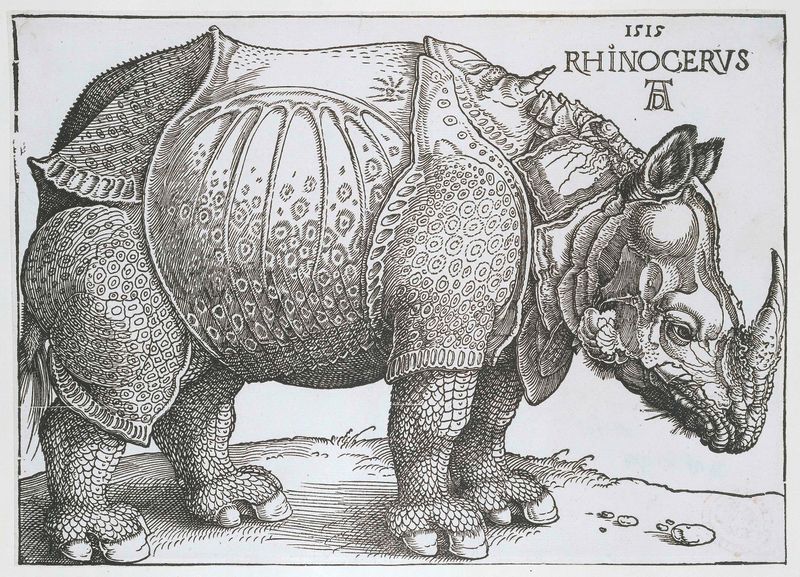
Neushoorn
Albrecht Dürer
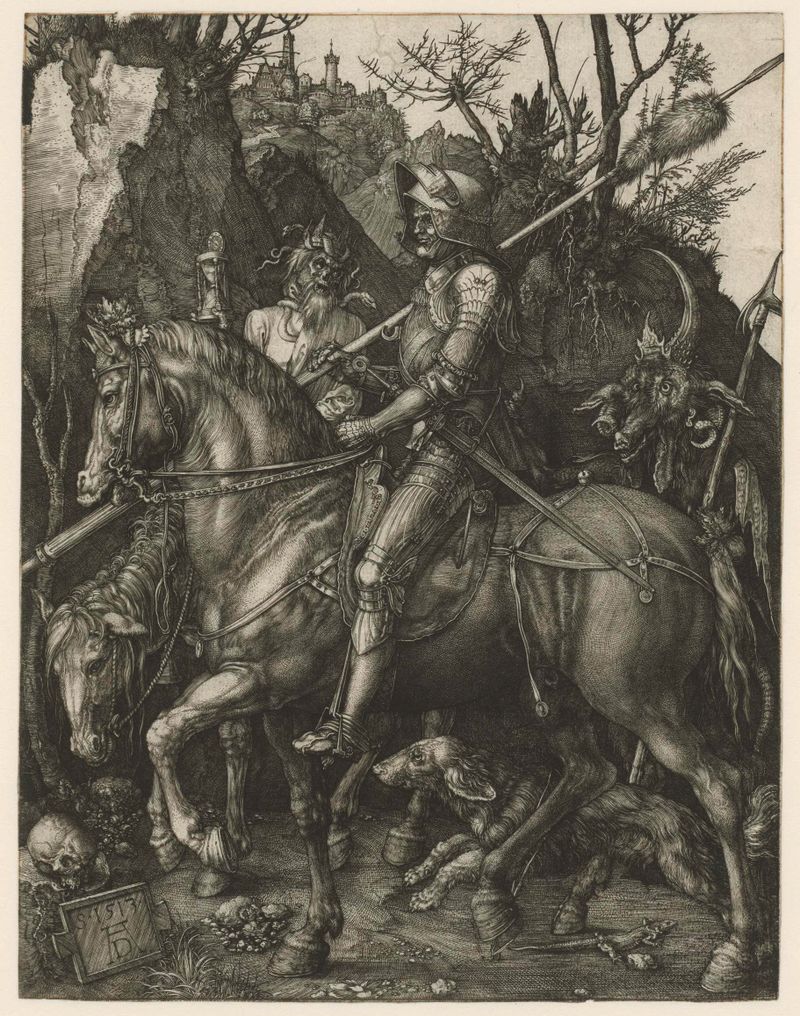
Knight, Death, and the Devil
Albrecht Dürer

De vier ruiters van de apocalyps
Albrecht Dürer

De vier ruiters van de apocalyps
Albrecht Dürer
De Heilige Hiëronymus in zijn studeervertrek
Albrecht Dürer
De Heilige Hiëronymus in zijn studeervertrek
Albrecht Dürer
De apocalyptische vrouw en de zevenkoppige draak
Albrecht Dürer
Adam en Eva
Albrecht Dürer
More Religious Art
Browse all →
The Return of the Prodigal Son
Rembrandt van Rijn

The Garden of Earthly Delights
El Bosco

Count Orgaz’ funeral
El Greco

The Hundred Guilder Print: the central piece with Christ preaching, the plate arched
Rembrandt van Rijn

The Descent from the Cross
Rogier van der Weyden

The return of the prodigal son
Rembrandt van Rijn