
Monte Civetta — History & Facts
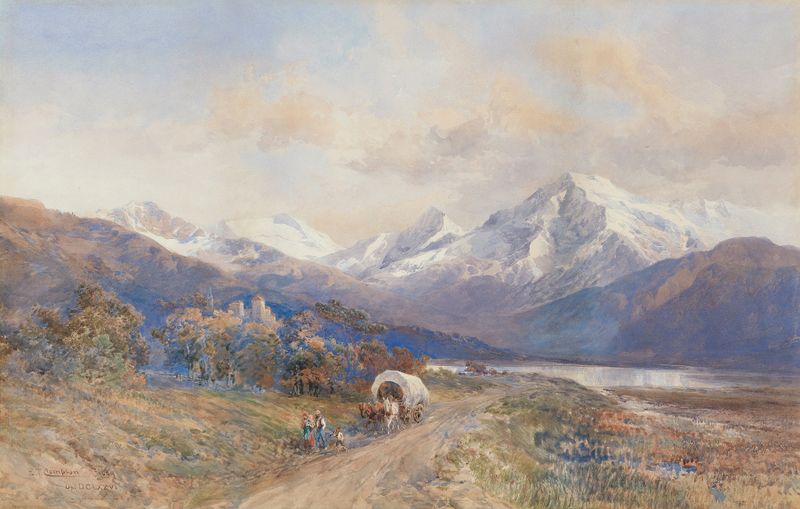
What secret hides in the quiet of the canvas? In Monte Civetta, the stillness of the imposing mountain landscape whispers stories of time immemorial, inviting us to listen closely. Look to the left at the jagged silhouette of the mountain peak, enveloped in a serene blue haze. Notice how the artist's brushstrokes create a rich tapestry of textures across the rugged terrain, where light dances subtly upon the crags and valleys. The palette is dominated by cool tones—deep blues and greys punctuated by touches of warm earth, invoking a sense of both majesty and melancholy.
The composition draws the eye to the summit, suggesting both the allure and the challenges of nature's grandeur. Beneath the surface lies a tension between the immutability of the mountain and the fleeting nature of human existence. The vast expanse of the landscape evokes a sense of isolation, reminding viewers of their smallness in the face of nature's monumental beauty. Yet, there is also a profound tranquility in this solitude, as the mountain stands steadfast against the passage of time, a silent witness to the world’s myriad changes. During the late 19th century, Edward Theodore Compton painted Monte Civetta while residing in the Italian Alps.
This period marked a significant evolution in landscape painting, as artists sought to capture not just visual reality but also the emotional connection between humanity and the environment. Compton, influenced by both Romantic and Realist traditions, was deeply engaged in exploring the interplay of light and form, reflecting the era’s growing appreciation for the power of nature.
More Artworks by Edward Theodore Compton
Browse all →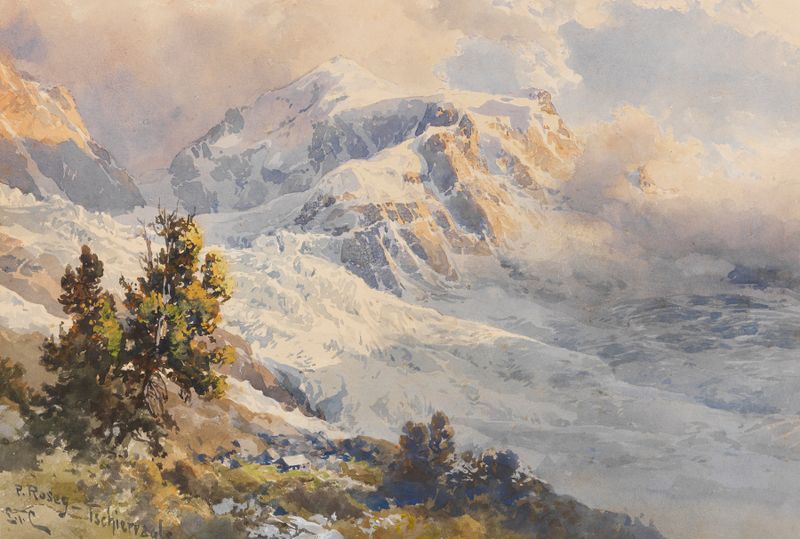
Piz Roseg – Tschiervagletscher
Edward Theodore Compton
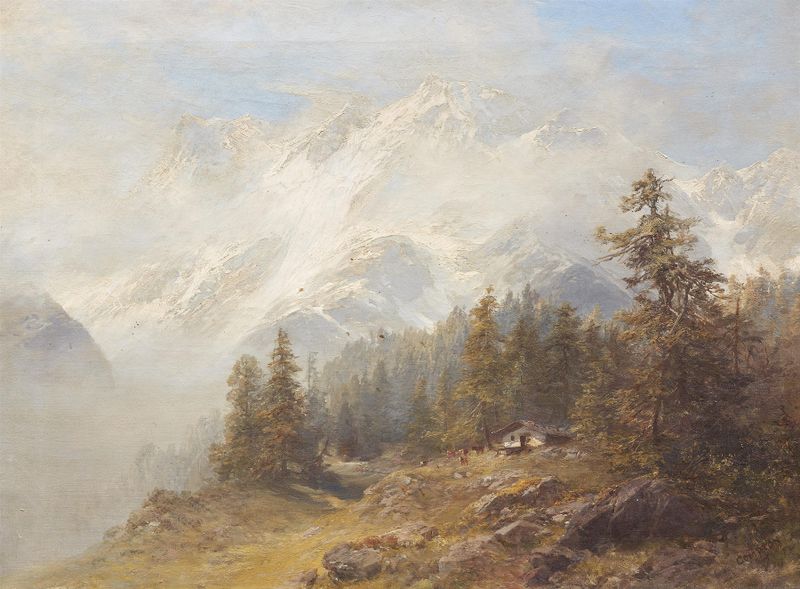
Alpenlandschaft vor schneebedecktem Massiv
Edward Theodore Compton
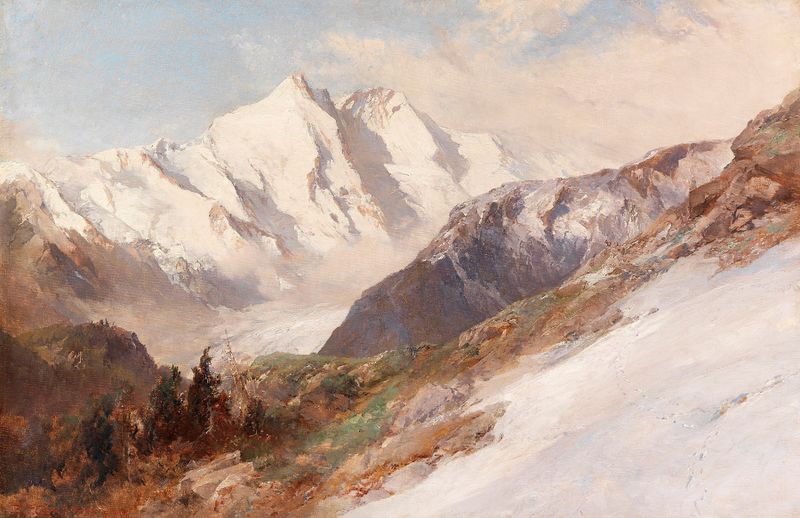
Blick auf die Nordseite des Großglockners
Edward Theodore Compton
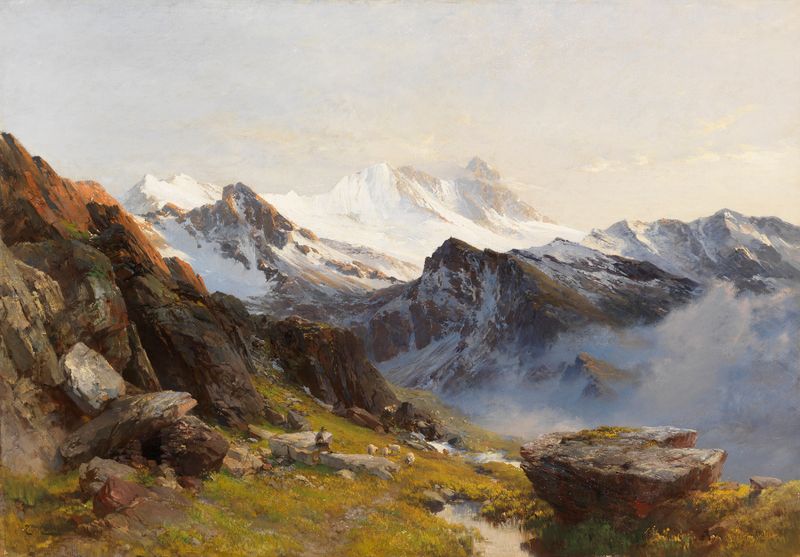
Großglockner von der Prager Hütte aus, früh
Edward Theodore Compton
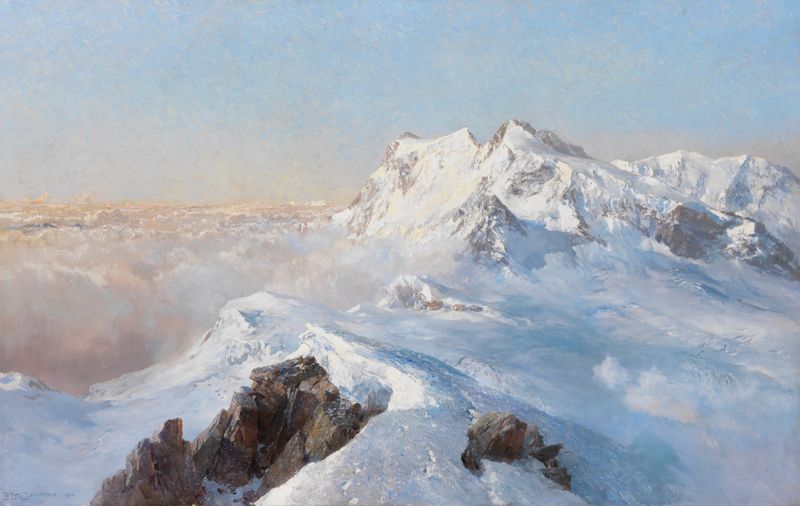
Über dem Nebelmeer (Monte Rosa vom Rimpfischhorn)
Edward Theodore Compton
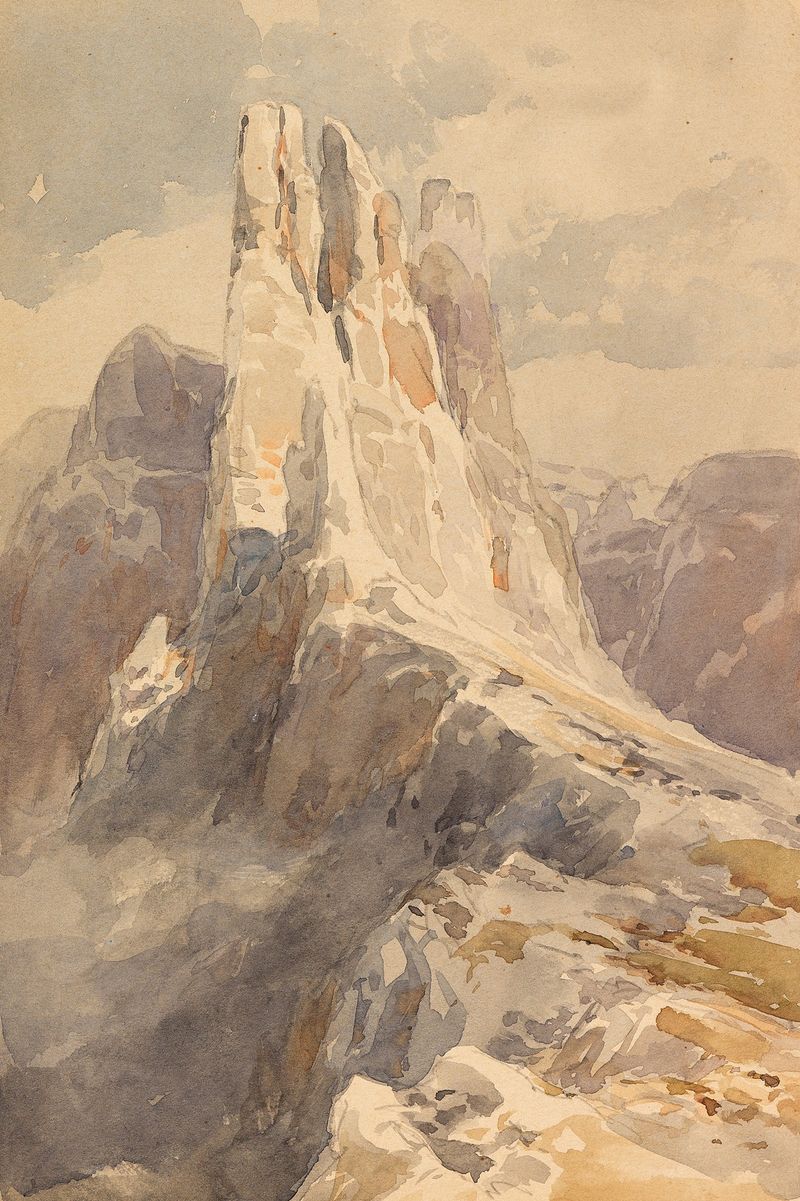
Blick auf die Vajolet-Türme in den Dolomiten
Edward Theodore Compton
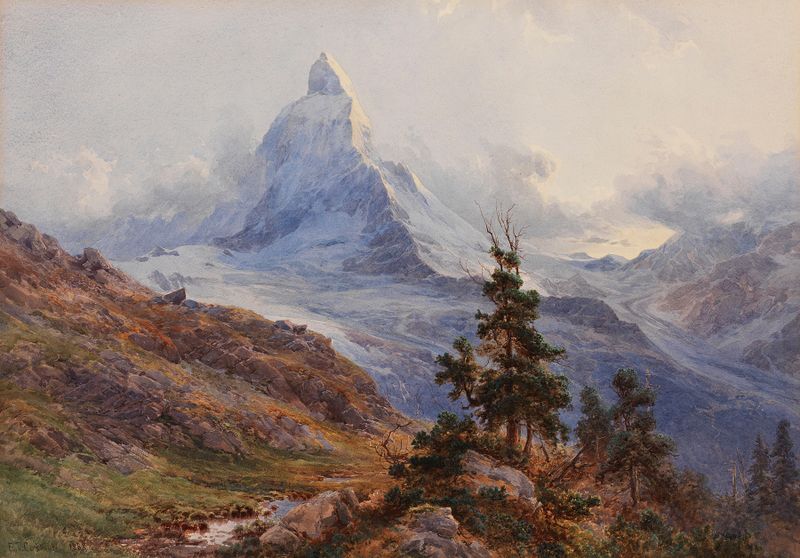
View of the Matterhorn
Edward Theodore Compton
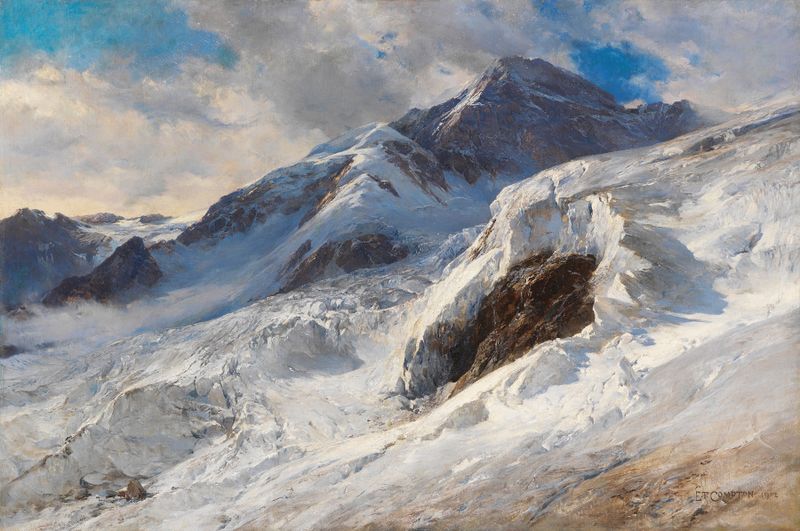
Lyskamm (Monte-Rosa)
Edward Theodore Compton
Blick auf den Ortler von St. Valentin
Edward Theodore Compton
Das Matterhorn von der Triftkumme
Edward Theodore Compton





