
Monte Viso, from the Col de La Croix — History & Facts
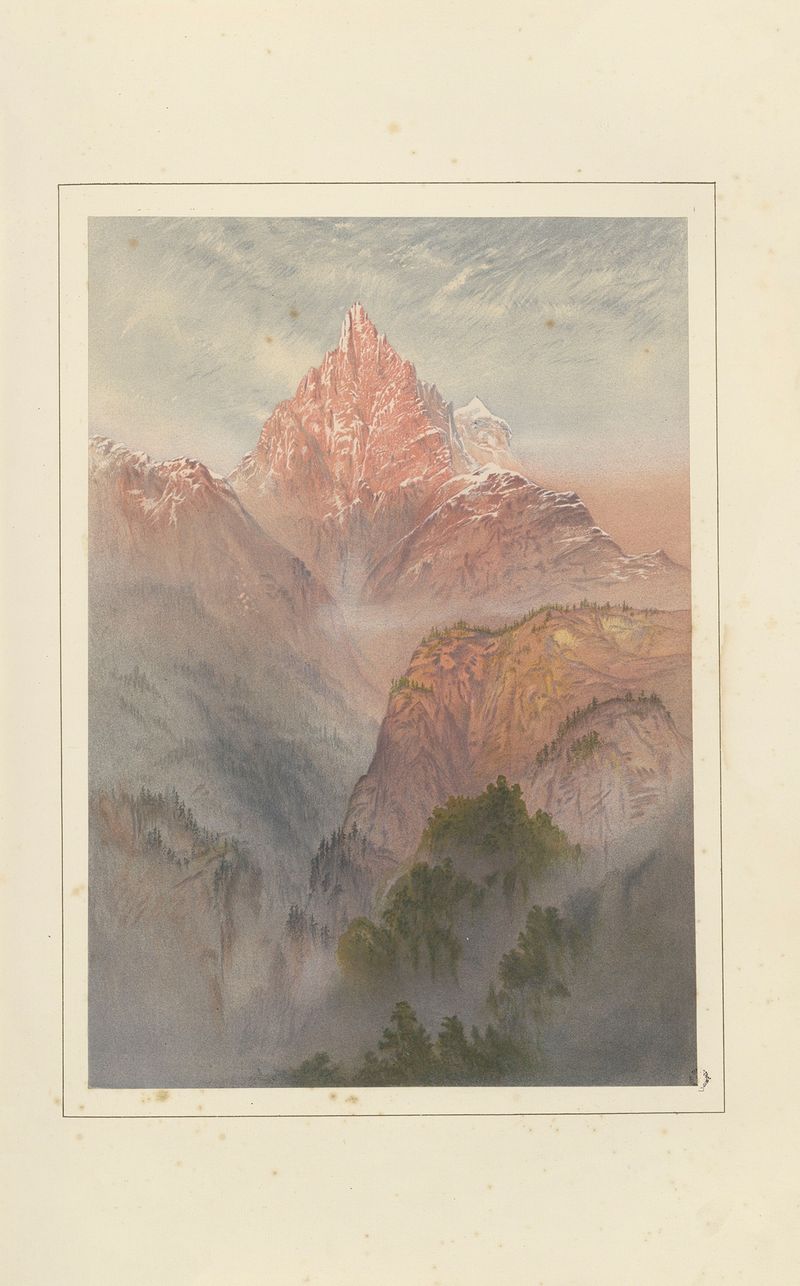
Could beauty survive in a century of chaos? In Monte Viso, from the Col de La Croix, the serene majesty of a mountain scene evokes a world untouched by tumult. Its grandeur invites contemplation, while beneath the surface lies a subtle interplay of illusion and reality. Look to the left at the towering peaks that pierce the sky, bathed in soft, golden light. The gentle hues of blue and white interlace with earthy greens of the foreground, creating a harmonious composition that draws the eye upward, leading us to the snow-capped summit.
Walton’s attention to detail captures the textural contrast between the smooth slopes and jagged rocks, inviting viewers to lose themselves in the tranquil essence of nature. As you delve deeper into the painting, notice how the clouds swirl around the mountain’s crest, creating an ethereal sense of movement. This interplay between the solid mountain and the transient sky suggests the duality of permanence and change, mirroring the artist's exploration of life amidst the uncertainty of his time. The composition, infused with a sense of calm, contrasts sharply with the societal upheavals of the late 19th century, prompting questions about what remains constant when chaos reigns. In 1867, Walton was in the midst of a burgeoning career, navigating the shifting landscapes of realism and romanticism in his art.
He painted this piece during a period marked by significant political revolutions and social transformations across Europe, capturing a moment of stillness in stark contrast to the era’s turbulence. As he stood at the Col de La Croix, he immortalized not just a view, but a profound meditation on beauty’s resilience against the backdrop of chaos.
More Artworks by Elijah Walton
Browse all →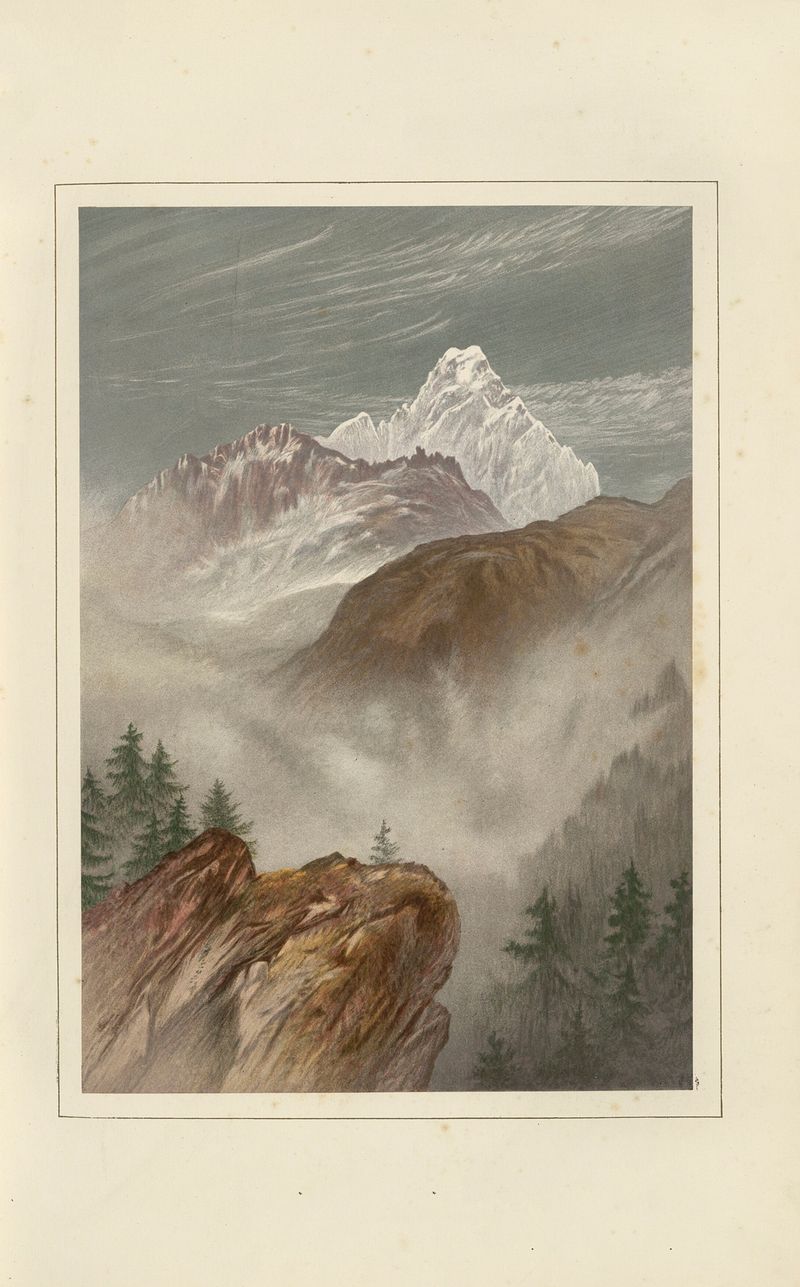
Monte Viso, from the south
Elijah Walton

The Matterhorn
Elijah Walton

The Gorner glacier
Elijah Walton

The Cascade de Roget and the Pointe de Salles
Elijah Walton
Crevasses on the Mer de Glace
Elijah Walton
St Martin’s Church Birmingham, By Night
Elijah Walton

The Weisshorn, from near St. Niklaus
Elijah Walton
Cofton From Rednal, Moonlight
Elijah Walton
Lodge Gates, Entrance To Aston Hall
Elijah Walton
The Dent du Midi, from the Valley of the Rhône
Elijah Walton





