
Moonlight, View of Dordrecht — History & Facts
What if beauty was never meant to be finished? In Moonlight, View of Dordrecht, the artist invites us to contemplate the ephemeral nature of our surroundings, capturing a moment suspended between dusk and dawn, where decay intertwines with serenity. Look to the left at the delicate interplay of moonlight on the water, shimmering like a silken thread woven into the fabric of the night. The artist’s loose brushwork creates a sense of movement in the reflection, as if the river is breathing. Notice how the deep blues and muted golds blend seamlessly, evoking both tranquility and melancholy.
The buildings in the distance stand silhouetted against the luminous sky, their outlines softened and almost ghostly, hinting at the passage of time. The juxtaposition of light and dark here speaks to the contrasting forces of vitality and decay. Each building could tell a story of life lived, falling into the shadows yet still touched by the moon’s glow. Jongkind’s choice to render this nocturnal scene captures a fleeting beauty that is both haunting and exquisite, suggesting that even in decay, there lies an undeniable allure.
The stillness of the water echoes the stillness of memory, inviting reflection on what remains when the vibrancy of life fades. In 1881, Jongkind was living in France, influencing the Impressionist movement while grappling with his own artistic identity. His career, marked by a love for landscapes and water, found a unique expression in this painting. During this period, he was gaining recognition, yet still faced the challenges of establishing his legacy amidst the evolving world of art.
The painting reflects not only his artistic journey but also a moment in time where beauty and decay met harmoniously under the moonlight.
More Artworks by Johan Barthold Jongkind
Browse all →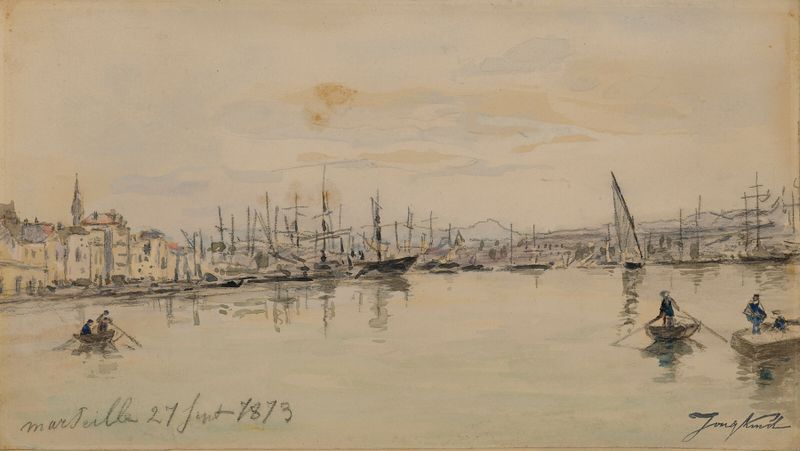
Le Port de Marseille
Johan Barthold Jongkind

Canal Saint-Martin
Johan Barthold Jongkind

Countryside near Brezins, between Grenoble and Vienne
Johan Barthold Jongkind

Notre-Dame vue du quai de la Tournelle
Johan Barthold Jongkind

Environs de Grenoble
Johan Barthold Jongkind

Clair de lune à Overschie (environs de Rotterdam)
Johan Barthold Jongkind

Port de Honfleur
Johan Barthold Jongkind
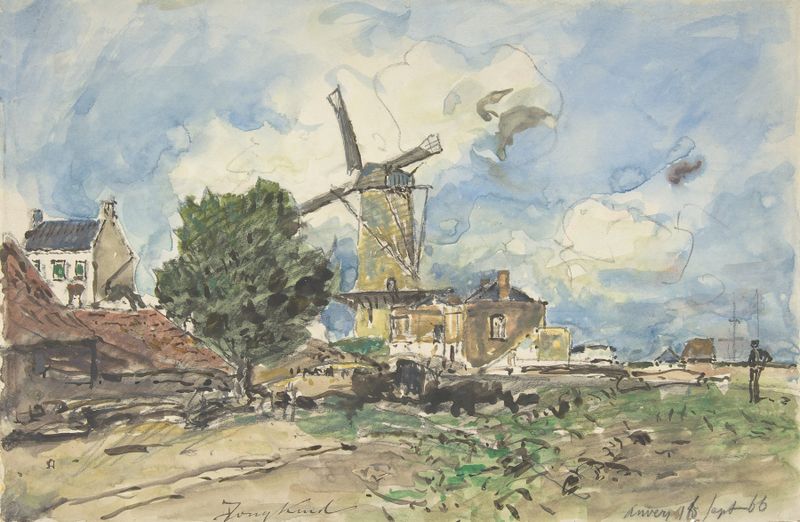
Wind Mill at Antwerp
Johan Barthold Jongkind

Le Havre
Johan Barthold Jongkind

The Church of Overschie
Johan Barthold Jongkind





