
Moonrise, Chioggia, Venice — History & Facts
This dance of hues whispers of the delicate balance between beauty and madness, as if the landscape itself is caught in an eternal moment of contemplation. Look to the left at the luminous moon, its silver glow spilling across the tranquil waters, where reflections shimmer like scattered thoughts. The vibrant palette of purples and blues captures the essence of twilight, while the warmth of the earth tones in the buildings offers a stark contrast to the cool air. Notice the gentle ripples in the water, each stroke revealing the tension between reality and illusion, as Moran masterfully blends impressionistic techniques with a romantic sense of longing. Dive deeper into the painting, and you’ll find the subtle interplay of light and shadow as they evoke the emotional turbulence beneath the serene surface.
The boat on the right, drifting gently, symbolizes solitude and introspection, while the distant horizon, shrouded in fog, hints at the unknown—an invitation to explore both the beauty and the chaos of the human experience. The colors, though harmonious, suggest an underlying madness, a yearning for connection amidst the solitude of nature. In 1897, Moran was grappling with a profound transition in his artistic journey, having shifted from grand landscapes to more intimate scenes. At this time, he was influenced by the American Impressionist movement, which sought to capture fleeting impressions of light and atmosphere.
Composed in Venice, a city that had long fascinated artists and writers, Moonrise, Chioggia, Venice stands as a testament to a pivotal moment in both the artist's life and the evolution of art during the late 19th century.
More Artworks by Thomas Moran
Browse all →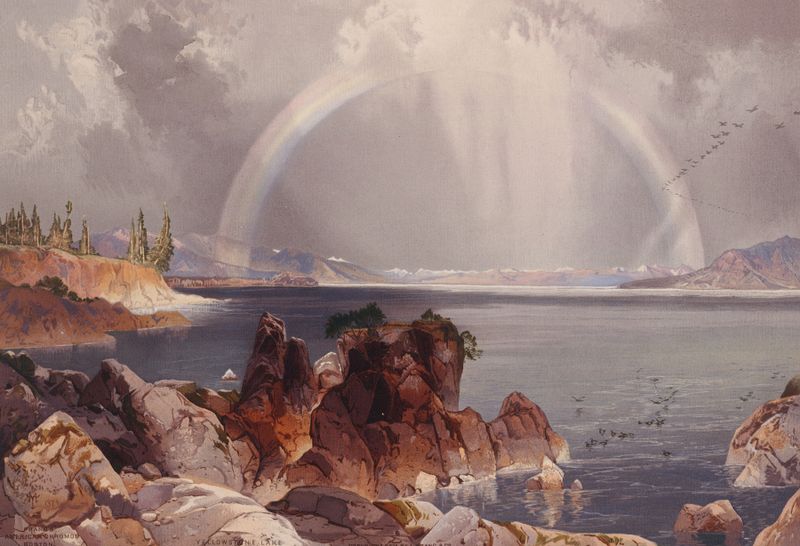
Yellowstone Lake
Thomas Moran

Grand Canyon of the Colorado River
Thomas Moran

Grand Canyon, Colorado River
Thomas Moran

The Towers of Tower Falls, Yellowstone
Thomas Moran
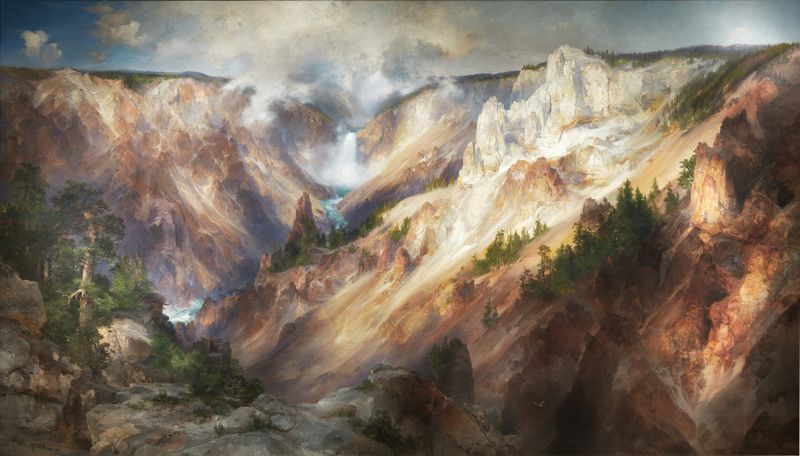
The Grand Canyon Of The Yellowstone
Thomas Moran

Mountain of the Holy Cross
Thomas Moran

Cliffs Of The Upper Colorado River, Wyoming Territory
Thomas Moran
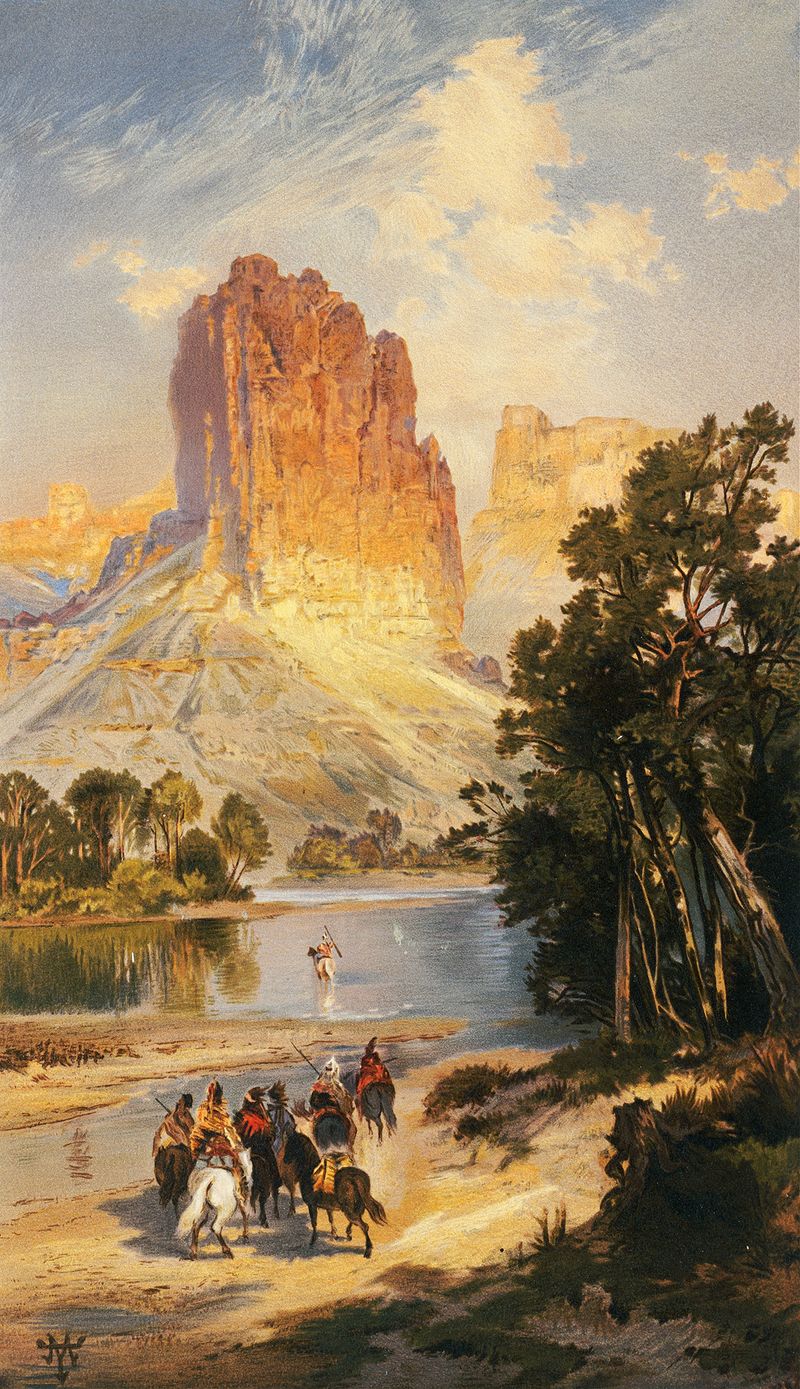
Cliffs of the Upper Colorado River, Wyoming Territory
Thomas Moran

Mammoth Hot Springs, Yellowstone
Thomas Moran
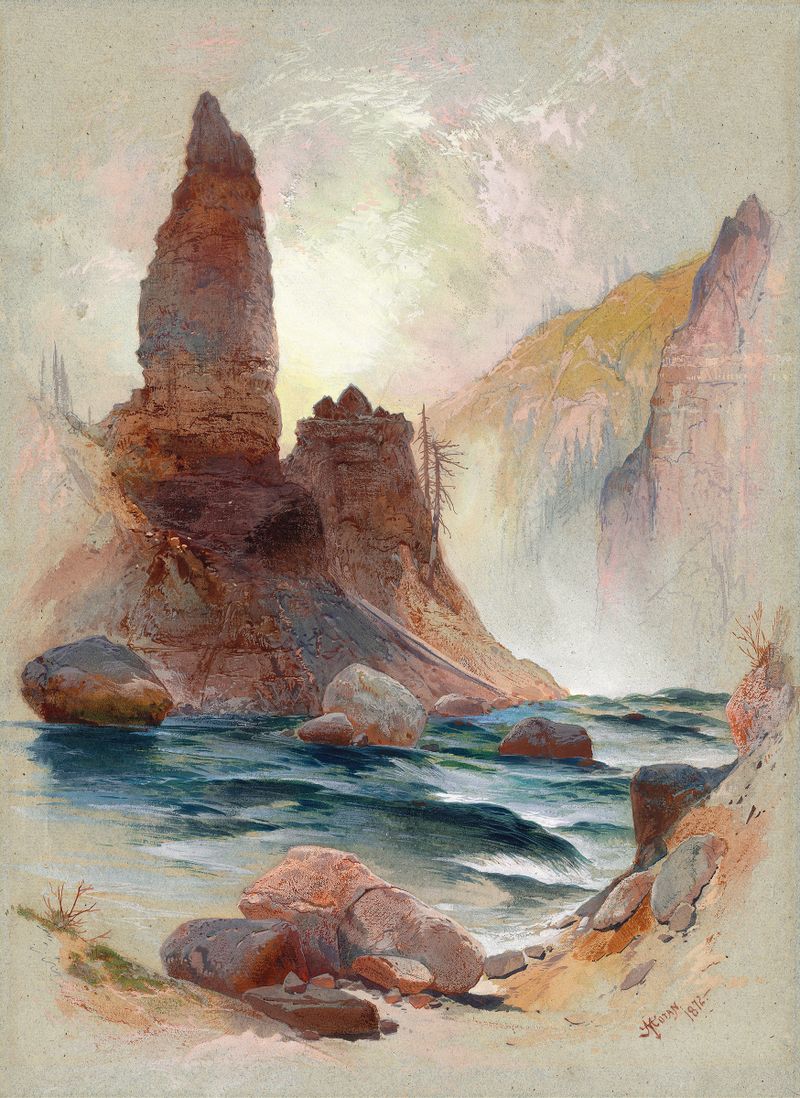
Tower at Tower Falls, Yellowstone
Thomas Moran





