
Morgen auf Bergeshöhe — History & Facts
What if beauty was never meant to be finished? The fleeting moment of dawn, a soft whisper of light, suggests eternity while evoking a bittersweet sense of nostalgia that resonates deep within the soul. Look to the left, where the soft hues of lavender and gold blend seamlessly into the sky, illuminating the jagged silhouettes of the mountains. Notice how the brushstrokes, both delicate and deliberate, create a sense of movement; the clouds gracefully dance across the horizon, while the shadows of the landscape cradle the emerging light. The composition draws your gaze upward, encouraging a moment of reflection as daybreak spills forth, casting a transformative glow over the terrain. Beneath the surface, the painting captures the tension between tranquility and transience.
The serene landscape is juxtaposed with the fleeting nature of dawn, a reminder that moments of beauty are ephemeral. The precision of the mountains implies permanence, yet the sky speaks of change, merging nostalgia with a palpable sense of longing for what is lost with every passing second. In 1893, the artist found inspiration in the Swiss Alps, a period marked by a growing fascination with natural landscapes within the context of the Romantic movement. As Compton embraced the interplay of light and shadow, he was also deeply influenced by the broader artistic currents of his time, which celebrated the sublime beauty of nature while wrestling with humanity’s place within it.
This work represents a defining moment in his career, as he sought to encapsulate the essence of the sublime through his poignant brushwork.
More Artworks by Edward Theodore Compton
Browse all →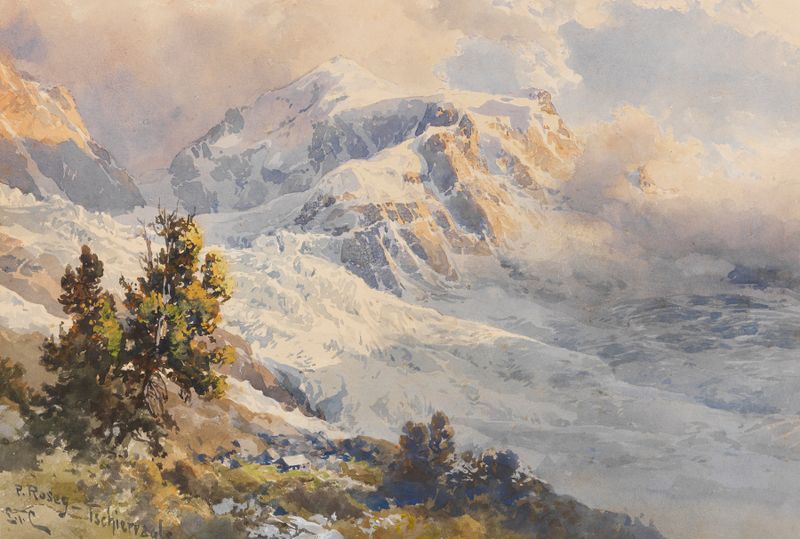
Piz Roseg – Tschiervagletscher
Edward Theodore Compton
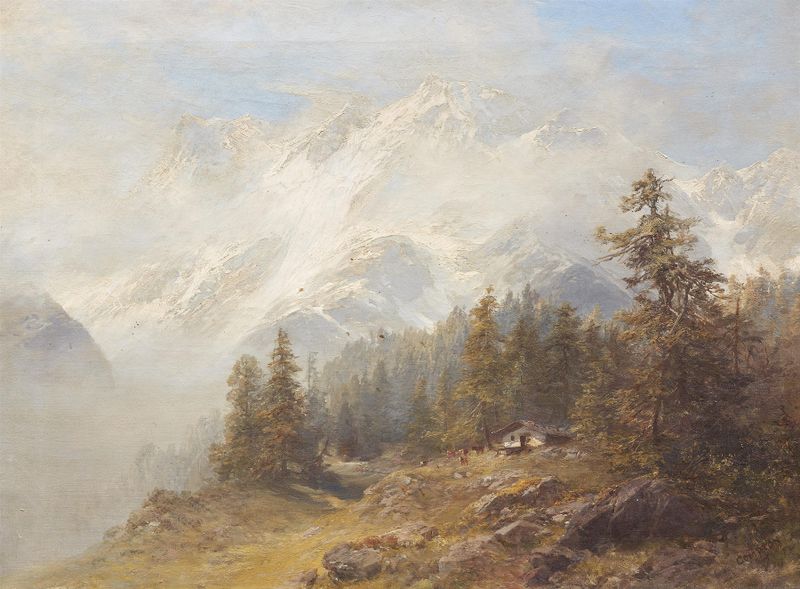
Alpenlandschaft vor schneebedecktem Massiv
Edward Theodore Compton
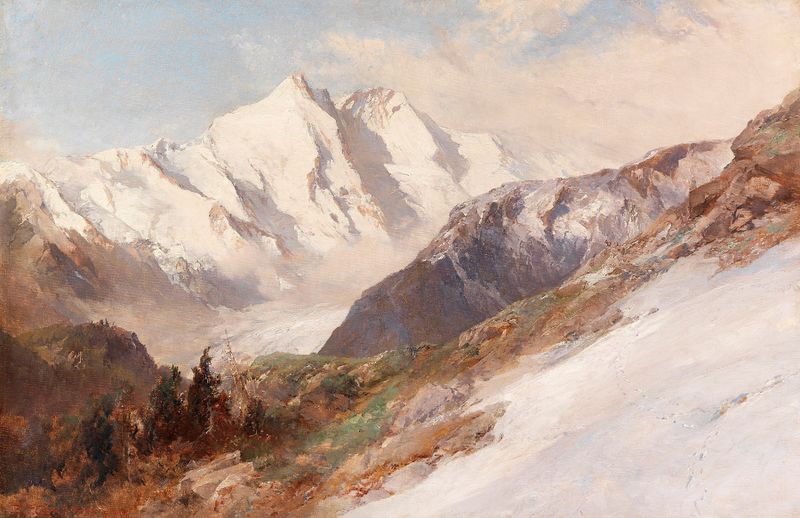
Blick auf die Nordseite des Großglockners
Edward Theodore Compton
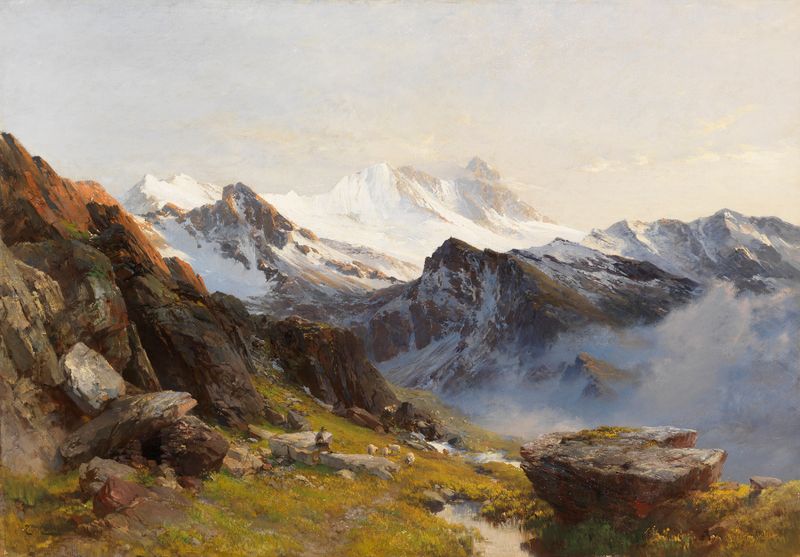
Großglockner von der Prager Hütte aus, früh
Edward Theodore Compton
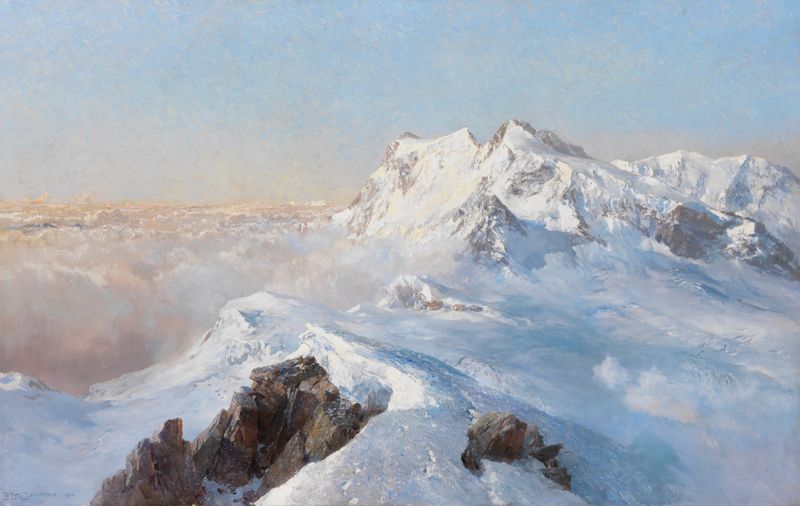
Über dem Nebelmeer (Monte Rosa vom Rimpfischhorn)
Edward Theodore Compton
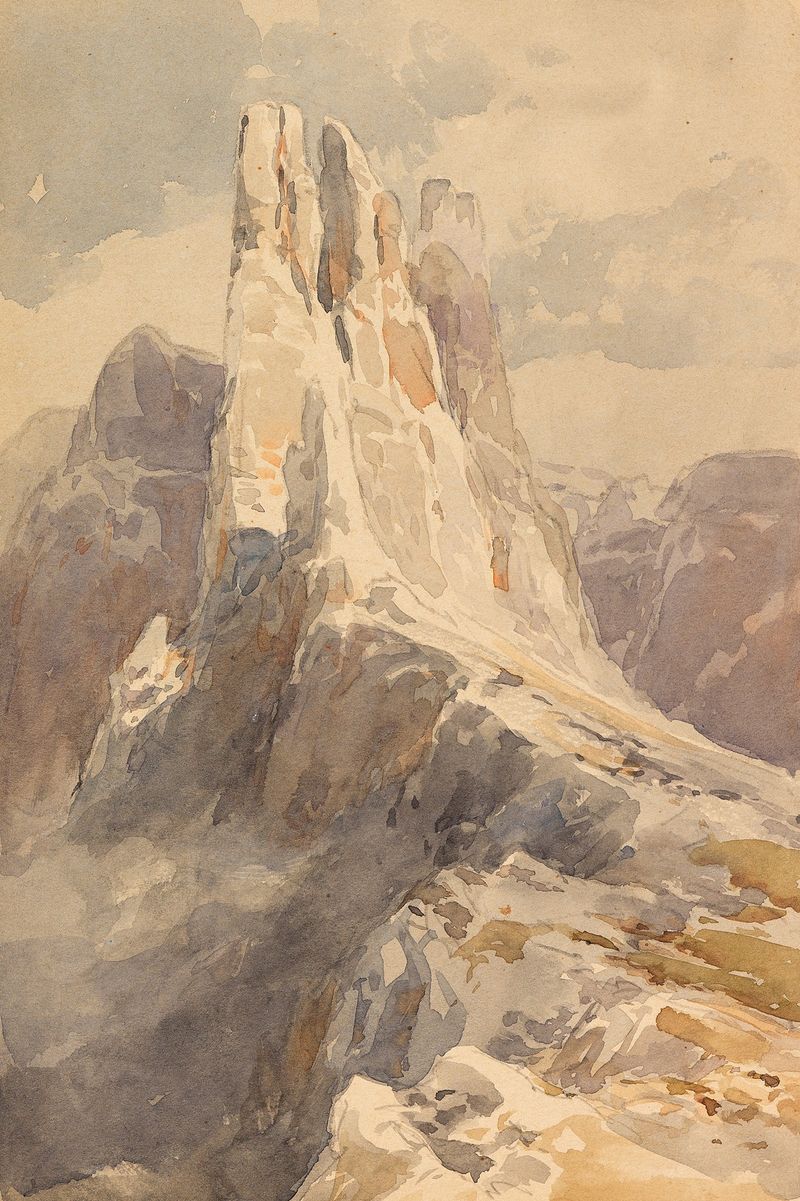
Blick auf die Vajolet-Türme in den Dolomiten
Edward Theodore Compton
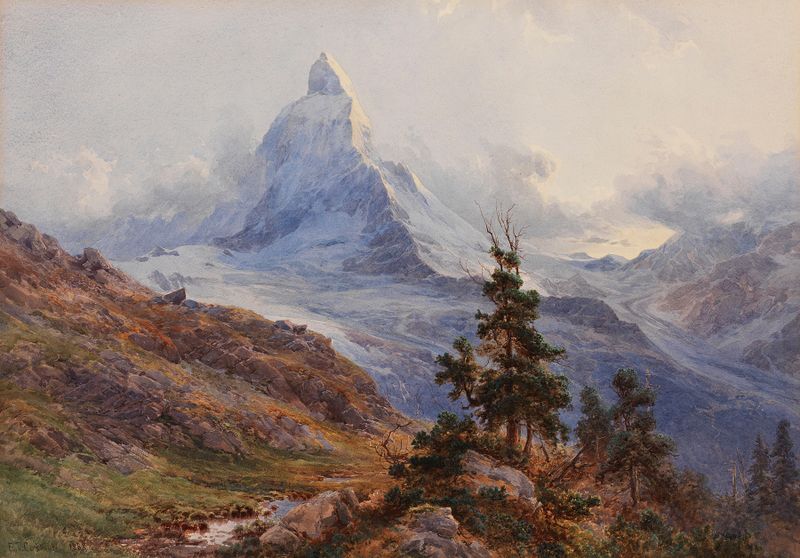
View of the Matterhorn
Edward Theodore Compton
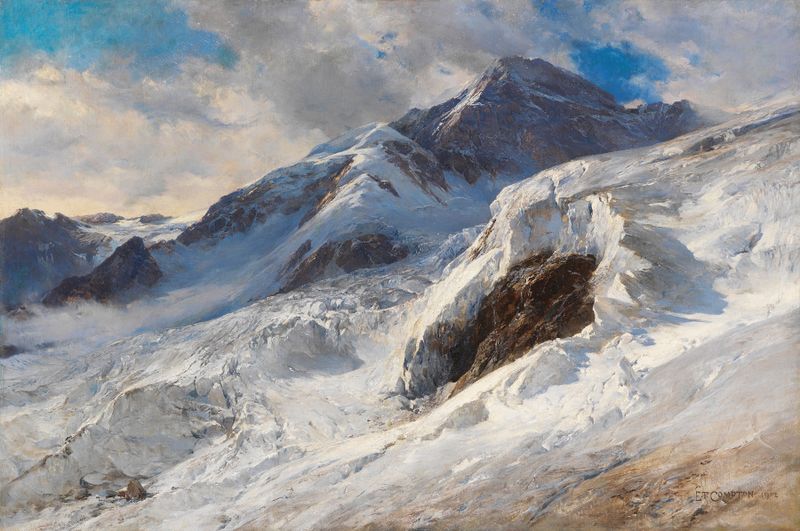
Lyskamm (Monte-Rosa)
Edward Theodore Compton
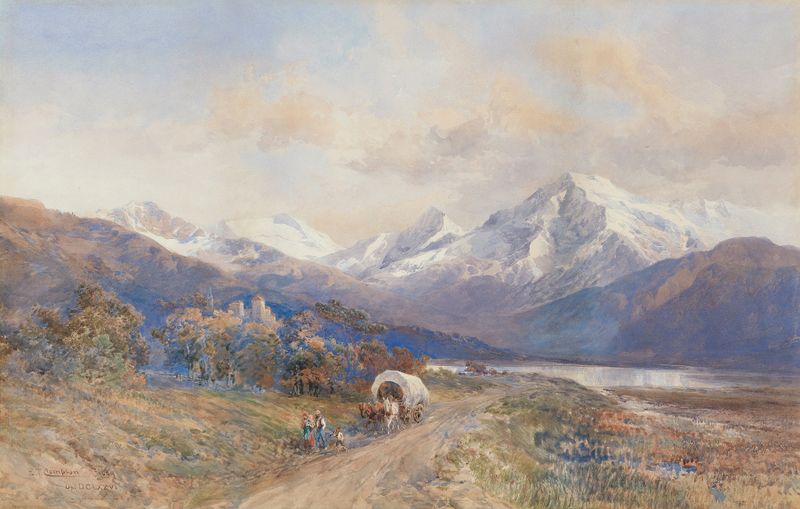
Blick auf den Ortler von St. Valentin
Edward Theodore Compton
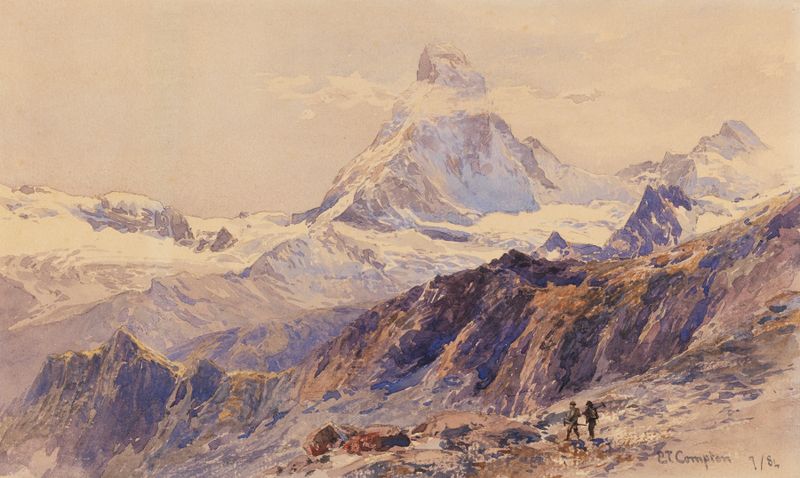
Das Matterhorn von der Triftkumme
Edward Theodore Compton





