
Morning at the Tegernsee — History & Facts
Can beauty exist without sorrow? In Morning at the Tegernsee, the ethereal landscape whispers a truth that transcends mere visual splendor, inviting contemplation of nature’s duality. Look closely at the serene surface of the lake, where soft ripples reflect an early dawn, inviting your gaze into the gentle embrace of the surrounding mountains. Notice how the delicate interplay of light and shadow dances across the water, illuminating the lush greenery and hinting at the vibrancy of life awakening. The palette of soft blues and greens conveys tranquility, while the subtle brushstrokes evoke the fleeting beauty of a morning mist. Yet, beneath this pastoral charm lies a tension that emerges from the horizon.
The clouds, heavy and pregnant with potential rain, cast a veil of uncertainty over the idyllic scene, suggesting that tranquility is often accompanied by an undercurrent of longing or melancholy. The boat, gently bobbing on the lake, becomes a metaphor for the transience of life, reminding viewers of the divine in the ordinary, as well as the fragility of moments that seem perfect. In 1827, Wilhelm von Kobell captured this poignant tableau during a period when Romanticism was flourishing in Europe, celebrating nature and emotion. Living in Germany, he was part of a cultural movement that sought to connect the sublime beauty of the landscape with profound human experience.
As he painted, Europe was awakening to new ideas about art, nature, and the individual's role within them, making this work a significant reflection of both personal and collective exploration in his time.
More Artworks by Wilhelm von Kobell
Browse all →
Der Postillon auf dem Weg nach Weilheim
Wilhelm von Kobell

Königsee with the Cliffs of St. Bartholomëe
Wilhelm von Kobell

Bauernwagen in bergiger Landschaft
Wilhelm von Kobell
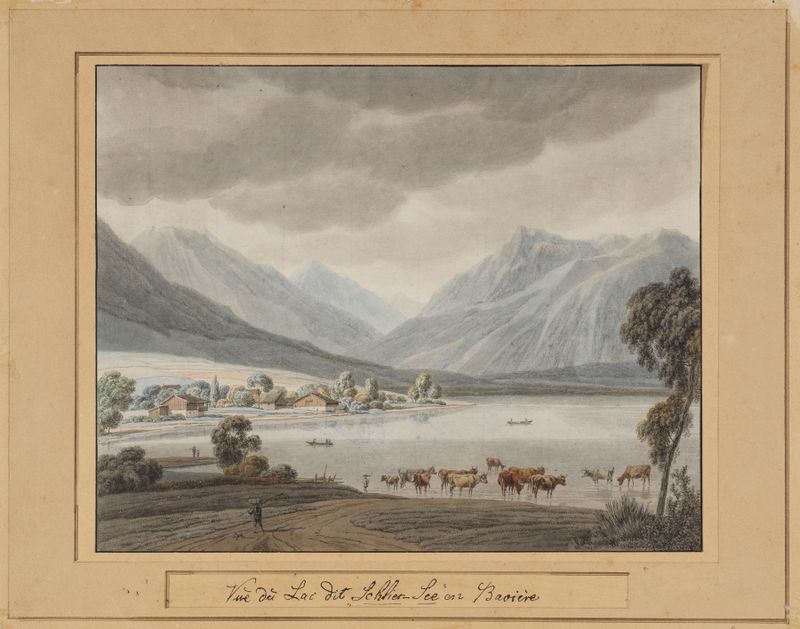
Schliersee
Wilhelm von Kobell
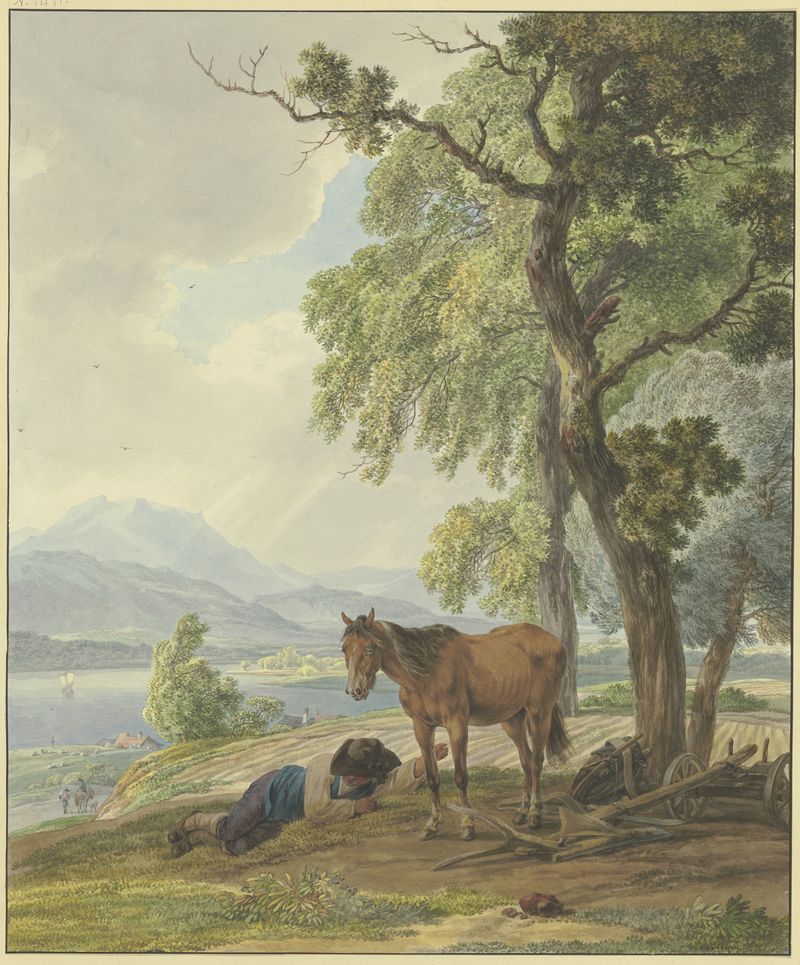
Ruhender Bauer mit seinem Pferd neben dem gepflügten Acker
Wilhelm von Kobell
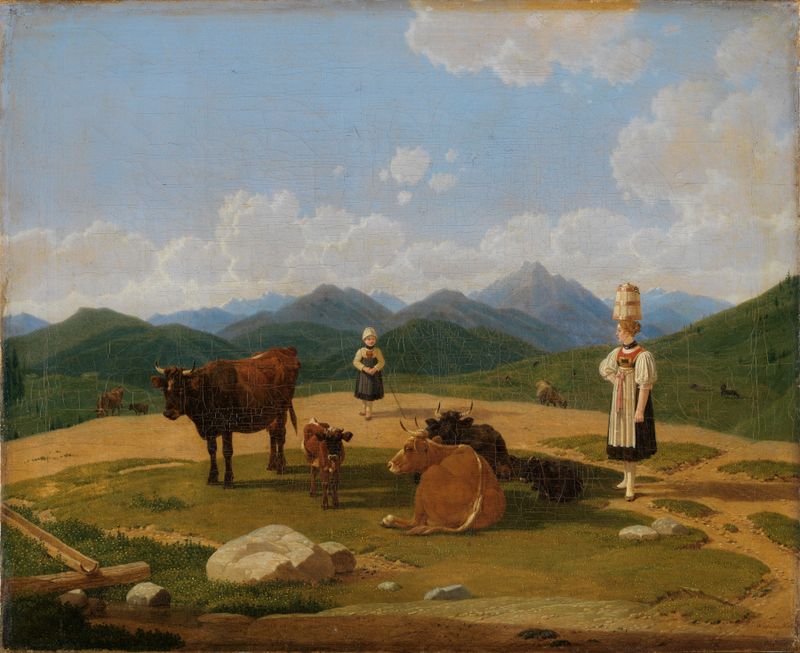
Auf der Alm
Wilhelm von Kobell
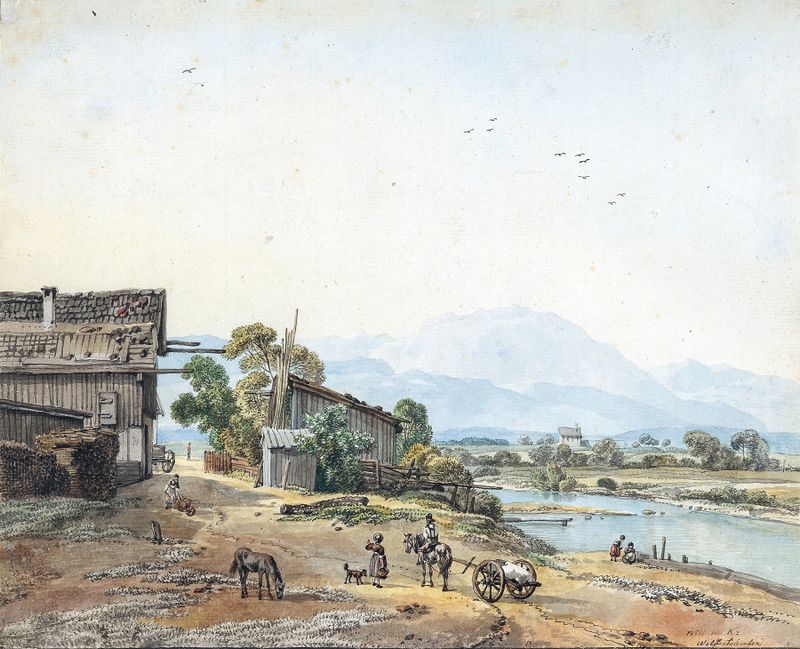
Wolfratshausen an der Loisach
Wilhelm von Kobell
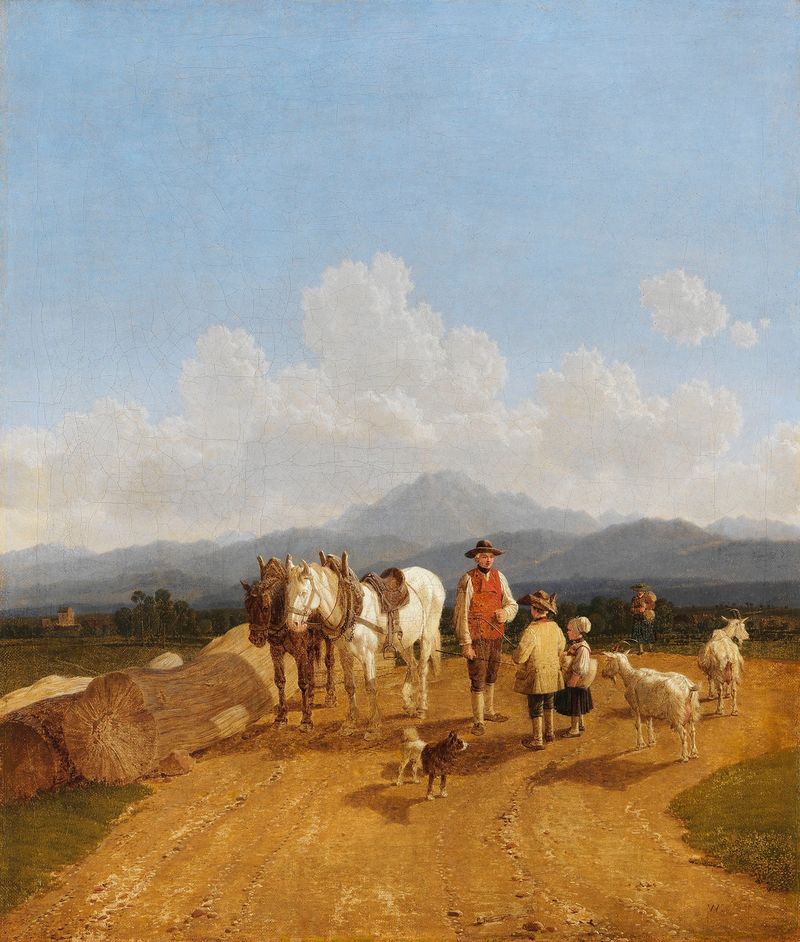
Bauer und Hirtenkinder in oberbayerischer Voralpenlandschaft
Wilhelm von Kobell

Begegnung auf der Landstrasse
Wilhelm von Kobell
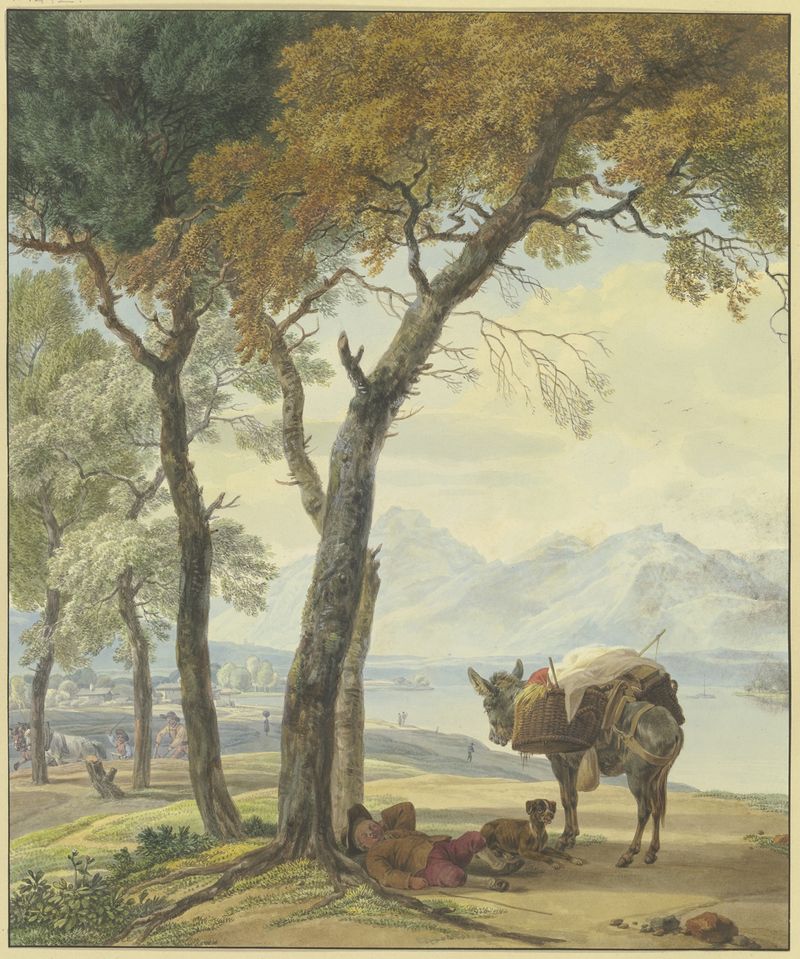
Schlafender Eseltreiber unter einer Baum an einem See
Wilhelm von Kobell





