
Motif of the Cascina in Pisa — History & Facts
What secret hides in the quiet of the canvas? In a world filled with noise and chaos, the stillness of this artwork invites a yearning for connection with nature and the echoes of history. Look to the left at the gentle curve of the river, where the water reflects delicate hues of azure and emerald, blending seamlessly into the landscape. Notice how the soft, diffused light bathes the pastoral scene, illuminating the rustic architecture of the Cascina in warm ochres and browns. The composition draws your eye through the gentle undulations of the terrain, where figures stroll leisurely, lost in their thoughts against the backdrop of rolling hills. Within this serene tableau lies a rich tapestry of emotions.
The juxtaposition of the tranquil river and the distant hills creates a sense of harmony, while the small figures evoke a bittersweet nostalgia, as if they are remnants of a time long past. The artist’s choice of soft brushwork fosters an intimate atmosphere, inviting the viewer to reflect on the beauty of simplicity and the fleeting nature of life. During a period marked by romanticism and a longing for pastoral ideals, the artist created this piece in a time when such landscapes were celebrated for their tranquility and simplicity. Living in Hungary, Károly Markó drew inspiration from his travels through Italy, capturing the essence of rural life while simultaneously addressing broader themes of nostalgia and yearning in the world of 19th-century art.
More Artworks by Károly Markó
Browse all →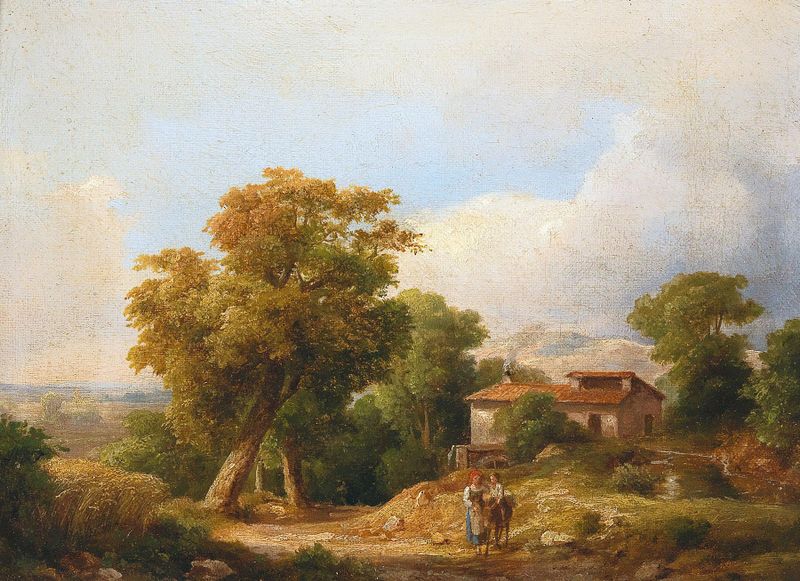
Italian Landscape with Farmhouse
Károly Markó

Landschaft mit Heuernte
Károly Markó
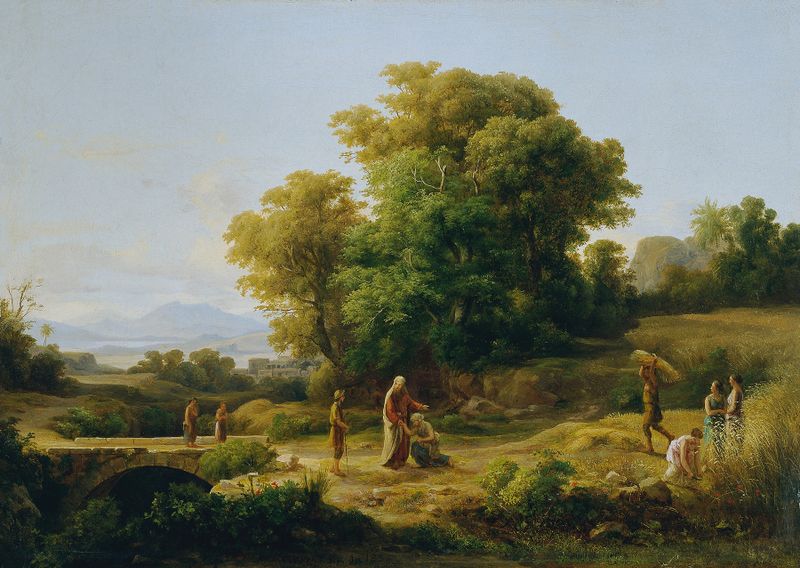
Ideale Landschaft mit Boas und Ruth
Károly Markó

Landscape at Tivoli, with a Scene from the Grape Harvest
Károly Markó
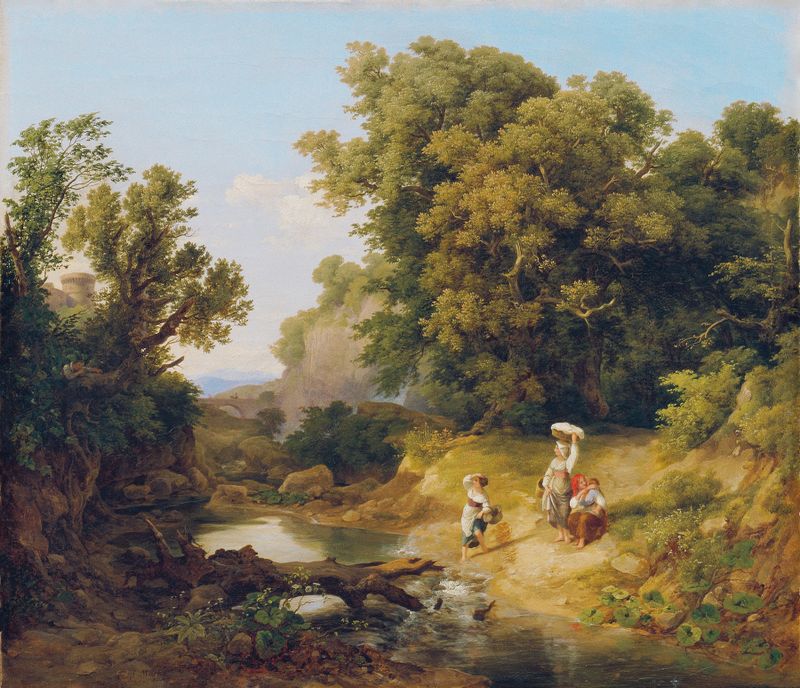
Ideale Landschaft (Italienische Landschaft)
Károly Markó
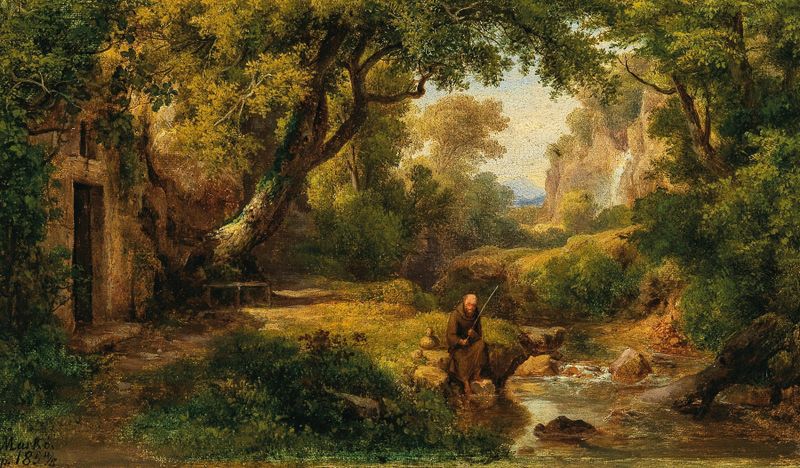
Flusslandschaft mit angelndem Mönch
Károly Markó

Italian Landscapes at Sunset, Fishermen
Károly Markó
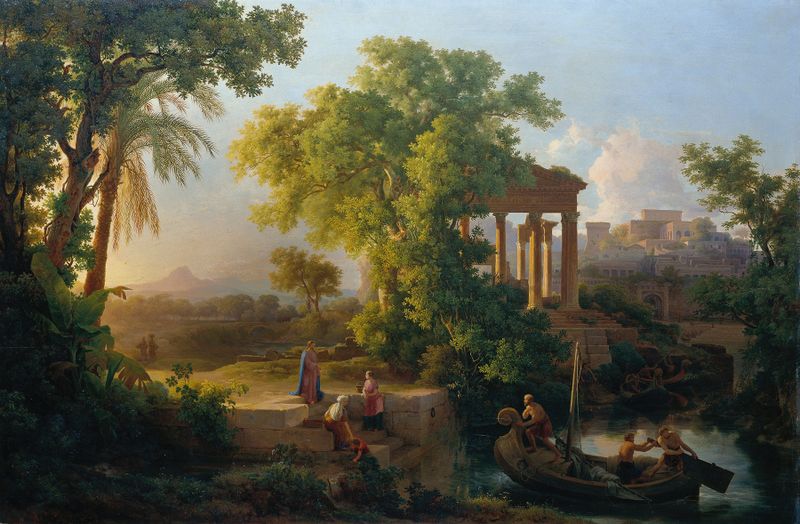
Landschaft mit der Berufung des Hl. Petrus
Károly Markó
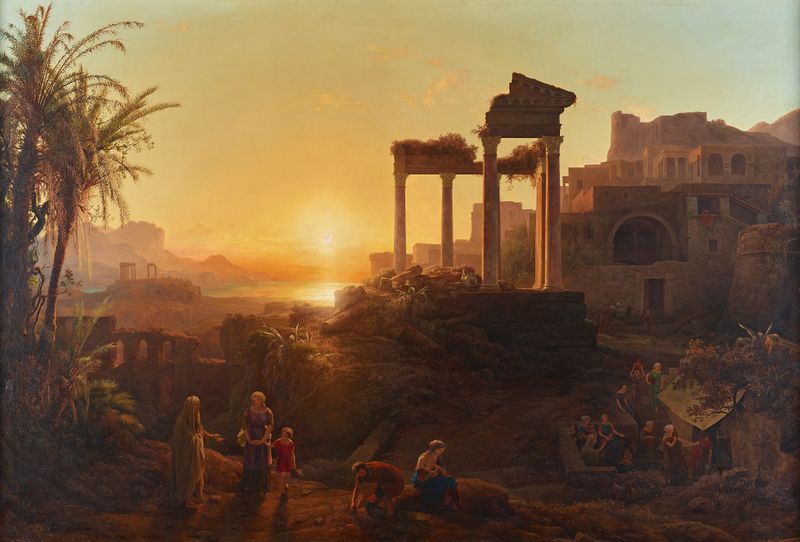
Landschaft mit Sonnenuntergang
Károly Markó

Ideallandschaft mit Christus und den Jüngern
Károly Markó





