
Motiv aus Lundenburg — History & Facts
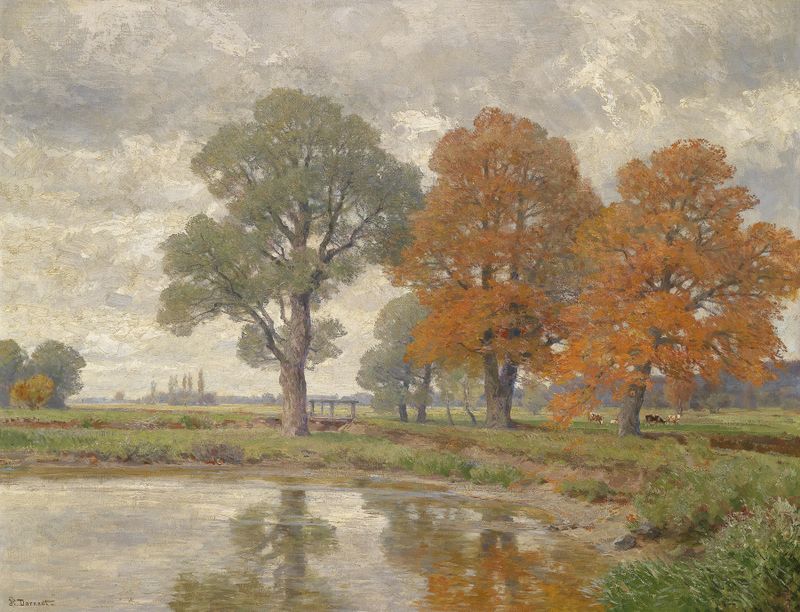
Can beauty exist without sorrow? In the delicate interplay of light and shadow, one might find the answer within the layers of Motiv aus Lundenburg. Look first at the foreground, where a tranquil landscape unfolds in soft greens and browns. The gentle curves of the hills cradle a quiet village, while the sky above pours golden hues that suggest a day nearing its end. Notice how the light falls upon the rooftops, casting a warm glow that invites contemplation, and contrasts with the cool, shadowed spaces beneath the trees.
This careful balance of color and form speaks to the artist’s intent to evoke both serenity and an underlying tension. Yet, amidst the idyllic scene, subtle tensions emerge. The looming clouds hint at a change, a reminder of the fleeting nature of peace and beauty. The juxtaposition of the vibrant village against the darker, ominous sky encapsulates a moment caught between bliss and impending uncertainty.
Each brushstroke adds to this complexity, as if the artist is whispering that even in beauty, there resides a shadow of sorrow. Hugo Darnaut painted Motiv aus Lundenburg during a period when European art was increasingly exploring emotional depth and the interplay between light and dark. Though the exact date of this work remains uncertain, it reflects the broader artistic currents of the late 19th and early 20th centuries, where artists sought to capture the transient moments of life against a backdrop of shifting societal landscapes. It was a time of reflection, and Darnaut’s canvas embodies this pursuit of balance amidst change.
More Artworks by Hugo Darnaut
Browse all →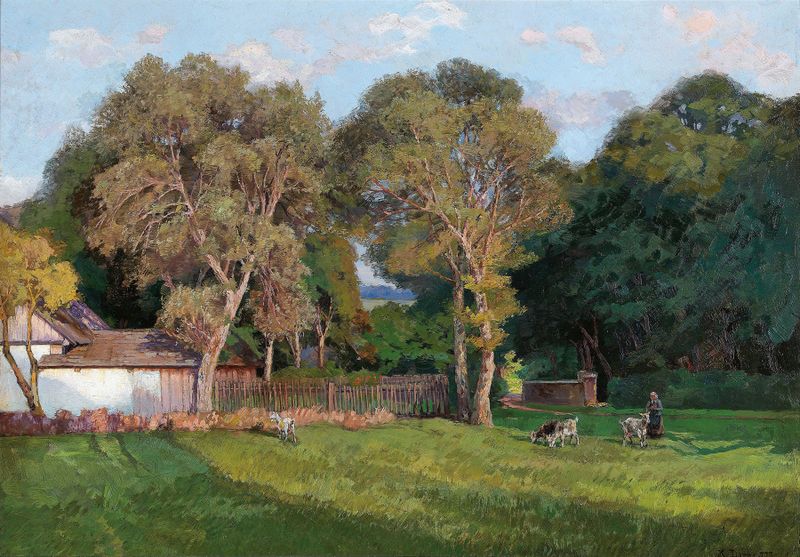
Aus dem Wienerwald
Hugo Darnaut
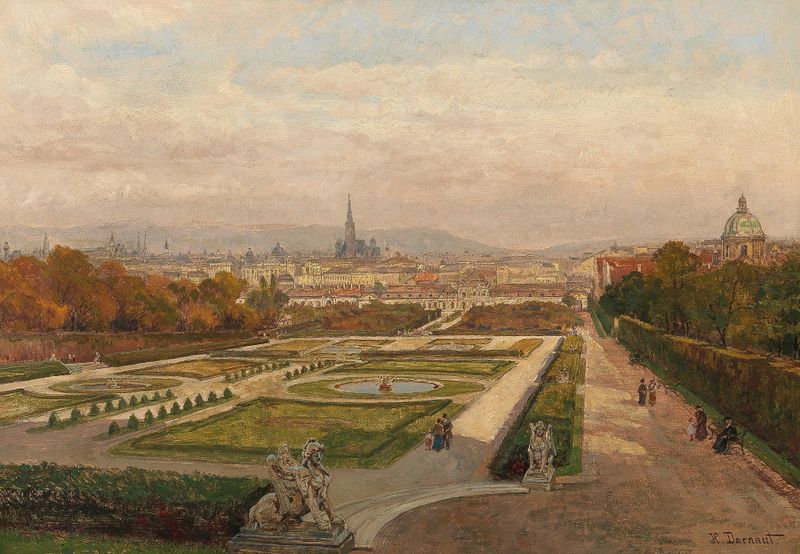
Blick vom Belvedere auf Wien
Hugo Darnaut

Motiv aus Plankenberg
Hugo Darnaut

In einem Wiener Garten (II., Praterstraße 60)
Hugo Darnaut

A Scene at Dusk in Late Autumn
Hugo Darnaut
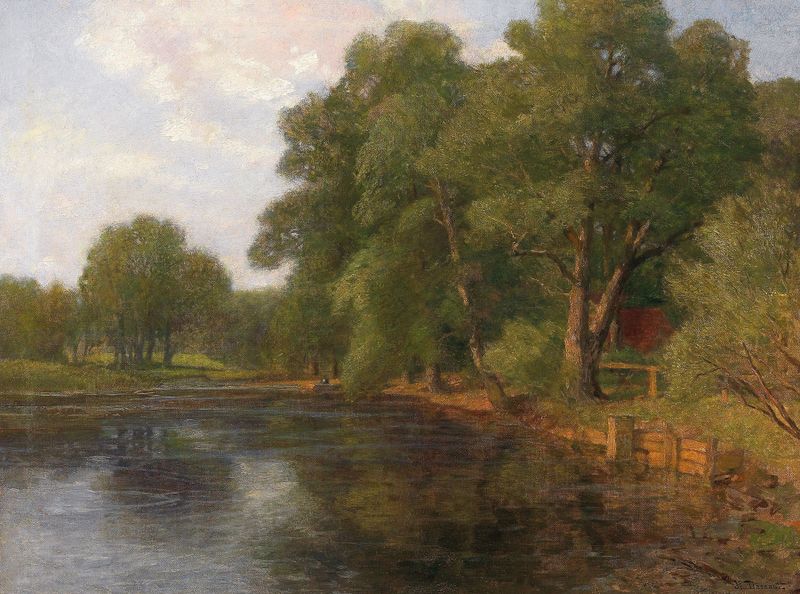
Motiv bei Plankenberg
Hugo Darnaut

Die Ruine Starhemberg im Piestingtal
Hugo Darnaut
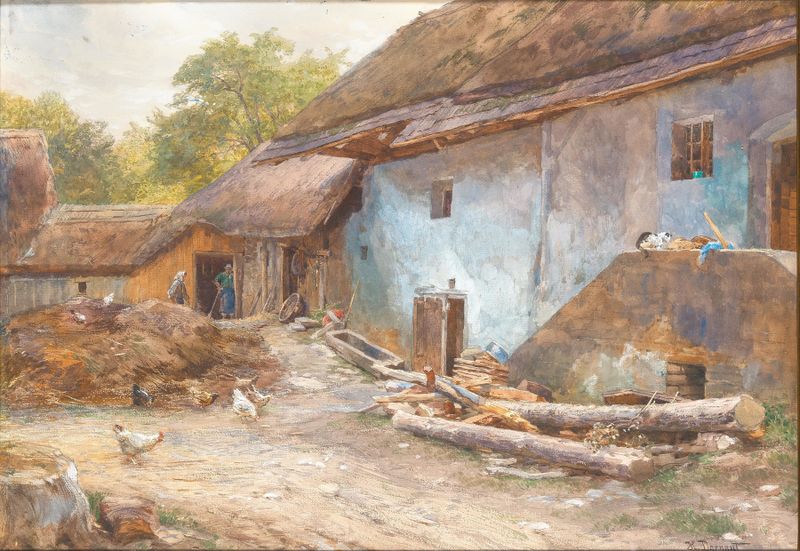
Niederösterreichischer Bauernhof
Hugo Darnaut

River Landscape with Small Herd of Cows and a Village in the background
Hugo Darnaut
Spätherbsttag
Hugo Darnaut





