
Moulins au clair de lune, Schiedam — History & Facts
Can paint confess what words never could? In Moulins au clair de lune, Schiedam, silence speaks volumes, revealing the unseen secrets of the night. Look closely at the tranquil water, where moonlight glimmers like whispers on the surface. The windmills rise majestically against a backdrop of soft blues and silvery grays, their silhouettes softened by gentle strokes that evoke a sense of calm. Notice how the artist employs a delicate balance of light and shadow, allowing the luminous moon to bathe the scene in a quiet glow, inviting viewers to lose themselves in its serenity. Within this stillness lies a profound contrast.
The windmills, symbols of industry, stand silent against the vastness of nature, suggesting the tension between human endeavor and the enduring tranquility of the landscape. Each brushstroke conveys an emotion—nostalgia, longing, perhaps a trespass into a forgotten time—as the viewer is drawn into intimate contemplation. The stillness captures a fleeting moment, where time seems to pause, whispering secrets only the stillness can hold. During the period Johan Barthold Jongkind painted this work, he was exploring the interplay of light and atmosphere in landscapes.
Living in France during the mid-19th century, he was at the forefront of the Impressionist movement, which sought to capture fleeting moments in nature. Jongkind’s innovative techniques and focus on nocturnal scenes reflected a broader shift in the art world, embracing new ways to express emotion and beauty through the interplay of light and color.
More Artworks by Johan Barthold Jongkind
Browse all →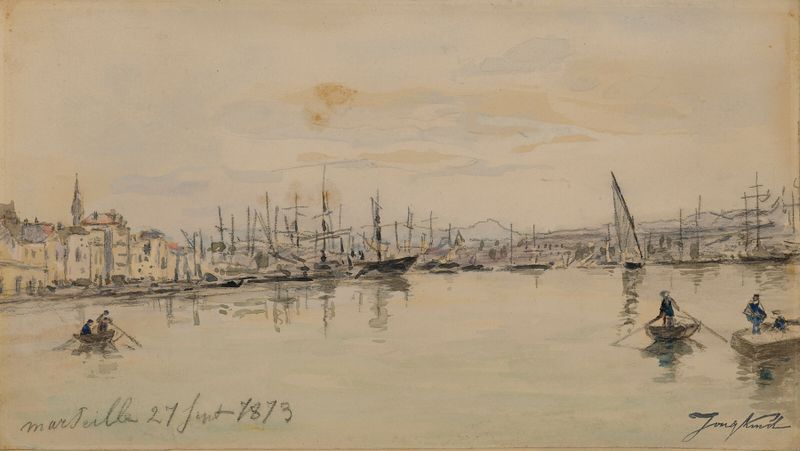
Le Port de Marseille
Johan Barthold Jongkind

Canal Saint-Martin
Johan Barthold Jongkind

Countryside near Brezins, between Grenoble and Vienne
Johan Barthold Jongkind

Notre-Dame vue du quai de la Tournelle
Johan Barthold Jongkind

Environs de Grenoble
Johan Barthold Jongkind

Clair de lune à Overschie (environs de Rotterdam)
Johan Barthold Jongkind

Port de Honfleur
Johan Barthold Jongkind
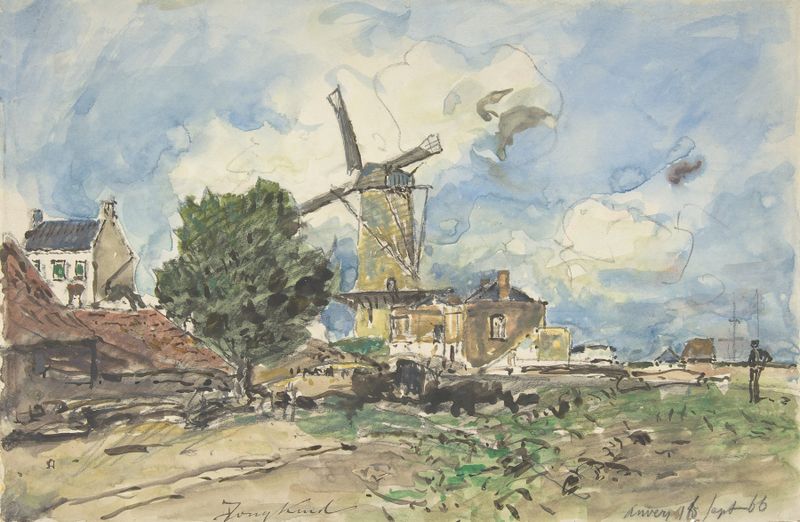
Wind Mill at Antwerp
Johan Barthold Jongkind

Le Havre
Johan Barthold Jongkind

The Church of Overschie
Johan Barthold Jongkind





