
Mount Fuji — History & Facts
In the stillness of Mount Fuji, silence becomes a canvas where nature’s majesty confronts the transient whispers of human existence. Look to the center, where the serene silhouette of Mount Fuji rises, an emblem of steadfastness against the soft pastel hues of the sky. The delicate brushstrokes convey a fluidity in the clouds, creating a gentle backdrop that bathes the mountain in a dreamlike light. Notice the gradient of blues and pinks, which blend seamlessly at the horizon, evoking a tranquil dawn that seems to pause time itself. Yet beneath this calm surface lies a tension between the eternal and the ephemeral.
The mountain, a symbol of endurance, contrasts sharply with the fleeting beauty of the atmospheric light—reminding us that all moments, no matter how picturesque, are transient. The sparse, almost absent foreground draws the viewer’s focus upward, suggesting a longing for connection with the sublime, while the open space evokes a profound silence, inviting introspection. In 1932, Takahashi Hiroaki crafted Mount Fuji during a period of growing nationalism in Japan. He was navigating a world where traditional art forms were merging with modern influences, reflecting a broader cultural shift.
This work emerged from a time when the beauty of national identity was being redefined, yet Hiroaki remained devoted to capturing the quiet power of nature amid the external chaos.
More Artworks by Takahashi Hiroaki
Browse all →
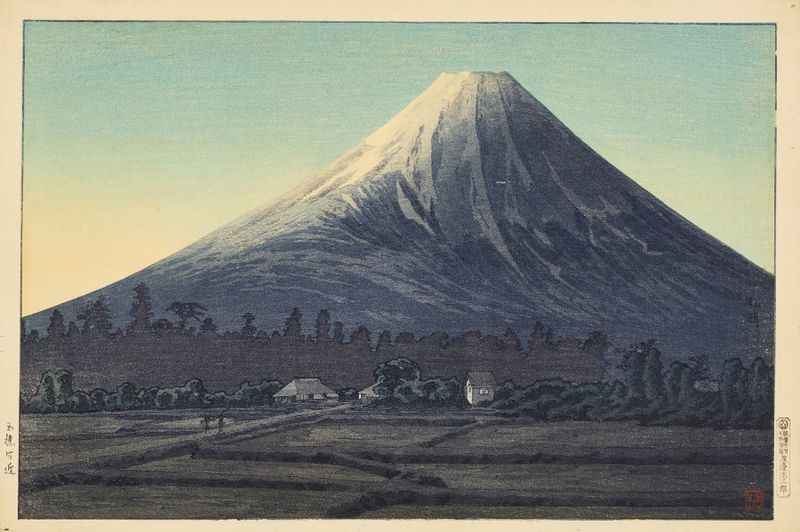
Mount Fuji seen near Tamaho, Dawn
Takahashi Hiroaki
Mount Fuji seen near Tamaho, day
Takahashi Hiroaki
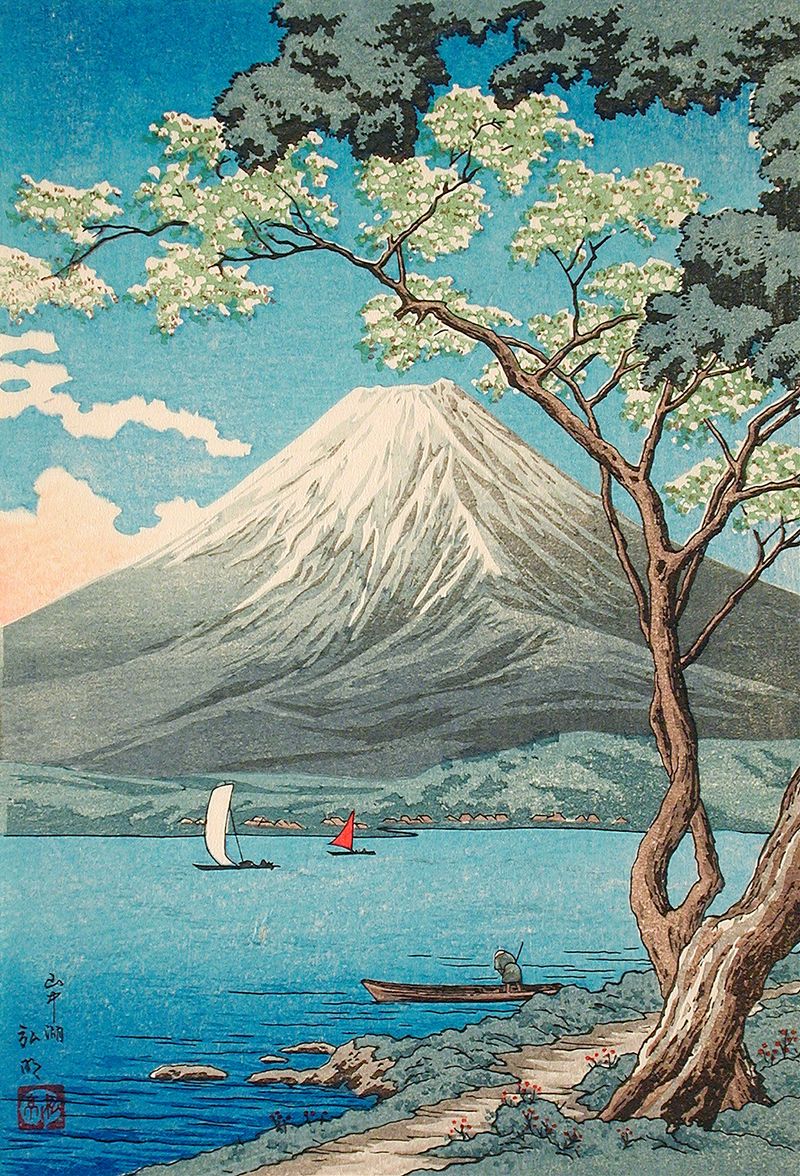
Mount Fuji from Lake Yamanaka
Takahashi Hiroaki

Mt. Fuji from Tagonoura, Snow Scene
Takahashi Hiroaki

Egoda no tsuki
Takahashi Hiroaki
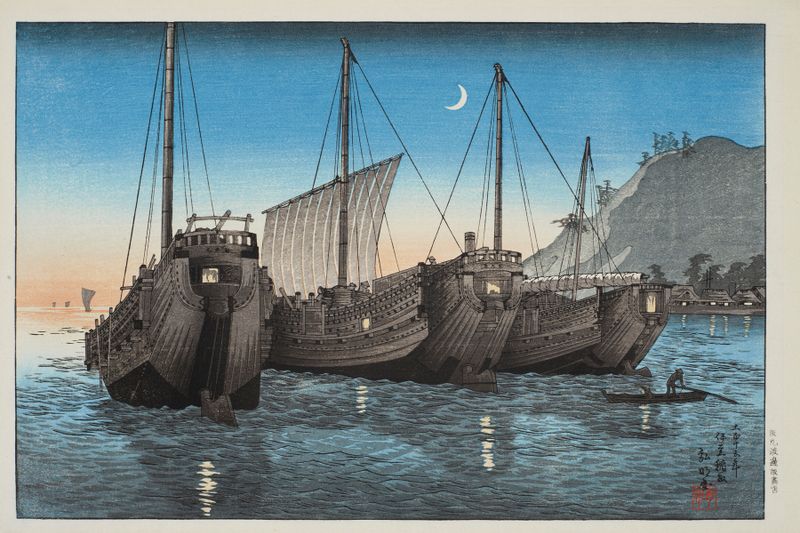
Junks in Inatori Bay, Izu
Takahashi Hiroaki

Izumibashi no ame
Takahashi Hiroaki
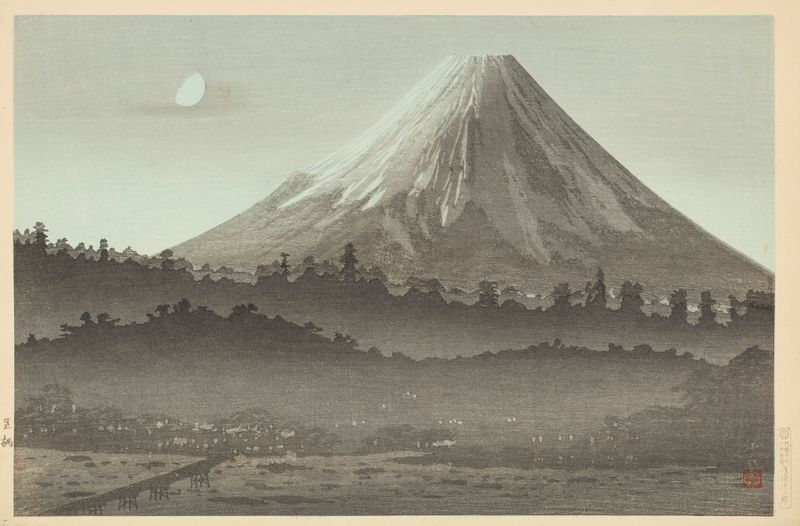
Mount Fuji seen near Tamaho, Night
Takahashi Hiroaki

Fishing nets at Tsukuda
Takahashi Hiroaki
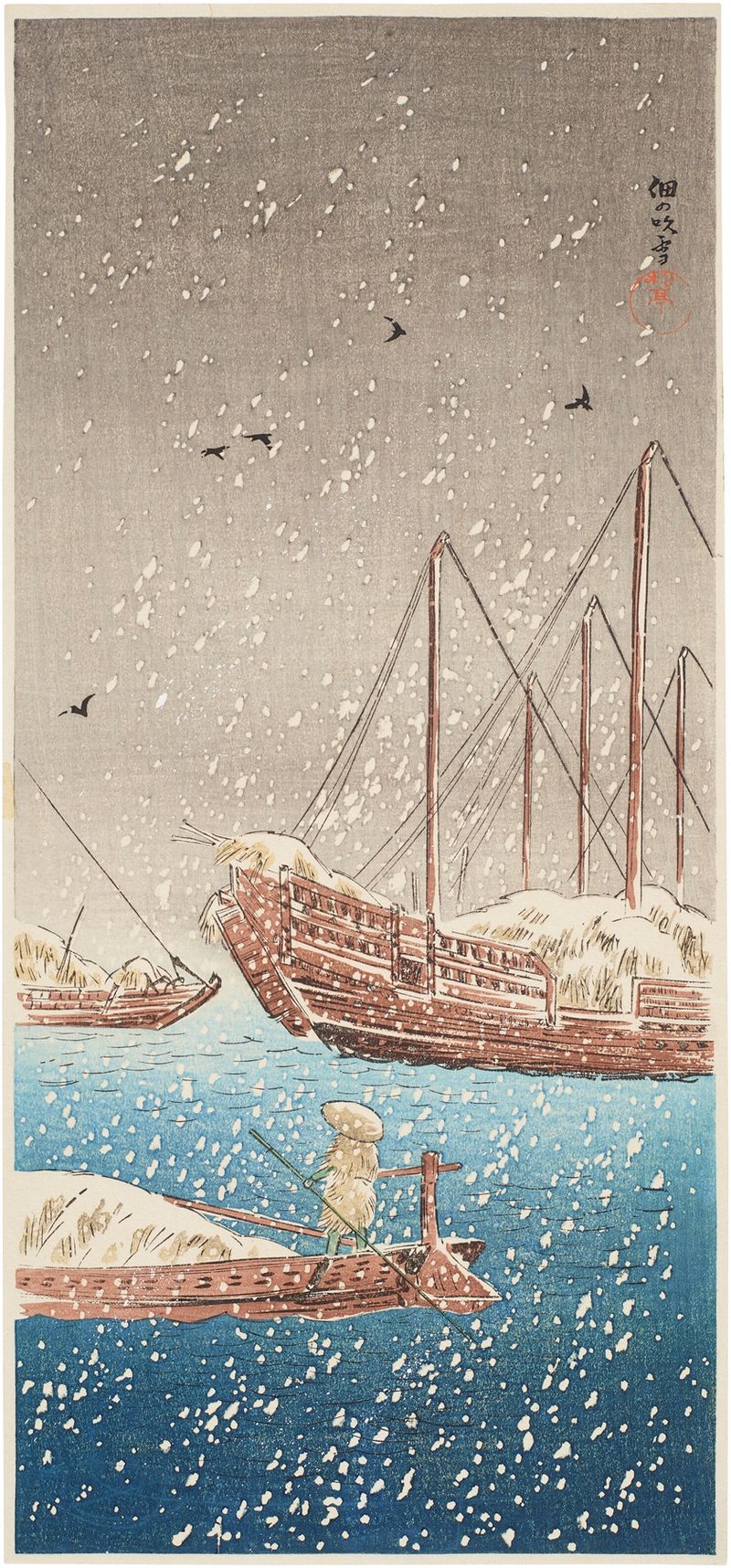
Tsukuda no fubuki
Takahashi Hiroaki





