
Mt. Fuji from Tagonoura, Snow Scene — History & Facts
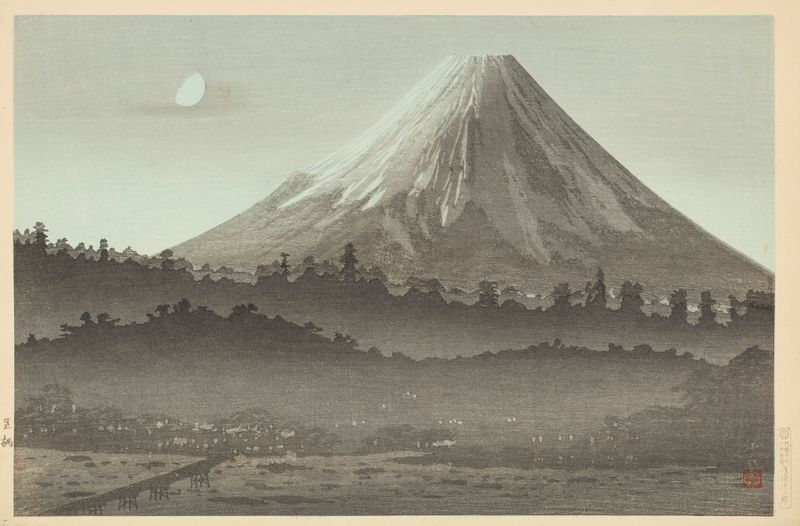
What secret hides in the quiet of the canvas? As winter blankets the landscape, a hushed reverence envelops the scene, inviting contemplation and reflection. Look to the left at the delicate outlines of the snow-laden trees, their branches bowing under the weight of winter’s touch. The cool blues and whites merge seamlessly, creating a tranquil atmosphere that draws the eye toward the majestic, snow-capped peak of Mt. Fuji in the background.
Notice how Hiroaki employs subtle gradations of color to suggest the warm glow of dawn, softly illuminating the mountainside while contrasting with the icy foreground. This interplay of light and shadow not only highlights the beauty of nature but also evokes a sense of serenity amidst the cold. Hidden within this tranquil exterior lies a deeper narrative of change. The pristine snow represents a moment frozen in time, yet beneath it simmers the tension of a nation on the brink of modernization and upheaval.
The stillness may encapsulate nature’s beauty, but it also speaks to the quiet revolution occurring in Japanese society, where tradition collides with progress. Each brushstroke communicates an urgency, hinting at what lies ahead for a culture caught between its historic roots and the modern world. Created in 1932, this artwork emerged during a pivotal period in Takahashi Hiroaki’s career, as he was adapting traditional ukiyo-e techniques to address contemporary themes. Living in a Japan undergoing rapid industrialization and cultural shifts, Hiroaki sought to capture the essence of his homeland while challenging the artistic conventions of his time.
His work reflects not just a landscape, but a society in transition, inviting viewers to ponder the delicate balance of change and tradition.
More Artworks by Takahashi Hiroaki
Browse all →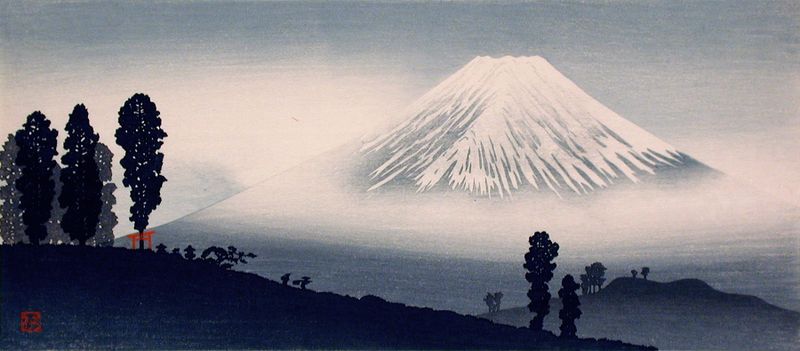
Mount Fuji
Takahashi Hiroaki

Mount Fuji seen near Tamaho, Dawn
Takahashi Hiroaki
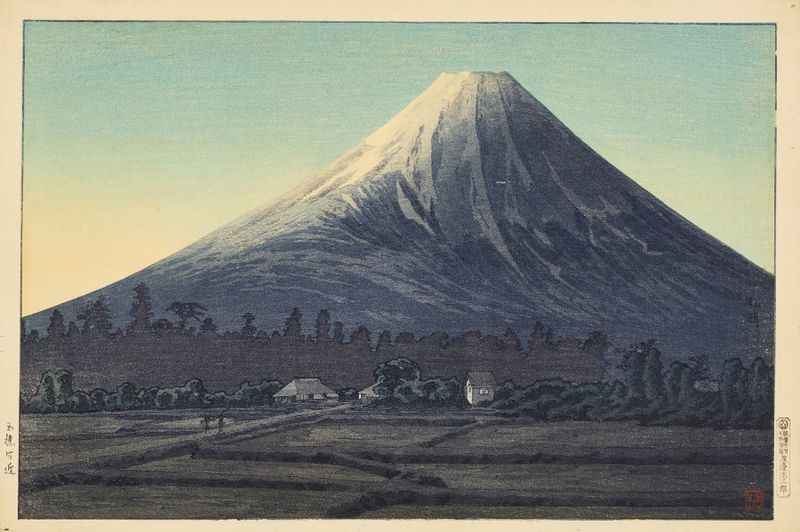
Mount Fuji seen near Tamaho, day
Takahashi Hiroaki
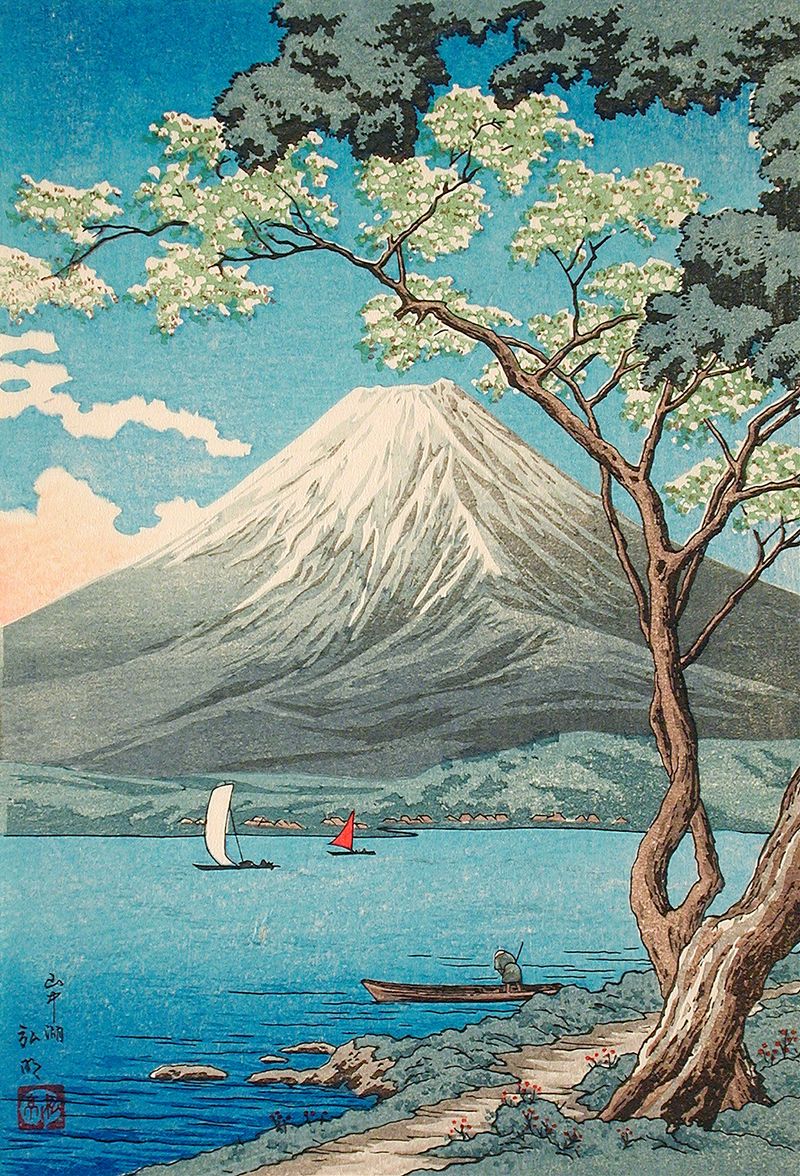
Mount Fuji from Lake Yamanaka
Takahashi Hiroaki

Egoda no tsuki
Takahashi Hiroaki
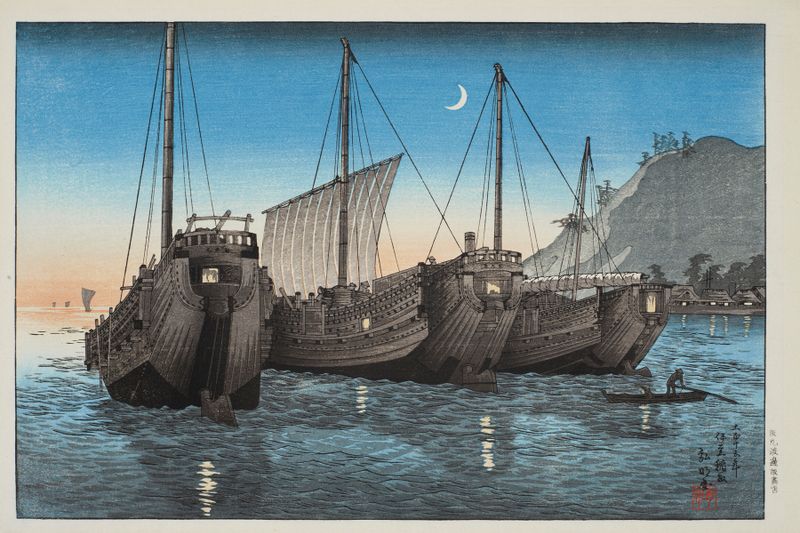
Junks in Inatori Bay, Izu
Takahashi Hiroaki

Izumibashi no ame
Takahashi Hiroaki
Mount Fuji seen near Tamaho, Night
Takahashi Hiroaki

Fishing nets at Tsukuda
Takahashi Hiroaki
Tsukuda no fubuki
Takahashi Hiroaki





