
Mount of the Holy Cross — History & Facts
In the heart of nature, nostalgia flows like a gentle stream, whispering stories of a time long past. Look to the center of the canvas where the majestic peak, crowned with snow, rises defiantly against a cerulean sky. The artist employs an intricate interplay of light and shadow, illuminating the rugged terrain while softening the harshness of the mountainside. Rich greens and earthy browns form a lush foreground, inviting your gaze to traverse the winding paths that lead into the wilderness.
The meticulously applied brushstrokes capture the dynamic essence of the landscape, where every stroke seems to breathe life into the scene. Beneath the surface, this piece encapsulates a profound sense of yearning. The mountain, often viewed as a symbol of aspiration, evokes a longing for exploration and connection to something greater than oneself. Meanwhile, the calm sky juxtaposes the tumult of nature, suggesting a tranquility that belies the chaos of life below.
The vibrant colors speak of nostalgia for experiences yet to be had and adventures unfurling on the horizon, blending yearning with serenity. In 1873, amid the unfolding American landscape movement, the artist created this masterpiece while exploring the Rockies. His work emerged during a period marked by the nation’s westward expansion, capturing the spirit of discovery and the sublime beauty of nature. This painting reflects not only the artist's technical prowess but also the contemporary fascination with the American wilderness, a testament to both personal exploration and collective ambition.
More Artworks by William Henry Holmes
Browse all →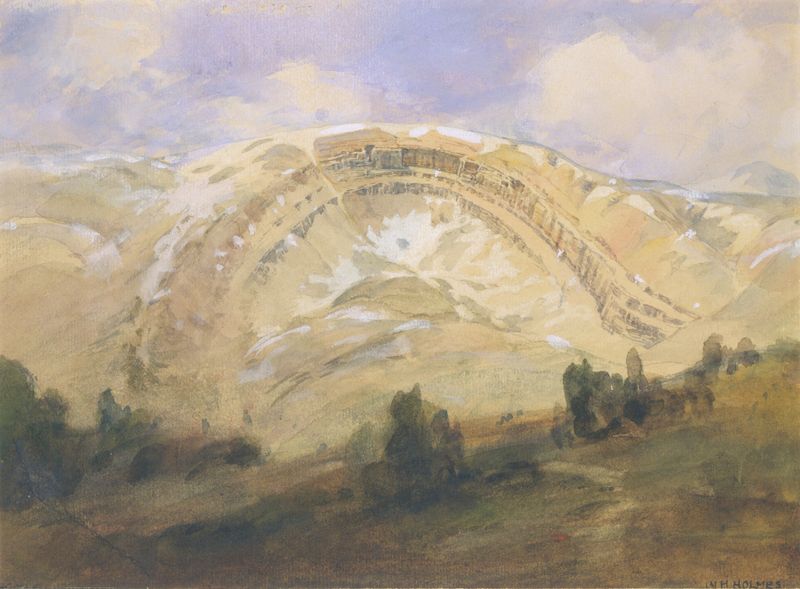
Folded Strata, A Great Geological Arch, Colorado
William Henry Holmes
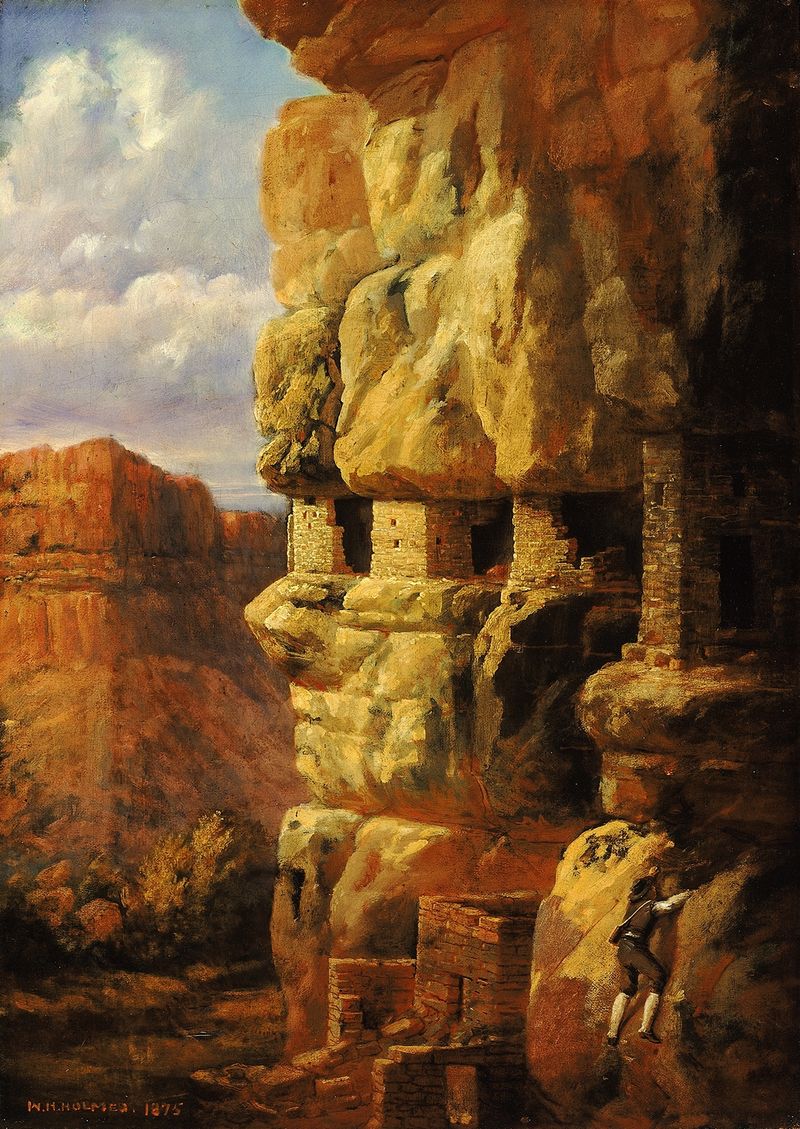
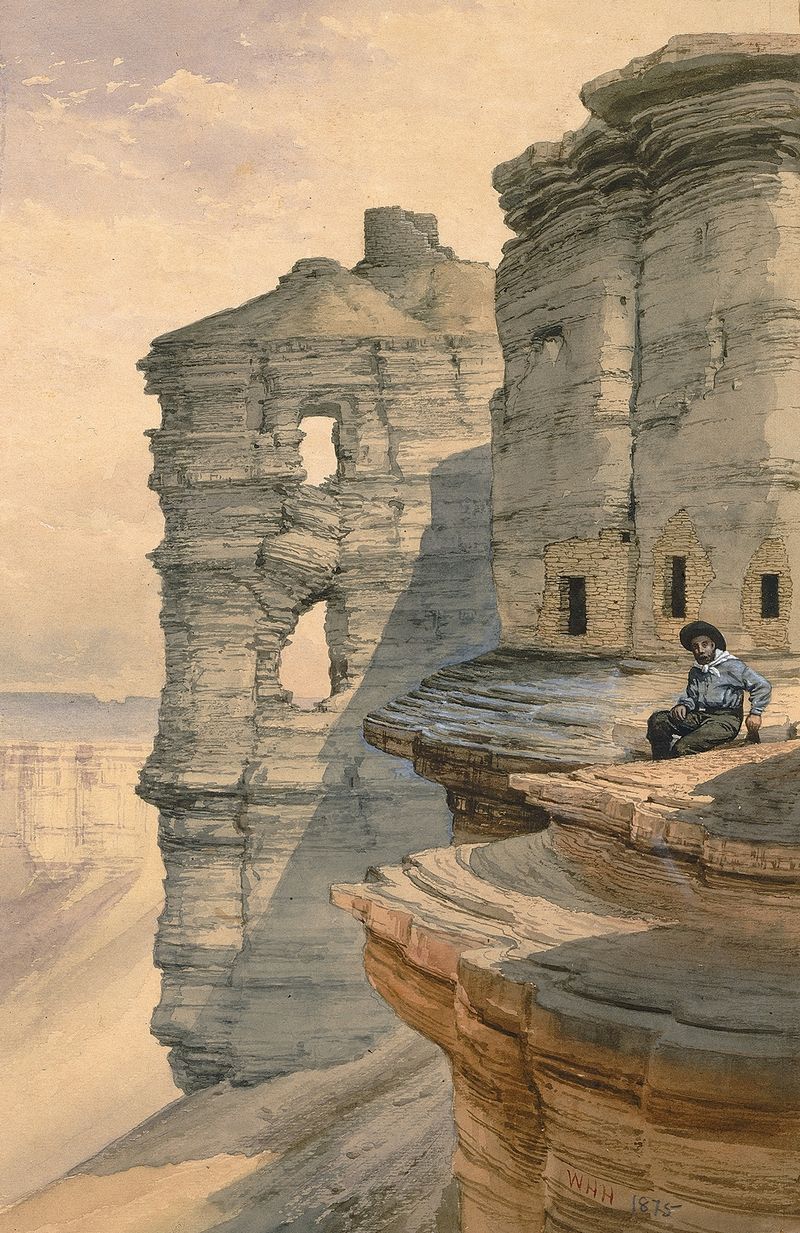
Cliff Houses On The Rio Mancos, Colorado
William Henry Holmes
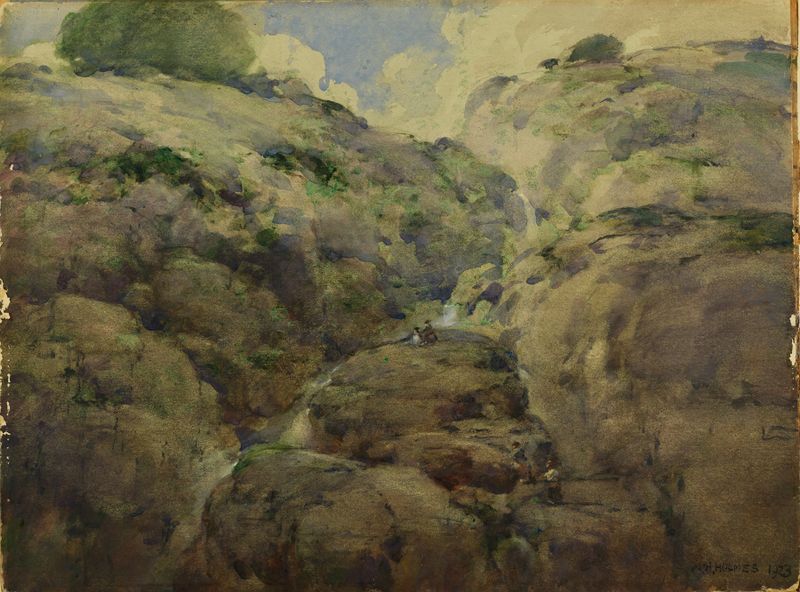
Mountain Gorge, Colorado
William Henry Holmes
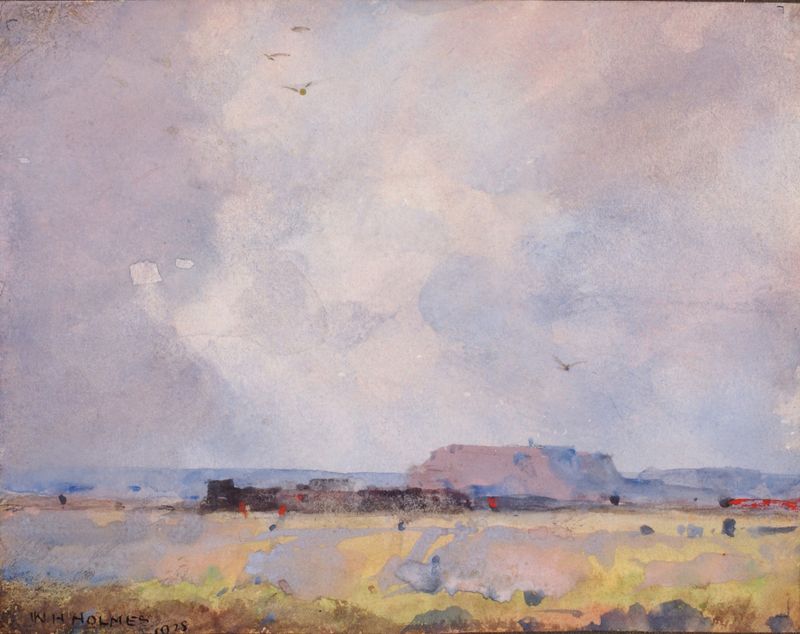
In The Plateau Country, With An Inhabited Pueblo
William Henry Holmes
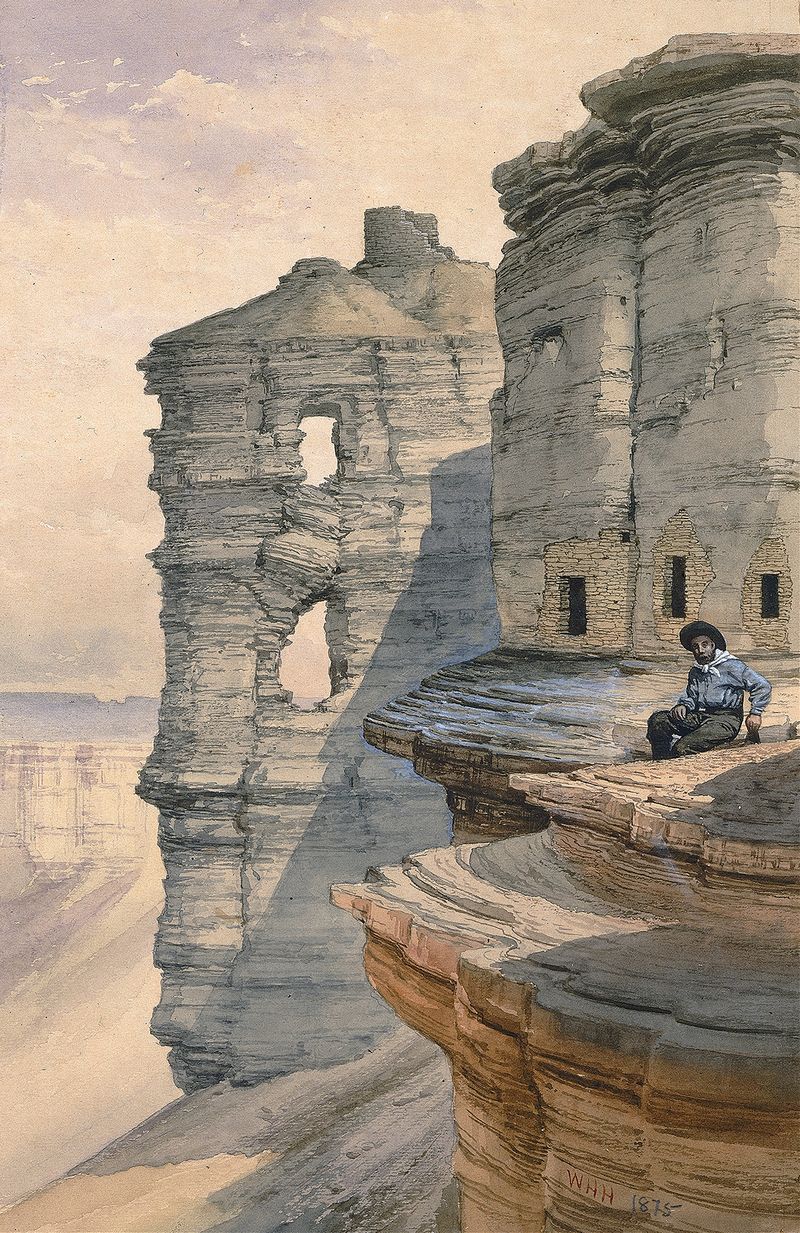
Cliff Houses on the Rio Mancos, Colorado
William Henry Holmes
Cliff Houses On The Rio Mancos, Colorado
William Henry Holmes
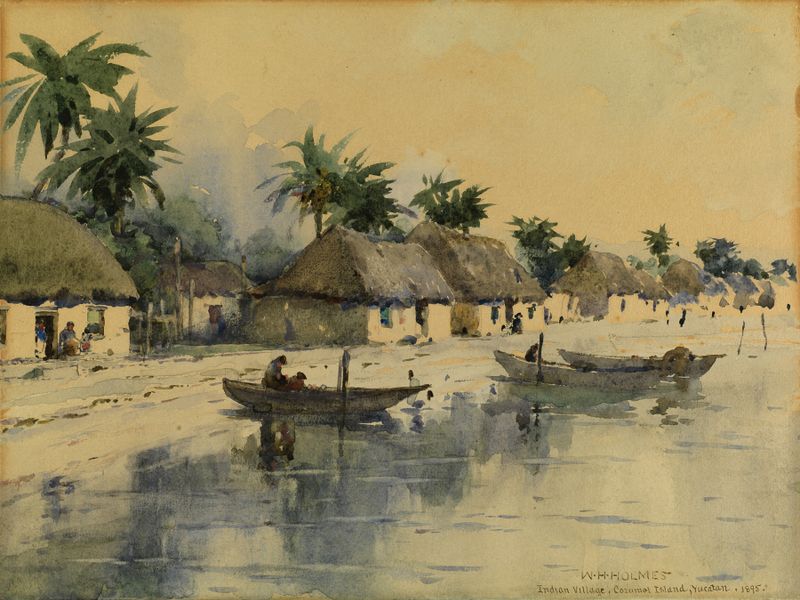
Indian Village, Cozumel Island, Yucatan
William Henry Holmes
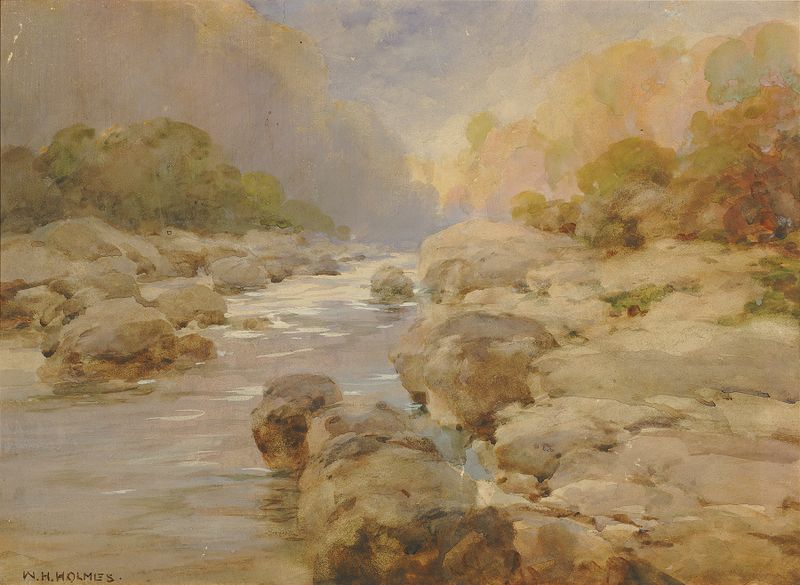
Unmodified Rock Creek, About 1910
William Henry Holmes
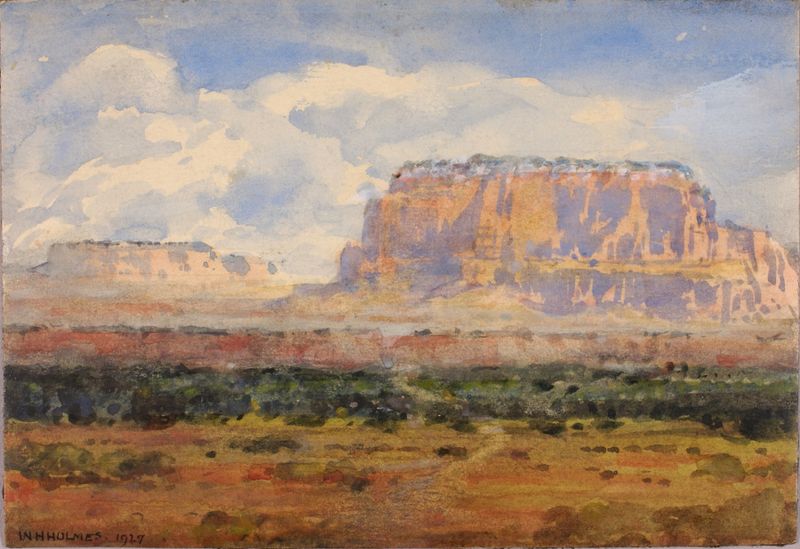
The Enchanted Mesa
William Henry Holmes
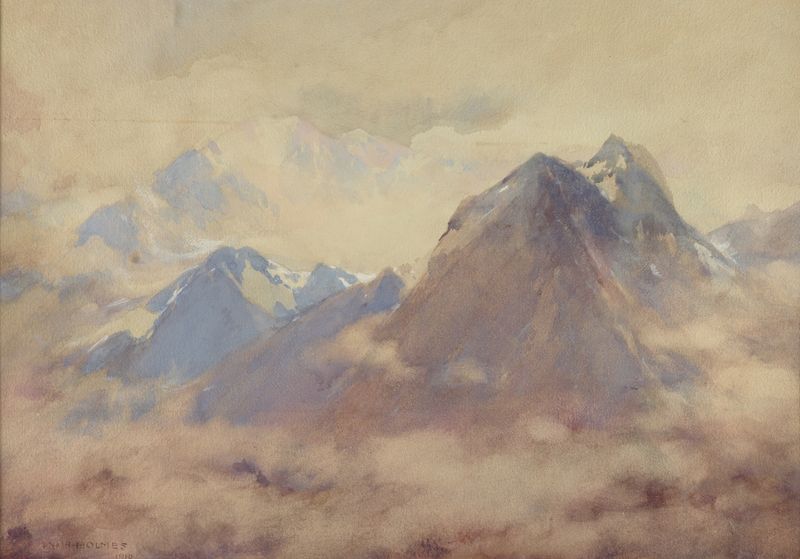
The Almighty’s Own, An Impression Of The High Andes
William Henry Holmes





